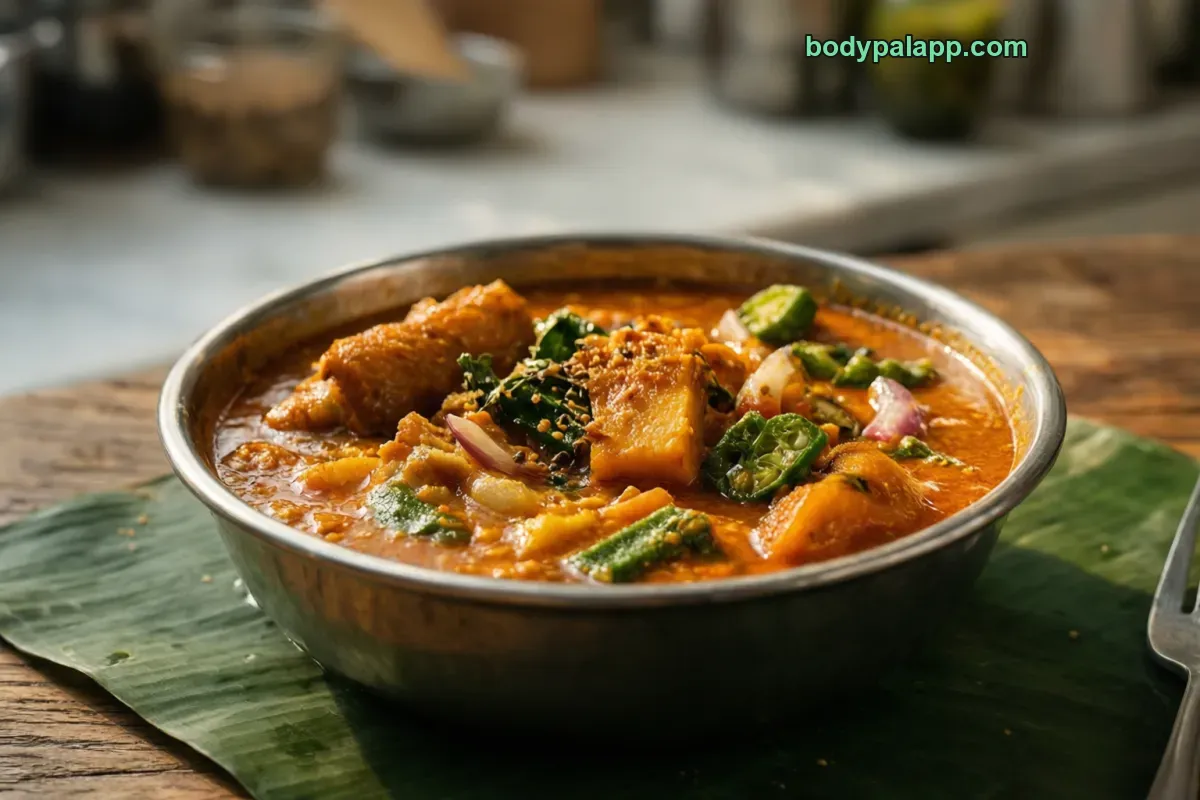
Sambar calories come to 213 for one cup (248 g) and 86 per 100 g. That is a modest number for a bowl that also brings 10.7 g of protein and 9.9 g of fiber. The catch is sodium: one cup carries 513 mg, 22% of the daily value, and refills add up fast.
213kcal
1 cup · 248 g, lentil vegetable stew
20%protein
10.7 gProtein
29 gCarbs
6.7 gFat
How to burn off 213 kcal
—Walking, brisk
—Jogging
—Cycling, moderate
—Swimming
Skip the math. BodyPal counts these calories from your steps and workouts automatically.
Nutrition facts
Lentil vegetable stew · per 248 g
Calories
213 kcal
Protein
10.7 g
Carbohydrate
29 g
Fat
6.7 g
Saturated fat
0.9 g
Cholesterol
0 mg
Sodium
513 mg
Potassium
588 mg
Iron
4.1 mg
Source: USDA FoodData Central
🛡️
Verified nutrition data
Numbers on this page come from USDA FoodData Central, the U.S. Department of Agriculture’s food composition database, and from manufacturer labels where a branded product is named. Last verified October 2026. How we verify our data →
Sambar: calories, protein and sodium by serving
Percent of daily value uses the FDA reference of 2,000 kcal a day.
Serving
kcal
Protein
Carbs
Fat
Sodium
% DV kcal
1 cup (248 g)
213
10.7 g
29.2 g
6.7 g
513 mg
11%
Half cup (124 g)
107
5.4 g
14.6 g
3.4 g
257 mg
5%
100 g
86
4.3 g
11.8 g
2.7 g
207 mg
4%
3 × 1 cup (248 g)
640
32.2 g
1,540 mg
5 × 1 cup (248 g)
1,066
53.7 g
2,567 mg
One cup is 213 calories, and refills add up
A standard cup of sambar weighs 248 g and lands at 213 calories, about 11% of the daily value for calories. A half cup (124 g), roughly the size of a side ladle next to a dosa or a few idli, is 107 calories. At that size sambar behaves like a side dish, not a meal.
The trouble is that sambar rarely stops at one serving. It is the bowl that gets topped up, and the total climbs in a straight line. Two cups (496 g) come to 427 calories, three cups (744 g) to 640, and five cups (1,240 g) to 1,066. Five cups is a family pot, but it shows how a thin, light stew can still reach meal-sized numbers.
Protein grows along with it. Two cups give 21.5 g and three cups give 32.2 g. If you log your food, measure your usual bowl once at home so you know whether you eat closer to a half cup or a full one. That single check fixes most of the guesswork.
Carbs supply more than half the calories
Split by source, sambar's calories are 53% carbohydrate, 27% fat and 20% protein. The carbs come from lentils and vegetables: 11.8 g per 100 g, with 4 g of that as fiber and only 2 g as sugars. A full cup holds 29.2 g of carbs, 9.9 g of fiber and 4.9 g of sugars. Few stews deliver that much fiber for the calories.
Fat is the part the cook controls. The stew in this USDA entry has 2.7 g of fat per 100 g, of which 0.4 g is saturated, and 6.7 g per cup. The oil or ghee used for tempering goes in at the end, so a richer version can sit above these values. Cholesterol is 0.
Protein is respectable for a vegetable dish: 4.3 g per 100 g and 10.7 g per cup, which covers 21% of the daily value. That is not tofu territory. It does make sambar more than a sauce for rice, and a cup pulls real weight in a meatless meal.
Sodium is the row to watch
Per 100 g, sambar has 207 mg of sodium, 9% of the daily value. Scale that to a cup and it becomes 513 mg, or 22%. A half cup is 257 mg, 11% of the daily value. Calories stay low while sodium quietly takes a bigger share.
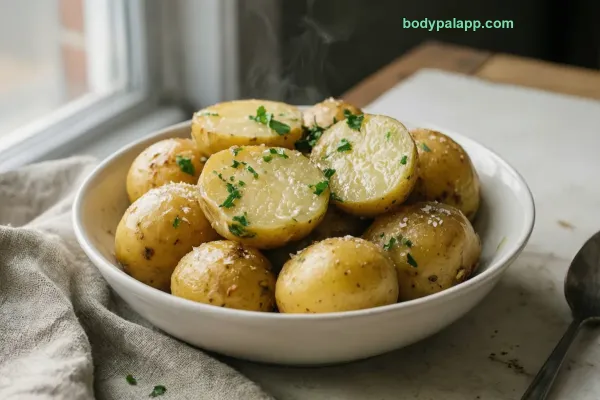
Refills are where it matters. Two cups bring 1,027 mg of sodium, three cups 1,540 mg, and five cups 2,567 mg, which is past the full daily value on its own. Boiled potato and peas sit at 5 mg per 100 g, so the gap comes from how sambar is seasoned, not from the vegetables themselves.
On the other side of the ledger, sambar has 237 mg of potassium per 100 g. If you watch sodium, keep the bowl to a measured cup and go easy on salty extras on the same plate, such as pickles or papad. Ask for the sambar on the side when eating out, so the refill is your call.
Sambar works best as the side, not the whole bowl
Sambar is almost always eaten with something starchy: dosa, idli, vada or rice. Those foods are not part of this entry, so log them on their own lines; the sambar number covers only the stew. A half cup at 107 calories beside a plate of rice adds fiber and protein without much fat.
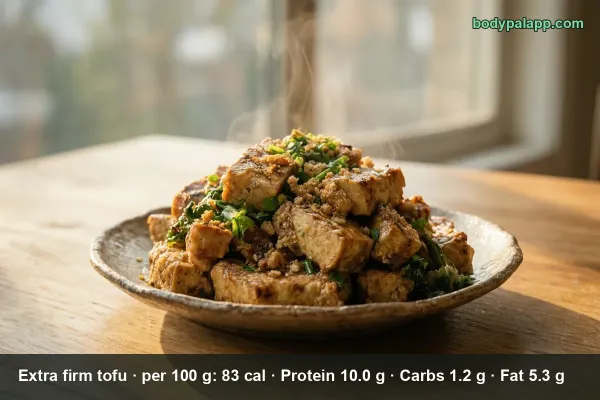
Its calorie density is 86 per 100 g, the same as boiled potato, so sambar fills a bowl without loading it. Swapping a second scoop of rice for a second ladle of sambar shifts the plate toward lentils and vegetables. If you want more protein in the same meal, extra firm tofu adds 10 g per 100 g and pairs easily with the spices.
The hard part is counting what actually got eaten. BodyPal can log sambar from a photo of the plate, which helps when the bowl has been refilled twice and nobody kept track. Either way, the cup is the unit to remember: 213 calories and 513 mg of sodium.
How does sambar compare?
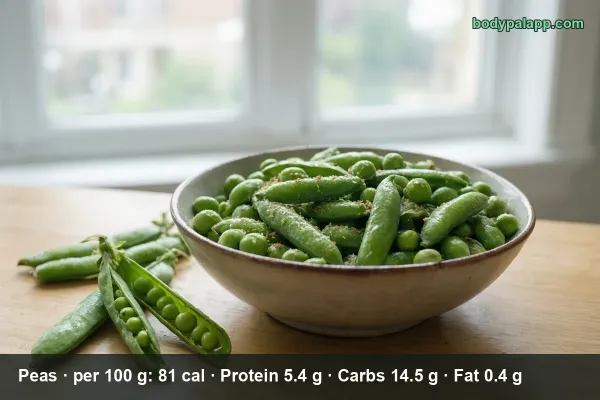
Here is how sambar stacks up against boiled potato, peas and extra firm tofu, per 100 g and per usual serving.
Verdict: For the lightest bowl, peas edge ahead at 81 calories per 100 g against sambar's 86, with only 5 mg of sodium. For protein that keeps you full, pick extra firm tofu at 10 g per 100 g; pick sambar when you want fiber and a whole meal's worth of flavor in a 213-calorie cup.
Most popular sambar brands in the United States
Ranked by popularity in the BodyPal database
# Productkcal / 100 g
1Jyoti Natural Foods Madras Sambar2.5 oz · 71 g113 kcal
The canned Madras sambar is a different recipe with more fat (4.2 g vs 2.7 g per 100 g), so its label reads higher than the stew above. Source: manufacturer labels / USDA FoodData Central.
Sambar FAQs
How many calories are in one cup of sambar?
One cup of sambar (248 g) has about 213 calories, and a half cup (124 g) has about 107.
Is sambar good for weight loss?
Sambar has 86 calories per 100 g and 4 g of fiber per 100 g, so one cup gives 213 calories with 9.9 g of fiber.
Sambar vs boiled potatoes: which has fewer calories?
They are the same per 100 g: 86 calories each.
How much protein is in sambar?
One cup of sambar has 10.7 g of protein, 29.2 g of carbs and 6.7 g of fat.
How many calories does sambar add to a dosa plate?
A half cup of sambar adds 107 calories and a full cup adds 213. The dosa and chutney are separate items, so log them on their own lines and add the sambar portion you actually ate.
How many calories are in half a cup of sambar?
Half a cup (124 g) of sambar has 107 calories. It also brings 5.4 g of protein, 14.6 g of carbs, 3.4 g of fat and 5 g of fiber.
How much sodium is in a bowl of sambar?
One cup of sambar has 513 mg of sodium, 22% of the daily value. Two cups reach 1,027 mg, so a refilled bowl adds up faster than the calories suggest.
Is sambar high in fiber?
Yes, for a stew. One cup has 9.9 g of fiber and 100 g has 4 g, while sugars stay low at 4.9 g per cup.
Does sambar have more calories than tofu?
Barely. Sambar has 86 calories per 100 g and extra firm tofu has 83, but tofu packs 10 g of protein against sambar's 4.3 g.