
How Many Calories in a Sloppy Joe?
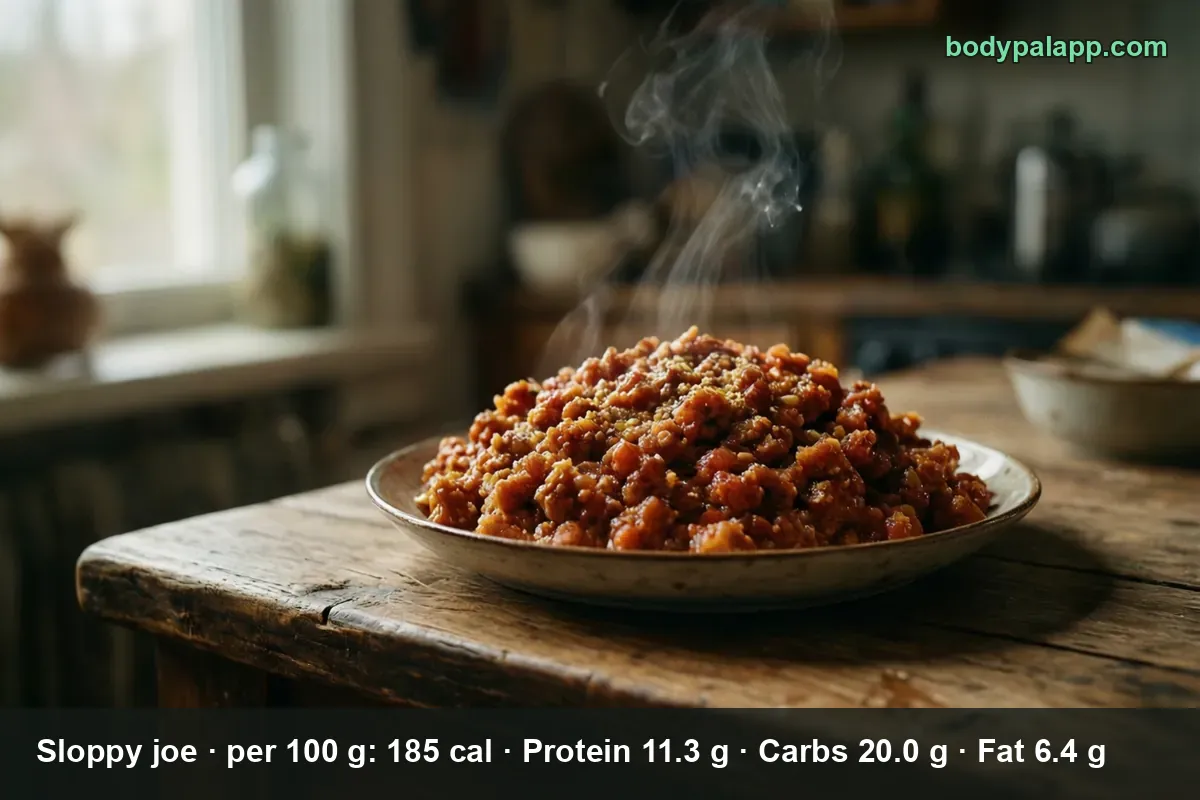
A sloppy joe on a white bun is 342 calories for one sandwich of about 185 g, which works out to 185 calories per 100 g. Ditch the bread, eat a cup of the meat off a plate, and you land on 350. That is eight calories more, not fewer. The bun is not where this sandwich hides its calories.
On this page
- Sloppy joe quick facts
- The bunless trap
- Portions, cup by cup
- White bun, wheat bun, no bun
- Where the sodium actually is
- Protein per calorie
- How does a sloppy joe compare?
- Most popular sloppy joe brands
- FAQ
Sloppy joe quick facts
The reference on this page is the sandwich itself, assembled and ready to eat: USDA FNDDS 2706883, "Sloppy joe sandwich, on white bun." Seasoned ground beef in tomato sauce, a standard hamburger bun, nothing else on the plate. USDA's serving for that record is one sandwich, any size, at 185 g.
| Nutrient | Per 100 g | Per 1 sandwich (185 g) | % Daily Value |
|---|---|---|---|
| Calories | 185 | 342 | — |
| Total fat | 6.42 g | 11.9 g | 15% |
| Saturated fat | 2.24 g | 4.1 g | 21% |
| Carbohydrate | 19.95 g | 36.9 g | 13% |
| Dietary fiber | 1.1 g | 2.0 g | 7% |
| Total sugars | 4.94 g | 9.1 g | — |
| Protein | 11.32 g | 20.9 g | 42% |
| Sodium | 360 mg | 666 mg | 29% |
% Daily Value is based on a 2,000-calorie diet.
Verified nutrition data
Numbers on this page come from USDA FoodData Central, the U.S. Department of Agriculture’s food composition database, and from manufacturer labels where a branded product is named. Last verified September 2026. How we verify our data →
One row stands out and it is the good one. A single sloppy joe carries 20.9 g of protein, 42% of the FDA Daily Value, out of a sandwich that supplies about 17% of a 2,000-calorie day. Very little else on a lunch counter returns protein at that rate.
The bill arrives in two columns. Sodium is 666 mg, 29% of the day. Saturated fat is 4.1 g, 21%. Both are running well ahead of the calories carrying them.
Two lines you would expect on a label are missing here on purpose. FNDDS does not publish added sugars or trans fat for prepared dishes in the 2021–2023 release, so those rows are absent rather than filled with a zero nobody measured. The sugar you can see, 9.1 g per sandwich, is the tomato sauce plus whatever the bun contributes, and most of it was added by somebody. Cholesterol comes to 48 mg (16% DV) and potassium to 429 mg (9% DV).
The bunless trap
Here is where the calorie math of a sloppy joe goes sideways, and it runs opposite to almost every low-carb instinct.
The filling on its own is a separate USDA record, and it reads 140 calories per 100 g. The assembled sandwich reads 185. So gram for gram, the bread is the denser half. Wet meat in sauce is mostly water and the bun is not, which is the same reason a soaked crouton weighs more than a dry one and feeds you less.
Read only that column and skipping the bun looks like a 24% saving. Then look at the portion.
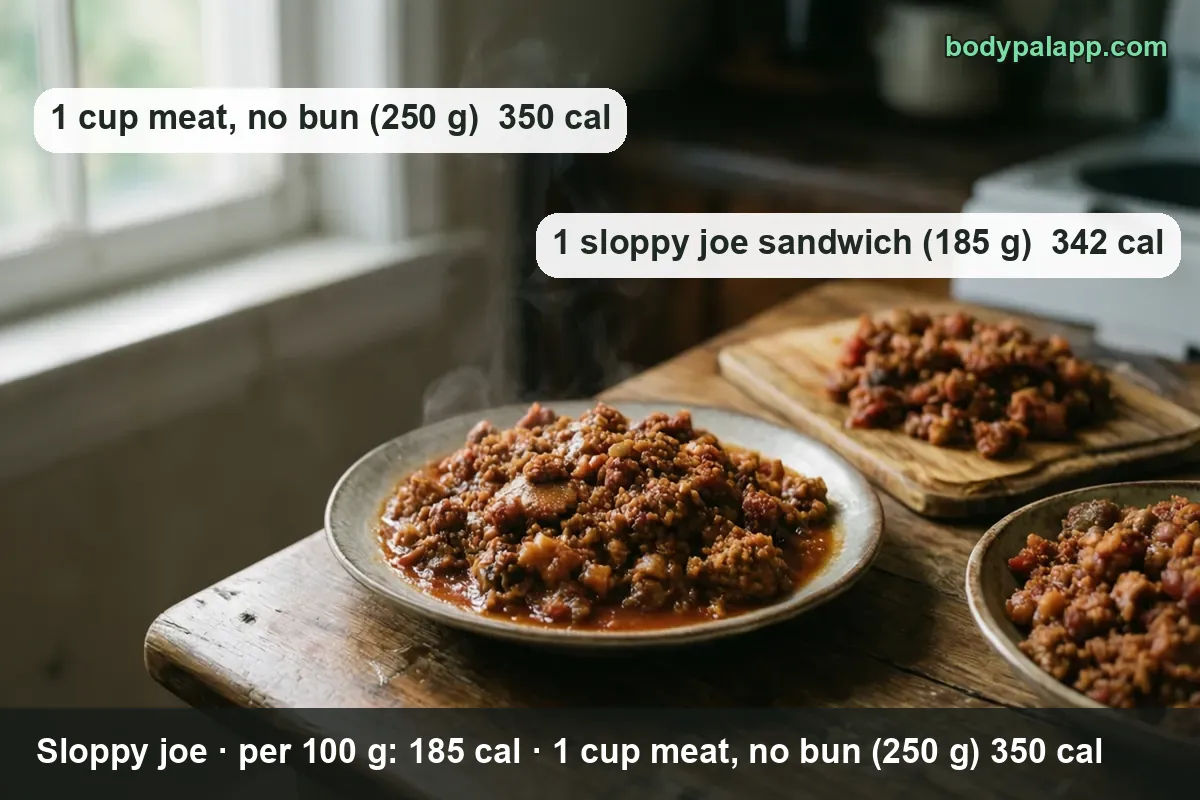
Nobody eats 185 g of loose ground beef with a fork. They eat a cup of it, and a cup is 250 g. At 140 calories per 100 g, that cup is 350 calories against the sandwich's 342. The bread came off, the plate got heavier, and the total went up.
The macros do shift, and if carbohydrate is what you are managing, the shift is real: carbohydrate drops from 36.9 g in the sandwich to 13.7 g in the cup, while fat climbs from 11.9 g to 19.1 g. What does not happen is a calorie saving. Losing the bun saves calories only when you also keep the serving the same size, and a bunless sloppy joe is almost never served the same size.
Portions, cup by cup
| Portion | Weight | Calories |
|---|---|---|
| Half a sloppy joe | 93 g | 172 |
| One sloppy joe, white bun | 185 g | 342 |
| One serving of the meat, no bun | 190 g | 266 |
| 1 cup of the meat, no bun | 250 g | 350 |
| 1 oz of assembled sandwich | 28 g | 52 |
The middle two rows are the ones to memorize, because they are the same food at two believable scoop sizes. USDA's unspecified serving of filling is 190 g and comes to 266 calories. A level cup is 250 g and comes to 350. Sixty grams of extra scoop, 84 extra calories, and no visible difference on a plate that is already a heap.
Half a sandwich is the cleanest 172-calorie stop in this whole article. Sloppy joes cut in half well, which is more than can be said for most sandwiches on a soft bun.
White bun, wheat bun, no bun
| Version | Per 100 g | Serving | Calories |
|---|---|---|---|
| Sloppy joe, white bun | 185 | 1 sandwich (185 g) | 342 |
| Sloppy joe, wheat bun | 180 | 1 sandwich (185 g) | 333 |
| Sloppy joe meat, no bun | 140 | 1 cup (250 g) | 350 |
The wheat bun is the swap worth making, and calories are the least interesting thing about it. Nine calories separate the two sandwiches, a difference too small to log honestly. Fiber is where the record moves: 2.0 g on white, 4.1 g on wheat, which takes one sandwich from 7% of the Daily Value to 15%. Protein edges up to 21.9 g and sodium drops slightly to about 635 mg. Carbohydrate falls from 36.9 g to 34.1 g.
Doubling the fiber in a sandwich for free is a rare offer. The Dietary Guidelines for Americans push most people toward whole grains for exactly this reason, and here the whole-grain version costs nothing in taste currency beyond the bun you already buy.
Canned sloppy joe filling sits between the two. USDA's branded entry for the ready-to-heat kind runs 165 calories per 100 g, so a half-cup serving of 121 g is about 200 calories before any bread. That is denser than home-simmered filling at 140 per 100 g, which fits what the can is: less water, more concentrated meat and sauce.
Where the sodium actually is
Sodium is the number on this page that deserves more attention than the calories.
- One sloppy joe on a white bun, 185 g: 666 mg, 29% DV
- The same sandwich on a wheat bun: about 635 mg, 28% DV
- One cup of the filling, no bun, 250 g: 740 mg, 32% DV
The Daily Value is 2,300 mg, so a single sandwich is a bit more than a quarter teaspoon of table salt out of a day's allowance of roughly one teaspoon. Nothing alarming for one lunch. It stops being one lunch when a second sandwich follows, which at 1,332 mg puts a plain meal past half the day.
The split between meat and bread is the part that surprises people. Per 100 g the filling alone carries 296 mg and the assembled sandwich carries 360, so the bun is the saltier component by weight. That would make "skip the bread" a decent sodium play, if portions behaved. They do not: the cup of filling you actually eat delivers 740 mg, more than the whole sandwich did. Going bunless moves sodium up on both counts that matter.
If the number matters to you, the lever is the sauce, not the bread. Sloppy joe sauce is the salt in this dish, and a pan simmered from tomato paste and spice is the one version of it you control.
Protein per calorie
A sloppy joe returns 6.1 g of protein for every 100 calories. That is a good ratio for a saucy sandwich, and it beats the meatloaf sandwich sitting next to it in USDA's data at 5.4 g. Ground beef is doing the work; the tomato sauce is along for the ride.
It is not the best ratio on the counter, though. A barbecue chicken sandwich on a white bun returns 7.8 g per 100 calories, because lean poultry brings protein without the fat that beef carries. If protein density is the whole point of your lunch, that is the sandwich. If you want protein density plus something that eats like comfort food, the sloppy joe is the trade most people would take, and it still counts as a MyPlate protein food at 42% of the day's protein target in one hand.
How does a sloppy joe compare?
Every row is one sandwich as it is normally served, with the serving weight named:
| Sandwich | Per 100 g | Per serving | Protein | Carbs | Fat |
|---|---|---|---|---|---|
| Sloppy joe, white bun (1 sandwich, 185 g) | 185 | 342 | 20.9 g | 36.9 g | 11.9 g |
| Gyro sandwich (1 sandwich, 200 g) | 184 | 368 | 22.5 g | 37.6 g | 13.5 g |
| Barbecue chicken sandwich, white bun (1 regular, 180 g) | 204 | 367 | 28.7 g | 44.7 g | 7.9 g |
| Meatball sandwich or sub (1 regular, 180 g) | 207 | 373 | 20.3 g | 38.4 g | 14.8 g |
| Meatloaf sandwich (1 sandwich, 135 g) | 217 | 293 | 15.9 g | 38.8 g | 8.3 g |
Our take: only the smaller meatloaf sandwich lands lighter in this group, and the sloppy joe is the only one under 350 calories that still clears 20 g of protein. Per 100 g it sits a single calorie above the gyro at the bottom of the density ladder, but it is served in a smaller package, so it wins on the plate by 26 calories.
For the best protein per calorie, the barbecue chicken sandwich is the pick and it is not close, with 7.9 g of fat against the sloppy joe's 11.9 g. For the smallest number on the table, the meatloaf sandwich at 293 calories wins on size alone, since it is the densest thing here per gram and simply comes smaller. The meatball sub is the one to think twice about: 373 calories, the most fat of the five, and less protein than the sloppy joe it costs 31 calories more than.
Most popular sloppy joe brands in the United States
Ranked by how widely each product appears among foods sold in the United States, from the BodyPal food database of over 3.3 million products. Calories are the figures printed on each Nutrition Facts label, checked against USDA FoodData Central.
| Product | Calories (per 100 g) |
|---|---|
| Hereford Sloppy Joe | 165 cal |
Brand popularity: BodyPal food database. Nutrition: manufacturer labels / USDA FoodData Central.
Sloppy joe FAQs
How many calories are in a sloppy joe sandwich?
342 calories for one sloppy joe on a white bun, about 185 g on the plate, which is 185 calories per 100 g. That sandwich carries 20.9 g of protein, 36.9 g of carbohydrate and 11.9 g of fat. Half a sloppy joe is 172 calories.
How many calories are in a sloppy joe without the bun?
140 calories per 100 g for the meat alone, against 185 for the assembled sandwich. Skipping the bread only saves calories if the serving stays the same size. A typical bunless portion is a cup, and that cup is 350 calories, eight more than the whole sandwich.
How many calories are in 1 cup of sloppy joe meat?
350 calories in one cup, 250 g of filling with no bread. It brings 30.2 g of protein, 13.7 g of carbohydrate, 19.1 g of fat and 740 mg of sodium, which is 32% of the Daily Value. USDA's smaller unspecified serving of 190 g comes to 266 calories.
How many calories are in a sloppy joe on a wheat bun?
333 calories for the same 185 g sandwich, nine fewer than the white-bun version. The real change is fiber, which doubles from 2.0 g to 4.1 g, or 7% of the Daily Value to 15%. Protein rises to 21.9 g and sodium falls to about 635 mg.
How much protein is in a sloppy joe?
20.9 g in one sandwich, 42% of the Daily Value, from 11.32 g per 100 g. That is 6.1 g of protein per 100 calories, better than a meatloaf sandwich at 5.4 g. A cup of the filling with no bun reaches 30.2 g.
How much sodium is in a sloppy joe?
666 mg in one sandwich, 29% of the 2,300 mg Daily Value, or a bit more than a quarter teaspoon of table salt. A cup of the filling with no bun is higher at 740 mg. Two sandwiches reach 1,332 mg, past half the day.
Is a sloppy joe healthy?
It is a 342-calorie lunch with 20.9 g of protein, 42% of the Daily Value, which is a strong return for the calories. The costs are 666 mg of sodium (29% DV) and 4.1 g of saturated fat (21% DV). A wheat bun doubles the fiber to 4.1 g at no calorie cost.
How many calories are in half a sloppy joe?
172 calories for 93 g, half of a standard white-bun sandwich. That half carries roughly 10.5 g of protein and 333 mg of sodium. It is the easiest portion cut here, since a sloppy joe divides cleanly in a way most soft-bun sandwiches do not.
Similar foods
- Gyro — 368 cal per sandwich
- Beef Cube Steak — 299 cal per steak
- Pork Chop — 220 cal per regular chop
- Turkey Sandwich — 215 cal plain, 433 loaded
- Shrimp Shumai — 180 cal for 6 pieces
- Shrimp Fajita — 227 cal per cup
Count it without the math
Point the camera at the plate and BodyPal reads the sandwich, the scoop and the sodium in one shot.


How long does it take to burn off a sloppy joe?
One sandwich (185 g) is 342 kcal. Enter your weight and the amount you ate to see how long it takes you to burn that off:
lb
| Activity | Time to burn 342 kcal |
|---|---|
| Walking, brisk | 1 hr 8 min |
| Cycling, moderate | 43 min |
| Swimming, moderate | 49 min |
| Jogging | 40 min |
| Weight training, moderate | 1 hr 16 min |
Times are for a 155 lb adult at a steady pace; change the weight to see yours. The amount is set to the portion in the text (185 g); change it to what you actually ate. BodyPal works this out from your steps automatically.
Burning it off is one side of it. The other is knowing your number: work out how many calories you need a day, with macros and a goal date.