
How many calories are in shrimp shumai?
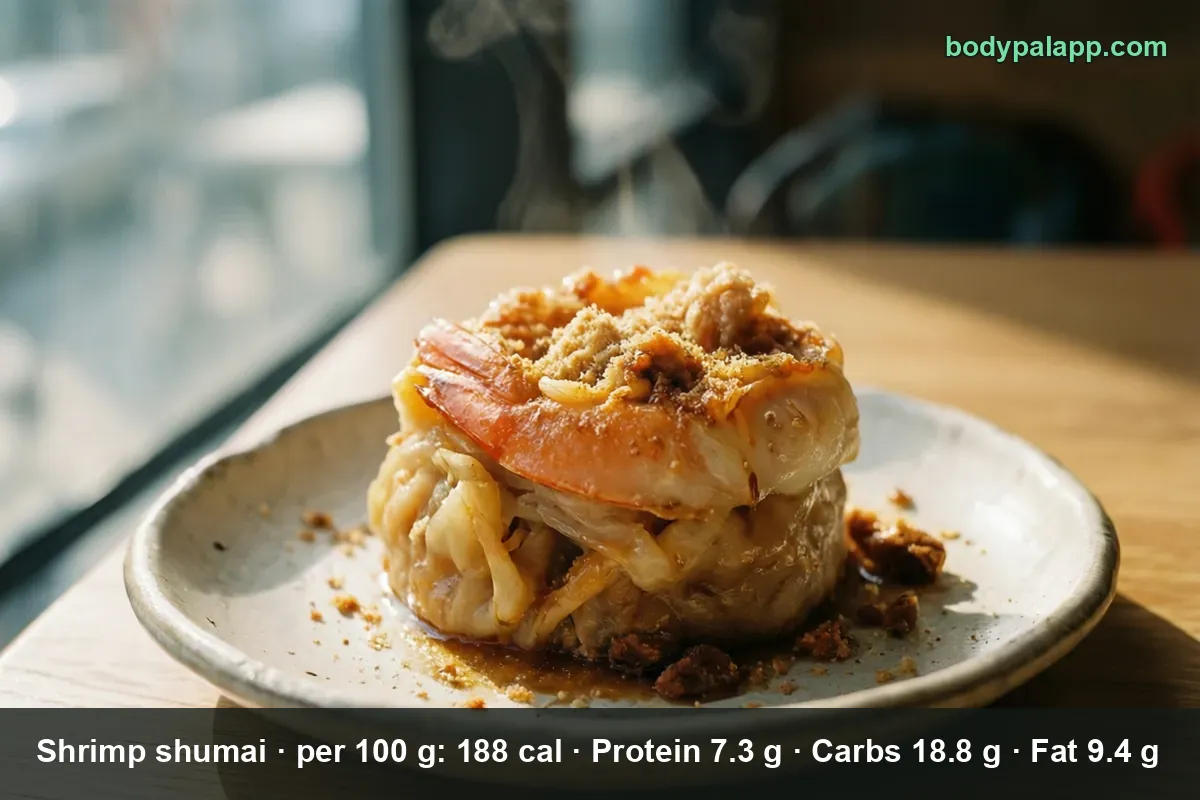
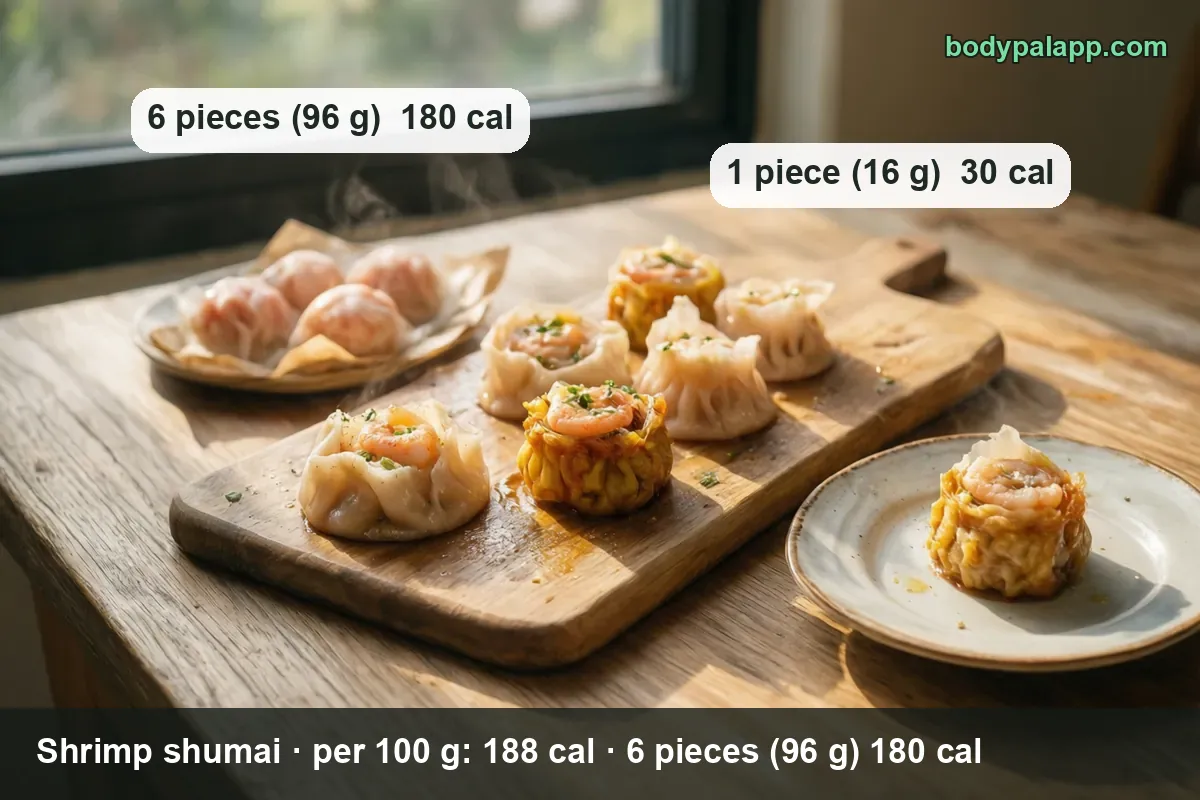
Six frozen shrimp shumai weigh 96 g and come to 180 calories. Per 100 g the dumplings run 188 calories, which puts one small 16 g piece at about 30. That is a light appetizer by dim sum standards, until you read the sodium line, which moves faster than the calories do.
On this page
- Shrimp shumai quick facts
- US servings from one piece to a full box
- Shumai versions and what each one costs you
- The piece count on the box is not a calorie count
- Sodium is the row that outruns the calories
- How does shrimp shumai compare?
- Most popular shrimp shumai brands
- Shrimp shumai FAQs
Shrimp shumai quick facts
The numbers below come from FDC 2275790, "Dumpling (Shrimp Shumai)", the NISSUI frozen box. It is the record worth building a page on for one reason: it is the only shumai entry with a complete label whose filling is shrimp and not pork. That is the bag most people actually carry home from the freezer aisle.
There is a bigger gap behind that choice. USDA FoodData Central has no Foundation, SR Legacy or FNDDS entry for shumai in any form, so there is no lab-analyzed reference food to fall back on. Every shumai figure on this page is manufacturer label data, which means it is rounded to label rules before anyone sees it. Treat single grams as approximate and the hundreds-of-milligrams sodium figure as real.
| Nutrient | Per 100 g | Per 6 pieces (96 g) | % Daily Value |
|---|---|---|---|
| Calories | 188 | 180 | — |
| Total fat | 9.38 g | 9.0 g | 12% |
| Saturated fat | 3.12 g | 3.0 g | 15% |
| Carbohydrate | 18.75 g | 18.0 g | 7% |
| Dietary fiber | 1.0 g | 1.0 g | 3% |
| Total sugars | 4.17 g | 4.0 g | — |
| Added sugars | 2.1 g | 2.0 g | 4% |
| Protein | 7.29 g | 7.0 g | 14% |
| Sodium | 469 mg | 450 mg | 20% |
% Daily Value is based on a 2,000-calorie diet.
Verified nutrition data
Numbers on this page come from USDA FoodData Central, the U.S. Department of Agriculture’s food composition database, and from manufacturer labels where a branded product is named. Last verified September 2026. How we verify our data →
Two rows sit outside the table. Cholesterol is 31 mg per 100 g, or 30 mg in a six-piece serving, which is 10% of the Daily Value and is the shrimp doing the work. Potassium is only 101 mg per 100 g, 97 mg per serving, a thin 2%. The label also declares 0 g of trans fat, so nothing was dropped for lack of data.
The added sugars row is worth a second look, because it is unusual to see it filled in on a savory frozen food. Two of the four grams of sugar in a serving were put there, most likely in the seasoning and the binder. It is 4% of the daily limit, which is small, and it is a reminder that dumpling filling is a seasoned mixture rather than plain seafood.
US servings from one piece to a full box
| Serving | Weight | Calories |
|---|---|---|
| 1 piece | 16 g | 30 kcal |
| 3 pieces | 48 g | 90 kcal |
| 4 pieces | 64 g | 120 kcal |
| 6 pieces, label serving | 96 g | 180 kcal |
| 1 oz | 28 g | 53 kcal |
| Per 100 g | 100 g | 188 kcal |
Only one line there is a USDA household measure: the six-piece, 96 g serving printed on the NISSUI package. Everything else is our own arithmetic from the USDA 100 g figure, not a USDA serving. The single-piece weight of 16 g is simply 96 divided by six, and the ounce row scales the same way.
That matters more than it sounds. A steamer basket at a dim sum restaurant usually arrives with four pieces, which is 120 calories on this math, and a paper tray from a supermarket hot case can hold nine or ten. Weighing the plate once beats counting dumplings forever, because the piece is the unit that changes from brand to brand while the gram never does.
Shumai versions and what each one costs you
| Version | Per 100 g | Typical serving | Calories |
|---|---|---|---|
| Frozen shrimp shumai | 188 kcal | 6 pieces, 96 g | 180 kcal |
| Deli-counter shrimp shumai | 122 kcal | 9 oz, 255 g | 311 kcal |
| Pork and shrimp shumai | 193 kcal | 140 g | 270 kcal |
| Pork shumai | 174 kcal | 10 pieces, 144 g | 251 kcal |
| Beef shumai | 174 kcal | 6 pieces, 86 g | 150 kcal |
| Chicken shumai | 121 kcal | 8 pieces, 140 g | 169 kcal |
The deli-counter version is the trap in that table. Per gram it is the second lightest thing here, 122 calories per 100 g, well under the frozen shrimp version. Per package it is the heaviest by a distance, 311 calories, because the ready-to-eat tray from the sushi case weighs 9 oz. Light food in a large container is still a large number.
Chicken is the leanest filling per gram at 121 calories per 100 g, and beef gives the smallest actual serving at 150 calories for six pieces of 86 g. Pork sits in the middle, and mixed pork-and-shrimp trays are the two heaviest records per 100 g anywhere on this page. Shrimp does not automatically mean lighter; it means a different texture and a different price.
The piece count on the box is not a calorie count
Here is the finding that undoes most people's mental math. A NISSUI piece weighs 16 g and costs 30 calories. A Bestaste pork-with-shrimp piece weighs about 28 g, since its label serving is three pieces at 85 g, and costs about 70 calories at 247 per 100 g. Both of those piece figures are our own arithmetic from the USDA 100 g numbers rather than USDA servings.
Say three shumai and you have said either 90 calories or 210 calories. Same word, more than double the number. JFC packs ten pieces into 144 g, which is roughly 14 g each and about 25 calories on the same arithmetic of ours, smaller still. Anyone logging "3 shumai" from memory is logging a guess with a 120-calorie range inside it.
The practical fix is to log by weight or by package serving, not by count. If you know the box says six pieces per serving, count six and stop. If the dumplings came from a restaurant steamer and you have no label, 30 calories a piece is a reasonable floor and 70 a reasonable ceiling.
Sodium is the row that outruns the calories
A six-piece serving is 180 calories, which is 9% of a 2,000-calorie day. The same serving is 450 mg of sodium, which is 20% of the Daily Value. FDA sets that Daily Value at 2,300 mg, so the sodium is running at more than twice the pace of the calories. Per 100 g the figure is 469 mg, about a fifth of a teaspoon of table salt.
Nothing in that count includes the dipping sauce, and dipping sauce is where shumai usually goes wrong. Soy sauce, ponzu and chili crisp all add sodium on top of a food that already spends a fifth of the day's allowance before it reaches the table. If you are watching sodium, the sauce is the thing to ration, not the dumpling.
Protein tells a quieter story. Seven grams a serving, 14% of the Daily Value, is respectable but not what people expect from a seafood dumpling. The shrimp filling is stretched with onion, starch and fish paste, which is why 100 g of it delivers 7.29 g of protein while the Bestaste pork-and-shrimp version delivers 14.12 g. MyPlate counts shumai toward the protein group, but a six-piece plate is a snack-sized contribution, not a meal's worth.
How does shrimp shumai compare?
| Product | Per 100 g | US serving | Calories |
|---|---|---|---|
| Shrimp shumai, frozen | 188 kcal | 6 pieces, 96 g | 180 kcal |
| Konomi pork and shrimp shumai | 193 kcal | 140 g | 270 kcal |
| JFC shumai with pork | 174 kcal | 10 pieces, 144 g | 251 kcal |
| Wei-Chuan pre-steamed shumai | 160 kcal | 6 pieces, 150 g | 240 kcal |
Our take: shrimp shumai loses on density and wins on the plate. Per 100 g it is the second heaviest of these four, above both pork products, because the Wei-Chuan filling is leaner per gram at 160. Per serving it is the lightest by 60 calories, and the reason is portion size rather than recipe: a NISSUI serving is 96 g while the others run 140 to 150 g. For a controlled appetizer, buy the box that serves 96 g and eat the serving. For a shared plate where everyone reaches in, the density number is the one that decides how the evening ends.
Most popular shrimp shumai brands in the United States
Ranked by how widely each product appears among foods sold in the United States, from the BodyPal food database of over 3.3 million products. Calories are the figures printed on each Nutrition Facts label, checked against USDA FoodData Central.
| Product | Calories (per 100 g) |
|---|---|
| Sushi Station Shrimp Shumai | 122 cal |
| NISSUI Dumpling (Shrimp Shumai) | 188 cal |
| Bestaste Pork with Shrimp Shumai | 247 cal |
| Konomi Shumai Pork & Shrimp Dumplings | 193 cal |
| JFC Shumai Dumplings with Pork | 174 cal |
| Wei-Chuan Pre-Steamed Shumai | 160 cal |
Brand popularity: BodyPal food database. Nutrition: manufacturer labels / USDA FoodData Central.
Shrimp shumai FAQs
How many calories are in one shrimp shumai?
One piece is about 30 calories. That is the 96 g label serving of six frozen NISSUI dumplings, 180 calories, divided by six, which is our own arithmetic rather than a USDA serving. Pieces from a deli tray or a restaurant steamer run larger, so treat 30 as the floor.
How many calories are in 6 shrimp shumai?
Six pieces are 180 calories, the printed label serving at 96 g. The same plate brings 7 g of protein, 18 g of carbohydrate, 9 g of fat and 450 mg of sodium. Calories land at 9% of a 2,000-calorie day; sodium lands at 20%.
Is shrimp shumai healthy?
At 188 calories per 100 g it is one of the lighter dim sum plates, with 7.29 g of protein and only 1 g of fiber. The catch is 469 mg of sodium per 100 g. FDA sets the Daily Value at 2,300 mg, so a six-piece serving spends a fifth of it.
Shrimp shumai vs pork shumai: which has fewer calories?
Pork wins more often than people expect, at 174 calories per 100 g for JFC pork shumai against 188 for frozen shrimp shumai. Wei-Chuan pre-steamed pork shumai is lighter still at 160. The heaviest records here are mixed pork-and-shrimp trays, at 193 and 247. Shrimp is the leaner filling, but the wrapper and binder set the number.
How much protein is in shrimp shumai?
Seven grams in a six-piece serving, which is 14% of the Daily Value, and 7.29 g per 100 g. That is modest for something built on seafood. Pork with shrimp from Bestaste carries 14.12 g per 100 g, because the shrimp filling here is stretched with onion and fish paste.
How much sodium is in shrimp shumai?
450 mg in six pieces, 20% of the 2,300 mg Daily Value that FDA uses. Per 100 g it is 469 mg, roughly a fifth of a teaspoon of table salt. Dipping sauce is not counted, and soy sauce adds more sodium on top of it.
Are steamed shumai lower in calories than fried?
Frozen shrimp shumai carries 9.38 g of fat per 100 g before any oil touches a pan. USDA FoodData Central has no fried shumai record, so there is no like-for-like number to set against the steamed one. Pan-frying adds whatever oil the pan holds, which no label can predict.
How many carbs are in shrimp shumai?
Eighteen grams in a six-piece serving, 7% of the Daily Value, from 18.75 g per 100 g. Fiber is only 1 g and total sugars are 4 g, of which 2 g are added. Nearly all of the carbohydrate is the wrapper and the starch that binds the filling.
Similar foods
- Crab Salad — 391 cal per cup
- Lobster Salad — 340 cal per cup
- Corn Tamale — 309 cal per tamale
- Meatball — 80 cal per meatball
- Homemade Meatballs — 80 cal per meatball
- Mushroom Ravioli — 296 cal per cup
Count it without the math
Point the camera at the steamer basket and BodyPal counts the shumai for you, filling and all.


How long does it take to burn off shrimp shumai?
A 6-piece serving (96 g) is 180 kcal. Enter your weight and the amount you ate to see how long it takes you to burn that off:
lb
| Activity | Time to burn 180 kcal |
|---|---|
| Walking, brisk | 36 min |
| Cycling, moderate | 22 min |
| Swimming, moderate | 26 min |
| Jogging | 21 min |
| Weight training, moderate | 40 min |
Times are for a 155 lb adult at a steady pace; change the weight to see yours. The amount is set to the portion in the text (96 g); change it to what you actually ate. BodyPal works this out from your steps automatically.
Want the bigger picture? Calculate your daily calorie needs — your maintenance figure, a target for losing or gaining, and the date you get there.