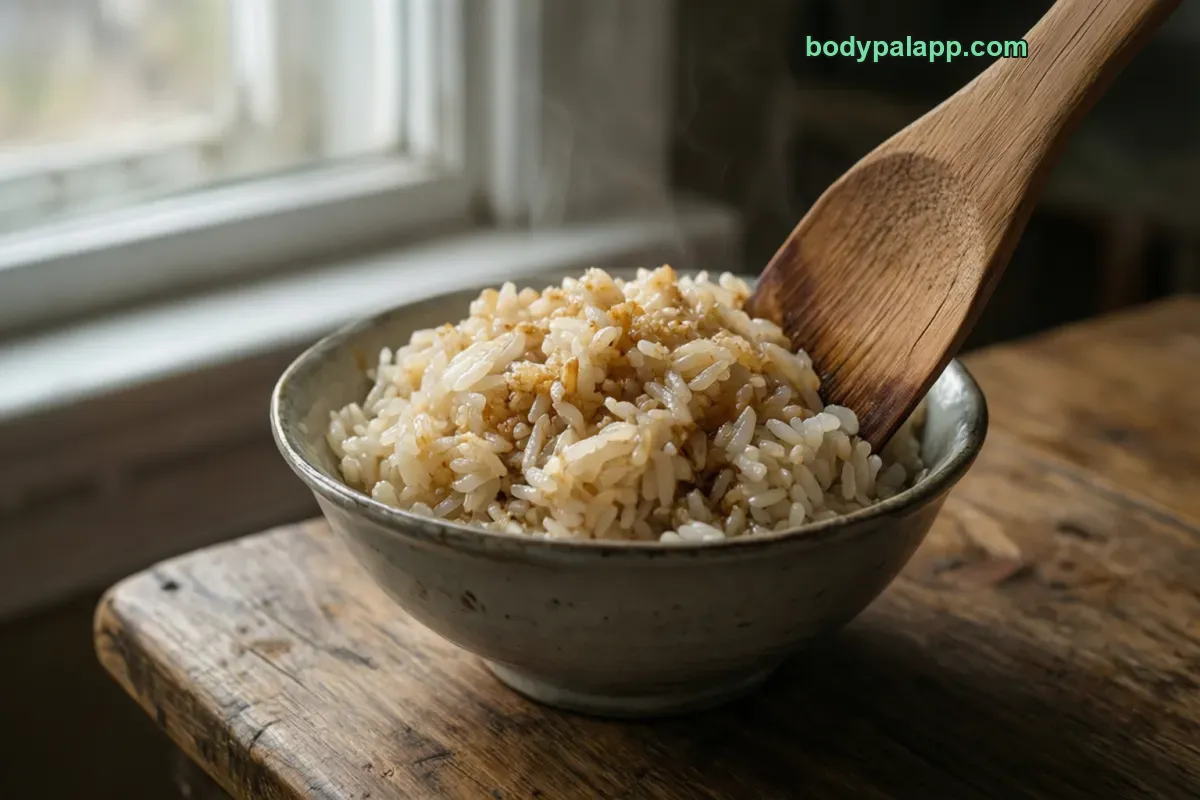
Sushi rice calories come to 242 for 1 cup (186 g) of cooked short-grain white rice, or 130 per 100 g. Nearly all of that is starch: carbs supply 91% of the calories, protein 7% and fat 1%. The rice itself is simple. How much of it ends up on your plate decides the total.
242kcal
1 cup · 186 g, short-grain white, cooked
7%protein
4.4 gProtein
53 gCarbs
0.4 gFat
How to burn off 242 kcal
—Walking, brisk
—Jogging
—Cycling, moderate
—Swimming
Skip the math. BodyPal counts these calories from your steps and workouts automatically.
Nutrition facts
Short-grain white, cooked · per 186 g
Calories
242 kcal
Protein
4.4 g
Carbohydrate
53 g
Fat
0.4 g
Saturated fat
0.1 g
Cholesterol
0 mg
Sodium
0 mg
Potassium
48 mg
Iron
2.7 mg
Source: USDA FoodData Central
🛡️
Verified nutrition data
Numbers on this page come from USDA FoodData Central, the U.S. Department of Agriculture’s food composition database, and from manufacturer labels where a branded product is named. Last verified September 2026. How we verify our data →
Sushi rice: calories, protein and sodium by serving
Percent of daily value uses the FDA reference of 2,000 kcal a day.
Serving
kcal
Protein
Carbs
Fat
Sodium
% DV kcal
1 cup (186 g)
242
4.4 g
53.4 g
0.4 g
0 mg
12%
100 g
130
2.4 g
28.7 g
0.2 g
0 mg
7%
Uncooked (100 g)
358
6.5 g
79.2 g
0.5 g
1 mg
18%
3 × 1 cup (186 g)
725
13.2 g
0 mg
5 × 1 cup (186 g)
1,209
21.9 g
0 mg
Each extra cup adds 242 calories
A single cup of cooked sushi rice weighs 186 g and carries 242 calories, about 12% of the daily value for calories. It also brings 4.4 g of protein and 53.4 g of carbs, with almost no fat at 0.4 g. That cup is a fair estimate for a poke bowl base or a homemade roll session for one.
The total climbs quickly once you go back for more. Two cups (372 g) reach 484 calories, three cups (558 g) land at 725, and five cups (930 g), roughly a family pot, hit 1,209. Protein barely keeps pace: 8.8 g at two cups, 13.2 g at three and 21.9 g at five. More rice means more calories, not much more protein.
Rolls hide the portion. Rice is pressed tight and wrapped, so it is hard to judge how much sits on a plate by looking at the pieces. If you track, weigh the cooked rice before shaping it, or log by cups of cooked rice rather than by piece count. That one habit makes a sushi night far easier to count.
Carbs supply 91% of the calories
Per 100 g, cooked sushi rice has 28.7 g of carbs, 2.4 g of protein and 0.2 g of fat. Run those through the calorie math and carbs account for 91% of the energy, protein 7% and fat 1%. This is a fuel food, not a protein food.
The protein share is modest. One cup covers 9% of the daily value for protein, so the rice cannot carry a meal on its own. The fish, egg, tofu or edamame next to it does that job, and it is worth choosing a filling with real protein if you want the meal to keep you full.
Fat is close to zero, with 0.1 g of saturated fat per 100 g and no cholesterol. That keeps the rice itself quiet on the rows people usually watch. The attention belongs on what goes into and onto each roll: mayo sauces, tempura batter and cream cheese change the picture far more than the rice does.
Dry rice has 358 calories per 100 g
Uncooked short-grain rice packs 358 calories per 100 g, against 130 once cooked. The grain absorbs water as it simmers, so the same calories spread over much more weight. The dry figure also shows 6.5 g of protein, 79.2 g of carbs and 2.8 g of fiber per 100 g.
This matters for logging. If you weigh rice from the bag, use the uncooked numbers; if you weigh it from the pot, use the cooked ones. Mixing the two is an easy way for a rice entry to end up wrong by a wide margin, in either direction.
A batch that starts with dry rice gets all its calories from that dry weight. Cook it, then split the pot by the share you actually eat and log that portion. As a quick sense check, 100 g of dry rice at 358 calories is well above a full cooked cup at 242.
Plain rice is sodium-free; the seasoning is extra
Plain cooked short-grain rice lists 0 mg of sodium per cup and 26 mg of potassium per 100 g. Those are the numbers for the rice alone. Sushi rice in restaurants and kits is usually dressed with rice vinegar, sugar and salt, and those additions are not part of these figures.
If you watch sodium, the plain rice is not where it comes from. Look at the seasoning, the soy sauce and the sauces on the plate instead. If you season rice at home, log the sugar and salt you add as separate entries so the total stays honest.
For a balanced plate, pair a cup of rice with a protein source and plenty of vegetables: salmon, tuna, tofu, egg, cucumber, avocado or seaweed salad. Brands such as Lundberg Family Farms Organic California Sushi Rice or Sushi Chef Premium Sushi Rice are the same kind of grain, so the cooked numbers here apply. BodyPal can log a sushi plate from a photo, which helps when the rice is tucked inside rolls.
How does sushi rice compare?
Here is how sushi rice stacks up against other cooked white rice on our pages, per 100 g and per usual serving.
Verdict: Calorie for calorie there is no real winner: sushi rice, white rice and cooked white rice all sit at 130 per 100 g, and instant rice is only slightly lower at 124. Pick by taste and texture, and if you want a smaller logged number, use a smaller cup, since a 158 g cup of cooked white rice comes to 205 against 242 for the 186 g cup here.
Most popular sushi rice brands in the United States
Ranked by popularity in the BodyPal database
# Productkcal / 100 g
1Sushi Chef Premium Sushi Rice1/4 cup · 53 g340 kcal
2Lundberg Family Farms Organic California Sushi Rice45 g356 kcal
Bagged sushi rice is labeled dry, so it reads about 356 calories per 100 g, while the cooked number above is 130 per 100 g. Source: manufacturer labels / USDA FoodData Central.
Sushi rice FAQs
How many calories are in sushi rice?
One cup of cooked sushi rice (186 g) is 242 calories, and 100 g is 130 calories.
Is sushi rice good for weight loss?
Cooked sushi rice is 130 calories per 100 g, nearly all of it from 28.7 g of carbs, and one cup adds 242 calories with only 4.4 g of protein.
Sushi rice vs white rice: which has more calories?
They match: short-grain sushi rice and regular cooked white rice are both 130 calories per 100 g, or 242 calories per cup (186 g).
How many carbs are in sushi rice?
A cup of cooked sushi rice (186 g) has 53.4 g of carbs, 4.4 g of protein and 0.4 g of fat. Per 100 g that is 28.7 g of carbs.
How many calories are in uncooked sushi rice?
Uncooked short-grain rice has 358 calories per 100 g, with 79.2 g of carbs, 6.5 g of protein and 2.8 g of fiber. Once cooked, the same weight drops to 130 calories because the rice absorbs water.
How many calories are in two cups of sushi rice?
Two cups of cooked sushi rice (372 g) contain 484 calories and 8.8 g of protein. Three cups (558 g) reach 725 calories, so portion size moves the total more than anything else.
Does sushi rice have sodium?
Plain cooked short-grain rice has 0 mg of sodium per cup, or 0% of the daily value. Sushi rice seasoned with salt and sugar will be higher, and those additions are not included in these figures.
How much protein is in a cup of sushi rice?
A cup of cooked sushi rice (186 g) has 4.4 g of protein, about 9% of the daily value. Protein supplies only 7% of its calories, so pair it with fish, tofu or egg.