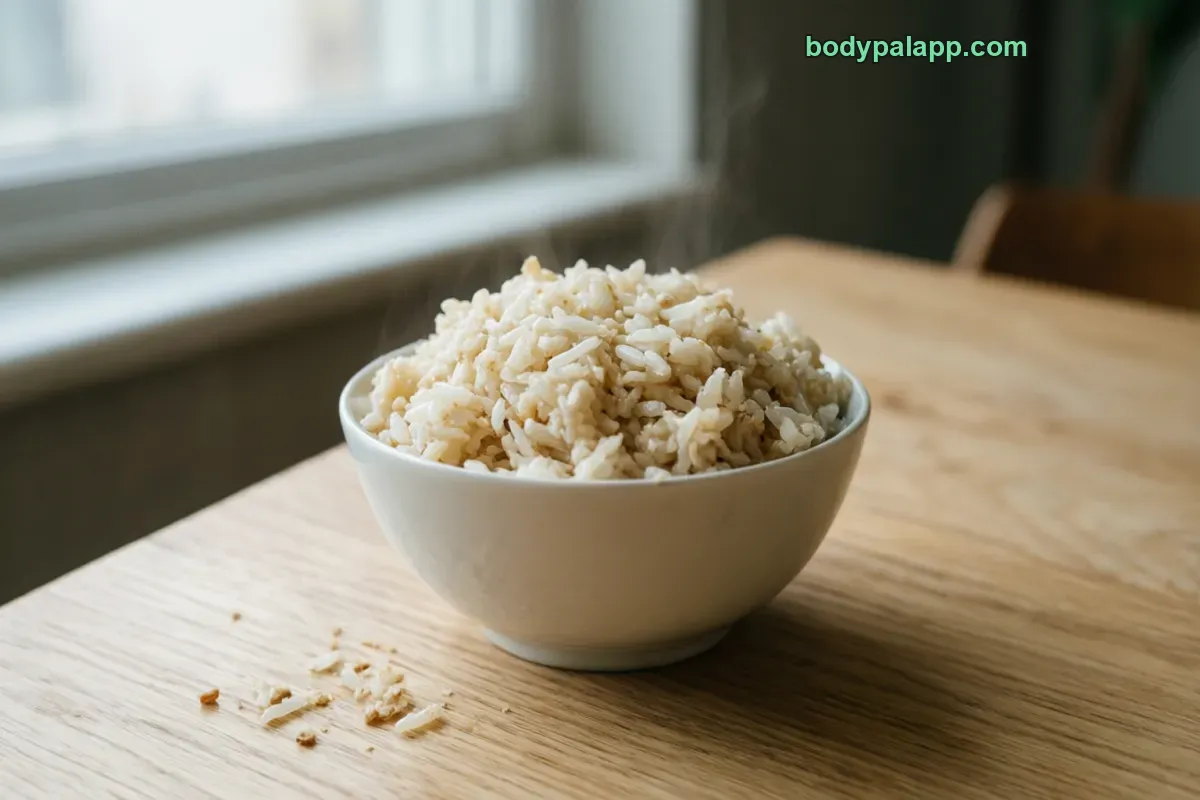
White rice calories come to 242 for 1 cup (186 g) of cooked, enriched medium-grain rice, or 130 per 100 g. The number to notice is the split: 91% of those calories come from carbs, 8% from protein and 2% from fat, so the size of your scoop decides almost everything.
242kcal
1 cup · 186 g, cooked, enriched
8%protein
4.4 gProtein
53 gCarbs
0.4 gFat
How to burn off 242 kcal
—Walking, brisk
—Jogging
—Cycling, moderate
—Swimming
Skip the math. BodyPal counts these calories from your steps and workouts automatically.
Nutrition facts
Cooked, enriched · per 186 g
Calories
242 kcal
Protein
4.4 g
Carbohydrate
53 g
Fat
0.4 g
Saturated fat
0.1 g
Cholesterol
0 mg
Sodium
0 mg
Potassium
54 mg
Iron
2.8 mg
Source: USDA FoodData Central
🛡️
Verified nutrition data
Numbers on this page come from USDA FoodData Central, the U.S. Department of Agriculture’s food composition database, and from manufacturer labels where a branded product is named. Last verified September 2026. How we verify our data →
White rice: calories, protein and sodium by serving
Percent of daily value uses the FDA reference of 2,000 kcal a day.
Serving
kcal
Protein
Carbs
Fat
Sodium
% DV kcal
1 cup (186 g)
242
4.4 g
53.2 g
0.4 g
0 mg
12%
100 g
130
2.4 g
28.6 g
0.2 g
0 mg
7%
Uncooked cup (200 g)
716
13 g
158.3 g
1 g
2 mg
36%
3 × 1 cup (186 g)
725
13.3 g
0 mg
5 × 1 cup (186 g)
1,209
22.1 g
0 mg
A cup is 242 calories, and cups add up fast
One level cup of cooked rice weighs 186 g and carries 242 calories, about 12% of the daily calorie value. Restaurant plates and takeout containers rarely stop at one cup. Two cups (372 g) come to 484 calories, three cups (558 g) reach 725, and five cups (930 g), the size of a family pot, hold 1,209.
The scoop is the variable that matters. A packed, heaped cup holds more grain than a loose one, so weighing your usual serving once tells you what you really eat. Plain rice has 0 mg of sodium per cup, which means the total on your plate moves with volume and nothing else.
If you log by weight instead, every 100 g adds 130 calories, or 7% of the daily value. A kitchen scale is the simplest way to keep this food honest, and BodyPal can also log a plate of rice from a photo. Either way, the second scoop is where most of the extra calories hide.
Carbs supply 91% of the calories
Per 100 g, cooked white rice has 28.6 g of carbs, 2.4 g of protein and just 0.2 g of fat. Carbs account for 91% of the energy, protein 8% and fat 2%. Few everyday staples come this close to pure starch.
Per cup, that means 53.2 g of carbs, 4.4 g of protein and 0.4 g of fat. The protein covers 9% of the daily value, a modest contribution rather than a reason to eat it. Fiber is thin as well: 0.6 g per cup, against a daily value of 28 g.
The upside of this profile is predictability. Rice brings no hidden fat, so the calorie count tracks the carb count almost one to one. The downside is that a bowl of plain rice does little to keep you full on its own, which is why what sits next to it on the plate matters so much.
Dry rice is 716 calories a cup, cooked is 242
The most common logging mistake with rice is mixing up dry and cooked measures. One uncooked cup (200 g) holds 716 calories, 13 g of protein and 158.3 g of carbs, roughly 36% of the daily calorie value. A cup of cooked rice, by contrast, is 242 calories.
The grain does not lose calories in the pot. Cooking adds water, which adds weight and volume but no energy, so the same rice simply spreads across more cups once it is done. If you measure before cooking, log the dry entry. If you scoop from the pot, log the cooked one.
Recipes and meal-prep plans often list rice by its dry amount. Split that dry total across the portions you actually serve rather than assuming each bowl equals one cooked cup. Getting this one step right matters more than any other detail on this page.
Rice needs a protein partner to make a meal
With 4.4 g of protein per cup and almost no fat, rice works best as the base of a plate, not the whole plate. Beans, eggs, fish, chicken or tofu fill the protein gap, and vegetables add the fiber the grain lacks. The result is a meal that holds you longer than the rice alone.
Because plain rice sits at 0 mg of sodium, the salt on the plate comes from what you add: soy sauce, seasoning packets, broths and curries. If you watch sodium, those toppings deserve more attention than the rice itself. The same goes for butter or oil stirred in after cooking, which the plain numbers here do not include.
Packaged options such as Minute White Rice, Ben's Original Boil-In-Bag Long Grain White Rice or Bibigo Korean-Style Medium Grain Sticky White Rice are convenient, but check the label serving against the amount you actually eat. Sticky and long-grain styles feel different in the bowl. The portion still drives the total.
How does white rice compare?
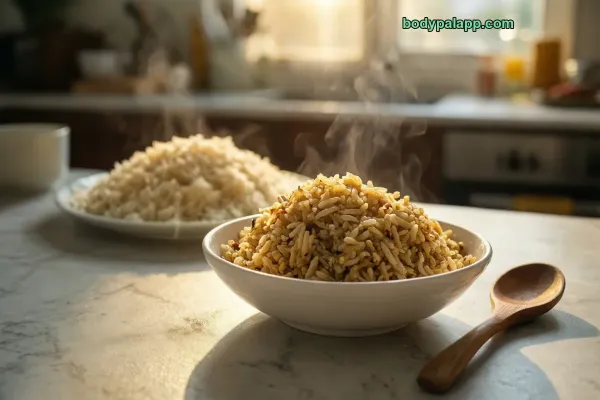
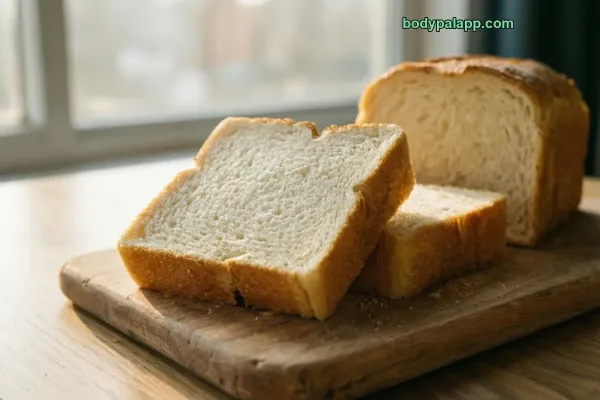
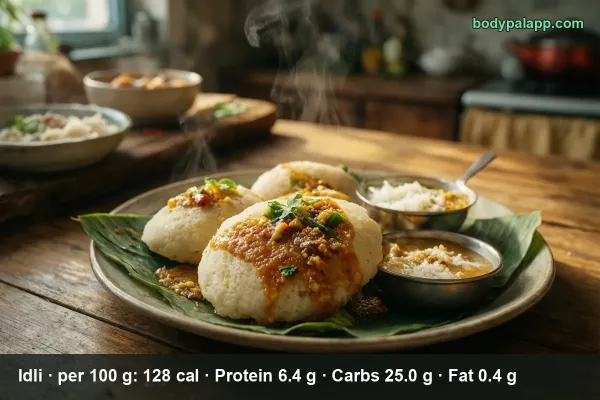
Here is how white rice stacks up against cooked white rice, white bread and idli, per 100 g and per usual serving.
Verdict: For the fewest calories per bite, rice and idli are close at 130 and 128 per 100 g, while white bread runs 270, about 2.1 times as dense. If you want more protein for similar calories pick idli at 6.4 g per 100 g; if you want the least sodium, stay with plain rice.
Most popular white rice brands in the United States
Ranked by popularity in the BodyPal database
# Productkcal / 100 g
1Bibigo Korean-Style Medium Grain Sticky White Rice1 bowl · 210 g148 kcal
2Parrot Long Grain White Rice1/4 cup · 45 g356 kcal
3Minute White Rice1/2 cup · 46 g370 kcal
4Minute Organic White Rice1 cup · 125 g160 kcal
5Minute Light & Fluffy White Rice1/2 cup · 46 g370 kcal
7Ben's Original Boil-In-Bag Long Grain White Rice48 g354 kcal
Dry rice packages are labeled per uncooked weight, so they read around 370 calories per 100 g, while the cooked numbers above are 130. Source: manufacturer labels / USDA FoodData Central.
White rice FAQs
How many calories are in a cup of white rice?
One cup of cooked white rice (186 g) is 242 calories. Cooked white rice is 130 calories per 100 g.
Is white rice good for weight loss?
A 1 cup serving is 242 calories and 53.2 g carbs, while a 100 g portion is 130 calories and 28.6 g carbs, so the portion size decides the total.
How many calories are in 1 cup of uncooked white rice?
Uncooked white rice is 358 calories per 100 g, so a 1 cup measure of dry rice (200 g) is 716 calories.
How much protein and carbs are in white rice?
One cup of cooked white rice (186 g) has 4.4 g protein, 53.2 g carbs and 0.4 g fat. Per 100 g that is 2.4 g protein and 28.6 g carbs.
How many calories does white rice have per gram?
Cooked white rice has 130 calories per 100 g, which works out to a little over one calorie per gram. Weighing your portion and using the 100 g figure is the most accurate way to log it.
What are the nutrition facts for 100 g of white rice?
100 g of cooked white rice has 130 calories, 28.6 g of carbs, 2.4 g of protein, 0.2 g of fat and 0.3 g of fiber. Sodium is 0 mg, and potassium is 29 mg.
How much protein is in a cup of white rice?
A cup (186 g) of cooked white rice has 4.4 g of protein, about 9% of the daily value. That is modest, so pairing rice with beans, eggs, fish or chicken makes a more filling meal.
What nutrition does 1 cup of white rice provide besides calories?
Besides its 242 calories, 1 cup (186 g) of cooked white rice gives 53.2 g of carbs, 4.4 g of protein, 0.4 g of fat and 0.6 g of fiber, with 0 mg of sodium.
How many calories are in a big bowl of white rice?
Two cups (372 g) of cooked white rice have 484 calories, and three cups (558 g) have 725. A large takeout bowl often holds more than one cup, so measuring once is worth it.