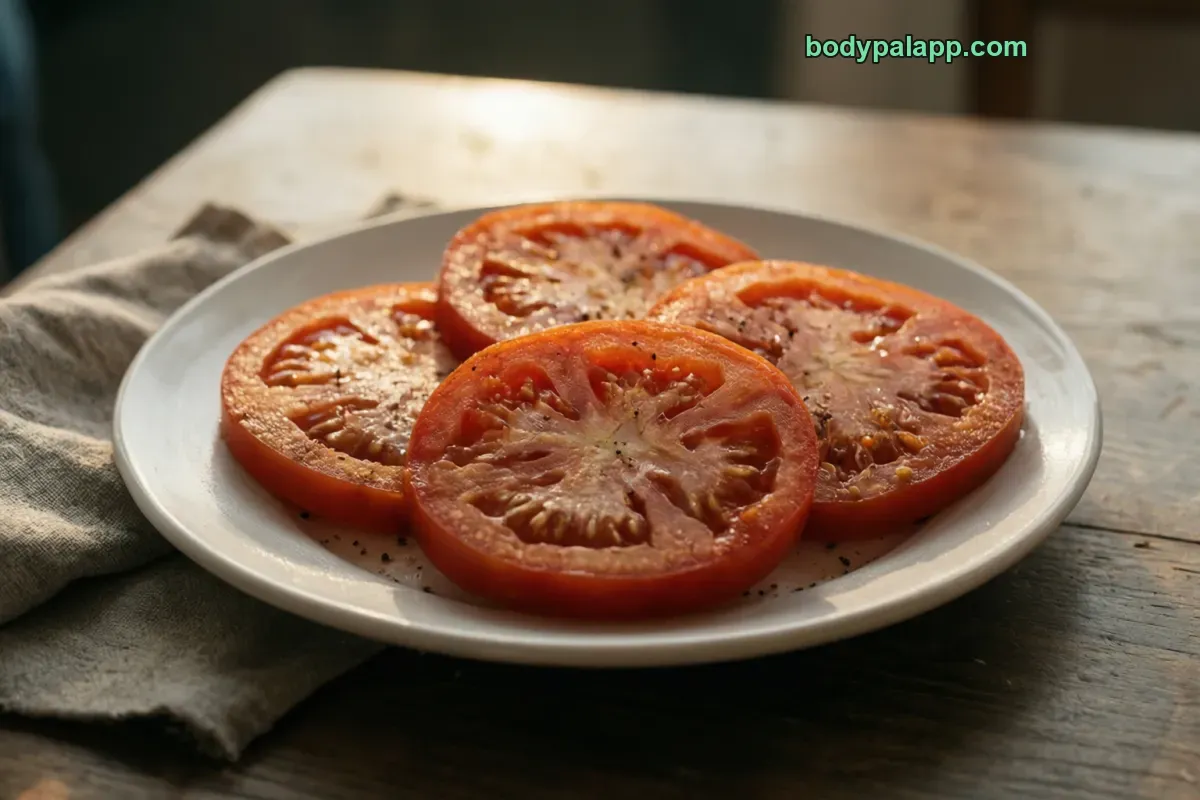
Tomato slice calories come to 4 for 1 medium slice (20 g) and 18 per 100 g of red, ripe, raw tomato. The number to notice is how little the stack moves: a full cup sliced (180 g) is still only 32 calories. The bread, cheese or dressing around the tomato decides your total, not the tomato.
4kcal
1 medium slice · 20 g, red, ripe, raw
17%protein
0.2 gProtein
1 gCarbs
0 gFat
How to burn off 4 kcal
—Walking, brisk
—Jogging
—Cycling, moderate
—Swimming
Skip the math. BodyPal counts these calories from your steps and workouts automatically.
Nutrition facts
Red, ripe, raw · per 20 g
Calories
4 kcal
Protein
0.2 g
Carbohydrate
0.8 g
Fat
0 g
Saturated fat
0 g
Cholesterol
0 mg
Sodium
1 mg
Potassium
47 mg
Iron
0.1 mg
Source: USDA FoodData Central
🛡️
Verified nutrition data
Numbers on this page come from USDA FoodData Central, the U.S. Department of Agriculture’s food composition database, and from manufacturer labels where a branded product is named. Last verified September 2026. How we verify our data →
Tomato slice: calories, protein and sodium by serving
Percent of daily value uses the FDA reference of 2,000 kcal a day.
Serving
kcal
Protein
Carbs
Fat
Sodium
% DV kcal
1 medium slice (20 g)
4
0.2 g
0.8 g
0 g
1 mg
0%
1 cup sliced (180 g)
32
1.6 g
7 g
0.4 g
9 mg
2%
100 g
18
0.9 g
3.9 g
0.2 g
5 mg
1%
3 × 1 medium slice (20 g)
11
0.5 g
3 mg
5 × 1 medium slice (20 g)
18
0.9 g
5 mg
A full cup of slices is only 32 calories
A medium slice weighs about 20 g and carries 4 calories. Two slices on a sandwich add 7, three add 11, and five slices, roughly 100 g of tomato, add 18. The steps look uneven because each total is worked out from the gram weight and then rounded, not multiplied from the single slice.
Scale up to a cup sliced (180 g) and you land at 32 calories, about 2% of the daily value for energy. That cup brings 1.6 g of protein, 7 g of carbs and 0.4 g of fat. Few foods let you pile a plate this high for so little, and fewer still taste this good doing it.
So portion size is the wrong worry here. A thin slice versus a thick one changes the total by a calorie or so, which no scale or app will meaningfully catch. The mayo, cheese, bun or dressing sitting next to the tomato is where the real numbers live. Log the tomato for completeness, then spend your attention on everything else in the meal.
Three quarters of the calories come from carbs
Per 100 g, raw tomato has 3.9 g of carbs, 0.9 g of protein and 0.2 g of fat. Run that through the calorie math and carbs supply 75% of the energy, protein 17% and fat 9%. Saturated fat and cholesterol both read 0, so there is nothing hiding in the fat column.
Of those carbs, 2.6 g per 100 g are sugars and 1.2 g are fiber. On a single slice that shrinks to 0.8 g of carbs, 0.5 g of sugars and 0.2 g of fiber, small enough to disappear on most tracking plans. A cup sliced carries 4.7 g of sugars and 2.2 g of fiber, which is the portion where these rows start to register at all.
The protein share deserves a second look. A 17% share sounds respectable until you see the grams: 0.2 g per slice and 1.6 g per cup. Percentages flatter very low-calorie foods, because a small number of grams makes up a large slice of a tiny total. Tomato is not a protein source, and nothing in its profile pretends to be.
Sodium is close to zero, potassium is the real mineral row
Raw tomato has 5 mg of sodium per 100 g. A slice carries 1 mg and a full cup sliced 9 mg, and both round to 0% of the daily value. If you track sodium, fresh tomato is about as low as a vegetable gets, and you can use it freely without watching that row.
Potassium tells a different story. The same 100 g holds 237 mg of potassium, far more than its sodium figure. Of all the mineral rows on this label, it is the one that actually shows up in the numbers.
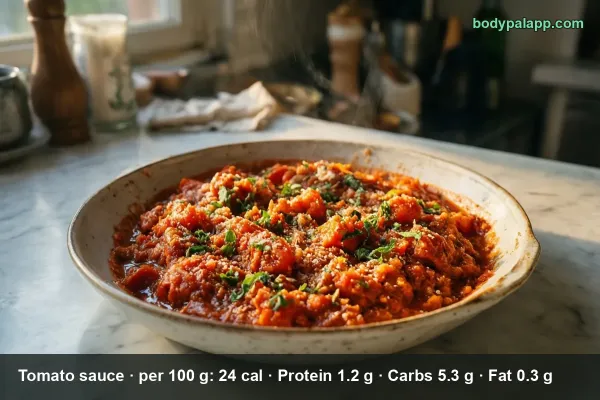
The catch is what happens after slicing. A pinch of salt on top, a salty dressing or a switch to processed tomato products changes the sodium row far more than the tomato itself ever will. Tomato sauce, for example, lists 11 mg per 100 g, still low but more than double the raw fruit. If sodium matters to you, judge the plate by its seasonings and sauces, not by the slices.
Tomato adds volume, so pair it with protein and fat
With 0.2 g of protein and 0 g of fat per slice, tomato will not keep you full on its own. Its job is volume, color and a sharp, acidic bite on a plate that gets its staying power from somewhere else.
Classic pairings do that work: eggs, cottage cheese, fresh mozzarella, tuna, sliced turkey or a drizzle of olive oil. Those foods bring the protein and fat that tomato lacks, and they also bring most of the calories. Weigh or measure them before you bother weighing the tomato, because a small error there costs far more than a whole extra slice.
If you are trimming calories, tomato slices are an easy way to make a sandwich or salad look fuller without adding much to the total. If you are fueling a long, active day, treat them as the garnish they are and build the meal around denser foods. Snap a photo and BodyPal can log the slices along with everything else on the plate.
How does tomato slice compare?
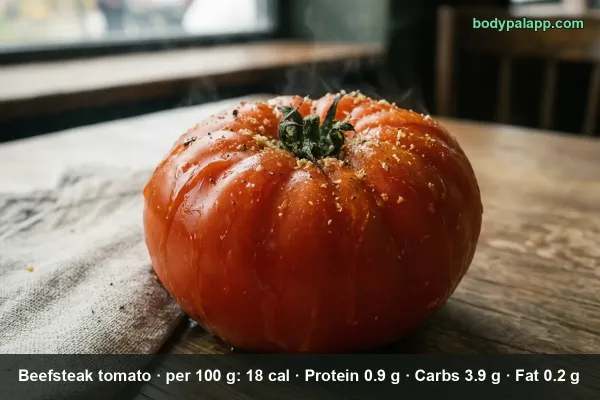
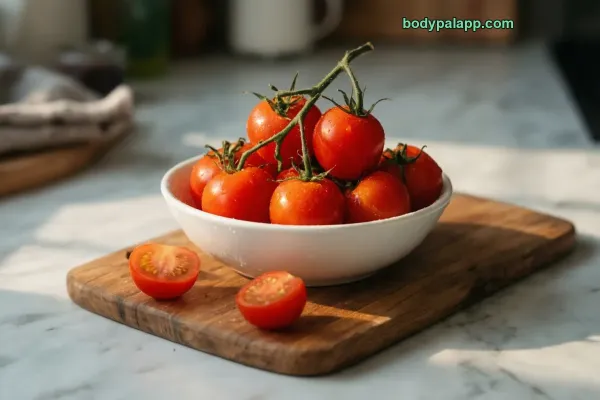
Here is how a tomato slice stacks up against beefsteak tomato, cherry tomato and tomato sauce, per 100 g and per usual serving.
Verdict: Sliced tomato and beefsteak tomato are identical on paper at 18 calories per 100 g, so pick whichever slices better for your sandwich. Cherry tomatoes run about 1.5 times as dense at 27 per 100 g and tomato sauce lands at 24 with 11 mg of sodium, so for the lightest plate stick with fresh slices.
Tomato slice FAQs
How many calories are in one tomato slice?
A medium raw tomato slice, about 1/4 inch thick (20 g), has about 4 calories.
Are tomato slices good for weight loss?
Raw tomato has 18 calories and 1.2 g of fiber per 100 g, so a full cup of slices (180 g) comes to 32 calories.
Tomato slice vs cherry tomato: which has fewer calories?
Sliced red tomato has 18 calories per 100 g, compared with 27 per 100 g for cherry tomatoes.
How many carbs are in a tomato slice?
A medium slice (20 g) has 0.8 g of carbs, including 0.5 g of sugars. A cup of slices has 7.0 g of carbs.
How many calories are in a cup of sliced tomatoes?
A cup of sliced tomatoes (180 g) has 32 calories. It also brings 1.6 g of protein, 7 g of carbs, 0.4 g of fat and 2.2 g of fiber, about 2% of the daily value for calories.
What is the nutrition of one tomato slice?
One medium slice (20 g) has 4 calories, 0.2 g of protein, 0.8 g of carbs and 0 g of fat. It adds 0.5 g of sugars, 0.2 g of fiber and just 1 mg of sodium.
How many calories do a few tomato slices add to a sandwich?
Two medium slices add 7 calories and three add 11. Even five slices, about 100 g of tomato, come to only 18 calories, so the bread and fillings matter far more.
How many calories are in 4 slices of tomato?
Four medium slices fall between the 11 calories for three slices and the 18 for five, so comfortably under 20. That is still a tiny share of any meal built around them.