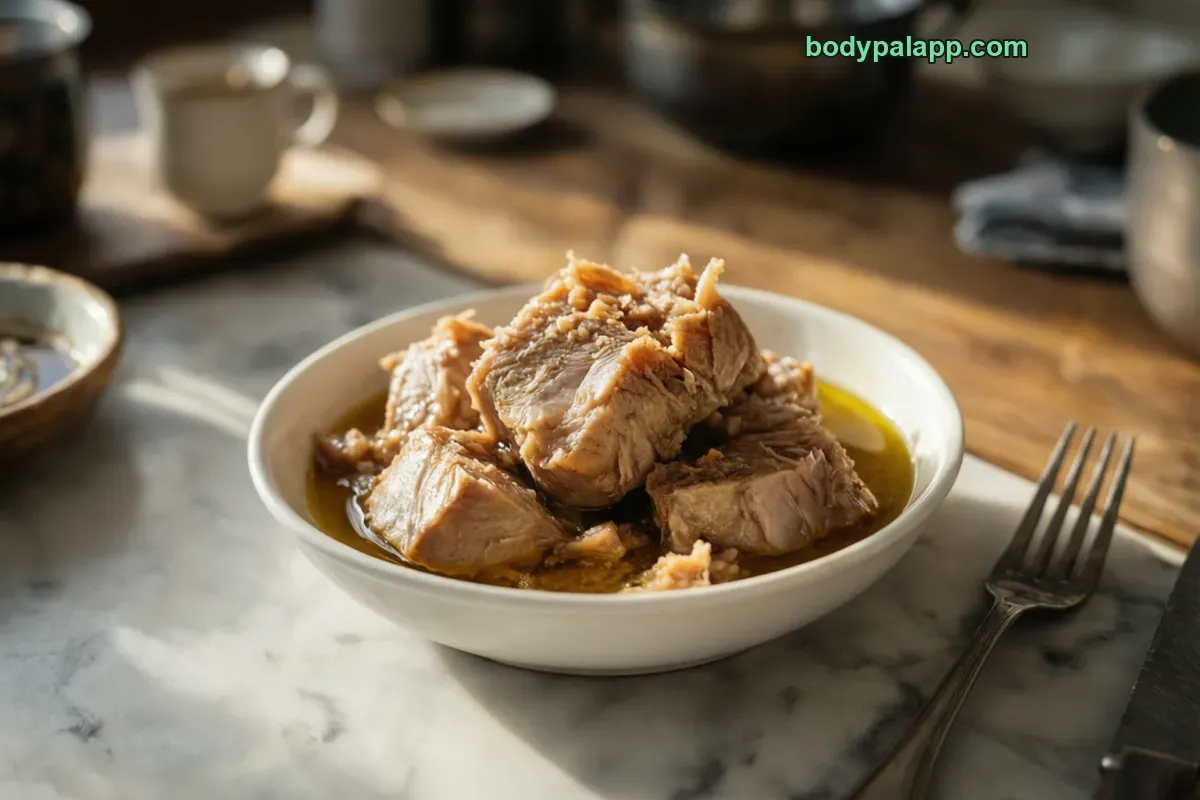
Tuna in oil calories come to 339 for one drained can (171 g) and 198 per 100 g. Protein is the headline: a single can carries 49.8 g, which is 100% of the daily value. Fat supplies the other 39% of the calories, so the oil still counts even after you drain it.
339kcal
1 can, drained · 171 g, light, canned, drained
61%protein
50 gProtein
0 gCarbs
14 gFat
How to burn off 339 kcal
—Walking, brisk
—Jogging
—Cycling, moderate
—Swimming
Skip the math. BodyPal counts these calories from your steps and workouts automatically.
Nutrition facts
Light, canned, drained · per 171 g
Calories
339 kcal
Protein
50 g
Carbohydrate
0 g
Fat
14 g
Saturated fat
2.6 g
Cholesterol
31 mg
Sodium
711 mg
Potassium
354 mg
Iron
2.4 mg
Source: USDA FoodData Central
🛡️
Verified nutrition data
Numbers on this page come from USDA FoodData Central, the U.S. Department of Agriculture’s food composition database, and from manufacturer labels where a branded product is named. Last verified September 2026. How we verify our data →
Tuna in oil: calories, protein and sodium by serving
Percent of daily value uses the FDA reference of 2,000 kcal a day.
Serving
kcal
Protein
Carbs
Fat
Sodium
% DV kcal
1 can, drained (171 g)
339
49.8 g
0 g
14 g
711 mg
17%
3 oz portion (85 g)
168
24.8 g
0 g
7 g
354 mg
8%
White tuna, 1 can (178 g)
331
47.2 g
0 g
14.4 g
705 mg
17%
100 g
198
29.1 g
0 g
8.2 g
416 mg
10%
3 × 1 can, drained (171 g)
1,016
149.4 g
2,134 mg
5 × 1 can, drained (171 g)
1,693
249.1 g
3,557 mg
One drained can is a 339-calorie meal
A full can of light tuna in oil, drained, weighs 171 g and lands at 339 calories. That is 17% of a 2000-calorie daily value in one sitting, about what many people eat at lunch. Stop at a 3 oz portion (85 g) and you are at 168 calories, roughly half the can, with 24.8 g of protein still on the plate.
The totals climb fast when cans stack up. Two drained cans come to 677 calories and 99.6 g of protein. Three cans reach 1,016 calories, and five cans hit 1,693. Few people eat five at once, but meal preppers who make a big batch of tuna salad should know where that bowl starts before mayo goes in.
The simplest move is deciding up front whether the can is one serving or two. Split it, and each half sits near the 3 oz numbers. Eat it whole, and plan the rest of the meal around a 339-calorie base.
Protein is 61% of the calories, fat the rest
Every calorie in drained tuna in oil comes from protein or fat. The split is 61% protein and 39% fat, with 0 g of carbs, 0 g of sugars and 0 g of fiber. Per 100 g you get 29.1 g of protein and 8.2 g of fat, of which 1.5 g is saturated.
That fat is the reason this can lands far above tuna packed in water. The fish itself is lean; the oil it sits in soaks into the flesh, and draining only removes the loose part. So a can of oil-packed tuna holds 14 g of fat, while the protein stays close to what you would expect from the fish alone.
For anyone counting protein, the trade-off is clear. You get 49.8 g of protein per can, enough to cover the full daily value, at the cost of a moderate fat load. If fat is the macro you are squeezing, this is the version to swap; if you need more energy from a small, filling portion, the oil helps.
Sodium is the row to watch
Canned tuna is salted, and the oil-packed light version carries 416 mg of sodium per 100 g. One drained can delivers 711 mg, which is 31% of the daily value before you add bread, cheese, pickles or dressing. A 3 oz portion sits at 354 mg, or 15%.
Multiples push this number harder than calories. Two cans reach 1,423 mg of sodium, and three cans come to 2,134 mg, close to a full day's daily value from tuna alone. That matters most for big-batch tuna salad and for anyone who eats a can at lunch every day.
If you watch sodium, look at what goes around the tuna. Crackers, deli bread and salty condiments add up quickly, while fresh vegetables, lemon and herbs add flavor without much sodium. Cholesterol, by comparison, is low at 18 mg per 100 g, and potassium comes in at 207 mg.
Light and white cans land close, so portion matters more
The numbers on this page are for light tuna canned in oil and drained, matching the USDA row for light tuna in oil, drained solids. A can of white tuna in oil (178 g) comes to 331 calories, 47.2 g of protein, 14.4 g of fat and 705 mg of sodium. The difference between light and white is small; the difference between a half can and a whole can is not.
Because there are no carbs here, tuna in oil pairs naturally with foods that bring fiber and volume. A big salad, a whole-grain wrap, white beans or roasted vegetables turn a can into a balanced plate. The oil already supplies fat, so a heavy mayo dressing doubles down on the macro you already have.
Brands such as Van Camp's Tuna in Oil, Schnucks Chunk Light Tuna in Oil and Molinera White Tuna in Oil sit in this category; check the label for your exact can. If you want to log it fast, BodyPal can record the food from a photo of your plate.
How does tuna in oil compare?
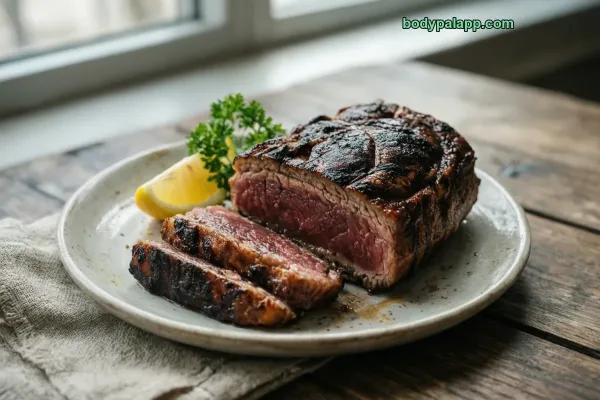
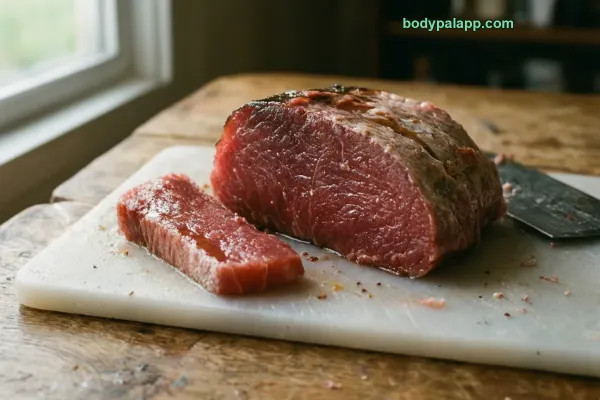
Here is how drained tuna in oil compares with tuna canned in water, grilled tuna steak and raw tuna, per 100 g and per usual serving.
Verdict: For weight loss, tuna canned in water wins: 142 calories per can and 86 per 100 g against 198 for the oil-packed version, with 19.4 g of protein per 100 g. For the most protein per calorie pick grilled tuna steak, at 29.2 g of protein for 130 calories per 100 g and only 54 mg of sodium.
Most popular tuna in oil brands in the United States
Ranked by popularity in the BodyPal database
# Productkcal / 100 g
1Royal Pacific Chunk Light Tuna in Oil56 g143 kcal
2Atun Ecuador Tuna in Oil2 oz · 56 g148 kcal
3Schnucks Chunk Light Tuna in Oil2 oz · 56 g161 kcal
4Eatwell Brand Chunk White Tuna in Oil2 oz · 56 g286 kcal
5Van Camp's Tuna in Oil2.2 oz · 62 g258 kcal
6Gonzalez Tuna in Oil1/4 cup · 56 g161 kcal
7Molinera White Tuna in Oil2 oz · 55 g164 kcal
8Ecuafood Solid Tuna in Oil1.8 oz · 52 g156 kcal
Labels count the product as packed, and the amount of oil kept or drained varies, so their numbers differ from the drained solids figures above. Source: manufacturer labels / USDA FoodData Central.
Tuna in oil FAQs
How many calories are in a can of tuna in oil?
A drained can of light tuna in oil (171 g) has about 339 calories, and a 3 oz portion has 168.
Is tuna in oil good for weight loss?
Drained tuna in oil has 198 calories per 100 g, with 29.1 g protein, 8.2 g fat and 0 g carbs.
Light vs white tuna in oil: which has fewer calories?
White tuna in oil has 186 calories per 100 g drained, light tuna in oil has 198. A can is 331 calories for white (178 g) and 339 for light (171 g).
How much protein is in a can of tuna in oil?
A drained 171 g can of light tuna in oil has about 49.8 g protein and 14.0 g fat. A 3 oz portion has 24.8 g protein.
Are these tuna in oil calories for drained tuna?
Yes. The 339 calories per can (171 g) and 198 per 100 g are for drained solids. If you also eat the oil left in the can, the total goes higher than these figures.
How many calories are in tuna flakes in oil?
Light tuna in oil, drained, has 198 calories per 100 g, whatever the cut, with 29.1 g of protein and 8.2 g of fat. Flakes, chunks and solid packs differ mainly in texture, so check the label for your brand.
How many more calories does oil add compared with water-packed tuna?
A drained can of tuna in oil has 339 calories against 142 for a can of tuna in water. Per 100 g it is 198 versus 86, and nearly all of that gap comes from fat.
How much fat is in a can of tuna in oil?
A drained can (171 g) holds 14 g of fat, and fat makes up 39% of its calories. Per 100 g there are 8.2 g of fat, including 1.5 g of saturated fat.
How many calories are in a 3 oz serving of tuna in oil?
A 3 oz portion (85 g) of drained tuna in oil has 168 calories, 24.8 g of protein, 7 g of fat and 354 mg of sodium, which is 15% of the daily value.