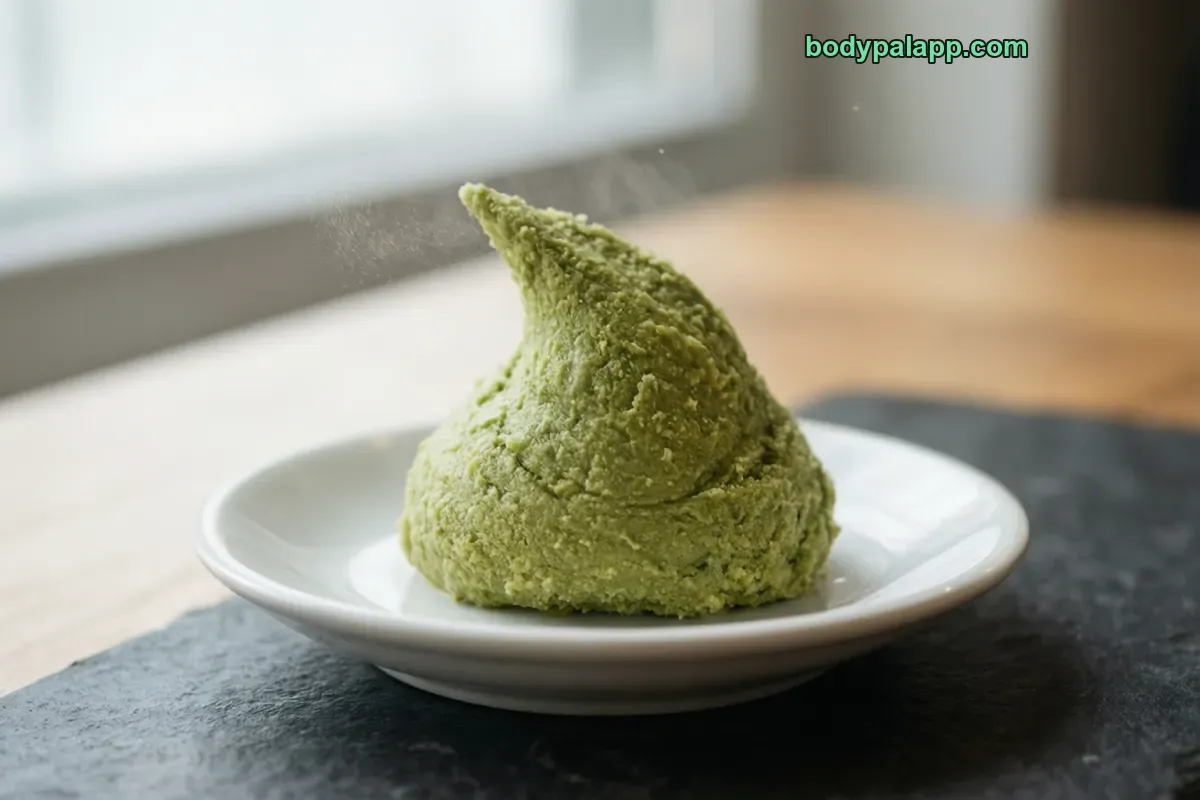
Wasabi calories come to 19 for 1 teaspoon (6.5 g) of prepared paste and 292 per 100 g. That per-100 g figure looks alarming, but nobody eats wasabi by the cup. The number that matters at the table is sodium: 220 mg in a single teaspoon, or 10% of the daily value.
19kcal
1 teaspoon · 6 g, prepared paste
3%protein
0.1 gProtein
3 gCarbs
0.7 gFat
How to burn off 19 kcal
—Walking, brisk
—Jogging
—Cycling, moderate
—Swimming
Skip the math. BodyPal counts these calories from your steps and workouts automatically.
Nutrition facts
Prepared paste · per 6 g
Calories
19 kcal
Protein
0.1 g
Carbohydrate
3 g
Fat
0.7 g
Saturated fat
0.1 g
Cholesterol
0 mg
Sodium
220 mg
Potassium
12 mg
Iron
0 mg
Source: USDA FoodData Central
🛡️
Verified nutrition data
Numbers on this page come from USDA FoodData Central, the U.S. Department of Agriculture’s food composition database, and from manufacturer labels where a branded product is named. Last verified October 2026. How we verify our data →
Wasabi: calories, protein and sodium by serving
Percent of daily value uses the FDA reference of 2,000 kcal a day.
Serving
kcal
Protein
Carbs
Fat
Sodium
% DV kcal
1 teaspoon (6.5 g)
19
0.1 g
3 g
0.7 g
220 mg
1%
1 tablespoon (20 g)
58
0.4 g
9.2 g
2.2 g
678 mg
3%
Dab for 1 sushi piece (2 g)
6
0 g
0.9 g
0.2 g
68 mg
0%
100 g
292
2.2 g
46.1 g
10.9 g
3,390 mg
15%
3 × 1 teaspoon (6.5 g)
57
0.4 g
661 mg
5 × 1 teaspoon (6.5 g)
95
0.7 g
1,102 mg
A teaspoon of wasabi is 19 calories
Wasabi is a condiment, so the serving decides everything. The small dab you smear on 1 sushi piece weighs about 2 g and carries 6 calories. A level teaspoon (6.5 g) is 19 calories, and a full tablespoon (20 g) reaches 58. Most people land somewhere between the dab and the teaspoon.
The total climbs quickly only when you keep going back to the mound on your plate. Two teaspoons come to 38 calories, three teaspoons to 57, and five teaspoons, or 33 g, to 95. Even that heavy hand is less than a single tablespoon of many dressings, so calories are rarely the reason to cut back on wasabi.
The 292 figure per 100 g is useful for comparison, not for logging. If you track a sushi dinner, log the wasabi as a teaspoon or a few dabs rather than skipping it. BodyPal can log it from a photo of the plate along with the rolls.
Carbs supply 63% of the calories
Prepared wasabi paste is mostly carbohydrate. Per 100 g it has 46.1 g of carbs, 10.9 g of fat and only 2.2 g of protein. Split by calories, that is 63% from carbs, 34% from fat and just 3% from protein. This is not a protein source in any meaningful way: a teaspoon gives you 0.1 g.
The fat share surprises people who expect a pure root paste. Commercial paste is a blended product, and the USDA row reflects that, with 2 g of saturated fat per 100 g and 0 mg of cholesterol. Per teaspoon, the fat is 0.7 g, which barely registers in a day.
Sugars sit at 13.2 g per 100 g, and fiber at 6.1 g. At a teaspoon you get 0.9 g of sugar and 0.4 g of fiber. Neither number will move your totals, but if you count carbs strictly, a tablespoon brings 9.2 g of carbs, which is worth logging.
Sodium is the row to watch
Here is where wasabi stops being trivial. Prepared paste carries 3,390 mg of sodium per 100 g, which is 147% of the daily value. You will never eat 100 g, but the density shows up even in small amounts: 220 mg per teaspoon (10% DV) and 678 mg per tablespoon (29% DV).
Spoon size changes the picture fast. Two teaspoons hold 441 mg, three hold 661 mg, and five teaspoons reach 1,102 mg. That is a lot of salt for something that adds under 100 calories. The sushi dab is far milder, at 68 mg or 3% DV.
Wasabi rarely travels alone. It usually shares the plate with soy sauce, pickled ginger and seasoned rice, so the sodium stacks. If you watch sodium, treat the wasabi as a measured dab per piece and go easy on the soy sauce dip rather than cutting the wasabi first.
Wasabi works best as a measured accent
Because the calories are low and the heat is strong, a little wasabi can add a lot of flavor to lean foods. A dab on sashimi, plain grilled fish, steamed vegetables or a rice bowl brings punch for 6 calories. Mixed into a light dressing or mashed into avocado, a teaspoon spreads across a whole dish for 19 calories.
The trade-off is sodium, not energy. If your meal already includes salty sauces, let the wasabi replace one of them instead of adding to them. Potassium is low at 182 mg per 100 g, so the paste does not offset its own salt in any useful way.
One note on searches: wasabi peas are a separate snack made from coated dried peas, and their numbers are not the same as this paste. This page covers prepared wasabi paste only, so check the snack's own label for its calories and protein.
How does wasabi compare?
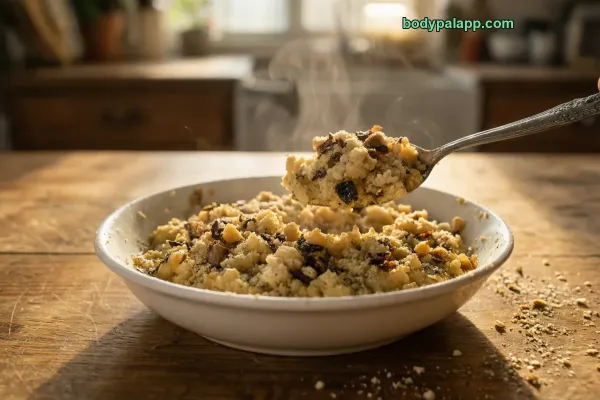
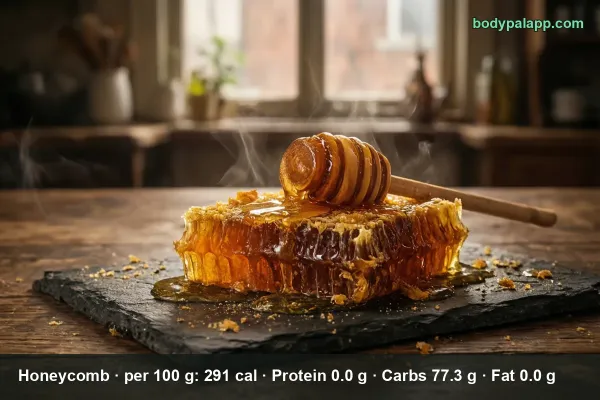
Here is how prepared wasabi paste stacks up against honey mustard, onion soup mix and honeycomb, per 100 g and per usual serving.
Verdict: Per 100 g, wasabi at 292 calories is in the same range as onion soup mix at 293 and honeycomb at 291, but by the spoon it is the leanest choice: a teaspoon is 19 calories against 41 for a tablespoon of honey mustard. If sodium is your priority, honey mustard at 509 mg per 100 g beats wasabi at 3,390 mg, and onion soup mix at 8,031 mg is the one to avoid.
Most popular wasabi brands in the United States
Ranked by popularity in the BodyPal database
# Productkcal / 100 g
1Kameya Wasabi1 tsp · 10 g230 kcal
2MW Polar Wasabi1 tsp · 5 ml400 kcal
3Ace Wasabi1 tsp · 5 g300 kcal
Packaged wasabi is sold as prepared paste or powder, often with added horseradish, sugar or starch, so label values differ from fresh wasabi root. Source: manufacturer labels / USDA FoodData Central.
Wasabi FAQs
How many calories are in wasabi?
A teaspoon of wasabi paste (6.5 g) has 19 calories, and a tablespoon (20 g) has 58.
Is wasabi good for weight loss?
The dab served with one piece of sushi (2 g) adds about 6 calories, so the small amount eaten matters more than the 292 calories per 100 g. It is salty: 3,390 mg sodium per 100 g, about 220 mg per teaspoon.
Wasabi vs honey mustard: which has fewer calories?
Per 100 g, wasabi paste has 292 calories and honey mustard 275. At a 6.5 g teaspoon that is 19 versus 18 calories.
How many carbs are in wasabi?
Wasabi paste has 46.1 g of carbs per 100 g, including 13.2 g sugar. A teaspoon has 3.0 g carbs and 0.9 g sugar.
How many calories are in a tablespoon of wasabi?
A tablespoon (20 g) of prepared wasabi paste has 58 calories. It also carries 678 mg of sodium, which is 29% of the daily value, so the salt matters more than the calories at this size.
How much sodium is in wasabi?
Prepared wasabi has 3,390 mg of sodium per 100 g, or 147% of the daily value. A teaspoon has 220 mg (10% DV), and the small dab for 1 sushi piece has 68 mg.
How many calories are in the wasabi served with sushi?
The dab used for 1 sushi piece weighs about 2 g and has 6 calories. A full teaspoon on the side of the plate comes to 19 calories.
Does wasabi have protein?
Barely. Wasabi paste has 2.2 g of protein per 100 g, and protein supplies only 3% of its calories. A teaspoon gives 0.1 g, so it adds flavor, not protein.
Is wasabi high in sugar?
Per 100 g, prepared wasabi has 13.2 g of sugars, but a teaspoon holds only 0.9 g. Even a tablespoon has 2.6 g, so at normal portions sugar is a minor line.