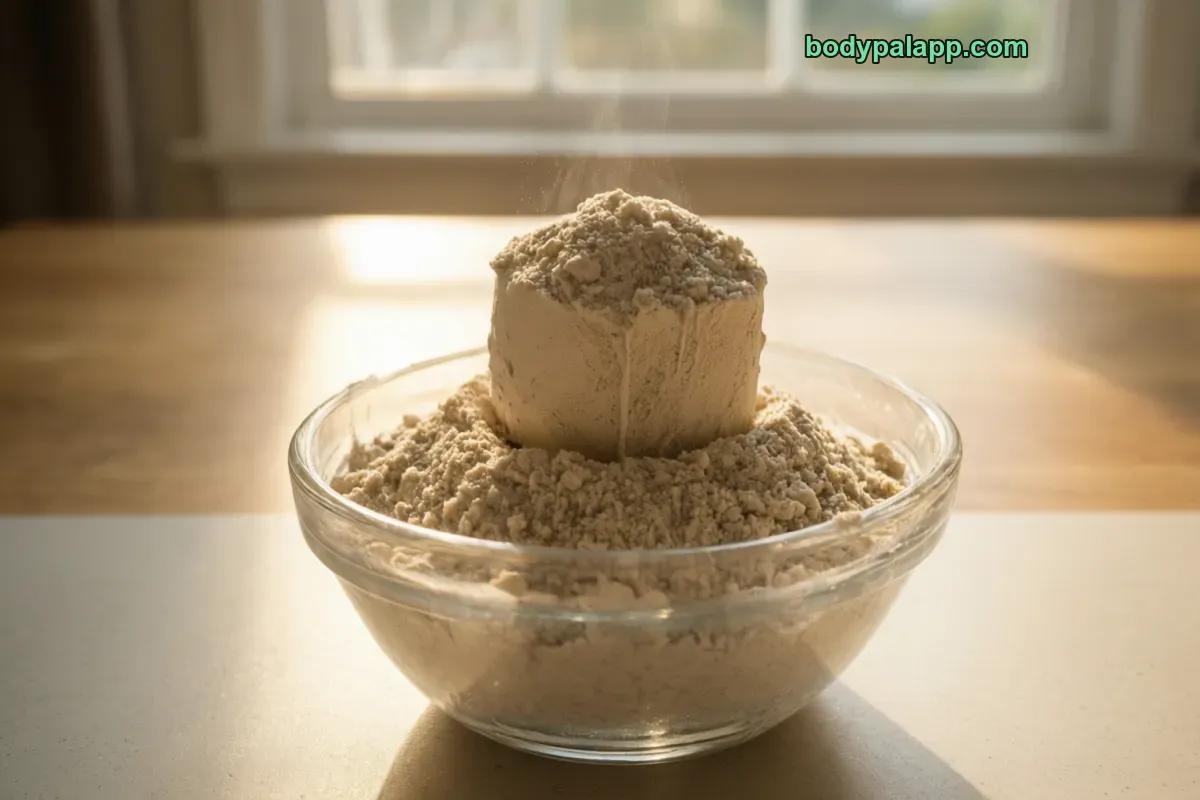
Whey protein calories come to 113 for a 1/3 cup (32 g) scoop of powder and 352 per 100 g. Nearly all of that is protein: 25 g per scoop, or 89% of the calories. The total stays low until you add milk, fruit or a second scoop. That is where shakes get heavy.
113kcal
1 1/3 cup serving · 32 g, powder, whey based
89%protein
25 gProtein
2 gCarbs
0.5 gFat
How to burn off 113 kcal
—Walking, brisk
—Jogging
—Cycling, moderate
—Swimming
Skip the math. BodyPal counts these calories from your steps and workouts automatically.
Nutrition facts
Powder, whey based · per 32 g
Calories
113 kcal
Protein
25 g
Carbohydrate
2 g
Fat
0.5 g
Saturated fat
0.2 g
Cholesterol
5 mg
Sodium
50 mg
Potassium
160 mg
Iron
0.4 mg
Source: USDA FoodData Central
🛡️
Verified nutrition data
Numbers on this page come from USDA FoodData Central, the U.S. Department of Agriculture’s food composition database, and from manufacturer labels where a branded product is named. Last verified October 2026. How we verify our data →
Whey protein: calories, protein and sodium by serving
Percent of daily value uses the FDA reference of 2,000 kcal a day.
Serving
kcal
Protein
Carbs
Fat
Sodium
% DV kcal
1/3 cup (32 g)
113
25 g
2 g
0.5 g
50 mg
6%
1 oz (28 g)
99
21.9 g
1.8 g
0.4 g
44 mg
5%
100 g
352
78.1 g
6.3 g
1.6 g
156 mg
18%
3 × 1/3 cup (32 g)
338
75 g
150 mg
5 × 1/3 cup (32 g)
563
125 g
250 mg
One scoop is 113 calories, three are 338
The standard serving on this page is 1/3 cup, or 32 g of powder. It carries 113 calories and 25 g of protein. That single scoop covers 50% of the daily value for protein but only 6% of a 2000-calorie reference day. Few foods give you that much protein for so little energy.
Scoops add up in a straight line. Two scoops (64 g) bring 225 calories and 50 g of protein. Three scoops (96 g) reach 338 calories and 75 g, and five scoops (160 g) hit 563 calories with 125 g of protein. Few people need five in one shake. Mix a big bottle for the whole day, though, and you can get there without noticing.
If you weigh instead of scooping, 1 oz (28 g) is 99 calories and 21.9 g of protein. Scoop sizes vary between tubs, so a kitchen scale gives you a cleaner number than the plastic scoop. A heaping scoop can easily run past 32 g, and the calories follow.
Nearly every calorie is protein
Per 100 g, whey powder holds 78.1 g of protein, 6.3 g of carbs and 1.6 g of fat. In the calorie split, protein supplies 89% of the energy, carbs 7% and fat 4%. That is about as lopsided as a nutrition label gets.
The fat barely registers: 0.5 g per scoop, with saturated fat at 0.8 g per 100 g. Carbs are just as small at 2 g per scoop, and the USDA row lists 0 g of sugars. Flavored tubs with sweeteners or cocoa may shift those rows a little, so check the label of the brand you buy.
That lopsided split is the whole appeal. You get a large dose of protein while spending about as many calories as a snack. The catch is that powder alone has almost no fat or carbs to round out a meal. The rest of your plate has to supply those.
Sugar is zero and sodium stays small
Packaged drinks often go wrong on sugar or sodium. Whey powder doesn't. One scoop has 0 g of sugars, 50 mg of sodium and 1 g of fiber. Against the 2300 mg daily value, that sodium is 2%, so your shake is not where your salt comes from.
Per 100 g, the powder has 156 mg of sodium, 16 mg of cholesterol and 500 mg of potassium. Even at three scoops you reach only 150 mg of sodium. A chocolate shake has 111 mg per 100 g, and that comes with 21.2 g of carbs the powder does not have.
Fiber is a small bonus at 3.1 g per 100 g. Don't count on whey powder to cover that row. It is a protein source and very little else, which is exactly why it is easy to fit around other foods.
What you mix it with sets the real total
The 113 calories on this page are for the powder alone. Shaken with water, that is the whole count. Milk, juice, nut butter, oats and bananas all add their own calories, and a blended shake can end up at several times the powder's number.
If you want the leanest shake, use one scoop with water or ice. If the shake replaces a meal, adding fruit and a carb source makes it more complete, since the powder brings only 2 g of carbs. Log each add-in separately so the total matches what you drank. BodyPal can log the shake from a photo if you would rather not type it in.
Brands on this page include Optimum Nutrition Gold Standard, Premier Protein, MRM Nutrition and Alani Nu. Their flavors and formulas differ, so compare each label with these USDA values before assuming a scoop is 113 calories.
How does whey protein compare?
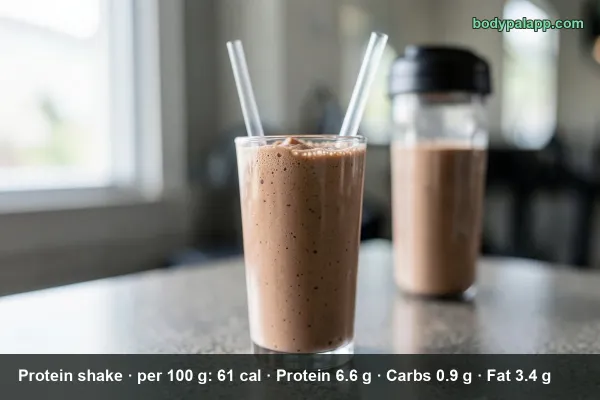
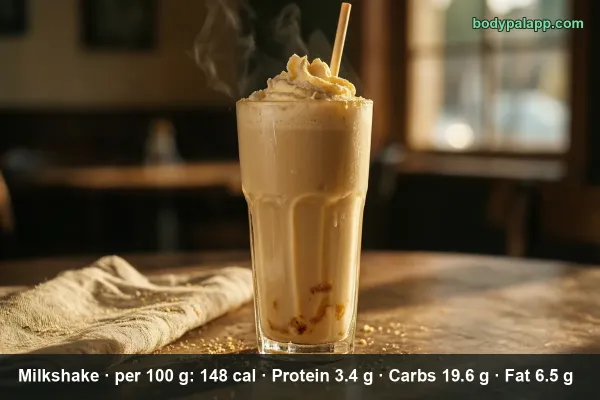
Here is how whey protein powder compares with a ready-made protein shake, a milkshake and a chocolate shake, per 100 g and per usual serving.
Verdict: Gram for gram, whey powder is the most calorie-dense item here at 352 per 100 g, but it is the only one that delivers 78.1 g of protein, while the milkshake has 3.4 g and the chocolate shake 3.1 g. For protein per calorie, pick whey or the protein shake at 6.6 g per 100 g. If weight loss is the goal, skip the milkshake and the 357-calorie chocolate shake.
Most popular whey protein brands in the United States
Ranked by popularity in the BodyPal database
# Productkcal / 100 g
1Optimum Nutrition Gold Standard 100% Whey Protein Drink, Vanilla1 carton · 325 ml46 kcal
The ready-to-drink carton is labeled per volume of liquid, so it reads far lower than the dry powder numbers above. Source: manufacturer labels / USDA FoodData Central.
Whey protein FAQs
How many calories are in a scoop of whey protein?
A 1/3 cup (32 g) serving of whey protein powder has about 113 calories, and 100 g has 352.
Is whey protein good for weight loss?
A 32 g serving gives 25 g of protein for 113 calories, with 2 g of carbs and 0.5 g of fat.
Whey protein vs protein shake: which has more calories?
Dry whey powder has 352 calories per 100 g, while a ready-made protein shake has 61 per 100 g because it is mostly liquid.
How much protein is in whey protein?
Whey protein powder has 78.1 g of protein per 100 g, so a 32 g serving has 25 g.
How many calories are in a whey protein shake?
A whey protein shake made with one 1/3 cup (32 g) scoop and water has 113 calories, since water adds none. Two scoops bring it to 225. Milk, fruit or nut butter add their own calories on top.
What does USDA FoodData Central list for whey protein powder?
The USDA row 'Beverages, Protein powder whey based' (FDC 173180) lists 352 calories per 100 g. It also has 78.1 g of protein, 6.3 g of carbs, 1.6 g of fat and 156 mg of sodium.
Does whey protein have sugar?
No. The USDA values show 0 g of sugars per 1/3 cup (32 g) scoop, with 2 g of total carbs and 1 g of fiber. Flavored brands can differ, so read the label on your tub.
How much sodium is in whey protein?
One 1/3 cup (32 g) scoop has 50 mg of sodium, which is 2% of the 2300 mg daily value. Even three scoops add only 150 mg, so whey powder is a low-sodium protein source.
How many calories are in 1 oz of whey protein?
One ounce (28 g) of whey protein powder has 99 calories and 21.9 g of protein. That is 5% of a 2000-calorie day and 44% of the daily value for protein.