
How many calories are in a protein shake?
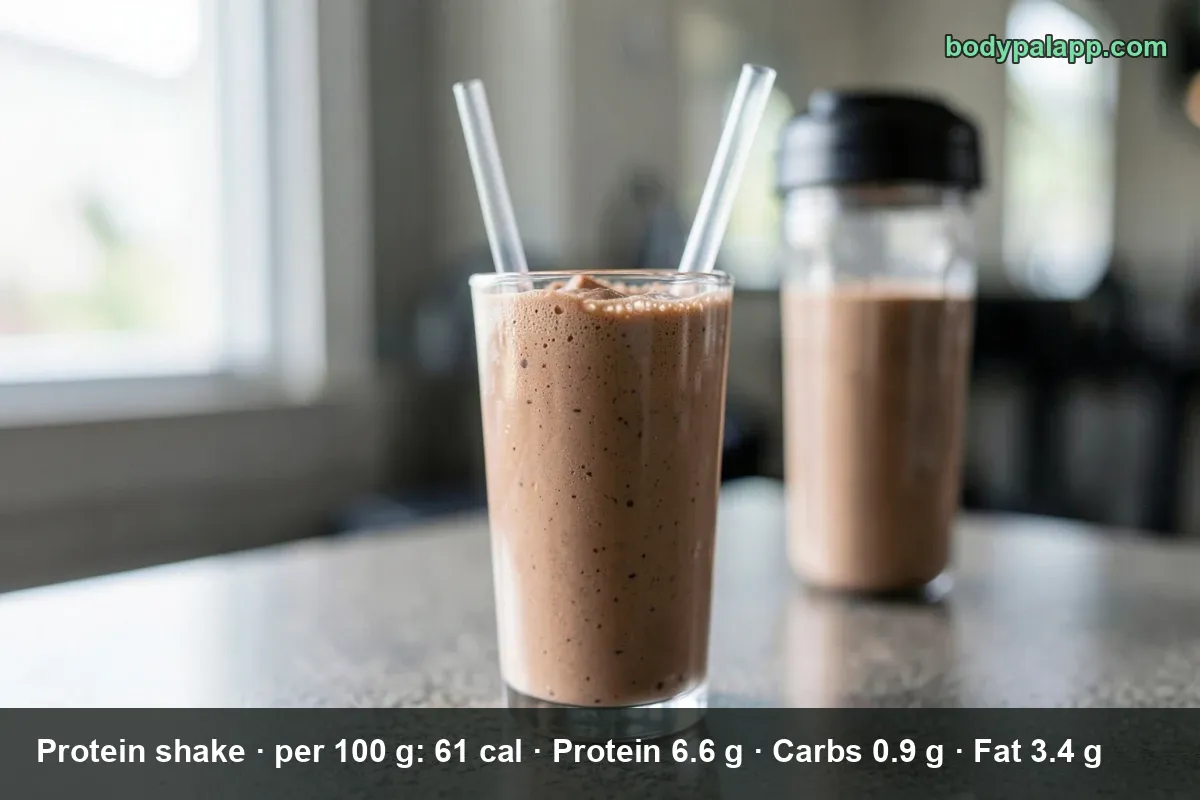
A 1-cup (256 g) serving of ready-to-drink protein shake carries 156 calories, and the liquid itself runs 61 calories per 100 g. The number that matters more sits one row down: 16.9 g of protein in that cup, 34% of a day's worth, for the calories of a small snack.
On this page
- Protein shake quick facts
- US servings, from a fluid ounce to a 14-ounce bottle
- Ready-to-drink, canned, light and powder
- Powder looks worse than it drinks
- Protein and sodium are the rows to watch
- How does a protein shake compare?
- Most popular protein shake brands
- FAQ
Protein shake quick facts
The row used here is the generic ready-to-drink one: FNDDS 2710726, "Nutritional drink or shake, high protein, ready-to-drink, NFS". It is the shake most people actually hold — a plastic bottle or a carton pulled from the cooler, already mixed — and it comes with household measures, so a cup and a bottle both have real weights behind them instead of a marketing serving.
Branded records exist for the same drink and land on the same profile, so nothing is gained by picking one label over another for the headline number. The powders are a different food entirely and get their own section below.
| Nutrient | Per 100 g | Per 1 cup (256 g) | % Daily Value |
|---|---|---|---|
| Calories | 61 | 156 | — |
| Total fat | 3.38 g | 8.7 g | 11% |
| Saturated fat | 0.51 g | 1.3 g | 7% |
| Carbohydrate | 0.85 g | 2.2 g | 1% |
| Dietary fiber | 0.4 g | 1.0 g | 4% |
| Total sugars | 0.6 g | 1.5 g | — |
| Protein | 6.59 g | 16.9 g | 34% |
| Sodium | 72 mg | 184 mg | 8% |
% Daily Value is based on a 2,000-calorie diet.
Verified nutrition data
Numbers on this page come from USDA FoodData Central, the U.S. Department of Agriculture’s food composition database, and from manufacturer labels where a branded product is named. Last verified September 2026. How we verify our data →
There is no added sugars row and no trans fat row here, because this FNDDS edition does not publish either for the record. Total sugars have no Daily Value at all, which is why that cell stays empty. Cholesterol is 4 mg per 100 g, or 10 mg in a cup (3% DV), and potassium is 179 mg per 100 g, or 458 mg in a cup (10% DV) — the drink is a better potassium source than most people expect from something that tastes like dessert.
US servings, from a fluid ounce to a 14-ounce bottle
| Serving | Weight | Calories |
|---|---|---|
| 1 fl oz | 32 g | 20 kcal |
| 1 oz | 28.4 g | 17 kcal |
| 1 cup | 256 g | 156 kcal |
| 1 bottle, 14 fl oz | 448 g | 273 kcal |
| 1 bottle or box, NFS | 544 g | 332 kcal |
| Per 100 g | 100 g | 61 kcal |
The cup, the fluid ounce and both bottle sizes are USDA household measures for this record. The 1 oz row is our own arithmetic from the USDA 100 g figure, not a USDA serving — it is there because scales weigh in ounces while bottles are sold in fluid ounces, and the two are not the same thing.
That distinction costs people calories. A fluid ounce of this shake weighs 32 g, not 28.4 g, so a 14 fl oz bottle is 448 g of liquid and 273 calories, not the 243 you would get by treating fluid ounces as weight ounces. Log the bottle, not the ounce count.
The big 20 fl oz bottles work out to 640 g and about 390 calories by the same scaling, and they carry roughly 42 g of protein — 84% of the Daily Value in one container.
Ready-to-drink, canned, light and powder
| Version | Per 100 g | Typical serving | Calories |
|---|---|---|---|
| Ready-to-drink protein shake | 61 kcal | 1 cup (256 g) | 156 kcal |
| SlimFast ready-to-drink shake | 61 kcal | 1 bottle (295 g) | 180 kcal |
| Canned protein shake, 11 fl oz | 61 kcal | 1 can (341 g) | 208 kcal |
| Light ready-to-drink shake | 138 kcal | 1 cup (248 g) | 342 kcal |
| High-protein shake mix, powder | 392 kcal | 1 serving (20 g) | 78 kcal |
| Whey shake mix, powder | 433 kcal | 1 scoop (26 g) | 113 kcal |
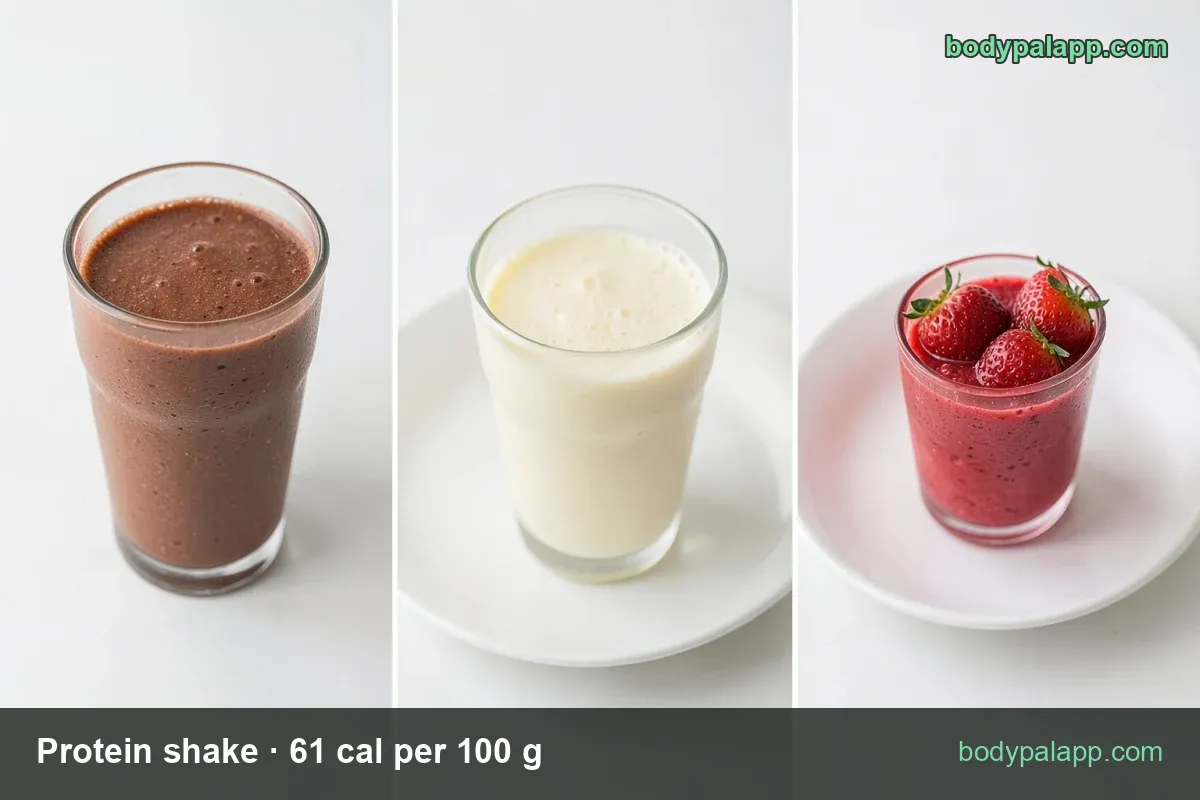
The first three lines are the same drink in different packaging: 61 calories per 100 g every time, with the container doing all the work. A meal-replacement bottle is 295 g and 180 calories. An 11 fl oz can weighs 341 g and comes to 208. Nothing about the formula changed — only how much of it you were handed.
The light shake is the trap. It reads as the diet option and it is the heaviest liquid on this page at 138 calories per 100 g, more than double the regular ready-to-drink shake, because carbohydrate jumps from 0.85 g to 17.29 g per 100 g. A cup of it is 342 calories against 156 for the standard version, and by our scaling from the 100 g row it carries about 21 g of sugars where the regular shake has 1.5 g in a cup. On this record, "light" describes a thinner, milkier drink, not a lighter one.
Label servings from the store shelf sit close to the USDA cup: a 330 ml Premier Protein shake is listed at 158 calories, an organic version at 149, and a 14 fl oz PowerBar chocolate shake at 161. A level 27 g scoop of Designer Protein vanilla powder is 100 calories on its own label.
Powder looks worse than it drinks
Per 100 g, powder is terrifying: 392 calories for the plain high-protein mix and 433 for the whey mix with added sugar. That is six to seven times the ready-to-drink shake. Then you look at how much of it anyone actually uses.
A 20 g serving of the plain mix is 78 calories — half a cup of the bottled shake. A 26 g whey scoop is 113 calories. The powder wins on calories for one reason: you are not paying for the water. Mix either one with plain water and the drink stays at the scoop's number, because water contributes nothing.
The two powders differ sharply from each other, not just from the bottle. The plain high-protein mix is 53.57 g of protein per 100 g with 3.57 g of sugars; the whey mix is 27.87 g of protein with 20.59 g of sugars and 18.2 g of fiber per 100 g. Scaled to a 26 g scoop — our own arithmetic from the USDA 100 g figures, not USDA servings — that whey scoop brings roughly 5.4 g of sugars and 4.7 g of fiber along with its 7.2 g of protein. Read the ingredient side before assuming powder means lean.
Protein and sodium are the rows to watch
One cup of the ready-to-drink shake covers 34% of the FDA Daily Value for protein, which is 50 g, while using 8% of the sodium allowance and 8% of a 2,000-calorie day. Very few foods return that ratio. If you are trying to hit a protein target without spending much of the day's calories, this is an efficient way to do it.
Sodium is the row that flips when you switch to powder. The plain high-protein mix carries 1,214 mg per 100 g, so a 20 g serving is about 243 mg — our own scaling from the USDA figure — which is 11% of the 2,300 mg Daily Value in a 78-calorie drink. Per calorie, the powder is nearly three times saltier than the bottle. Anyone watching sodium should notice that before they notice the protein.
Saturated fat stays quiet at 1.3 g a cup, 7% DV. The Dietary Guidelines for Americans treat protein foods as something to spread across the day rather than concentrate, and two shakes would already be two-thirds of the protein Daily Value — worth knowing if you also eat meat, eggs or dairy at meals.
How does a protein shake compare?
| Drink | Per 100 g | US serving | Calories | Protein |
|---|---|---|---|---|
| Protein shake, ready-to-drink | 61 kcal | 1 cup (256 g) | 156 kcal | 16.9 g |
| Iced mocha coffee, milk based | 60 kcal | 8 fl oz (240 g) | 144 kcal | 3.6 g |
| Grape drink, canned | 61 kcal | 8 fl oz (240 g) | 146 kcal | 0 g |
| Energy drink, carbonated | 62 kcal | 8 fl oz (240 g) | 149 kcal | 1 g |
Serving calories for the three comparison drinks are our own arithmetic from their USDA 100 g figures. Protein per serving is scaled the same way.
Our take: four drinks, a two-calorie spread per 100 g, and completely different jobs. The mocha, the grape drink and the energy drink give you between 0 and 3.6 g of protein per glass; the shake gives 16.9 g for the same calories per 100 g as the grape drink. If you are choosing a cold drink from a cooler and calories are the constraint, they are interchangeable. If satiety is the constraint, the shake is the only one of the four that will still be doing something an hour later. For weight loss, the honest comparison is not shake versus soda — it is shake versus the meal it replaces, and 156 calories only helps if it stands in for something bigger.
Most popular protein shake brands in the United States
Ranked by how widely each product appears among foods sold in the United States, from the BodyPal food database of over 3.3 million products. Calories are the figures printed on each Nutrition Facts label, checked against USDA FoodData Central.
| Product | Calories (per 100 g) |
|---|---|
| Premier Protein High Protein Shake Chocolate | 48 cal |
| Premier Protein High Protein Shake Vanilla | 48 cal |
| Premier Protein High Protein Shake Caramel | 48 cal |
| Premier Protein Organic Protein Shake Vanilla | 45 cal |
| PowerBar Chocolate Protein Shake | 39 cal |
| Designer Protein Vanilla Dream Shake Powder | 370 cal |
Brand popularity: BodyPal food database. Nutrition: manufacturer labels / USDA FoodData Central.
Protein shake FAQs
How many calories are in a protein shake?
A 1-cup (256 g) serving of ready-to-drink protein shake is 156 calories, at 61 calories per 100 g. A 14 fl oz bottle is 448 g and 273 calories, and the larger bottle-or-box serving of 544 g comes to 332. The container decides the number, not the formula.
How many calories in a Premier Protein shake?
The Premier Protein chocolate, vanilla and caramel shakes are listed at 158 calories for one 330 ml shake, or 48 calories per 100 g on the label. The organic vanilla version is 149 per shake at 45 per 100 g. All four land within ten calories of a USDA cup.
How much protein is in one protein shake?
One cup holds 16.9 g of protein, which is 34% of the 50 g Daily Value, for 156 calories. A 14 fl oz bottle holds about 30 g, and a 20 fl oz bottle carries about 42 g, or 84% of a day's protein, by our scaling from the USDA 6.59 g per 100 g figure.
How many calories in a scoop of protein powder?
A 20 g serving of high-protein shake mix is 78 calories, and a 26 g whey shake scoop is 113. Per 100 g the powders are 392 and 433 calories, which looks alarming until you notice the serving is 20 to 26 grams. Mixed with water, the scoop number is the drink number.
Do light protein shakes have fewer calories?
No: the USDA light ready-to-drink shake is 138 calories per 100 g against 61 for the regular one, so a cup is 342 calories instead of 156. Carbohydrate drives it: 17.29 g per 100 g versus 0.85 g. Here "light" describes a thinner, milkier drink rather than a lower-calorie one.
Is a protein shake better with milk or water?
Water keeps a 20 g scoop at its 78 calories, since water adds none. USDA does not publish a ready-made record for shake mix blended with milk, so any milk version has to be logged as two entries. Ready-to-drink bottles already contain their liquid at 61 calories per 100 g.
How much sodium is in a protein shake?
A cup of ready-to-drink shake has 184 mg of sodium, 8% of the 2,300 mg Daily Value, from 72 mg per 100 g. That is about a tenth of a teaspoon of table salt. Powder is saltier per calorie: 1,214 mg per 100 g means roughly 243 mg in a 20 g serving, or 11% DV.
Are protein shakes good for weight loss?
At 156 calories a cup with 16.9 g of protein, a shake is a cheap way to hit a protein target, and the Dietary Guidelines treat protein foods as part of a spread-out pattern. It helps only when it replaces something larger; drunk on top of meals it is 156 extra calories.
Similar foods
- Mango Smoothie — 151 cal per glass
- Thai Tea — 227 cal per tall glass
- Strawberry Banana Smoothie — 226 cal for 12 fl oz
- Fruit Smoothie — 143 cal per cup
- Smoothie — 143 cal per cup
- Boba Drink — 239 cal per item, any size
Count it without the math
Point the camera at the bottle and BodyPal counts the shake for you, scoop or carton.


How long does it take to burn off 156 kcal of protein Shake?
A 1-cup (256 g) serving is 156 kcal. Enter your weight and the amount you ate to see how long it takes you to burn that off:
lb
| Activity | Time to burn 156 kcal |
|---|---|
| Walking, brisk | 31 min |
| Cycling, moderate | 20 min |
| Swimming, moderate | 22 min |
| Jogging | 18 min |
| Weight training, moderate | 35 min |
Times are for a 155 lb adult at a steady pace; change the weight to see yours. The amount is set to the portion in the text (256 g); change it to what you actually ate. BodyPal works this out from your steps automatically.
This table assumes you know your daily total. If you do not, the daily calorie calculator works it out from five numbers.