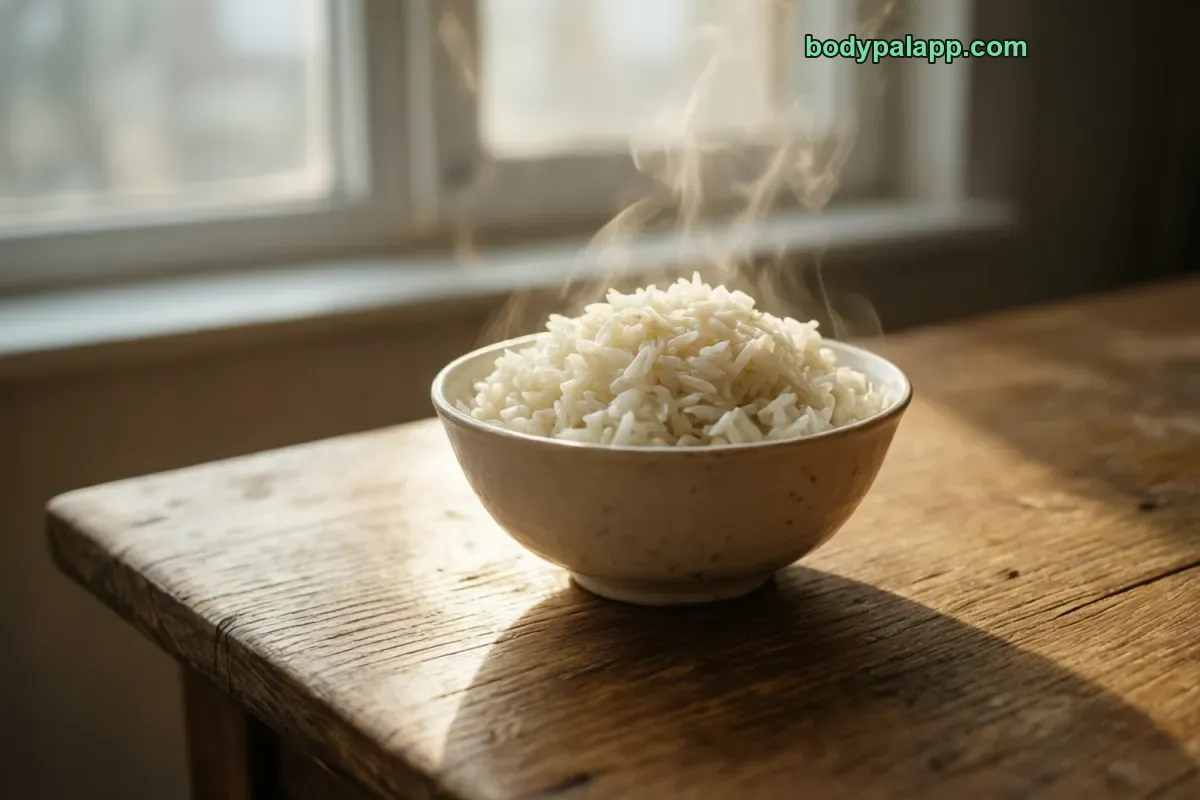
Cooked white rice calories come to 204 for 1 cup (158 g) and 129 per 100 g. Nearly all of that energy is carbohydrate, with 44.2 g of carbs per cup against 4.2 g of protein and almost no fat. The surprise is sodium: this USDA entry lists 387 mg per cup.
204kcal
1 cup · 158 g, cooked, no added fat
9%protein
4.2 gProtein
44 gCarbs
0.4 gFat
How to burn off 204 kcal
—Walking, brisk
—Jogging
—Cycling, moderate
—Swimming
Skip the math. BodyPal counts these calories from your steps and workouts automatically.
Nutrition facts
Cooked, no added fat · per 158 g
Calories
204 kcal
Protein
4.2 g
Carbohydrate
44 g
Fat
0.4 g
Saturated fat
0.1 g
Cholesterol
0 mg
Sodium
387 mg
Potassium
55 mg
Iron
1.9 mg
Source: USDA FoodData Central
🛡️
Verified nutrition data
Numbers on this page come from USDA FoodData Central, the U.S. Department of Agriculture’s food composition database, and from manufacturer labels where a branded product is named. Last verified September 2026. How we verify our data →
Cooked white rice: calories, protein and sodium by serving
Percent of daily value uses the FDA reference of 2,000 kcal a day.
Serving
kcal
Protein
Carbs
Fat
Sodium
% DV kcal
1 cup (158 g)
204
4.2 g
44.2 g
0.4 g
387 mg
10%
100 g
129
2.7 g
28 g
0.3 g
245 mg
6%
Short-grain, 1 cup (186 g)
242
4.4 g
53.4 g
0.4 g
0 mg
12%
3 × 1 cup (158 g)
611
12.7 g
1,161 mg
5 × 1 cup (158 g)
1,019
21.1 g
1,936 mg
One cup is 204 calories, and second helpings add up fast
A level cup of cooked white rice weighs 158 g and lands at 204 calories, or 10% of a 2000-calorie daily value. That is a reasonable side. The trouble is that rice rarely gets measured. It gets scooped, piled under curry or stir-fry, and refilled from the pot.
Here is how the total moves. Two cups (316 g) bring 408 calories. Three cups (474 g) reach 611 calories, which is close to a full meal on rice alone. Five cups, or 790 g, the kind of amount a family pot holds, come to 1,019 calories. Restaurant takeout containers often hold more than one cup, so the number on your plate can be double what you assume.
The simplest fix is to weigh or measure once. After you see what 158 g looks like in your own bowl, eyeballing gets much more accurate. If you want a photo log instead, BodyPal can record the rice from a picture of your plate.
Carbs supply 89 percent of the calories
The calorie split is lopsided: 89% from carbohydrate, 9% from protein and 2% from fat. Per 100 g you get 28 g of carbs, 2.7 g of protein and 0.3 g of fat. Rice is a starch delivery system, and that is exactly what it does well.
Protein is modest. One cup gives 4.2 g, which is 8% of the daily value, so rice alone will not anchor a meal. Fiber is low too, at 0.6 g per cup and 0.4 g per 100 g. Sugars are almost nil at 0.1 g, so the carbs are starch rather than sweetness.
Fat is the quietest row on the label, 0.4 g per cup and 0.1 g of it saturated. Cholesterol is 0. That means any fat in your rice dish comes from what you cook it with or put on top: butter, oil, fried rice preparation or a creamy sauce. The plain grain is lean.
Sodium is the row to watch
This USDA row lists 245 mg of sodium per 100 g, which works out to 387 mg in a cup, or 17% of the 2300 mg daily value. Rice grains themselves carry very little sodium. A figure like this reflects rice cooked with salt in the water, which is how many home cooks and restaurants make it.
The number scales with the portion. Two cups carry 774 mg, three cups 1,161 mg, and five cups 1,936 mg. Add soy sauce, a salty curry or a seasoned protein on top, and the plate can climb quickly.
If you watch sodium, cook rice without salt in the water and season the dish instead. Short-grain rice in the USDA data, cooked without salt, shows 0 mg of sodium per cup. That is the clearest sign that the sodium comes from the pot, not the grain.
Short-grain cups run heavier at 242 calories
Short-grain rice, the sticky kind used for sushi and many Korean and Japanese dishes, packs more densely into a cup. A cup weighs 186 g and holds 242 calories, 53.4 g of carbs and 4.4 g of protein. That is 12% of the daily calorie value, versus 10% for a cup of regular cooked white rice. The difference is mostly weight per cup, not a different grain chemistry.
Brands on this page range from long-grain options like Parrot and Ben's Original to sticky styles from Bibigo and Annie Chun's, plus quick-cook Minute rice. Check whether a pouch or bowl is one serving or two before logging it.
To round out a rice meal, add what rice lacks. A palm of chicken, fish, tofu or beans brings protein, and a generous serving of vegetables adds fiber and volume. Keeping rice at about one cup and letting the rest of the plate grow is an easy way to keep the total in check.
How does cooked white rice compare?
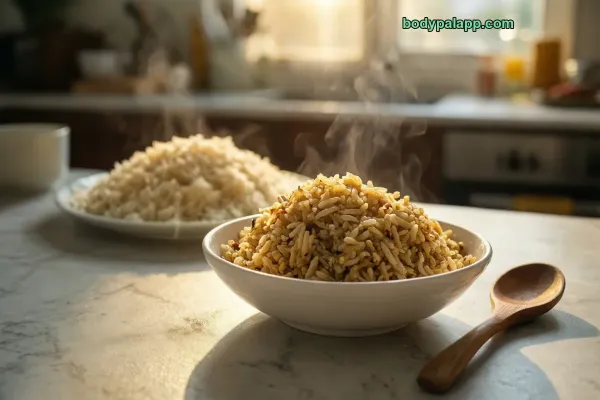
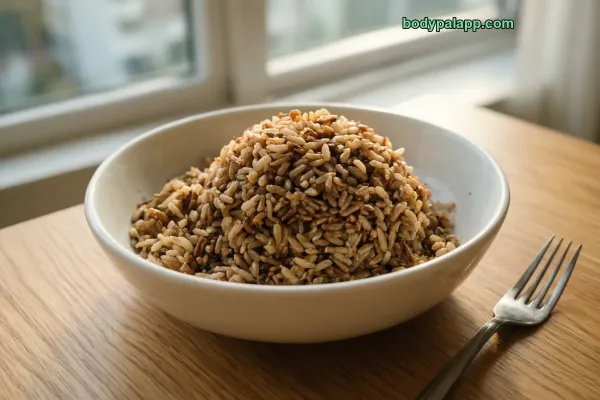
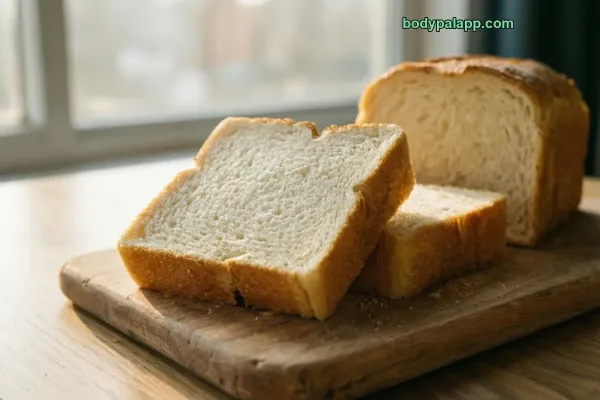
Here is how cooked white rice compares with another white rice entry, brown rice and white bread, per 100 g and per usual serving.
Verdict: For the fewest calories per 100 g, brown rice edges ahead at 123 versus 129 to 130 for white, though its bigger 1 cup (202 g) serving brings 248 calories. White bread is about 2.1 times as calorie-dense at 270 per 100 g, but one 74-calorie slice is a far smaller portion than a cup of rice.
Most popular cooked white rice brands in the United States
Ranked by popularity in the BodyPal database
# Productkcal / 100 g
1Bibigo Korean-Style Medium Grain Sticky White Rice1 bowl · 210 g148 kcal
2Parrot Long Grain White Rice¼ cup · 45 g356 kcal
3Minute White Rice½ cup · 46 g370 kcal
4Minute Organic White Rice1 cup · 125 g160 kcal
5Minute Light & Fluffy White Rice½ cup · 46 g370 kcal
7Ben's Original Boil-in-Bag Long Grain White Rice¼ cup dry · 48 g354 kcal
Dry rice packages are labeled per uncooked weight (354 to 370 per 100 g), while ready-to-eat bowls and trays are labeled cooked and read close to the number above. Source: manufacturer labels / USDA FoodData Central.
Cooked white rice FAQs
How many calories are in a cup of cooked white rice?
About 204 calories in 1 cup (158 g), or 129 calories per 100 g.
Is white rice good for weight loss?
A cup of cooked white rice has 204 calories with 0.4 g fat and 0.6 g fiber, so the portion size sets the total.
How many calories are in cooked vs uncooked white rice?
Cooked white rice has 129 calories per 100 g, while dry long-grain rice is labeled at 356 per 100 g because it has not absorbed water yet.
How many carbs are in a cup of cooked white rice?
One cup (158 g) has 44.2 g carbs and 4.2 g protein; per 100 g it is 28.0 g carbs.
How much protein is in a cup of cooked white rice?
One cup (158 g) of cooked white rice has 4.2 g of protein, about 8% of the daily value. Per 100 g it is 2.7 g, so rice works better alongside a protein food than as the main source.
How much sodium is in cooked white rice?
This USDA entry lists 387 mg of sodium per cup, or 17% of the daily value, and 245 mg per 100 g. That reflects salted cooking water; short-grain rice cooked without salt shows 0 mg.
How many calories are in 2 cups of cooked white rice?
Two cups (316 g) of cooked white rice come to 408 calories, with 8.4 g of protein and 774 mg of sodium. Three cups reach 611 calories.
Does short-grain white rice have more calories per cup?
Yes. A cup of cooked short-grain rice weighs 186 g and has 242 calories, compared with 204 for a 158 g cup of regular cooked white rice. The denser packing explains most of the gap.
How much fiber is in cooked white rice?
Cooked white rice has 0.6 g of fiber per cup and 0.4 g per 100 g. Pairing it with vegetables or beans is the easy way to add fiber to a rice meal.