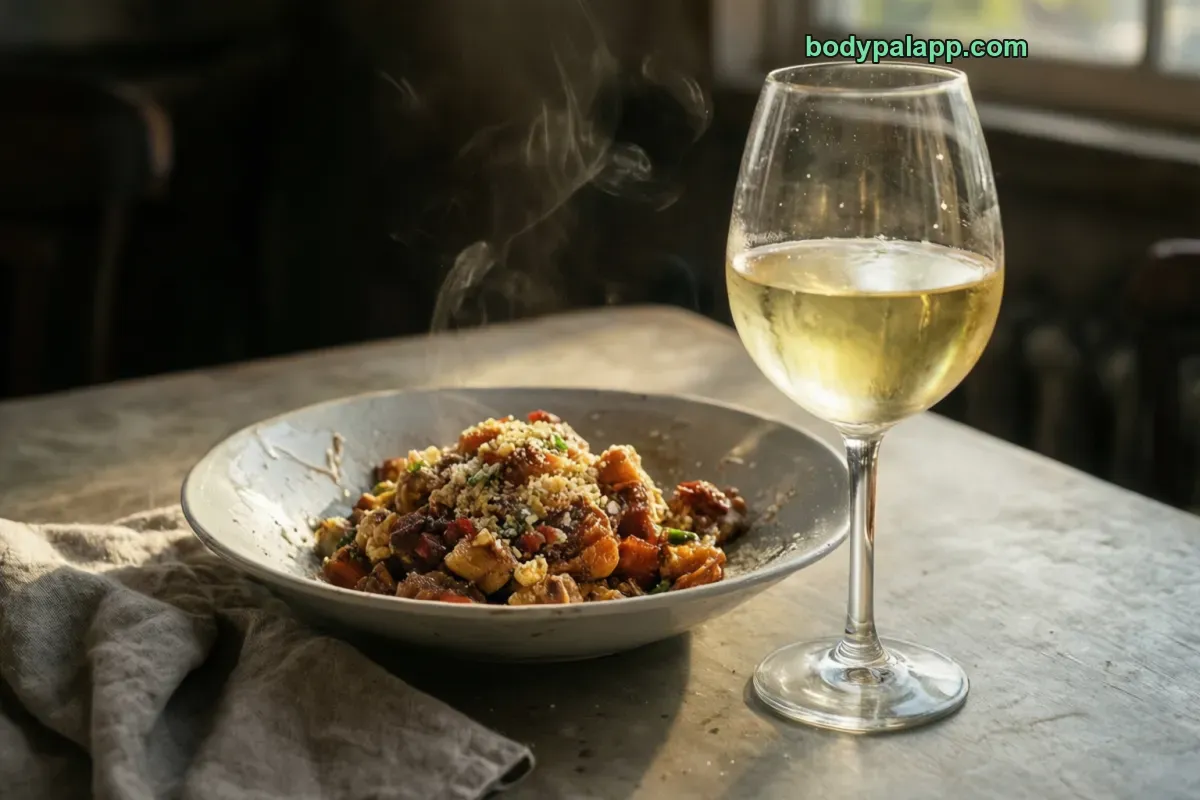
Pinot grigio wine calories come to 122 for one 5 fl oz glass (147 g) and 83 per 100 g. The label numbers look tiny: 3 g of carbs, 0.1 g of protein and no fat per glass. Most of the energy comes from alcohol, so the size of your pour moves the total far more than anything else.
122kcal
1 5 fl oz glass · 147 g, white table wine
3%protein
0.1 gProtein
3 gCarbs
0 gFat
How to burn off 122 kcal
—Walking, brisk
—Jogging
—Cycling, moderate
—Swimming
Skip the math. BodyPal counts these calories from your steps and workouts automatically.
Nutrition facts
White table wine · per 147 g
Calories
122 kcal
Protein
0.1 g
Carbohydrate
3 g
Fat
0 g
Source: USDA FoodData Central
🛡️
Verified nutrition data
Numbers on this page come from USDA FoodData Central, the U.S. Department of Agriculture’s food composition database, and from manufacturer labels where a branded product is named. Last verified September 2026. How we verify our data →
Pinot grigio wine: calories, protein and sodium by serving
Percent of daily value uses the FDA reference of 2,000 kcal a day.
Serving
kcal
Protein
Carbs
Fat
Sodium
% DV kcal
1 glass, 5 fl oz (147 g)
122
0.1 g
3 g
0 g
0 mg
6%
1 fl oz (29 g)
24
0 g
0.6 g
0 g
0 mg
1%
100 g
83
0.1 g
2.1 g
0 g
0 mg
4%
3 × 1 glass, 5 fl oz (147 g)
366
0.3 g
0 mg
5 × 1 glass, 5 fl oz (147 g)
610
0.5 g
0 mg
Each glass adds 122 calories, and refills add up fast
A standard 5 fl oz glass of Pinot Grigio weighs 147 g and carries 122 calories. That is 6% of a 2,000-calorie reference day, about the same as a small snack. One glass on its own barely shows up in a daily log.
The trouble is that wine rarely stops at one. Two glasses come to 244 calories, three reach 366, and five glasses (735 g, roughly a full bottle shared over a long dinner) land at 610. That last figure is a full meal's worth of energy with no protein and no fiber to show for it.
Pour size is the hidden variable. Each extra fluid ounce adds about 24 calories, so a generous restaurant pour or a big balloon glass at home can quietly push one "glass" well past 122. If you track intake, measure a 5 fl oz pour once so you know what it looks like in your own glasses.
Alcohol, not carbs, supplies most of the calories
Per 100 g, Pinot Grigio lists 0.1 g of protein, 2.1 g of carbs and 0 g of fat. Those three numbers cannot add up to 83 calories on their own. The gap is alcohol, which the standard macro table does not count as protein, carbs or fat.
That is why the calorie split on this page reads 97% carbs and 3% protein. It only divides the small share of energy that comes from the three macros. Read it as a description of the leftovers, not of where the 83 calories really come from.
The practical takeaway: a low-carb label does not make a wine low in calories. Pinot Grigio is a dry white with little residual sugar, which keeps the carb line short, but the alcohol keeps the calorie line at 122 per glass. Comparing wines by carbs alone will mislead you; compare them by calories per pour.
Carbs are low and sodium is zero
One glass holds 3 g of carbohydrate, and a single fluid ounce holds 0.6 g. Set against the 275 g daily reference for carbs, that is a very small slice. If you count carbs strictly, Pinot Grigio is one of the easier drinks to fit in.
Sodium reads 0 mg for every serving on this page, from a single ounce to five glasses, so it contributes 0% of the daily value. Protein is 0.1 g per glass and fat is 0 g, which means the wine adds energy without adding anything that keeps you full.
So the row to watch here is not sugar, salt or fat. It is the calorie line itself, and it scales directly with how much you pour. Everything else on the nutrition table stays close to zero no matter how many glasses you drink.
Plan the glass around the meal, not after it
Because Pinot Grigio brings calories but almost no protein, it fits best next to a meal that does the filling. Crisp, light whites are a classic match for grilled fish, chicken, salads and vegetable dishes, which are easy to keep moderate in calories themselves.
If you are watching your intake, decide on the number of glasses before you sit down. One glass is 122 calories, two are 244; that difference is easy to plan for in advance and easy to overshoot once the bottle is on the table. Alternating each glass with water slows the pace without any effort.
Logging wine is where many food diaries go quiet. BodyPal can log a glass from a photo, which makes it simpler to record the second and third pours honestly instead of guessing at the end of the night.
How does pinot grigio wine compare?
Here is how Pinot Grigio stacks up against generic white wine, Chardonnay and rose wine, per 100 g and per usual serving.
Verdict: Per 100 g these wines are nearly identical, from 82 for white wine to 84 for Chardonnay, so pick the one you enjoy and control the pour. The real difference is serving size: a 180 g glass of rose wine is 149 calories against 122 for Pinot Grigio, so if you want the lighter glass, choose the smaller standard pour.
Pinot grigio wine FAQs
How many calories are in a glass of Pinot Grigio?
A 5 fl oz glass (147 g) of Pinot Grigio has about 122 calories. One fl oz is about 24 calories.
Is Pinot Grigio good for weight loss?
A 5 fl oz glass has 122 calories with 0 g fat and 0.1 g protein, so almost all of its calories come from alcohol. That is 83 calories per 100 g.
Pinot Grigio vs white wine: which has fewer calories?
They are almost the same: Pinot Grigio has 83 calories per 100 g and generic white wine has 82.
How many carbs are in Pinot Grigio?
Pinot Grigio has 2.06 g of carbs per 100 g, about 3.0 g in a 5 fl oz glass.
What are the nutrition facts for Pinot Grigio per 100 g?
Per 100 g, Pinot Grigio has 83 calories, 0.1 g of protein, 2.1 g of carbs, 0 g of fat and 0 mg of sodium. Most of the energy comes from alcohol, which the macro rows do not show.
How many carbs are in one fluid ounce of Pinot Grigio?
One fluid ounce (29 g) of Pinot Grigio contains 0.6 g of carbs and 24 calories. A standard 5 fl oz glass brings that to 3 g of carbs and 122 calories.
How many calories are in two glasses of Pinot Grigio wine?
Two 5 fl oz glasses of Pinot Grigio (294 g) contain 244 calories. Three glasses reach 366 calories, and five glasses come to 610, so refills add up quickly.
Does Pinot Grigio have any fat or protein?
Pinot Grigio has 0 g of fat and only 0.1 g of protein per glass. Its 122 calories per glass come mostly from alcohol, with a small share from its 3 g of carbs.
Is there sodium in Pinot Grigio?
Pinot Grigio lists 0 mg of sodium per glass, which is 0% of the daily value. Even five glasses still show 0 mg, so sodium is not a concern with this wine.