
How Many Calories in a Biscoff Biscuit? 38 Each
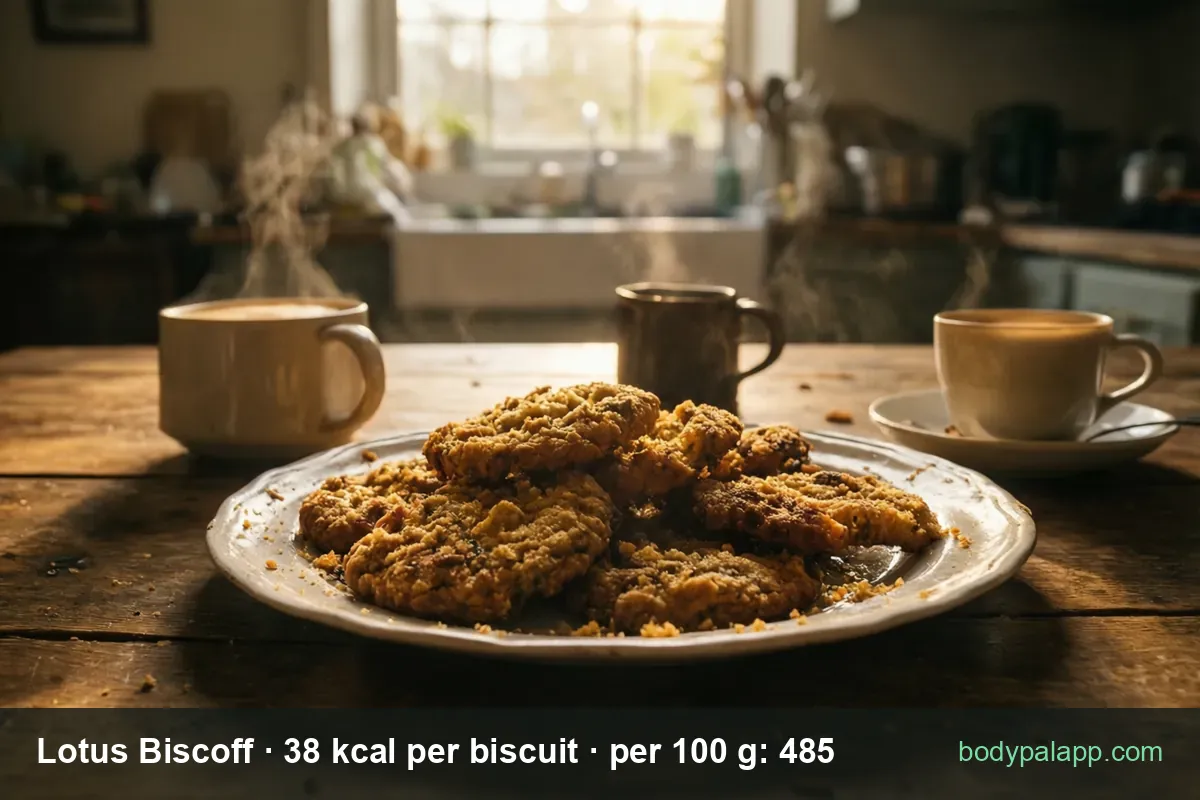
There are 38 calories in a Biscoff biscuit, the single 7.75 g caramelised wafer that arrives on the saucer with your coffee. Per 100 g the figure is 485 kcal. One biscuit is a rounding error in a day. The sums only go wrong when the packet stays open.
On this page
- Biscoff nutrition at a glance
- One, two, half the packet
- The sandwich and the spread
- Against the other coffee-side treats
- Is caramelised lighter?
- Most popular Biscoff products
- FAQ
Biscoff nutrition at a glance
| Nutrient | Per biscuit (7.75 g) | Per 100 g | %RI* per biscuit |
|---|---|---|---|
| Energy | 38 kcal / 159 kJ | 485 kcal / 2,029 kJ | 2% |
| Protein | 0.4 g | 5 g | 1% |
| Carbohydrate | 5.7 g | 73 g | 2% |
| of which sugars | 2.9 g | 38 g | 3% |
| Fat | 1.5 g | 19 g | 2% |
| of which saturates | 0.6 g | 8 g | 3% |
| Fibre | 0.1 g | 1 g | – |
| Salt | 0.01 g | 0.07 g | 0% |
*%RI = percentage of the reference intake for an average adult (2,000 kcal; 70 g fat, 20 g saturates, 260 g carbohydrate, 90 g sugars, 50 g protein, 6 g salt).
Verified nutrition data
Numbers on this page come from CoFID, the UK government’s Composition of Foods Integrated Dataset, and from manufacturer labels where a branded product is named. Last verified August 2026. How we verify our data →
The shape of the label is classic biscuit: nearly three quarters carbohydrate, half of that sugars. What stands out is how small the unit is. At 7.75 g, a Biscoff weighs about a third of a digestive, which is the whole reason a 485 kcal per 100 g food can sit next to an espresso and call itself modest.
Salt is genuinely negligible at 0.07 g per 100 g, which is rarer in biscuits than you would think.
One, two, half the packet
| Portion | Weight | Calories |
|---|---|---|
| One biscuit | 7.75 g | 38 kcal |
| Two, because there were two on the saucer | 15.5 g | 76 kcal |
| Five with the afternoon cup of tea | ~39 g | 188 kcal |
| Half a 250 g packet | 125 g | 606 kcal |
A 250 g packet holds around 32 biscuits, and the arithmetic is unforgiving in both directions. Stop at one and coffee has cost you 38 kcal. Work through half the sleeve during a long call and you have quietly had 606, which is more than a slice of cake you would at least have remembered eating.
The pairing matters too. A biscuit on the side of a black coffee is a 40-calorie ritual; the same biscuit next to a latte rides along with the milk, and the drink is doing most of the damage. Our cappuccino breakdown shows the same effect from the other side of the counter.
The sandwich and the spread
The plain caramelised biscuit is the baseline. Lotus has built two heavier things on top of it.
The cream sandwich runs about 504 kcal per 100 g, and a single 10 g sandwich is 50 kcal. Two wafers with a filling weigh more than one wafer, so the per-item cost is a third higher even though the per-100 g figures look close.
The spread is the one to respect. Biscoff spread is ground-up biscuits with added oil, which takes it to 584 kcal per 100 g, and a 15 g tablespoon is 88 kcal, more than two biscuits. It spreads like peanut butter and gets logged like jam, and it is closer to the former: the same spoon of jam would be around half the calories, without the fat. If it lives in your cupboard, weigh the spoon once and believe the result.
Against the other coffee-side treats
| Treat | Per item | Per 100 g |
|---|---|---|
| Biscoff biscuit | 38 kcal | 485 kcal |
| Freddo | 96 kcal | 533 kcal |
| Twirl (one finger) | 114 kcal | 530 kcal |
| Maltesers (a dozen) | 121 kcal | 503 kcal |
The verdict: per 100 g everything on this table lives in the same 480-530 kcal band, because biscuits and chocolate are both sugar and fat in a dry wrapper. The Biscoff wins on the only measure that matters at the till: the unit. At 38 kcal it is the smallest single treat here by a distance, and the only one where "just one" is a two-digit number.
Is caramelised lighter?
"Caramelised biscuits are lighter than chocolate ones." The word sounds airy, and 485 kcal per 100 g says otherwise; that is standard biscuit territory, a whisker below milk chocolate at 519. Caramelising changes the flavour of the sugar, not the amount of it. The biscuit is light because it is small, and that is the honest reason to like it.
Most popular Biscoff products in the United Kingdom
Ranked by how widely each product appears among foods sold in the United Kingdom, from the BodyPal food database of over 3.3 million products. Calories are the figures printed on each label.
| Product | Calories (per 100 g) |
|---|---|
| Lotus Biscoff biscuits | 484 kcal |
| Lotus Biscoff Spread | 584 kcal |
| Lotus Biscoff Crunchy Spread | 571 kcal |
| Milka & Biscoff bar | 529 kcal |
Brand popularity: BodyPal food database. Nutrition: manufacturer labels.
How long does it take to burn off a Biscoff biscuit?
One 7.75 g biscuit is 38 kcal. Enter your weight and the amount you ate to see how long it takes you to burn that off:
lb
| Activity | Time to burn 38 kcal |
|---|---|
| Walking, brisk | 8 min |
| Cycling, moderate | 5 min |
| Swimming, moderate | 5 min |
| Jogging | 4 min |
| Weight training, moderate | 8 min |
Times are for a 154 lb (11 st) adult at a steady pace; change the weight to see yours. The amount is set to the portion in the text (7.75 g); change it to what you actually ate. BodyPal works this out from your steps automatically.
Want the bigger picture? Calculate your daily calorie needs — your maintenance figure, a target for losing or gaining, and the date you get there.
Frequently asked questions
How many calories are in one Biscoff biscuit?
One Lotus Biscoff biscuit is 38 kcal, at 7.75 g per biscuit. That carries 2.9 g of sugar and 1.5 g of fat. Two biscuits, the amount most cafés serve on the saucer, come to 76 kcal.
How many calories in a tablespoon of Biscoff spread?
A 15 g tablespoon of Biscoff spread is 88 kcal, from 584 kcal per 100 g. The spread is ground biscuits with added oil, so a single spoon costs more than two whole biscuits. A thin scrape on toast lands closer to 50-60 kcal.
How many calories in a Biscoff cream sandwich?
A 10 g Biscoff cream sandwich biscuit is about 50 kcal, at roughly 504 kcal per 100 g. The filling adds weight rather than density, so each sandwich costs about a third more than a plain 38 kcal biscuit.
How many Biscoff biscuits are in a packet?
A standard 250 g packet holds around 32 biscuits at 7.75 g each, which is roughly 1,213 kcal per packet. The useful mental note is the halfway line: work through half a sleeve and you have had about 606 kcal.
Is a Biscoff biscuit healthier than a chocolate bar?
Per 100 g, no; at 485 kcal it sits in the same band as most chocolate at around 500-530. Per item, yes by size alone: 38 kcal against 96 for the smallest mainstream chocolate bar. If you stop at one, the biscuit is the cheapest treat on the shelf.
How much sugar is in a Biscoff biscuit?
2.9 g per biscuit, from 38 g of sugar per 100 g. Two biscuits give 5.9 g, about a fifth of the 30 g of free sugars the NHS suggests adults stay under in a day. The caramelised flavour is the sugar itself, cooked darker.
Why are Biscoff biscuits so low in calories?
They are not, per gram; 485 kcal per 100 g is normal for a biscuit. Each one is simply small at 7.75 g, a third the weight of a digestive. The low number on the wrapper is portion size doing the work, not the recipe.
Do the calories change with a coffee?
The biscuit stays at 38 kcal; the drink decides the rest. Next to a black americano the whole ritual is about 40 kcal. Next to a medium latte the pairing is closer to 200, and the milk, not the biscuit, is the difference worth logging.
Similar foods
- Bourbon biscuit — 68 kcal each
- Bounty — 278 kcal per twin bar
- Snickers — 235 kcal per bar
- Crisps — 123 kcal per 25 g bag
- Twix — 246 kcal per twin bar
- Oreo — 52 kcal per biscuit
Count it without the maths
BodyPal logs the biscuit, the spread on the knife and the coffee beside them from one photo, so the saucer stops flattering the diary.

