
Calories in a Cappuccino, and Why the Espresso Is Only 2 of Them
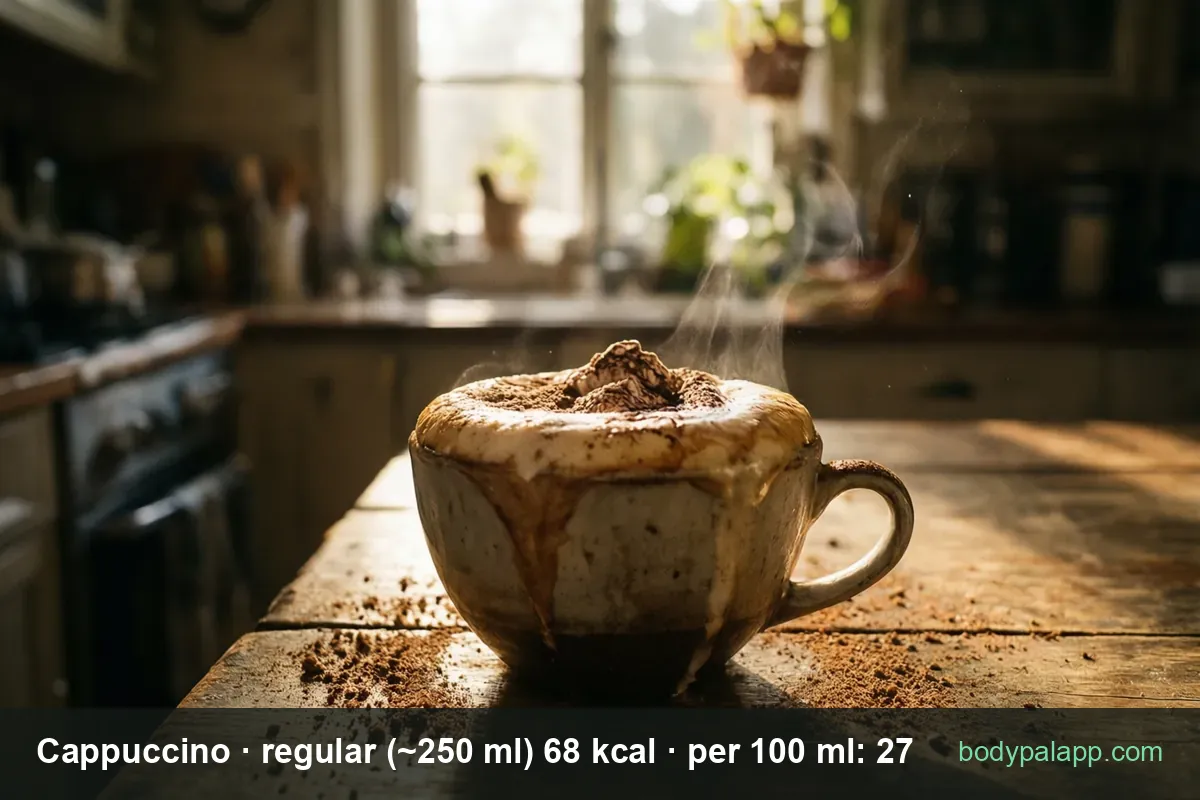
A cappuccino runs about 68 calories for a regular 250 ml cup, which is 27 per 100 ml. The espresso shot contributes roughly 2 of those. Every other calorie in the cup walked in with the milk, which means the real question at the counter is never the coffee.
On this page
- Cappuccino nutrition at a glance
- Cup sizes, from regular to large
- The milk decides everything
- Chains: Greggs, Costa and the counter question
- How does a cappuccino compare?
- Most popular cappuccino brands
- FAQ
Cappuccino nutrition at a glance
| Nutrient | Per 100 ml | Per regular cup (~250 ml) | %RI* per cup |
|---|---|---|---|
| Energy | 27 kcal / 113 kJ | 68 kcal / 285 kJ | 3% |
| Protein | 2.0 g | 5.0 g | 10% |
| Carbohydrate | 3.2 g | 8.0 g | 3% |
| of which sugars | 2.4 g | 6.0 g | 7% |
| Fat | 0.8 g | 2.0 g | 3% |
| of which saturates | 0.5 g | 1.3 g | 7% |
| Fibre | 0 g | 0 g | – |
| Salt | 0.06 g | 0.15 g | 3% |
*%RI = percentage of the reference intake for an average adult (2,000 kcal; 70 g fat, 20 g saturates, 260 g carbohydrate, 90 g sugars, 50 g protein, 6 g salt).
Verified nutrition data
Numbers on this page come from CoFID, the UK government’s Composition of Foods Integrated Dataset, and from manufacturer labels where a branded product is named. Last verified August 2026. How we verify our data →
Two things worth noticing. The sugars line is all lactose from the milk, nothing added, so an unsweetened cappuccino has no free sugars at all. And 5 g of protein per cup makes it one of the few drinks that contributes something back for its 68 calories.
The sachet of sugar is the fork in the road: one teaspoon adds 16 kcal and turns the natural-sugars story into an added-sugars one, which is the distinction NHS sugar guidance actually cares about.
Cup sizes, from regular to large
| Serving | Volume | Calories |
|---|---|---|
| Espresso alone | ~30 ml | ~2 kcal |
| Regular cappuccino | ~250 ml | 68 kcal |
| Large cappuccino | ~350 ml | 95 kcal |
| Regular + 1 tsp sugar | ~250 ml | 84 kcal |
The jump from regular to large is 27 kcal of pure milk, since the espresso underneath is the same shot. Order sizes drift upward one visit at a time, and a daily large instead of a daily regular is 189 kcal a week nobody decided on.
A morning-and-afternoon cappuccino habit at regular size is 136 kcal a day. That is a perfectly reasonable spend for two good coffees; it just belongs in the log like everything else that has a number.
The milk decides everything
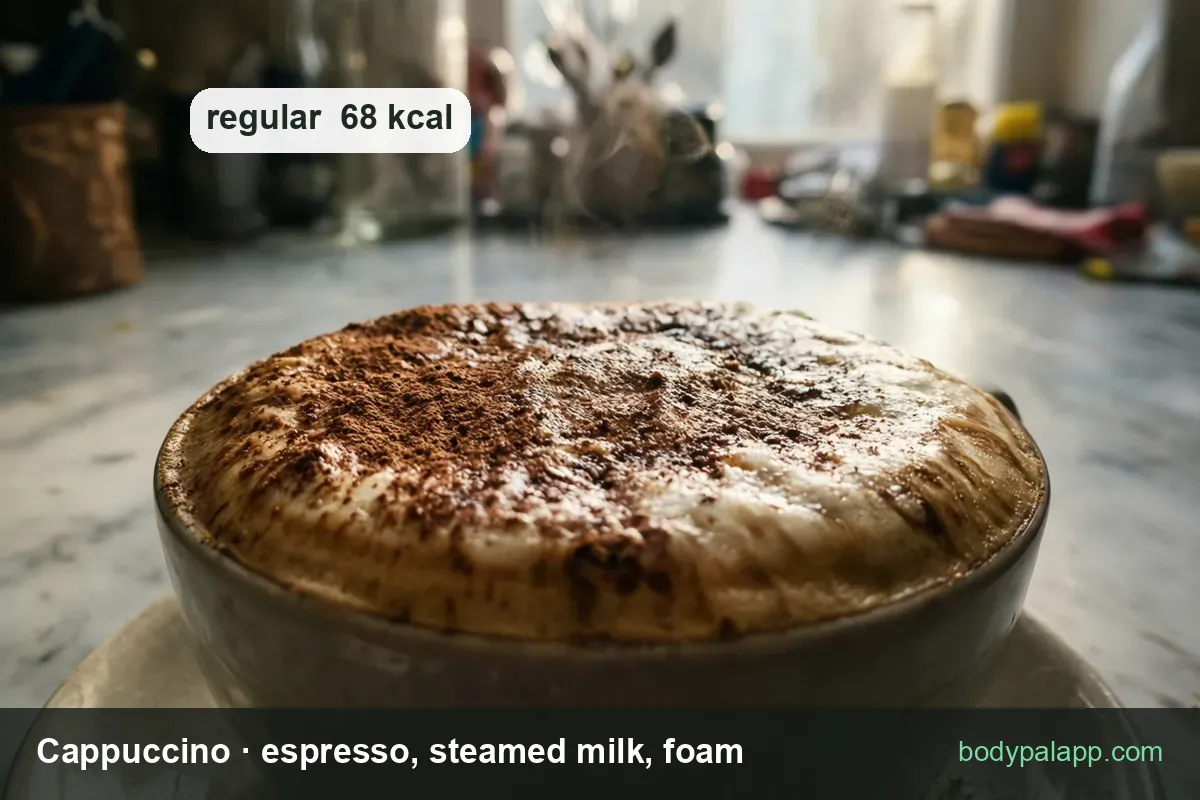
The CoFID average behind the 68 assumes ordinary milk. Swap the jug and the cup follows, because milk is the only ingredient with weight:
| Milk in the steamer | Per 100 ml of milk |
|---|---|
| Whole milk | 63 kcal |
| Semi-skimmed | 46 kcal |
| Skimmed | 34 kcal |
| Oat drink | 48 kcal |
A "skinny" cappuccino is simply the skimmed row: roughly half the milk calories of whole, and the foam actually holds better with lower fat. Oat lands between semi-skimmed and whole, which surprises people who expected plant to mean lighter.
This is also where the cappuccino earns its structural advantage: it is one-third foam, and foam is mostly air. A latte of the same cup size carries meaningfully more liquid milk, which is the entire difference between the two drinks. If the milk is the calories, the drink with less milk wins, whatever the barista's opinion.
Chains: Greggs, Costa and the counter question
Greggs publishes 94 kcal for a regular cappuccino, a shade above the CoFID average, which mostly reflects a bigger cup and whole milk as default. It is a published, reliable figure, and if that is your morning stop, log 94 and think no more about it.
Costa and the other chains publish their own menu numbers, and cup sizes differ enough between brands that copying one chain's figure onto another's cup misleads. The portable rule is simpler: the number scales with millilitres of milk. A cup of tea with its splash sits far below any cappuccino; the cappuccino sits below the latte; the latte sits below anything with syrup, a subject the NHS Eatwell Guide files under drinks that quietly count.
How does a cappuccino compare?
| Drink | Per serving | Notes |
|---|---|---|
| Espresso | ~2 kcal | the coffee itself |
| Cappuccino, regular | 68 kcal | one-third foam |
| Greggs cappuccino, regular | 94 kcal | published figure |
| Glass of whole milk (200 ml) | 126 kcal | for scale |
The verdict: a cappuccino is the middle path of milky coffees, real milk but a third of the cup is air. If you want the lowest number that still feels like a coffee break, this is it; a skinny version pushes it lower still. If the cup is really a milk delivery system for you, the latte does that job and the numbers say so.
Most popular cappuccino brands in the United Kingdom
Ranked by how widely each product appears among foods sold in the United Kingdom, from the BodyPal food database of over 3.3 million products. Calories are the figures printed on each label. These are instant sachet powders; a made-up regular cup lands near the 68 kcal in the tables above.
| Product | Calories (per 100 g (instant powder)) |
|---|---|
| Nescafé Cappuccino | 385 kcal |
| Mokate Cappuccino | 426 kcal |
| Bellarom Cappuccino (Lidl) | 379 kcal |
Brand popularity: BodyPal food database. Nutrition: manufacturer labels.
How long does it take to burn off a cappuccino?
A regular 250 ml cup is 68 kcal. Enter your weight and the amount you ate to see how long it takes you to burn that off:
lb ml
| Activity | Time to burn 68 kcal |
|---|---|
| Walking, brisk | 14 min |
| Cycling, moderate | 8 min |
| Swimming, moderate | 10 min |
| Jogging | 8 min |
| Weight training, moderate | 15 min |
Times are for a 154 lb (11 st) adult at a steady pace; change the weight to see yours. The amount is set to the portion in the text (250 ml); change it to what you actually drank. BodyPal works this out from your steps automatically.
This table assumes you know your daily total. If you do not, the daily calorie calculator works it out from five numbers.
Frequently asked questions
How many calories are in a cappuccino?
About 68 kcal for a regular 250 ml cup made with ordinary milk, or 27 per 100 ml on the UK CoFID average. A large is around 95. The espresso is roughly 2 kcal of that; the milk supplies essentially everything else.
How many calories in a skinny cappuccino?
Skimmed milk carries 34 kcal per 100 ml against 63 for whole, so a skinny cappuccino runs at roughly half the milk calories of a whole-milk one. As a rule of thumb, expect a regular skinny to land in the 40-50 kcal region.
How many calories in a Greggs cappuccino?
94 kcal for a regular, according to Greggs' published nutrition. That sits above the 68 kcal CoFID average mainly through cup size and whole milk as the default. It is a solid number to log if Greggs is your usual counter.
How many calories in a Costa cappuccino?
Costa publishes calorie figures on its menus and website for each size and milk, and those beat any generic estimate because chain cup sizes differ. As orientation, the CoFID average is 27 kcal per 100 ml; scale it by your cup and milk choice.
Cappuccino or latte: which has fewer calories?
The cappuccino, at the same cup size, every time. A third of a cappuccino is foam, which is air, while a latte fills the same cup with liquid milk. Since milk is where the calories live, less milk means a smaller number.
Does sugar in a cappuccino change much?
One level teaspoon adds 16 kcal, taking a regular from 68 to 84, a 24% rise. The bigger shift is qualitative: the cup's natural lactose becomes added free sugars, which is the kind national guidance suggests keeping an eye on.
Is a cappuccino okay every day?
A regular at 68 kcal is a modest daily spend, and it brings 5 g of protein with it. Two a day at large size is a different arithmetic, 190 kcal, which is fine when it is chosen rather than drifted into. Log the cup you actually order.
How many calories in a cappuccino with oat milk?
Oat drink runs about 48 kcal per 100 ml, between skimmed and whole dairy, so an oat cappuccino lands close to a semi-skimmed one and above a skinny. Sweetened oat drinks run higher; the unsweetened carton is the one that keeps the number down.
Similar foods
- Latte — 68 kcal a mug at home
- Lucozade Sport — 135 kcal a 500 ml bottle
- Can of Coke — 139 kcal a 330 ml can
- Semi skimmed milk — 46 kcal per 100 ml
- Monster — 235 kcal per 500 ml can
- Cup of tea — 13 kcal with milk
Count the cup, skip the maths
BodyPal logs a cappuccino from one photo of the cup, milk choice and all, so the coffee habit shows up honestly without a spreadsheet.

