
How many calories are in an Angry Orchard?
One 12 fl oz bottle of Angry Orchard-style hard cider is 202 calories, and per 100 g the drink runs 56 calories. Pour a 16 fl oz pint instead and you are at 269. There is no fat and no protein in the glass: every calorie is carbohydrate or alcohol.
On this page
- Hard cider quick facts
- US servings, from one fluid ounce to a full pint
- Pint, bottle and the drinks that sit next to them
- Carbs, sugar and the rows USDA does not publish
- How does hard cider compare?
- Most popular hard cider brands
- FAQ
Hard cider quick facts
Angry Orchard has no record of its own in USDA FoodData Central. What it does have is a category, and the category is well measured: FNDDS 2710621, "Hard cider", from the 2021–2023 survey cycle. That record is the one used all the way down this page. It is filed under Beer rather than under juice, which tells you how the database thinks about the drink, and its listed portions are a 12 fl oz bottle or can and a 16 fl oz pint — the two containers people actually buy.
There is a second candidate, SR Legacy 174146, "Beverages, AMBER, hard cider." It reports the same 56 calories per 100 g, but it is anchored to a single brand and carries only one serving. The survey record wins on portions, not on numbers.
| Nutrient | Per 100 g | Per 1 bottle, 12 fl oz (360 g) | % Daily Value |
|---|---|---|---|
| Calories | 56 | 202 | — |
| Total fat | 0 g | 0 g | 0% |
| Saturated fat | 0 g | 0 g | 0% |
| Carbohydrate | 5.92 g | 21.3 g | 8% |
| Dietary fiber | 0 g | 0 g | 0% |
| Total sugars | 5.92 g | 21.3 g | — |
| Protein | 0 g | 0 g | 0% |
| Sodium | 4 mg | 14 mg | 1% |
% Daily Value is based on a 2,000-calorie diet.
Verified nutrition data
Numbers on this page come from USDA FoodData Central, the U.S. Department of Agriculture’s food composition database, and from manufacturer labels where a branded product is named. Last verified September 2026. How we verify our data →
Two rows you would expect on a can are missing here on purpose. USDA does not publish added sugars or trans fat for this record, so rather than borrow a number from a label, both rows come out. Cholesterol is 0 mg. Potassium is the one mineral worth a mention: 54 mg per 100 g works out to 194 mg in a bottle, about 4% of the Daily Value, which is a rounding error next to a banana but not quite nothing.
US servings, from one fluid ounce to a full pint
| Serving | Weight | Calories |
|---|---|---|
| 1 fl oz | 30 g | 17 kcal |
| 1 oz by weight | 28.4 g | 16 kcal |
| 1 bottle or can, 12 fl oz | 360 g | 202 kcal |
| 1 pint or tallboy, 16 fl oz | 480 g | 269 kcal |
| Per 100 g | 100 g | 56 kcal |
The 12 fl oz and 16 fl oz lines are USDA household measures, listed on the record itself. The 1 fl oz and 1 oz lines are our own arithmetic from the USDA 100 g figure, not USDA servings, and they are here because bartenders and recipe writers still work in ounces. Note the trap in that pair: a fluid ounce of cider weighs about 30 g, so an ounce by volume and an ounce by weight are not the same pour, and the calorie count differs by one.
Two bottles in an evening is 404 calories and 42.6 g of carbohydrate, again our own scaling rather than a USDA serving. That is a full restaurant appetizer's worth of energy that never touches a plate, which is exactly why cider is one of the things people forget to log.
Pint, bottle and the drinks that sit next to them
| Version | Per 100 g | Typical serving | Calories |
|---|---|---|---|
| Hard cider, 12 oz bottle or can | 56 kcal | 360 g | 202 kcal |
| Hard cider, pint (16 fl oz) | 56 kcal | 480 g | 269 kcal |
| Beer | 43 kcal | 360 g | 155 kcal |
| Hard seltzer | 24 kcal | 360 g | 86 kcal |
| Sweetened alcoholic malt beverage | 68 kcal | 360 g | 245 kcal |
| Apple cider, non-alcoholic | 46 kcal | 248 g | 114 kcal |
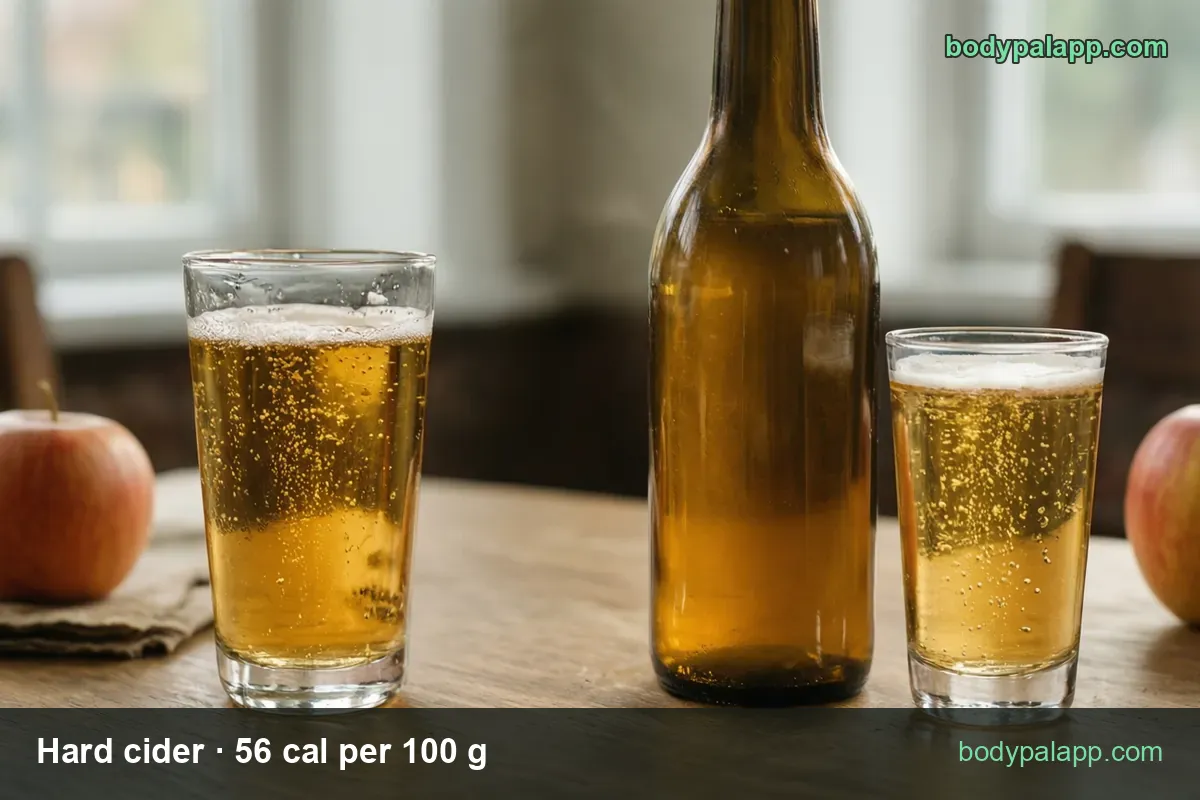
The bottle-to-pint jump is the one that catches people. A pint glass does not look meaningfully bigger than a can on the bar, but 480 g against 360 g is 269 calories against 202 — 67 calories added every time the bartender reaches for the taller glass. Three pints over an evening is 807 calories where three bottles would have been 606.
Every drink that comes in under hard cider on that list does so for a reason you can see in the carbohydrate column. Beer at 43 calories per 100 g has less residual sugar and usually less alcohol. Hard seltzer at 24 is the floor of the category, with 0.55 g of carbohydrate per 100 g. The one drink above cider is the sweetened malt beverage at 68 per 100 g, or 245 per 12 fl oz, and it gets there by being sweetened after the fact rather than fermented dry.
The non-alcoholic apple cider row is not a variant of the same drink, but it is the single most common mix-up in this category, so it is here for contrast. The 8 fl oz serving is USDA's; the 360 g servings for beer, seltzer and malt beverage are our own arithmetic from each record's 100 g figure, matched to the cider bottle so the comparison is honest.
One branded row does exist for the style, if you want a label to check against: Square Mile Cider Co Ginger Pear Apple Cider lands at 56 calories per 100 g and 199 per 355 ml can — within a calorie or two of the generic record.
Carbs, sugar and the rows USDA does not publish
Here is the fact that surprises most people who assume cider is the sugary option. Non-alcoholic apple cider carries 11.3 g of carbohydrate per 100 g. Hard cider carries 5.92 g — just over half. Yet hard cider is the higher-calorie drink, 56 against 46 per 100 g. Fermentation eats the sugar and leaves alcohol behind, and alcohol carries roughly twice the energy per gram that sugar does. The calories did not come from the apples. They came from the yeast finishing its work.
All 5.92 g of that carbohydrate is sugar, because there is no fiber and no starch in a fermented drink. In a 12 fl oz bottle that means 21.3 g of total sugars, and in a pint 28.4 g. Total sugars have no Daily Value on the US label, so the percentage column stays empty there; the carbohydrate line does have one, and a bottle takes 8% of it, a pint 10%. Those percentages come from the FDA's Daily Value reference amounts for a 2,000-calorie diet.
What you cannot get from this record is an added sugars figure. Cider makers may back-sweeten after fermentation, and the sugar in the finished drink is some mix of residual apple sugar and whatever was added, but USDA does not separate the two for hard cider. Any site quoting an added sugars number for a generic cider is reading it off a specific can, not off the database.
On the drinking side rather than the counting side, the Dietary Guidelines for Americans put moderate drinking at two drinks or fewer in a day for men and one or fewer for women, and note that adults who do not drink should not start. The CDC's standard drink definition is 0.6 fl oz of pure alcohol — a 12 fl oz beer at 5% ABV is one of them. Ciders are commonly bottled around that strength, which is part of why a 12 oz can is the format the category settled on.
How does hard cider compare?
| Drink | Per 100 g | US serving | Calories |
|---|---|---|---|
| Hard cider | 56 kcal | 12 fl oz, 360 g | 202 kcal |
| Beer | 43 kcal | 12 fl oz, 360 g | 155 kcal |
| Hard seltzer | 24 kcal | 12 fl oz, 360 g | 86 kcal |
| Apple cider, non-alcoholic | 46 kcal | 8 fl oz, 248 g | 114 kcal |
Our take: for calorie counting, hard cider is the most expensive of the three alcoholic options here — 47 calories more than a beer and 116 more than a hard seltzer at the same 12 fl oz. If you are trying to keep a night out under a few hundred calories, seltzer buys you two glasses for the price of one cider. If you would rather have one drink you actually enjoy, one bottle of cider at 202 calories fits comfortably inside most days without any arithmetic gymnastics. The variable that does real damage is the glass, not the style: switch from cans to pints and you have added a cookie's worth of calories to every round without noticing.
Most popular hard cider brands in the United States
Ranked by how widely each product appears among foods sold in the United States, from the BodyPal food database of over 3.3 million products. Calories are the figures printed on each Nutrition Facts label, checked against USDA FoodData Central.
| Product | Calories (per 100 g) |
|---|---|
| Square Mile Cider Co Ginger Pear Apple Cider | 56 cal |
Brand popularity: BodyPal food database. Nutrition: manufacturer labels / USDA FoodData Central.
Angry Orchard FAQs
How many calories are in a 12 oz Angry Orchard?
A 12 fl oz bottle or can is 202 calories, based on the USDA hard cider record at 56 calories per 100 g. Angry Orchard has no USDA record of its own, so this is the generic hard cider figure; a cider brewed drier or sweeter than average will land a little either side.
How many calories in a pint of hard cider?
A 16 fl oz pint of hard cider is 269 calories, 67 more than the 12 oz bottle. The pour weighs 480 g against 360 g, and the carbohydrate goes with it: 28.4 g instead of 21.3 g, or 10% of a day's Daily Value.
How many carbs are in Angry Orchard?
21.3 g of carbohydrate in a 12 fl oz bottle, which is 8% of the Daily Value, and 28.4 g in a pint. Per 100 g the figure is 5.92 g. There is no fiber in hard cider, so every gram of that carbohydrate is sugar.
How much sugar is in a hard cider?
21.3 g of total sugars in a 12 fl oz serving, the same number as the carbohydrate, because hard cider carries no fiber or starch. USDA does not split that into added and naturally occurring sugars for this record, so there is no added sugars figure to quote.
Is hard cider more fattening than beer?
Per 12 fl oz, hard cider is 202 calories and beer 155, so the cider costs 47 more per bottle. Per 100 g it is 56 against 43. Nothing about either drink is fattening on its own; the gap only matters if you drink several in a sitting.
Hard cider vs hard seltzer: which has fewer calories?
Hard seltzer is 86 calories per 12 fl oz against 202 for hard cider, a difference of 116. Seltzer runs 24 calories per 100 g with 0.55 g of carbohydrate, while cider sits at 56 with 5.92 g. Seltzer is the lighter glass by a wide margin.
Does hard cider have any protein or fat?
Zero on both counts: 0 g of protein and 0 g of fat per 100 g and per bottle, so the 202 calories come from carbohydrate and alcohol only. Sodium is 14 mg per 12 fl oz, about 1% of the Daily Value, and cholesterol is 0 mg.
Is hard cider the same as apple cider?
Not the same drink: non-alcoholic apple cider is 46 calories per 100 g, 114 in an 8 fl oz glass, with 11.3 g of carbohydrate per 100 g against 5.92 g in hard cider. Fermentation eats the sugar and replaces it with alcohol, which carries more calories per gram.
Similar foods
- Cider — 202 cal per can or bottle (12 fl oz)
- IPA — 209 cal per can or bottle 12 fl oz
- Vodka Soda — 133 cal per drink
- Vodka Water — 133 cal per drink
- Whiskey And Soda — 133 cal per drink
- Mojito — 137 cal per drink
Count it without the math
Point the camera at the glass and BodyPal counts the cider for you, pint or bottle.


How long does it take to burn off Angry Orchard?
One 12 fl oz bottle (360 g) is 202 kcal. Enter your weight and the amount you ate to see how long it takes you to burn that off:
lb
| Activity | Time to burn 202 kcal |
|---|---|
| Walking, brisk | 40 min |
| Cycling, moderate | 25 min |
| Swimming, moderate | 29 min |
| Jogging | 24 min |
| Weight training, moderate | 45 min |
Times are for a 155 lb adult at a steady pace; change the weight to see yours. The amount is set to the portion in the text (360 g); change it to what you actually ate. BodyPal works this out from your steps automatically.
Burning it off is one side of it. The other is knowing your number: work out how many calories you need a day, with macros and a goal date.