
How many calories are in cider?
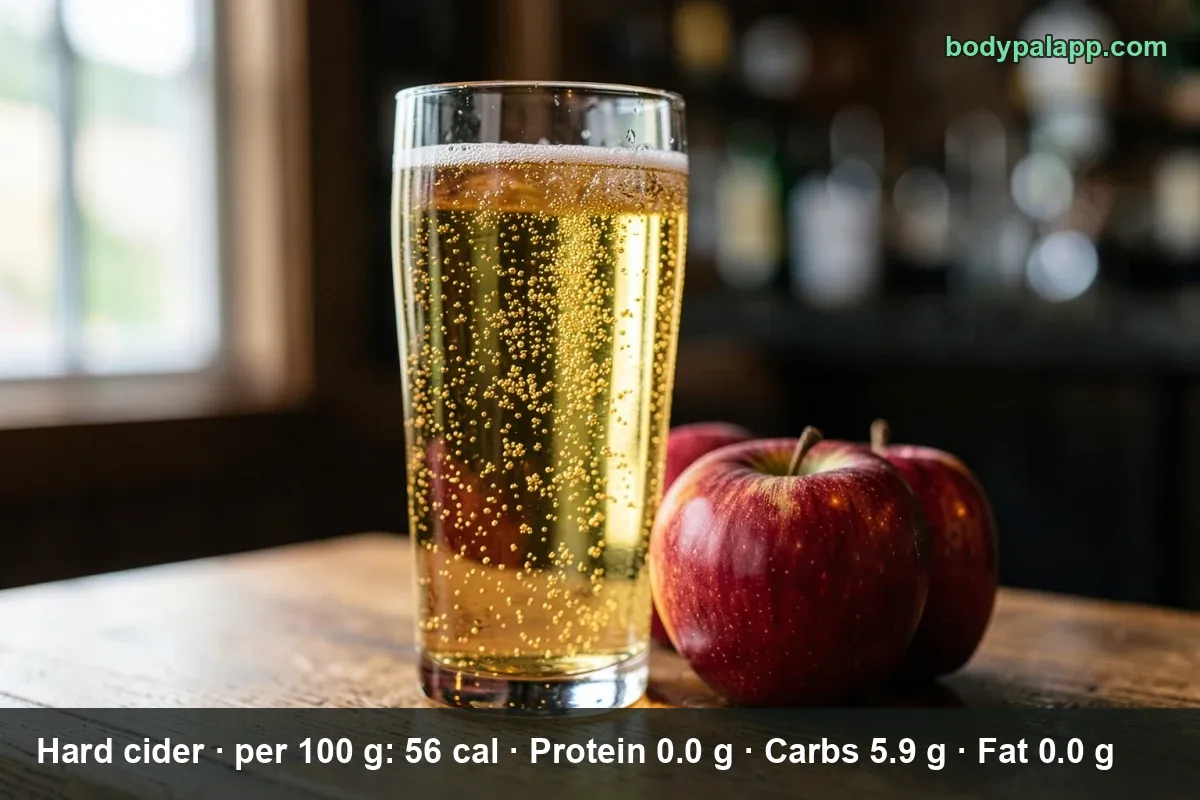
A 12 fl oz can or bottle of hard cider is 202 calories. Per 100 g cider runs 56 calories, which puts it above beer and below a sweetened malt drink. The carbohydrate, 21.3 g a bottle, is all sugar, but the rest of the count comes from the alcohol.
On this page
- Cider quick facts
- Cider servings from one fluid ounce to a pint
- Hard cider and apple cider are two different drinks
- The pint the bottle and the single ounce
- Sugar and carbs are the rows to watch
- How does cider compare?
- Most popular cider brands
- FAQ
Cider quick facts
The number above comes from the USDA record FNDDS 2710621, "Hard cider". It is the generic fermented cider entry, and it is the one that carries real US household servings: a 12 fl oz can or bottle at 360 g and a 16 fl oz pint at 480 g. That matters, because the thing an American holds is almost never a metric measure.
An older SR Legacy record, 174146, describes the same drink under a brand name and gives the identical per-100-g figures. Its can is 355 g rather than 360 g, so it lands at 199 calories instead of 202. The drink did not change; the assumed can did. It stays below as a variant, not as the headline.
| Nutrient | Per 100 g | Per 1 can or bottle, 12 fl oz (360 g) | % Daily Value |
|---|---|---|---|
| Calories | 56 | 202 | — |
| Total fat | 0 g | 0 g | 0% |
| Saturated fat | 0 g | 0 g | 0% |
| Carbohydrate | 5.92 g | 21.3 g | 8% |
| Dietary fiber | 0 g | 0 g | 0% |
| Total sugars | 5.92 g | 21.3 g | — |
| Protein | 0 g | 0 g | 0% |
| Sodium | 4 mg | 14 mg | 1% |
% Daily Value is based on a 2,000-calorie diet.
Verified nutrition data
Numbers on this page come from USDA FoodData Central, the U.S. Department of Agriculture’s food composition database, and from manufacturer labels where a branded product is named. Last verified September 2026. How we verify our data →
Two label rows are missing on purpose. USDA does not publish added sugars for this record, and it does not publish trans fat either, so writing zeros there would be an invention rather than a measurement. Cholesterol is 0 mg. Potassium is 54 mg per 100 g, which works out to 194 mg a bottle, or 4% of the 4,700 mg Daily Value published by the FDA.
Cider servings from one fluid ounce to a pint
| Serving | Weight | Calories |
|---|---|---|
| 1 fl oz | 30 g | 17 kcal |
| 1 oz by weight | 28.4 g | 16 kcal |
| 1 cup, 8 fl oz | 240 g | 134 kcal |
| 1 can or bottle, 12 fl oz | 360 g | 202 kcal |
| 1 pint, 16 fl oz | 480 g | 269 kcal |
| Per 100 g | 100 g | 56 kcal |
The 1 fl oz, 12 fl oz and 16 fl oz lines are USDA household measures for this record. The 1 oz weight line and the 8 fl oz cup are our own arithmetic from the USDA 100 g figure, not USDA servings, and the cup is there only because people type it into search boxes.
Watch the difference between the first two rows. A fluid ounce of cider weighs 30 g, while an ounce by weight is 28.4 g, so the two land one calorie apart. Nobody drinks either, but the mismatch is exactly why a cup poured at home and a cup measured on a scale rarely agree.
Hard cider and apple cider are two different drinks
In most of the country, "cider" on a menu means the fermented, alcoholic drink, and "cider" at a farm stand in October means unfiltered apple juice. USDA keeps them as separate records, and the numbers cross in a way most people guess wrong.
| Version | Per 100 g | Typical serving | Calories |
|---|---|---|---|
| Hard cider, bottle | 56 kcal | 12 fl oz (360 g) | 202 kcal |
| Hard cider, pint | 56 kcal | 16 fl oz (480 g) | 269 kcal |
| Hard cider, SR Legacy can | 56 kcal | 12 fl oz (355 g) | 199 kcal |
| Apple cider, non-alcoholic | 46 kcal | 8 fl oz (248 g) | 114 kcal |
| Cider vinegar | 21 kcal | 1 tbsp (14.9 g) | 3 kcal |
Hard cider is the heavier of the two drinks per 100 g, 56 against 46, and yet it carries less sugar: 5.92 g per 100 g versus 9.62 g in plain apple cider. The fermentation ate some of the sugar and left alcohol in its place, and alcohol is denser in calories than sugar is. So the sweeter glass is the lighter one.
The non-alcoholic version also brings a trace of everything hard cider lost. Apple cider has 0.1 g of protein, 0.13 g of fat and 0.2 g of fiber per 100 g, against flat zeros in the fermented record. None of that changes a food log, but it does tell you the juice is still fruit and the hard cider is essentially sugar and ethanol in water.
The pint the bottle and the single ounce
The gap between a bottle and a pint is where cider quietly costs you. A 12 fl oz can is 202 calories. The 16 fl oz pint that most taprooms pour is 269. That is 67 calories of difference for a glass that looks barely taller, and 67 calories is roughly the same as a light beer you did not count.
Order two pints instead of two bottles and the arithmetic doubles: 538 against 404, our own scaling of the USDA serving figures. Three pints is 807, which is a full dinner's worth of calories with no protein, no fiber and no fat attached to it.
At the other end, a single fluid ounce is 17 calories, which is worth knowing when a recipe calls for a splash of cider in a braise or a pan sauce. A quarter cup of it in a pot of mussels adds about 34 calories to the whole pan, scaled from the USDA 100 g figure rather than taken from a USDA serving.
One brand row exists in USDA's branded database for the non-alcoholic side: Hays Orchard Original Apple Cider, 48 calories per 100 g, labeled at 120 calories for an 8 fl oz pour. Hard cider brands are absent, and there is a reason. Alcoholic drinks are labeled under the Alcohol and Tobacco Tax and Trade Bureau, not the FDA, so brands like the ones on a taproom board do not file Nutrition Facts panels into that database at all.
Sugar and carbs are the rows to watch
Every gram of carbohydrate in the USDA hard cider record is sugar: 5.92 g per 100 g, 21.3 g in a bottle, 28.4 g in a pint. Fat, saturated fat, fiber and protein are all zero, so the drink is a two-line entry in a food log. Sodium is negligible at 14 mg a bottle, about 1% of the Daily Value and far less than a pinch of table salt.
Here is the part the label would not tell you even if cider carried one. Those 21.3 g of sugar account for roughly 85 of the 202 calories, taking sugar at 4 calories per gram, which is our own arithmetic rather than a USDA figure. The remaining 117 come from alcohol. That is why a "dry" cider is not a light cider: cutting the residual sugar can only touch about two-fifths of the total.
Total sugars have no Daily Value on the US label, so the 21.3 g cannot be read against the 50 g added-sugars limit, and USDA does not publish an added-sugars figure for this record to compare with. The carbohydrate row is the one that carries a percentage: 8% of the 275 g Daily Value per bottle.
If you are tracking alcohol rather than calories, the CDC's drink definitions put a standard drink at 5 fl oz of wine or 12 fl oz of regular beer, and the Dietary Guidelines for Americans recommend that adults who drink keep it to two drinks or fewer a day for men and one or fewer for women. A pint of cider is more than one standard serving by volume, and the calorie count moves with it.
How does cider compare?
| Drink | Per 100 g | US serving | Calories |
|---|---|---|---|
| Hard cider | 56 kcal | 12 fl oz (360 g) | 202 kcal |
| Beer | 43 kcal | 12 fl oz (360 g) | 155 kcal |
| Hard seltzer | 24 kcal | 12 fl oz (360 g) | 86 kcal |
| Sweetened malt beverage | 68 kcal | 12 fl oz (360 g) | 245 kcal |
The three comparison servings are our own arithmetic at 12 fl oz (360 g) so that every row is the same pour.
Our take: cider is not the light choice people assume it is. At the same volume it beats beer by 47 calories and more than doubles hard seltzer, and only the sweetened malt drink sits above it. If you are drinking to a calorie budget, seltzer at 86 is the honest answer and beer at 155 is the reasonable one. If you are drinking cider because you like cider, drink it in the 12 fl oz bottle rather than the pint and you have saved yourself the 67 calories without giving anything up.
Most popular cider brands in the United States
Ranked by how widely each product appears among foods sold in the United States, from the BodyPal food database of over 3.3 million products. Calories are the figures printed on each Nutrition Facts label, checked against USDA FoodData Central.
| Product | Calories (per 100 g) |
|---|---|
| Hays Orchard Original Apple Cider | 48 cal |
Brand popularity: BodyPal food database. Nutrition: manufacturer labels / USDA FoodData Central.
Cider FAQs
How many calories are in a pint of cider?
A 16 fl oz pint of hard cider is 269 calories, based on the USDA figure of 56 calories per 100 g. That is 67 more than the 12 fl oz bottle at 202 calories, and it brings 28.4 g of carbohydrate with it, all of it sugar.
How many calories in a 12 oz hard cider?
A 12 fl oz can or bottle is 202 calories and 21.3 g of carbohydrate. That is the USDA household serving for hard cider, 360 g on a scale. An older USDA record assumes a 355 g can and lands at 199 calories, which is a rounding difference rather than a real one.
Is cider healthier than beer?
Cider is 202 calories per 12 fl oz against 155 for regular beer, so beer wins that comparison by 47 calories. Cider also carries 21.3 g of carbohydrate to beer's 12.8 g. Neither drink brings protein, fat or fiber worth logging, and both count as alcohol first.
How much sugar is in hard cider?
A 12 fl oz bottle has 21.3 g of total sugars, which is 5.92 g per 100 g. Every gram of carbohydrate in the USDA record is sugar. Total sugars have no Daily Value on the US label, and USDA does not publish added sugars for this record, so the split is unknown.
Does cider have carbs?
Yes, 21.3 g in a 12 fl oz bottle, which is 8 percent of the 275 g Daily Value. Per 100 g that is 5.92 g, and a 16 fl oz pint takes it to 28.4 g. Hard seltzer, by comparison, is 0.55 g per 100 g, under 2 g in the same can.
How many calories in a cup of apple cider?
An 8 fl oz cup of non-alcoholic apple cider is 114 calories, at 46 calories per 100 g. It is lighter than hard cider per 100 g but carries more sugar, 9.62 g against 5.92 g. The alcohol, not the fruit, is what pushes the fermented version higher.
Is apple cider vinegar zero calories?
Almost: one tablespoon is 3 calories, since cider vinegar runs 21 calories per 100 g with 0.93 g of carbohydrate. A whole cup, scaled from that figure rather than taken from a USDA serving, would be about 50 calories. It is a condiment, not the drink this page is built around.
How many calories in dry cider versus sweet cider?
USDA publishes one generic hard cider record at 56 calories per 100 g and 202 per 12 fl oz, with no separate dry and sweet entries. Sweetness tracks residual sugar, so a drier cider sits below the 5.92 g of sugar per 100 g in that record and a sweeter one above it.
Similar foods
- Angry Orchard — 269 cal per pint (16 fl oz)
- IPA — 209 cal per can or bottle 12 fl oz
- Vodka Soda — 133 cal per drink
- Vodka Water — 133 cal per drink
- Whiskey And Soda — 133 cal per drink
- Mojito — 137 cal per drink
Count it without the math
Point the camera at the glass and BodyPal counts the cider for you, pint or bottle.


How long does it take to burn off cider?
A 12 fl oz can or bottle (360 g) is 202 kcal. Enter your weight and the amount you ate to see how long it takes you to burn that off:
lb
| Activity | Time to burn 202 kcal |
|---|---|
| Walking, brisk | 40 min |
| Cycling, moderate | 25 min |
| Swimming, moderate | 29 min |
| Jogging | 24 min |
| Weight training, moderate | 45 min |
Times are for a 155 lb adult at a steady pace; change the weight to see yours. The amount is set to the portion in the text (360 g); change it to what you actually ate. BodyPal works this out from your steps automatically.
Want the bigger picture? Calculate your daily calorie needs — your maintenance figure, a target for losing or gaining, and the date you get there.