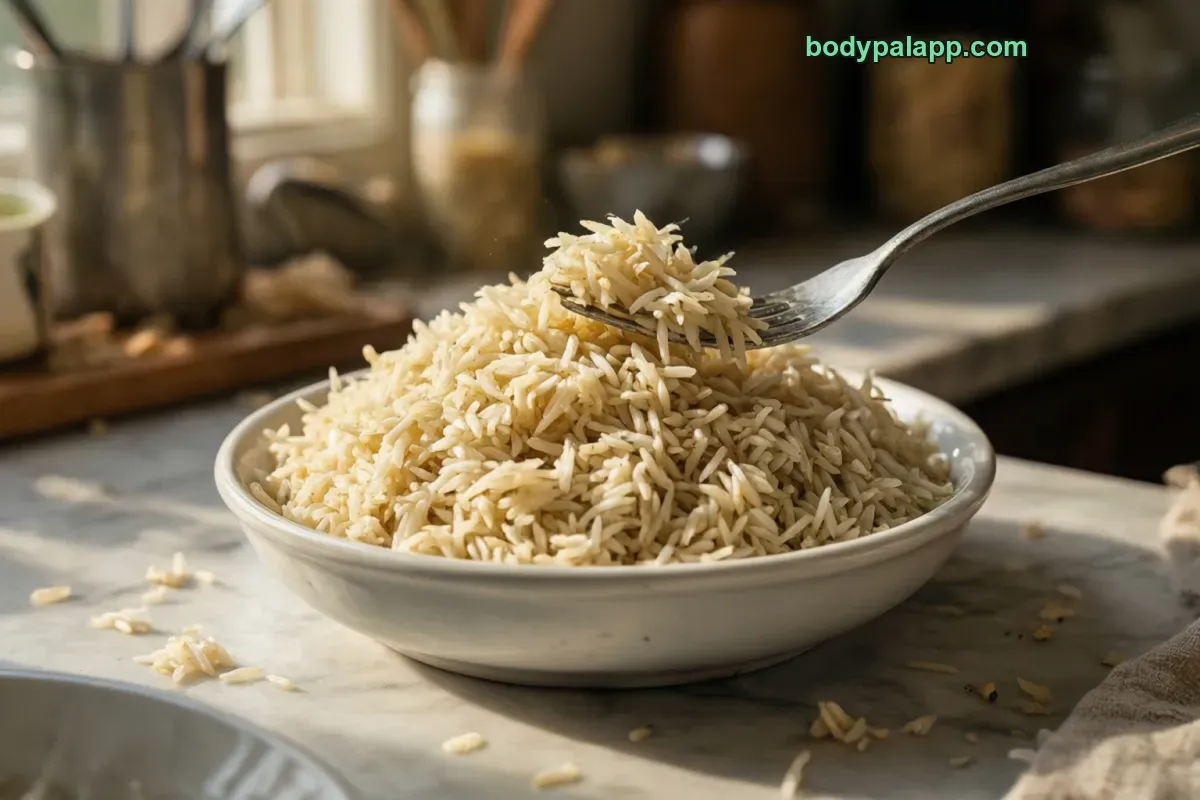
Basmati rice calories come to 205 for 1 cup cooked (158 g) and 130 per 100 g. Almost all of it is starch: carbs supply 89% of the calories, protein 9% and fat 2%. That means the size of your scoop decides the total far more than anything else on the label.
205kcal
1 cup of cooked rice · 158 g, basmati, cooked
9%protein
4.3 gProtein
45 gCarbs
0.4 gFat
How to burn off 205 kcal
—Walking, brisk
—Jogging
—Cycling, moderate
—Swimming
Skip the math. BodyPal counts these calories from your steps and workouts automatically.
Nutrition facts
Basmati, cooked · per 158 g
Calories
205 kcal
Protein
4.3 g
Carbohydrate
45 g
Fat
0.4 g
Saturated fat
0.1 g
Cholesterol
0 mg
Sodium
2 mg
Potassium
55 mg
Iron
1.9 mg
Source: USDA FoodData Central
🛡️
Verified nutrition data
Numbers on this page come from USDA FoodData Central, the U.S. Department of Agriculture’s food composition database, and from manufacturer labels where a branded product is named. Last verified September 2026. How we verify our data →
Basmati rice: calories, protein and sodium by serving
Percent of daily value uses the FDA reference of 2,000 kcal a day.
Serving
kcal
Protein
Carbs
Fat
Sodium
% DV kcal
1 cup cooked (158 g)
205
4.3 g
44.5 g
0.4 g
2 mg
10%
1 cup uncooked (185 g)
675
13.2 g
147.9 g
1.2 g
9 mg
34%
100 g
130
2.7 g
28.2 g
0.3 g
1 mg
7%
3 × 1 cup cooked (158 g)
616
12.8 g
5 mg
5 × 1 cup cooked (158 g)
1,027
21.3 g
8 mg
A second cup takes you to 411 calories
One cup of cooked basmati, about 158 g, lands at 205 calories, or 10% of a 2,000-calorie daily value. That is a modest side. The trouble is that rice rarely stays at one cup. Restaurant plates and generous home servings drift upward without anyone noticing.
Two cups (316 g) come to 411 calories. Three cups (474 g) reach 616, which is more than many full meals. A big family pot of 5 cups (790 g) holds 1,027 calories before any curry, butter or oil goes near it. The rice itself never changes; only the volume does.
If you track intake, weigh the cooked rice once or twice to learn what your usual bowl really holds. A kitchen scale beats a measuring cup, because fluffy, freshly cooked grains pack differently from rice that has cooled and settled. BodyPal can also log a plate of rice from a photo, which helps when you are eating out.
Carbs supply 89% of every calorie
Basmati is a carbohydrate food, plain and simple. Per 100 g cooked it carries 28.2 g of carbs, 2.7 g of protein and just 0.3 g of fat. Run that through the calorie split and carbs account for 89%, protein for 9% and fat for only 2%.
Sugar is almost absent at 0.1 g per 100 g, so those carbs are starch rather than anything sweet. Fiber is low too: 0.4 g per 100 g and 0.6 g in a cooked cup. Against a daily value of 28 g, that is a small contribution, so the rice will not do much for fullness on its own.
The protein is real but thin. A cup gives 4.3 g, which is 9% of the daily value. Even three cups only reach 12.8 g. Treat basmati as the energy base of a plate, not as the part that carries the protein.
Dry rice holds 675 calories per cup
The single biggest logging mistake with rice is mixing up cooked and uncooked weights. One cup of dry rice (185 g) carries 675 calories, 34% of a 2,000-calorie day, with 147.9 g of carbs and 13.2 g of protein.
Cooking adds water, not calories. The grains swell, so the same calories spread across far more weight and volume. That is why 100 g of cooked rice sits at 130 calories. If you measure rice dry before it hits the pot, log the uncooked entry. If you scoop it from the pot, log the cooked one.
Note that the figures on this page use the USDA entry for long-grain white rice, enriched and cooked. Brown basmati, sold by brands such as Golden Crown and Kohinoor's, is a different product. Check its own label rather than borrowing these numbers.
Basmati needs a protein partner
Plain basmati is one of the cleanest rows on a nutrition label. Sodium is 1 mg per 100 g and 2 mg per cooked cup, which rounds to 0% of the 2,300 mg daily value. Cholesterol is 0 and saturated fat is 0.1 g per 100 g. Whatever salt and fat a rice dish ends up with, the cook added it.
That makes the rice easy to fit into a day of eating, but it also leaves gaps. With little protein and fiber, a bowl of rice alone burns off quickly. Pair it with beans, lentils, chicken, fish or tofu, and add vegetables for bulk and fiber.
If you watch sodium, keep an eye on the sauces, stocks and seasoning blends that often go into rice pilafs and biryanis. If you watch calories, let the protein and vegetables take up more of the plate and keep the rice near 1 cup.
How does basmati rice compare?
Here is how basmati stacks up against white, jasmine and sushi rice, per 100 g and per usual serving.
Verdict: Per 100 g all four rices land at 130 calories, so no variety wins on calories alone. The gap you see per serving, 205 for basmati and jasmine versus 242 for white and sushi rice, comes from heavier cup weights, so for weight loss weigh your rice whichever kind you pick.
Most popular basmati rice brands in the United States
Ranked by popularity in the BodyPal database
# Productkcal / 100 g
1Golden Grown Basmati Rice¼ cup · 45 g333 kcal
2Golden Crown Brown Basmati Rice¼ cup · 45 g333 kcal
3Golden Crown Indian Basmati Rice1 cup · 100 g351 kcal
4Tilda Steamed Pure Basmati Rice1 cup · 135 g141 kcal
5Tilda Pure Original Basmati Rice¼ cup · 45 g356 kcal
6Veetee Basmati Rice½ cup · 140 g136 kcal
7Kohinoor's Exclusive Brown Basmati Rice50 g370 kcal
Most labels are per dry rice weight, so they read far higher than the cooked number above; ready-to-heat pouches like Tilda Steamed and Veetee are close to cooked rice. Source: manufacturer labels / USDA FoodData Central.
Basmati rice FAQs
How many calories are in a cup of basmati rice?
About 205 calories in one cup of cooked basmati rice (158 g), or 130 per 100 g.
Is basmati rice good for weight loss?
A cooked cup has 205 calories with 0.4 g fat and 0.6 g fiber, so the portion size sets the total.
Basmati rice vs jasmine rice: which has fewer calories?
They are nearly the same: cooked basmati has 130 calories per 100 g and cooked jasmine 129.
How many carbs are in basmati rice?
A cooked cup has 44.5 g carbs and 4.3 g protein; per 100 g it is 28.2 g carbs.
How many calories are in uncooked basmati rice?
One cup of uncooked rice (185 g) has 675 calories, 34% of a 2,000-calorie daily value. Cooking adds only water, so that same rice yields several cups at 205 calories each.
How much protein is in a cup of basmati rice?
A cup of cooked basmati (158 g) gives 4.3 g of protein, 9% of the daily value. Per 100 g it is 2.7 g, so pair rice with beans, meat, fish or tofu for a fuller meal.
Is basmati rice high in sodium?
No. Plain cooked basmati has 1 mg of sodium per 100 g and 2 mg per cup, which is 0% of the daily value. Any real sodium in a rice dish comes from salt, stock or sauces.
How much fat is in basmati rice?
Very little: 0.4 g per cooked cup and 0.3 g per 100 g. Fat supplies just 2% of the calories, while carbs supply 89%, so oil or butter added during cooking changes the total most.
How much fiber does basmati rice have?
A cooked cup has 0.6 g of fiber and 100 g has 0.4 g, a small share of the 28 g daily value. Adding vegetables or beans is the easy way to raise fiber in a rice meal.