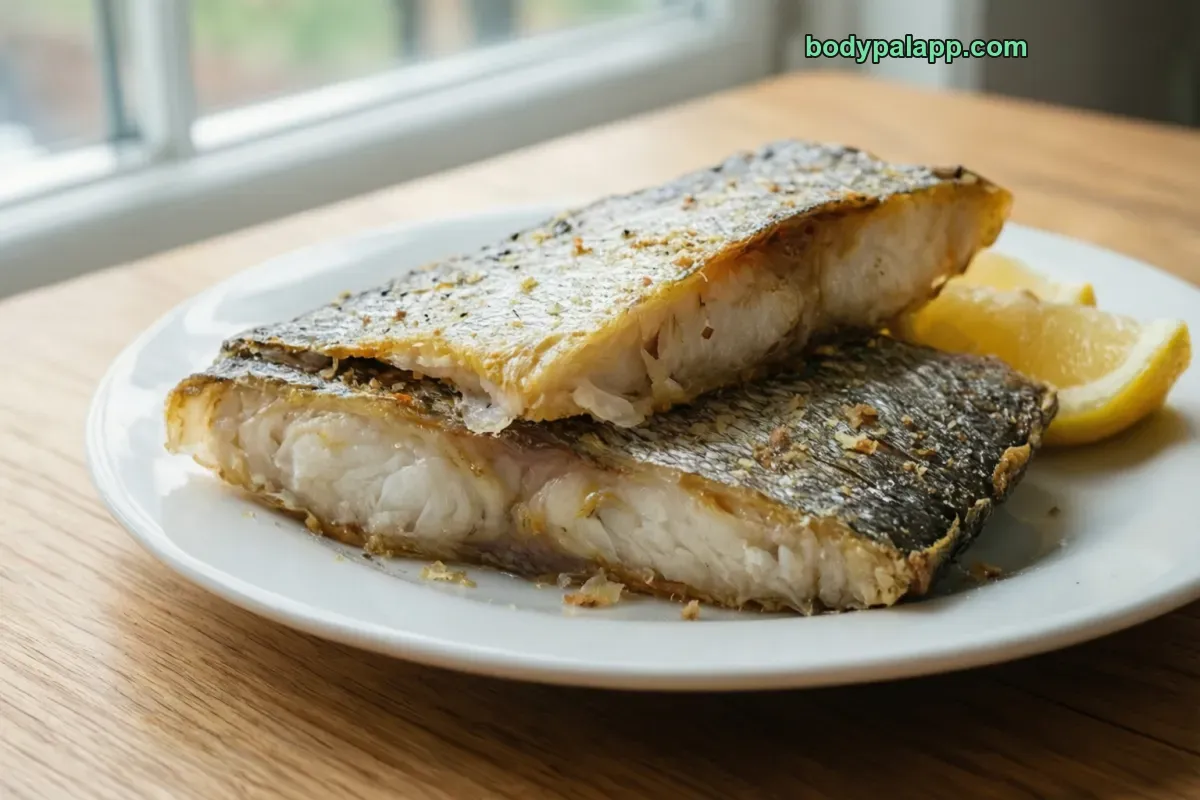
Bass calories come to 91 for one 62 g fillet and 146 per 100 g of cooked freshwater bass. The number to notice is protein: it supplies 69% of the calories, and there are 0 g of carbs. Portion size drives the total, so count fillets or weigh them.
91kcal
1 fillet · 62 g, freshwater, cooked, dry heat
69%protein
15 gProtein
0 gCarbs
2.9 gFat
How to burn off 91 kcal
—Walking, brisk
—Jogging
—Cycling, moderate
—Swimming
Skip the math. BodyPal counts these calories from your steps and workouts automatically.
Nutrition facts
Freshwater, cooked, dry heat · per 62 g
Calories
91 kcal
Protein
15 g
Carbohydrate
0 g
Fat
2.9 g
Saturated fat
0.6 g
Cholesterol
54 mg
Sodium
56 mg
Potassium
283 mg
Iron
1.2 mg
Source: USDA FoodData Central
🛡️
Verified nutrition data
Numbers on this page come from USDA FoodData Central, the U.S. Department of Agriculture’s food composition database, and from manufacturer labels where a branded product is named. Last verified October 2026. How we verify our data →
Bass: calories, protein and sodium by serving
Percent of daily value uses the FDA reference of 2,000 kcal a day.
Serving
kcal
Protein
Carbs
Fat
Sodium
% DV kcal
1 fillet (62 g)
91
15 g
0 g
2.9 g
56 mg
5%
3 oz portion (85 g)
124
20.6 g
0 g
4 g
77 mg
6%
Striped bass fillet (124 g)
154
28.2 g
0 g
3.7 g
109 mg
8%
100 g
146
24.2 g
0 g
4.7 g
90 mg
7%
3 × 1 fillet (62 g)
272
45 g
167 mg
5 × 1 fillet (62 g)
453
75 g
279 mg
One fillet is a 91-calorie portion
A single freshwater bass fillet weighs 62 g and comes to 91 calories with 15 g of protein. That is 5% of the daily calorie value and 30% of the protein value. By fish standards it is a small serving, and most people eat more than one.
The total climbs steadily because nothing in bass hides extra calories. Two fillets (124 g) come to 181 calories and 30 g of protein. Three fillets reach 272 calories and 45 g of protein. Five fillets, a meal for several people rather than one, total 453 calories with 75 g of protein.
If you buy by weight, use the 3 oz portion (85 g): 124 calories and 20.6 g of protein. A striped bass fillet is a bigger cut. At 124 g it brings 154 calories and 28.2 g of protein, so check which fish and which size you are actually logging.
Protein supplies 69% of the calories
Per 100 g, cooked bass has 146 calories, 24.2 g of protein, 4.7 g of fat and 0 g of carbs. In calorie terms that is a 69% protein, 31% fat split. There is no sugar, starch or fiber to count.
The fat is modest. Saturated fat is 1 g per 100 g against a daily value of 20 g, so most of the fat in bass is not the saturated kind. A striped bass fillet is leaner still, with 3.7 g of fat in 124 g.
That profile makes bass an easy protein anchor. 100 g covers 48% of the protein daily value for 7% of the calorie value. Any carbs on the plate come from what you serve with it, not from the fish.
Sodium stays low until you season it
Plain cooked bass carries 90 mg of sodium per 100 g, which is 4% of the daily value. One fillet has 56 mg, or 2%. Even five fillets total only 279 mg. Salt, soy sauce, marinades or a breaded coating move this row far more than the fish does.
Cholesterol is the row to glance at: 87 mg per 100 g against a 300 mg daily value. If you track cholesterol, count it with the rest of the day. Potassium runs the other way at 456 mg per 100 g, a useful contribution toward the daily value.
These numbers come from the USDA row for freshwater bass, mixed species, cooked with dry heat. That means baked, broiled or grilled without added fat. Pan-frying in butter or oil adds fat and calories the table does not show, so log the cooking fat separately.
Build the plate around what bass lacks
Bass brings protein and very little else: 0 g of carbs and 0 g of fiber. A filling plate adds those from vegetables, beans, potatoes or whole grains. Lemon, herbs, garlic and pepper add flavor without moving the calorie number.
If you are cutting calories, two fillets at 181 calories leave plenty of room for generous sides, and the protein keeps the meal from feeling thin. If you are eating for training, three fillets put 45 g of protein on the plate for 272 calories. Sauces are where the count drifts, so measure them.
Logging is simple because the fish itself has no hidden ingredients. Count the fillets, add the oil and sides, and you are done. BodyPal can also log a plate of bass from a photo.
How does bass compare?
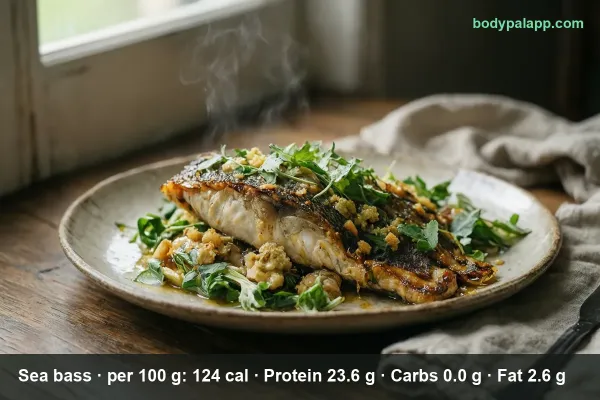
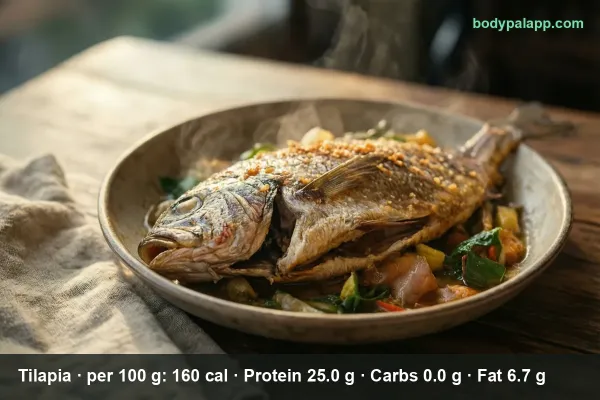
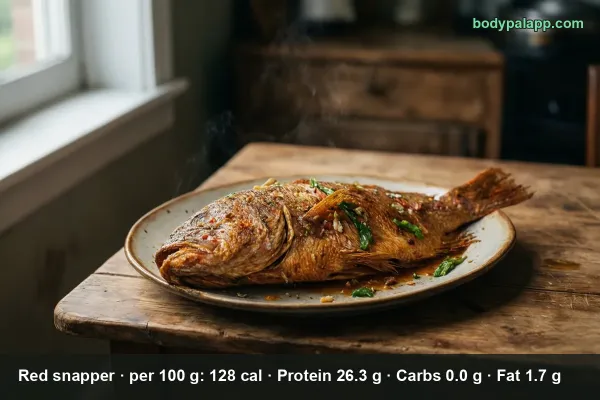
Here is how freshwater bass stacks up against sea bass, tilapia and red snapper, per 100 g and per usual serving.
Verdict: For the fewest calories pick sea bass at 124 per 100 g; for the most protein per calorie pick red snapper, with 26.3 g of protein for 128 calories and just 1.7 g of fat. Tilapia is the heaviest of the group at 160 calories and 280 mg of sodium per 100 g, while bass at 146 sits in the middle.
Most popular bass brands in the United States
Ranked by popularity in the BodyPal database
# Productkcal / 100 g
1Sea Best Chilean Sea Bass Portions4 oz · 113 g115 kcal
These are raw sea bass products labeled per raw weight, so they read lower than the cooked freshwater bass numbers above. Source: manufacturer labels / USDA FoodData Central.
Bass FAQs
How many calories are in one bass fillet?
A cooked bass fillet (62 g) has about 91 calories, and a 3 oz portion has 124.
Is bass good for weight loss?
Cooked bass has 146 calories per 100 g with 24.2 g protein and 0 g carbs. A 3 oz portion gives 124 calories and 20.6 g protein.
Bass vs sea bass: which has fewer calories?
Cooked sea bass has 124 calories per 100 g versus 146 for cooked freshwater bass. Sea bass also has less fat, 2.6 g versus 4.7 g per 100 g.
How much protein is in bass?
One cooked bass fillet (62 g) has 15.0 g protein and 2.9 g fat. Per 100 g it has 24.2 g protein.
How many calories are in sea bass?
Sea bass has 124 calories per 100 g, a little less than freshwater bass at 146. The difference comes mostly from fat: 2.6 g in sea bass versus 4.7 g in freshwater bass.
How much protein is in sea bass?
Sea bass has 23.6 g of protein per 100 g, almost the same as freshwater bass at 24.2 g. Both have 0 g of carbs, so nearly all of their calories come from protein and a little fat.
What are the nutrition facts for sea bass?
Per 100 g, sea bass has 124 calories, 23.6 g of protein, 0 g of carbs, 2.6 g of fat and 87 mg of sodium. That makes it one of the leaner fish compared on this page.
How many calories are in Chilean sea bass?
This page covers freshwater bass at 146 calories per 100 g, and generic sea bass is 124. Chilean sea bass is a different fish; packaged portions from Sea Best, Packers and Empire's Treasure are listed in the brand table with their own label values.
How many calories are in a striped bass fillet?
A striped bass fillet of 124 g has 154 calories and 28.2 g of protein. Two freshwater bass fillets of the same total weight come to 181 calories, so striped bass is the leaner choice by weight.