
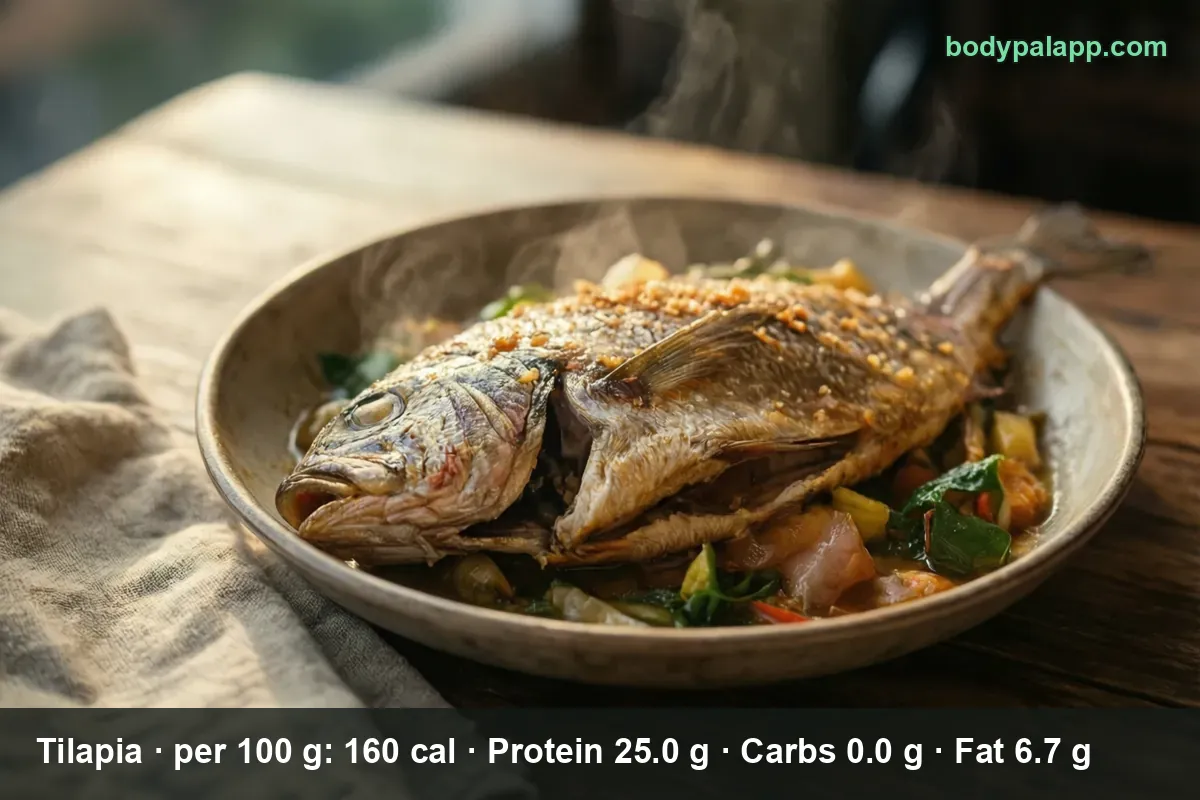
How many calories are in tilapia?
A small or regular tilapia fillet weighs 90 g and carries 144 calories, at 160 calories per 100 g for plain cooked fish. That is the number for a fillet that came out of an oven or off a grill. Drop the same fillet in a fryer and it becomes 213.
On this page
- Tilapia quick facts
- US servings from one ounce to a whole fish
- How the cooking method changes the number
- Raw or cooked and which weight to log
- Protein and sodium are the rows to watch
- How does tilapia compare?
- Most popular tilapia brands
- FAQ
Tilapia quick facts
The row below is FNDDS 2706318, "Fish, tilapia, NFS". NFS means not further specified: the generic cooked tilapia that lands on a weeknight plate, with a little fat and a little salt from the kitchen. It is the record most people are actually looking for, and it comes with real household measures attached, which is why a fillet, a cup and a whole fish all get numbers further down. Its values match the separate "baked or broiled" record line for line.
If your fillet was steamed, grilled, breaded or fried, USDA has a distinct record for each of those, and they are laid out in their own section.
| Nutrient | Per 100 g | Per one fillet (90 g) | % Daily Value |
|---|---|---|---|
| Calories | 160 | 144 | — |
| Total fat | 6.65 g | 6.0 g | 8% |
| Saturated fat | 1.91 g | 1.7 g | 9% |
| Carbohydrate | 0.01 g | 0.0 g | 0% |
| Dietary fiber | 0 g | 0.0 g | 0% |
| Total sugars | 0.01 g | 0.0 g | — |
| Protein | 24.95 g | 22.5 g | 45% |
| Sodium | 280 mg | 252 mg | 11% |
| Cholesterol | 66 mg | 59 mg | 20% |
| Potassium | 376 mg | 338 mg | 7% |
% Daily Value is based on a 2,000-calorie diet.
Verified nutrition data
Numbers on this page come from USDA FoodData Central, the U.S. Department of Agriculture’s food composition database, and from manufacturer labels where a branded product is named. Last verified September 2026. How we verify our data →
There is no added sugars row and no trans fat row here, because this FNDDS edition does not publish either for the record, and unbreaded fish has nothing to add sugar to anyway. Daily Values come from the FDA nutrition label reference amounts.
US servings from one ounce to a whole fish
| Serving | Weight | Calories |
|---|---|---|
| 1 oz | 28 g | 45 kcal |
| One small or regular fillet | 90 g | 144 kcal |
| One large fillet | 135 g | 216 kcal |
| 1 cup, flaked or cubed | 135 g | 216 kcal |
| One whole fish, any size | 270 g | 432 kcal |
| Per 100 g | 100 g | 160 kcal |
The fillet, the cup and the whole fish are USDA household measures for this record, weights and all. The 1 oz line is our own arithmetic from the USDA 100 g figure, not a USDA serving, and so is the 4 oz portion people usually buy: 113 g of cooked tilapia works out to 181 calories with 28.2 g of protein.
Two traps live in this table. A cup of flaked tilapia weighs the same 135 g as a large fillet, so logging both "1 cup" and "1 fillet" for one piece of fish doubles a 216-calorie serving into 432. And a whole fish is not one portion for one person in most kitchens, even though it is listed as a single serving at 270 g.
How the cooking method changes the number
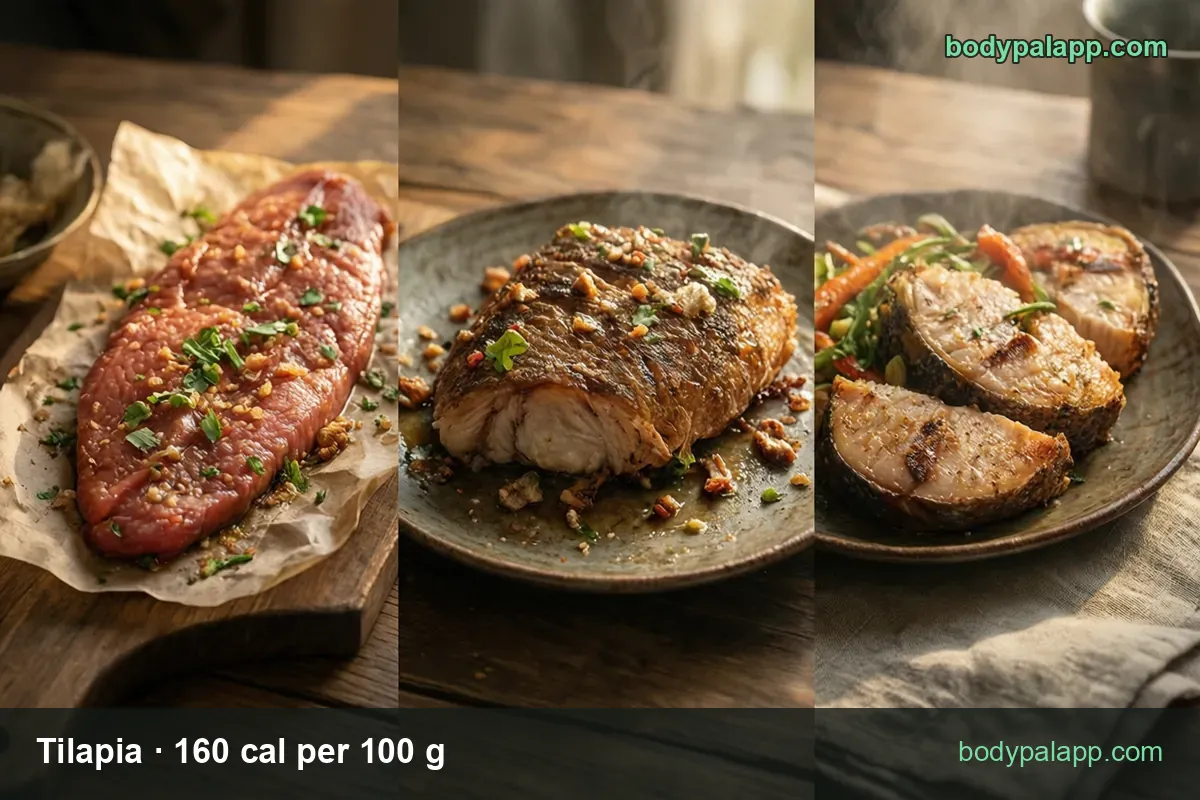
Tilapia is lean enough that whatever you cook it in shows up in the total. Steamed to fried is a swing of 116 calories per 100 g on identical fish.
| Version | Per 100 g | Typical piece | Calories |
|---|---|---|---|
| Steamed | 121 kcal | one fillet, 90 g | 109 kcal |
| Grilled | 142 kcal | one fillet, 90 g | 128 kcal |
| Baked or broiled | 160 kcal | one fillet, 90 g | 144 kcal |
| Breaded and baked | 180 kcal | one fillet, 90 g | 162 kcal |
| Fried | 237 kcal | one fillet, 90 g | 213 kcal |
| Raw fillet | 96 kcal | 4 oz raw, 113 g | 108 kcal |
Steamed is the outlier in the good direction: 2.15 g of fat and 163 mg of sodium per 100 g, because nothing was added to the pan. Grilled sits at 4.42 g of fat and carries the most protein per 100 g of any version in this table, 25.46 g for 142 calories.
Coating is where the food changes character. Breaded and baked adds only 20 calories per 100 g over plain baked, but fried adds 57 on top of that, plus 11.72 g of carbs and 13.46 g of fat per 100 g, and protein drops to 17.18 g because breading and oil now make up part of the weight.
Frozen retail fillets follow the same logic. Plain raw store fillets from brands like Great American, Oceankist and Simply Seafood run 88 to 99 calories per 100 g, close to the USDA raw record, while Trident Seafoods' panko breaded tilapia is 209 per 100 g, or 230 calories for the two-piece serving on the box.
Raw or cooked and which weight to log
This is the mistake that quietly costs people accuracy. Raw tilapia is 96 calories per 100 g; the same fish cooked with dry heat and no added fat is 128 per 100 g. Nothing was added. Water left.
So a 4 oz raw fillet (113 g) is 108 calories, and it still has those 108 calories after cooking, only now it weighs less. If you weigh the fillet after it comes off the heat and log it against a cooked record, you get a number close to right. If you weigh it raw and log it against a cooked record, you overcount by roughly a third.
Pick one habit and stick to it: weigh raw and use a raw record, or weigh cooked and use a cooked one. Store labels are almost always raw weight, which is why an 88-calorie-per-100 g package looks so much lighter than the 160 on this page.
Protein and sodium are the rows to watch
One 90 g fillet delivers 22.5 g of protein, 45% of the Daily Value, for 144 calories. Very little else on a dinner plate does that. MyPlate counts a 1 oz-equivalent of cooked seafood as 1 oz by weight, so that single fillet covers about three of them.
The Dietary Guidelines for Americans suggest 8 oz of seafood a week for adults. At the generic cooked rate, 8 oz is 227 g and about 363 calories with roughly 56.6 g of protein across the week, which is our own arithmetic from the USDA 100 g figure rather than a USDA serving. That is a small calorie line for a full week of a food group.
Sodium is the row that comes from the kitchen, not the fish. Generic cooked tilapia carries 280 mg per 100 g, 252 mg in a fillet, about an eighth of a teaspoon of table salt. Cooked plain with no salt, the SR Legacy record is 56 mg per 100 g, a fifth as much. Fried goes the other way to 383 mg. If you are watching sodium, the steamed record at 163 mg is the better pick, and it happens to be the lowest-calorie version too.
Cholesterol is worth a glance if a doctor has flagged it: 59 mg in one fillet, 20% of the Daily Value, which is high relative to the calories. Potassium runs 338 mg per fillet, 7% DV.
How does tilapia compare?
| Fish | Per 100 g | US serving | Calories |
|---|---|---|---|
| Tilapia | 160 kcal | one fillet, 90 g | 144 kcal |
| Bass | 161 kcal | one fillet, 90 g | 145 kcal |
| Whiting, baked or broiled | 153 kcal | one fillet, 90 g | 138 kcal |
| White fish, baked or broiled, coated | 166 kcal | one fillet, 90 g | 149 kcal |
Our take: cooked the same way, mild white fish all land within 11 calories of each other per fillet, and whiting is the only one of these four that comes in under tilapia. Tilapia wins on protein instead, at 24.95 g per 100 g against 22.9 for bass and 22.75 for whiting, so it gives you the most protein per calorie of the group. Choose by price and what looks fresh, then spend your attention on the pan: swapping fried for grilled saves 85 calories on one fillet, which is more than any of these swaps between species.
Most popular tilapia brands in the United States
Ranked by how widely each product appears among foods sold in the United States, from the BodyPal food database of over 3.3 million products. Calories are the figures printed on each Nutrition Facts label, checked against USDA FoodData Central.
| Product | Calories (per 100 g) |
|---|---|
| Trident Seafoods Panko Breaded Tilapia | 209 cal |
| Great American Seafood Imports Tilapia Fillet | 88 cal |
| Miramar Seafood Tilapia Fillet | 88 cal |
| Oceankist Tilapia Fillet | 97 cal |
| Simply Seafood Tilapia Fillet | 99 cal |
| Hy-Vee Fish Market Tilapia Fillets | 98 cal |
Brand popularity: BodyPal food database. Nutrition: manufacturer labels / USDA FoodData Central.
Tilapia FAQs
How many calories are in a tilapia fillet?
A small or regular fillet weighs 90 g and carries 144 calories, based on the USDA's generic cooked tilapia at 160 calories per 100 g. A large fillet, closer to 135 g, comes to 216. Breading or a pan of oil pushes that same fillet to 162 or 213.
How many calories in 4 oz of tilapia?
Four ounces of cooked tilapia is 113 g and about 181 calories, which is our own arithmetic from the USDA 100 g figure, not a USDA serving. Four ounces of raw fillet is lighter on paper at 108 calories, because the water has not cooked out yet.
How much protein is in tilapia?
One 90 g fillet has 22.5 g of protein, which is 45% of the Daily Value, at 24.95 g per 100 g. Four ounces of cooked fillet is roughly 28.2 g. Steamed tilapia is leaner still per calorie: 25.37 g of protein for 121 calories per 100 g.
Grilled or fried tilapia: how big is the difference?
About 85 calories per fillet. Grilled tilapia is 142 calories per 100 g, so a 90 g fillet is 128; fried is 237 per 100 g, or 213 for the same fillet. Frying also adds 11.72 g of carbs per 100 g and 109 mg more sodium than grilling.
Does tilapia have carbs?
Almost none: USDA lists 0.01 g of carbohydrate per 100 g of plain cooked tilapia, which rounds to 0.0 g on a 90 g fillet, with zero fiber. Carbs only appear once there is a coating: breaded baked tilapia has 0.14 g and fried tilapia 11.72 g per 100 g.
How much sodium is in cooked tilapia?
280 mg per 100 g, or 252 mg in a 90 g fillet. That is 11% of the Daily Value, about an eighth of a teaspoon of table salt. Cooked without salt, the SR Legacy record drops to 56 mg per 100 g. Fried tilapia climbs to 383 mg.
Is tilapia good for weight loss?
At 160 calories per 100 g with 24.95 g of protein, tilapia is one of the cheaper ways to fill a plate. Steamed, it drops to 121 calories per 100 g. If you are watching calories, the cooking method matters more than the fish: fried is 237.
Raw or cooked tilapia: which weight do I log?
Log the weight you actually eat: raw tilapia is 96 calories per 100 g and cooked dry heat is 128, because water leaves the fillet. So 113 g raw is 108 calories, and that same fillet weighs less on the plate while still carrying those calories.
Similar foods
- Cuttlefish — 134 cal per 3 oz
- Cooked Salmon — 242 cal per fillet
- Grilled Calamari — 209 cal per cup
- Calamari Steak — 175 cal per steak
- Steelhead trout — 143 cal for 3 oz cooked
- Shrimp In Lobster Sauce — 279 cal per cup
Count it without the math
Point the camera at the plate and BodyPal counts the fillet for you, breading and all.


How long does it take to burn off tilapia?
One fillet (90 g) is 144 kcal. Enter your weight and the amount you ate to see how long it takes you to burn that off:
lb
| Activity | Time to burn 144 kcal |
|---|---|
| Walking, brisk | 29 min |
| Cycling, moderate | 18 min |
| Swimming, moderate | 21 min |
| Jogging | 17 min |
| Weight training, moderate | 32 min |
Times are for a 155 lb adult at a steady pace; change the weight to see yours. The amount is set to the portion in the text (90 g); change it to what you actually ate. BodyPal works this out from your steps automatically.
Want the bigger picture? Calculate your daily calorie needs — your maintenance figure, a target for losing or gaining, and the date you get there.