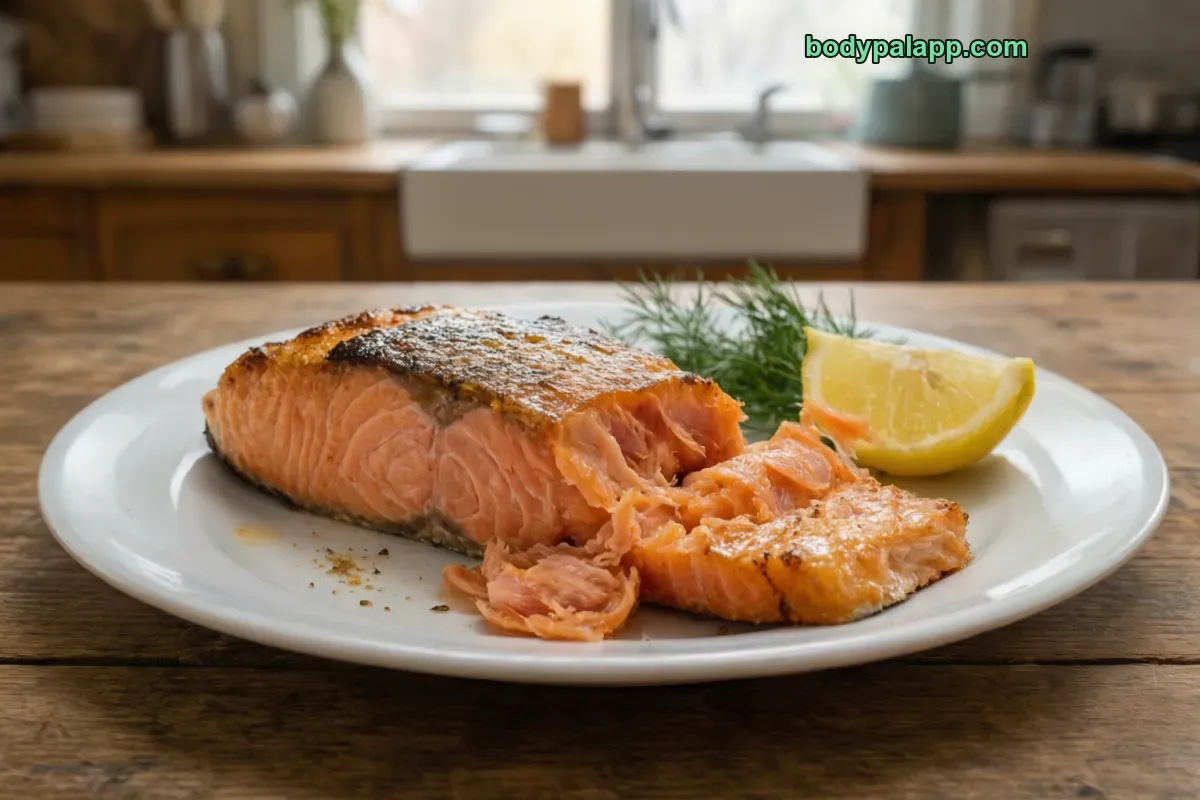
Cooked salmon calories come to 242 for a 155 g fillet and 156 per 100 g, based on sockeye cooked with dry heat. The number to notice is protein: 68% of the calories come from it, and a single fillet carries 41 g, or 82% of the daily value, with zero carbs.
242kcal
1 fillet · 155 g, sockeye, cooked dry heat
68%protein
41 gProtein
0 gCarbs
8.6 gFat
How to burn off 242 kcal
—Walking, brisk
—Jogging
—Cycling, moderate
—Swimming
Skip the math. BodyPal counts these calories from your steps and workouts automatically.
Nutrition facts
Sockeye, cooked dry heat · per 155 g
Calories
242 kcal
Protein
41 g
Carbohydrate
0 g
Fat
8.6 g
Saturated fat
1.5 g
Cholesterol
95 mg
Sodium
143 mg
Potassium
676 mg
Iron
0.8 mg
Source: USDA FoodData Central
🛡️
Verified nutrition data
Numbers on this page come from USDA FoodData Central, the U.S. Department of Agriculture’s food composition database, and from manufacturer labels where a branded product is named. Last verified September 2026. How we verify our data →
Cooked salmon: calories, protein and sodium by serving
Percent of daily value uses the FDA reference of 2,000 kcal a day.
Serving
kcal
Protein
Carbs
Fat
Sodium
% DV kcal
Fillet (155 g)
242
41 g
0 g
8.6 g
143 mg
12%
3 oz portion (85 g)
133
22.5 g
0 g
4.7 g
78 mg
7%
100 g
156
26.5 g
0 g
5.6 g
92 mg
8%
3 × Fillet (155 g)
725
123.1 g
428 mg
5 × Fillet (155 g)
1,209
205.2 g
713 mg
A 3 oz portion lands at 133 calories
The serving you pick moves the total more than anything else on this page. A 3 oz portion (85 g), the size most labels use, comes to 133 calories with 22.5 g of protein. A full fillet of 155 g is 242 calories and 41 g of protein. That is 7% versus 12% of a 2000-calorie day.
Store and restaurant fillets often run bigger than people assume, and the math scales in a straight line. Two fillets (310 g) add up to 484 calories and 82.1 g of protein. Three fillets, the kind of tray you might cook for a family dinner, total 725 calories. Five fillets at 775 g reach 1,209 calories, a useful number if you batch-cook salmon for the week and split it into containers.
If you track by weight, the 100 g row is the cleanest reference: 156 calories and 26.5 g of protein. A kitchen scale turns a guess into a logged number. When weighing is not practical, BodyPal can log salmon from a photo, but knowing whether your plate looks like 85 g or 155 g still sharpens the estimate.
Protein supplies about two thirds of every calorie
The calorie split is simple: 68% protein, 32% fat and 0% carbohydrate. Per 100 g that works out to 26.5 g of protein, 5.6 g of fat and no sugar or fiber at all. Few foods deliver that much protein for 156 calories.
Fat is the smaller share, and sockeye cooked with dry heat is a lean way to eat salmon. There is 5.6 g of fat per 100 g, of which 1 g is saturated, measured against a daily value of 20 g for saturated fat. A full fillet carries 8.6 g of fat in total. Oil or butter in the pan is not part of this row, so the 32% figure holds only for plain cooking.
On protein, the numbers are hard to beat. The 100 g serving covers 53% of the 50 g daily value, the 3 oz portion covers 45%, and the fillet 82%. If you want a filling, high-protein main without a big calorie bill, plain cooked salmon is one of the cleaner ways to get there.
Sodium stays low until the seasoning goes on
Plain cooked sockeye has 92 mg of sodium per 100 g. A 3 oz portion carries 78 mg, just 3% of the 2300 mg daily value, and a whole fillet 143 mg, or 6%. For a main-course protein, that is a low reading.
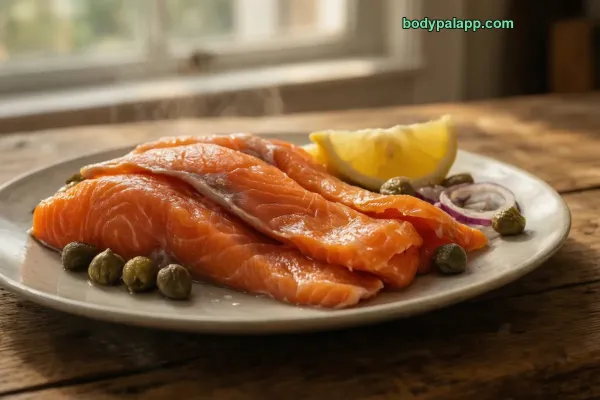
The catch is everything around the fish. Soy glazes, seasoning blends and cured versions change the row completely; smoked salmon on our pages lists 672 mg per 100 g. If you watch sodium, cook the fillet plain and build flavor with lemon, herbs, garlic or black pepper instead of salty sauces.
Two other rows deserve a glance. Cholesterol is 61 mg per 100 g against a 300 mg daily value, and potassium is 436 mg per 100 g against 4700 mg. Neither number is extreme, but both are worth logging if you track them alongside calories.
Zero carbs leaves the rest of the plate open
Cooked salmon has 0 g of carbohydrate, sugar and fiber. That makes it easy to fit into almost any way of eating, but it also means the fish brings no fiber to the plate, against a daily value of 28 g. What you serve it with decides how filling and balanced the meal ends up.
Vegetables add fiber and volume for few calories, which suits a lean protein like this one. A rice, grain or potato side adds the carbohydrate the fish lacks. Portion that side as carefully as the salmon, because it can easily match or pass the 133 calories in a 3 oz portion.
Sauces are the quiet variable. A spoon of creamy dressing or a pat of butter can add more fat than the fish itself contains, so measure them if you log the meal. Keep the salmon plain and the extras visible, and the 242 calories of a fillet stay close to what actually lands on your plate.
How does cooked salmon compare?
This table sets cooked sockeye against raw, grilled and smoked salmon, per 100 g and per usual serving.
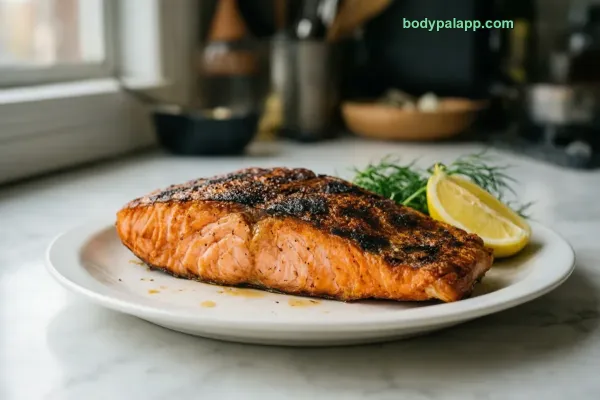
Verdict: For the most protein per calorie, plain cooked salmon wins at 156 calories and 26.5 g of protein per 100 g, while grilled salmon runs about 1.7 times the calories at 259. Smoked salmon is lighter at 117 per 100 g, but its 672 mg of sodium makes it a topping, not the main event.
Most popular cooked salmon brands in the United States
Ranked by popularity in the BodyPal database
# Productkcal / 100 g
1Foppen Smoked Norwegian Salmon Slices2 oz · 56 g214 kcal
3Foppen Traditional Smoked Norwegian Atlantic Salmon Slices2 oz · 56 g196 kcal
4Blue Hill Bay Smoked Salmon2 oz · 56 g125 kcal
5Trans-Ocean Smoked Salmon2 oz · 57 g123 kcal
6Blue Hill Bay Herb Smoked Salmon2 oz · 56 g125 kcal
These packs are smoked and cured rather than cooked with dry heat, so their per 100 g numbers sit above or below the plain cooked figure above. Source: manufacturer labels / USDA FoodData Central.
Cooked salmon FAQs
How many calories are in cooked salmon?
A 155 g cooked salmon fillet is 242 calories and a 3 oz portion (85 g) is 133 calories. Per 100 g, cooked salmon has 156 calories.
Is cooked salmon good for weight loss?
Per 100 g it has 156 calories, 26.5 g protein and 0 g carbs, so a 3 oz portion gives 22.5 g protein for 133 calories.
Cooked salmon vs grilled salmon: what is the difference?
Plain salmon cooked with dry heat is 156 calories per 100 g, while grilled salmon prepared with added fat is 259 calories per 100 g.
How much protein is in cooked salmon?
Cooked salmon has 26.5 g protein per 100 g. That is 41 g in a 155 g fillet and 22.5 g in a 3 oz portion.
How many calories are in 3 oz of cooked salmon?
A 3 oz portion (85 g) of cooked salmon has 133 calories, with 22.5 g of protein, 4.7 g of fat and 0 g of carbs. That is 7% of a 2000-calorie daily value and 45% of the protein daily value.
How many calories are in a cooked salmon fillet?
A 155 g cooked salmon fillet has 242 calories and 41 g of protein, about 12% of a 2000-calorie day. Two fillets come to 484 calories, so the size of the fillet matters more than the cooking.
What are the macros for 100 g of cooked salmon?
100 g of cooked salmon has 156 calories, 26.5 g of protein, 5.6 g of fat and 0 g of carbs. By calories, that is 68% protein and 32% fat, with no sugar or fiber.
What are the full nutrition facts for 100 g of cooked salmon?
Beyond its 156 calories, 100 g of cooked sockeye has 92 mg of sodium, 61 mg of cholesterol, 436 mg of potassium and 1 g of saturated fat. Sugar and fiber are both 0 g.