
How many calories are in sea bass?
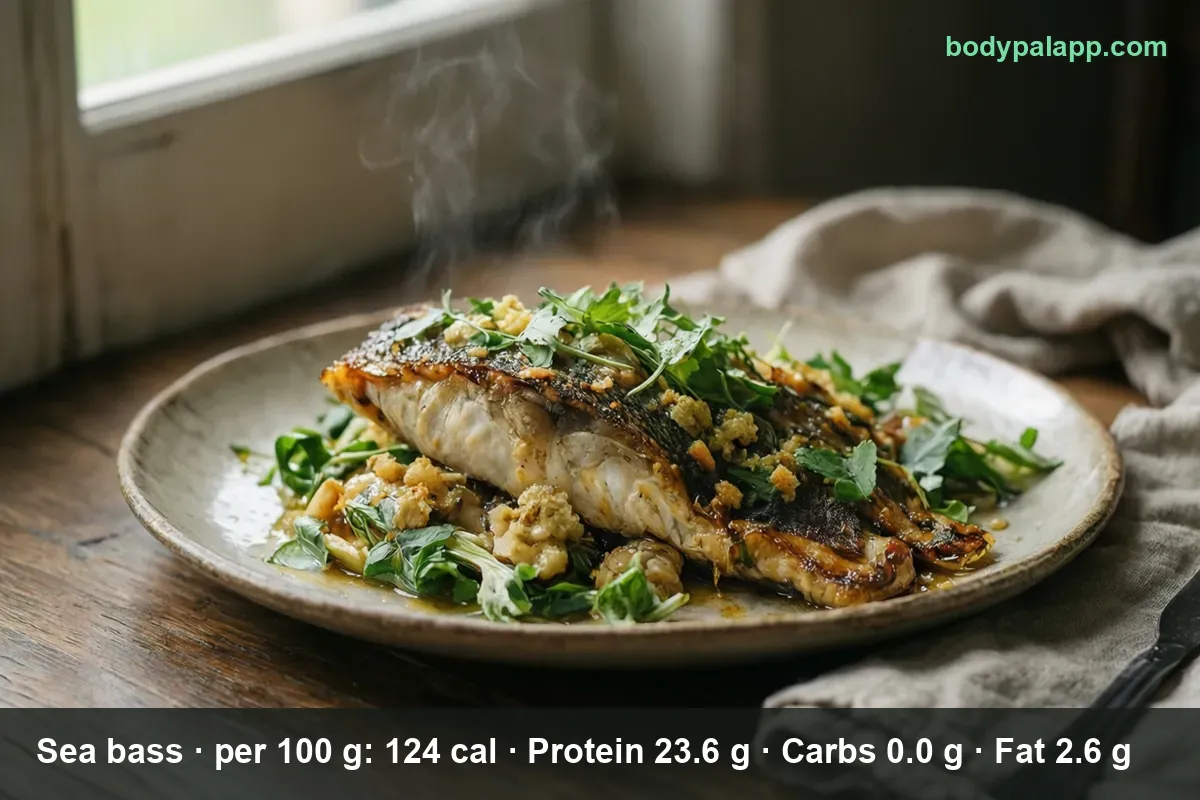
One cooked sea bass fillet weighs 101 g and carries 125 calories. Per 100 g the cooked fish runs 124 calories, with 23.6 g of protein and zero carbohydrate. A 3 oz portion, the size most recipes plate, is 105. The fillet is lean enough that what goes in the pan matters more than the fish.
On this page
- Sea bass quick facts
- US servings, from one ounce to a six-ounce fillet
- Raw, cooked, Chilean and branzino
- Protein is the row that stands out
- How does sea bass compare?
- Most popular sea bass brands
- Sea bass FAQs
Sea bass quick facts
The record used here is SR Legacy 173694, "Fish, sea bass, mixed species, cooked, dry heat". That is the fish people actually put on a plate: baked, grilled or broiled, skin on, nothing added. The raw record exists too and sits lower, and it gets its own section further down for anyone who weighs fish before it hits the heat.
USDA attaches a household measure to this record: one fillet, 101 g. That is a modest restaurant portion and a generous home one, which makes it a useful anchor.
| Nutrient | Per 100 g | Per 1 fillet (101 g) | % Daily Value |
|---|---|---|---|
| Calories | 124 | 125 | — |
| Total fat | 2.56 g | 2.6 g | 3% |
| Saturated fat | 0.66 g | 0.7 g | 3% |
| Carbohydrate | 0 g | 0 g | 0% |
| Dietary fiber | 0 g | 0 g | 0% |
| Protein | 23.63 g | 23.9 g | 48% |
| Sodium | 87 mg | 88 mg | 4% |
| Cholesterol | 53 mg | 54 mg | 18% |
| Potassium | 328 mg | 331 mg | 7% |
% Daily Value is based on a 2,000-calorie diet.
Verified nutrition data
Numbers on this page come from USDA FoodData Central, the U.S. Department of Agriculture’s food composition database, and from manufacturer labels where a branded product is named. Last verified September 2026. How we verify our data →
There is no total sugars row and no added sugars row on this page, because USDA does not publish either value for this record — which follows from a food with 0 g of carbohydrate. Trans fat is missing from the SR Legacy edition of the row as well, so it is left out rather than guessed. Cholesterol is the one line that runs higher than people expect from a lean white fish: 54 mg in a fillet, 18% of the FDA Daily Value.
US servings, from one ounce to a six-ounce fillet
| Serving | Weight | Calories |
|---|---|---|
| 1 oz, cooked | 28 g | 35 kcal |
| 3 oz, cooked | 85 g | 105 kcal |
| One fillet, USDA measure | 101 g | 125 kcal |
| 4 oz, cooked | 113 g | 140 kcal |
| 6 oz, cooked, restaurant plate | 170 g | 211 kcal |
| Per 100 g | 100 g | 124 kcal |
Only three of those are USDA's own: the 101 g fillet, the 3 oz portion and the per-100-g figure. The 1 oz, 4 oz and 6 oz lines are our own arithmetic from the USDA 100 g figure, not USDA servings — useful, because ounces are how fish is sold and how recipes are written.
The spread is the real story. A 3 oz portion is 105 calories; the 6 oz fillet a seafood restaurant plates is 211, twice as much, and both of them still carry 0 g of carbohydrate. Nothing about the fish changed. The scale did. If you are logging by eye, the difference between "a fillet" and "a big fillet" is worth more than any decision about the cooking method.
One more trap worth naming: fish is usually bought raw and eaten cooked. Weigh 129 g of raw sea bass, cook it dry, and you get roughly 101 g on the plate — the same 125 calories either way. Weighing raw and then logging the cooked row, or the reverse, is where the count goes wrong.
Raw, cooked, Chilean and branzino
| Version | Per 100 g | Typical piece | Calories |
|---|---|---|---|
| Sea bass, raw | 97 kcal | 1 fillet, 129 g | 125 kcal |
| Sea bass, cooked, dry heat | 124 kcal | 3 oz, 85 g | 105 kcal |
| Chilean sea bass fillet, store label | 200 kcal | 6 oz, 170 g | 340 kcal |
| Branzino, Mediterranean sea bass | 159 kcal | 4 oz, 113 g | 180 kcal |
| Striped bass, raw | 97 kcal | 3 oz, 85 g | 82 kcal |
| Chilean sea bass portions, Sea Best | 115 kcal | 4 oz, 113 g | 130 kcal |
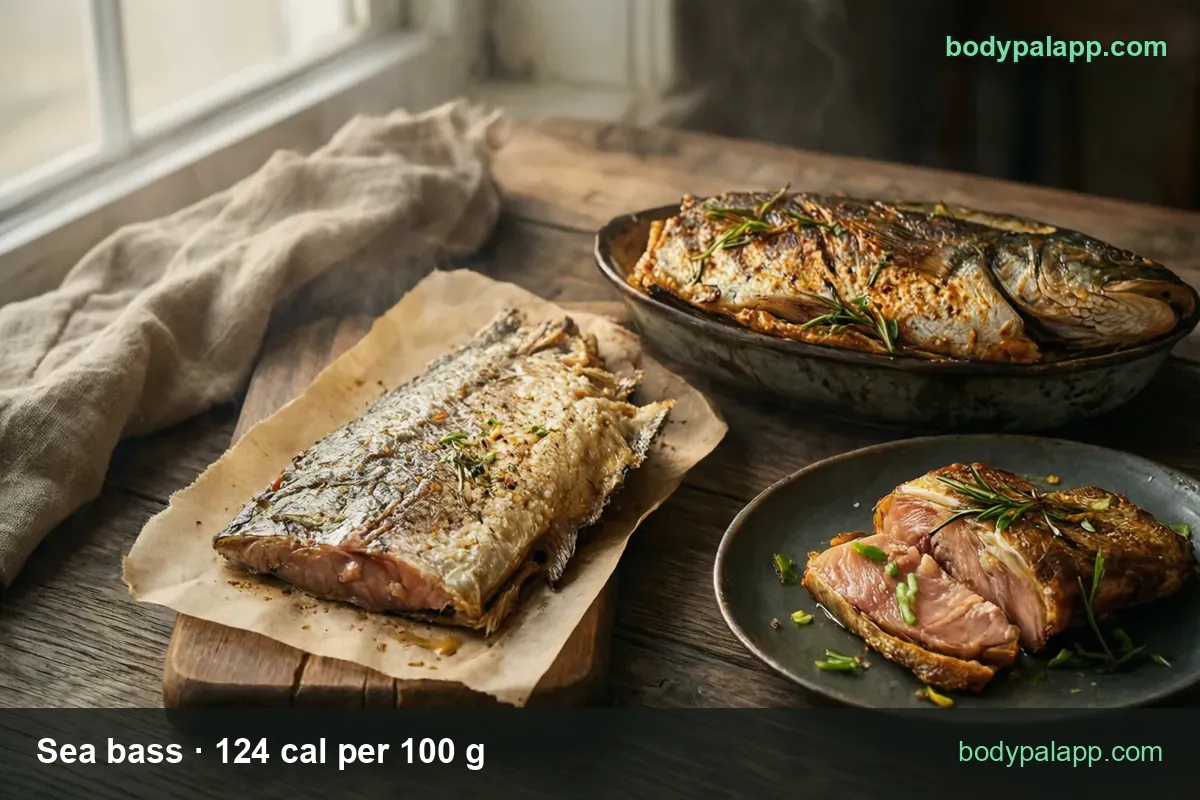
Raw versus cooked. The raw record, 175142, reads 97 calories per 100 g against 124 cooked — cooking lifts the 100 g figure by about 28%. Dry heat does not add calories, it removes water, so the same protein and fat sit in less weight. Per fillet the two land in the same place: 129 g raw and 101 g cooked are both about 125 calories.
Chilean sea bass is not sea bass. It is Patagonian toothfish, a different species that happens to sell better under a borrowed name, and it is a far oilier fish. One store-label fillet reads 200 calories per 100 g, which turns a 6 oz piece into 340 calories — more than the 211 you would get from the same weight of true sea bass. Labels are not consistent, either: Sea Best's Chilean portions read 115 per 100 g, and Daily Chef, Packers and Empire's Treasure all sit near 97 to 98, in line with plain raw sea bass. If the package says Chilean, read the panel instead of assuming.
Branzino. Sold as Mediterranean sea bass and usually served whole, it comes in at 159 calories per 100 g, so a 4 oz fillet is 180 calories. Higher than domestic sea bass, well under the Chilean outlier.
Protein is the row that stands out
One fillet delivers 23.9 g of protein for 125 calories — 48% of the Daily Value in a single piece of fish, which almost no other 125-calorie food manages. That works out to roughly 5 calories per gram of protein. For comparison, the fat row barely registers: 2.6 g total, 0.7 g saturated, 3% of the Daily Value each.
Sodium is low for the same reason. Plain cooked sea bass carries 88 mg in a fillet, 4% of the 2,300 mg Daily Value, so the salt on this plate is whatever you shake onto it or whatever the brine in a frozen portion left behind. Potassium runs 331 mg per fillet, 7%.
MyPlate counts seafood toward the protein group and points adults at roughly two servings a week; a 4 oz cooked portion at 140 calories fits inside almost any daily budget. Cholesterol is the one number to keep in view at 18% of the Daily Value per fillet, and the Dietary Guidelines for Americans advise keeping dietary cholesterol as low as practical within an otherwise healthy eating pattern. If you are watching sodium instead, plain fillets beat pre-seasoned frozen portions every time.
How does sea bass compare?
| Fish | Per 100 g | Protein per 100 g | US serving | Calories |
|---|---|---|---|---|
| Sea bass, cooked | 124 kcal | 23.63 g | 3 oz, 85 g | 105 kcal |
| Striped bass, raw | 97 kcal | 17.73 g | 3 oz, 85 g | 82 kcal |
| Monkfish, cooked | 97 kcal | 18.56 g | 3 oz, 85 g | 82 kcal |
| Tilapia, raw | 96 kcal | 20.08 g | 3 oz, 85 g | 82 kcal |
Our take: read that table twice before you conclude sea bass is the heavy one. All three neighbors land at 82 calories per 3 oz, but two of them — striped bass and tilapia — are raw rows, and raw sea bass is 97, level with them. The only true cooked-to-cooked pair here is sea bass at 124 against monkfish at 97, and monkfish gives up five grams of protein per 100 g to get there. For protein per 100 g, sea bass wins the group outright at 23.63 g. For protein per calorie, tilapia noses ahead: 20.08 g at 96 calories. If you want the most protein on the fork, take sea bass; if you are squeezing a tight calorie budget and the fish is interchangeable to you, tilapia is the cheaper line item.
Most popular sea bass brands in the United States
Ranked by how widely each product appears among foods sold in the United States, from the BodyPal food database of over 3.3 million products. Calories are the figures printed on each Nutrition Facts label, checked against USDA FoodData Central.
| Product | Calories (per 100 g) |
|---|---|
| Sea Best Chilean Sea Bass Portions | 115 cal |
| Daily Chef Mediterranean Sea Bass | 97 cal |
| Sea Best Sea Bass WGS 350/500 GR | 98 cal |
| Open Nature Wild Caught Chilean Sea Bass Fillets | 200 cal |
| Packers 8 oz Chilean Sea Bass | 97 cal |
| Empire's Treasure Sea Bass Fillet 4/6 oz | 98 cal |
Brand popularity: BodyPal food database. Nutrition: manufacturer labels / USDA FoodData Central.
Sea bass FAQs
How many calories are in sea bass?
125 calories for one cooked fillet of 101 g, and 124 calories per 100 g. A 3 oz cooked portion is 105 calories. Raw sea bass is lighter on paper at 97 per 100 g, but only because the water has not cooked out yet. Same fish, different weight.
How many calories are in a 6 oz sea bass fillet?
211 calories for a 6 oz cooked fillet, 170 g on the scale. That is our own arithmetic from the USDA 100 g figure of 124 calories, not a USDA serving. It brings 40 g of protein, 4.4 g of fat and no carbohydrate at all.
Is sea bass high in protein?
Yes — one 101 g fillet has 23.9 g of protein, 48% of the Daily Value, for 125 calories. That works out to roughly 5 calories per gram of protein, which is about as efficient as fish gets. MyPlate counts seafood twice a week toward the protein group.
How many calories are in Chilean sea bass?
200 calories per 100 g on the Open Nature store label, which puts a 6 oz fillet at 340 calories. Against 124 per 100 g for true cooked sea bass, that is roughly 60% more. The extra is fat: Chilean sea bass is a much oilier fish.
Is Chilean sea bass the same as sea bass?
No — Chilean sea bass is Patagonian toothfish, an unrelated deep-water species, and the numbers show it: 200 calories per 100 g on one store label against 124 for cooked sea bass. Sea Best portions read lower, 115 per 100 g, so labels vary by supplier. Check the package.
How many calories are in baked or grilled sea bass?
105 calories for a 3 oz portion, whichever of the two you choose. USDA's cooked row is dry heat, and baking, grilling and broiling all fall under it, so the calorie count is the same. Oil or butter added in the pan is logged separately, on top of the 105.
Does sea bass have carbs?
Zero — sea bass carries 0 g of carbohydrate per 100 g, cooked or raw, and no fiber. USDA does not publish a total sugars figure for the cooked record, which follows from a food with no carbohydrate in it. Any carbs on the plate came from the sides.
Is sea bass or tilapia lower in calories?
Tilapia, at 96 calories per 100 g raw against 124 for cooked sea bass. But that comparison is unfair: the tilapia row is raw and the sea bass row is cooked. Raw against raw, sea bass is 97 and tilapia 96 — one calorie apart, effectively identical.
Similar foods
- Chilean Sea Bass — 125 cal per fillet
- Shrimp Etouffee — 305 cal per cup
- Shrimp Fra Diavolo — 305 cal per cup
- Scallops Cooked — 107 cal per 3 oz
- Red Snapper — 218 cal per fillet
- Tilapia Cooked — 111 cal per fillet
Count it without the math
Point the camera at the plate and BodyPal counts the fillet for you, skin and all.


How long does it take to burn off sea bass?
One fillet (101 g) is 125 kcal. Enter your weight and the amount you ate to see how long it takes you to burn that off:
lb
| Activity | Time to burn 125 kcal |
|---|---|
| Walking, brisk | 25 min |
| Cycling, moderate | 16 min |
| Swimming, moderate | 18 min |
| Jogging | 15 min |
| Weight training, moderate | 28 min |
Times are for a 155 lb adult at a steady pace; change the weight to see yours. The amount is set to the portion in the text (101 g); change it to what you actually ate. BodyPal works this out from your steps automatically.
Burning it off is one side of it. The other is knowing your number: work out how many calories you need a day, with macros and a goal date.