
How many calories are in shrimp fra diavolo?
A 1-cup (246 g) serving of shrimp fra diavolo carries 305 calories, and the dish runs 124 calories per 100 g. That is a shrimp-and-spicy-tomato plate with no pasta under it. Most of the number is shrimp, not sauce: 35.3 g of protein and 11.1 g of carbohydrate.
On this page
- Shrimp fra diavolo quick facts
- US servings, from one ounce to a full cup
- Over linguine, over rice, and other versions
- Cholesterol, protein, and the sodium question
- How does shrimp fra diavolo compare?
- Most popular shrimp fra diavolo brands
- FAQ
Shrimp fra diavolo quick facts
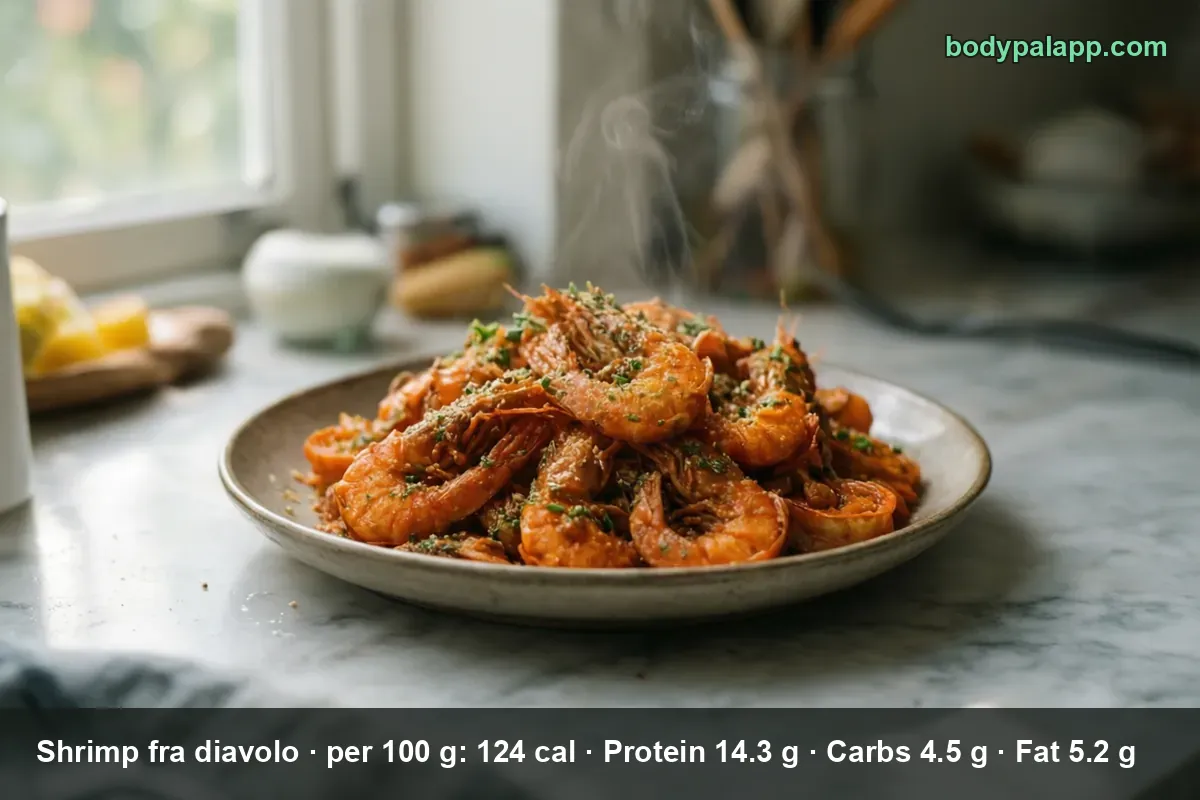
USDA does not publish a line called fra diavolo. The closest match by construction is FNDDS 2706856, "Shrimp creole, no rice": shrimp simmered in a tomato sauce with onion and pepper, with nothing starchy underneath. That is exactly what a fra diavolo order looks like when it arrives without pasta, and exactly what the plate in the photo is. The heat in fra diavolo comes from crushed red pepper, which contributes nothing measurable to the total, so the profile lines up.
The version ladled over noodles has its own USDA record and stays in the variants table further down. Blending the two would give you a number that matches neither plate.
| Nutrient | Per 100 g | Per 1 cup (246 g) | % Daily Value |
|---|---|---|---|
| Calories | 124 | 305 | — |
| Total fat | 5.16 g | 12.7 g | 16% |
| Saturated fat | 1.086 g | 2.7 g | 13% |
| Carbohydrate | 4.51 g | 11.1 g | 4% |
| Dietary fiber | 1.0 g | 2.5 g | 9% |
| Total sugars | 1.32 g | 3.2 g | — |
| Protein | 14.33 g | 35.3 g | 71% |
| Sodium | 153 mg | 376 mg | 16% |
| Cholesterol | 127 mg | 312 mg | 104% |
| Potassium | 198 mg | 487 mg | 10% |
% Daily Value is based on a 2,000-calorie diet.
Verified nutrition data
Numbers on this page come from USDA FoodData Central, the U.S. Department of Agriculture’s food composition database, and from manufacturer labels where a branded product is named. Last verified September 2026. How we verify our data →
Two rows you would see on a package label are missing. USDA does not publish added sugars or trans fat for this mixed dish in the FNDDS release, so there is nothing to report rather than a zero to assume. Total sugars, 3.2 g in a cup, are what the tomatoes and onion bring; total sugars carry no Daily Value, which is why that cell stays blank. The FDA Daily Value reference sets the targets used in the last column.
US servings, from one ounce to a full cup
| Serving | Weight | Calories |
|---|---|---|
| 1 oz | 28 g | 35 kcal |
| 4 oz | 113 g | 140 kcal |
| Half a cup | 123 g | 153 kcal |
| 6 oz, restaurant entree portion | 170 g | 211 kcal |
| 1 cup | 246 g | 305 kcal |
| Per 100 g | 100 g | 124 kcal |
Only the 1-cup row is a USDA household measure. The ounce rows and the half cup are our own arithmetic from the USDA 100 g figure, not USDA servings, which is worth knowing if you log by weight rather than by cup.
A cup of this is heavier than a cup of most things, at 246 g, because shrimp are dense and the sauce fills the gaps between them. That is where people misjudge it. Eyeballing a plated entree as "about two cups" gets you to roughly 610 calories, and an appetizer half-portion sits near 153. If your kitchen scale is out, the shrimp themselves are the useful anchor: a typical jumbo shrimp with the tail off weighs around 20 g, so a dozen plus sauce lands close to the full cup.
Over linguine, over rice, and other versions
| Version | Per 100 g | Typical serving | Calories |
|---|---|---|---|
| Shrimp fra diavolo, sauce only | 124 kcal | 1 cup (246 g) | 305 kcal |
| Over linguine | 134 kcal | 1 cup (224 g) | 300 kcal |
| Creole style, with rice | 123 kcal | 1 cup (243 g) | 299 kcal |
| Shrimp scampi | 192 kcal | 1 cup (250 g) | 480 kcal |
| Shrimp and vegetables, no sauce | 118 kcal | 1 cup (162 g) | 191 kcal |
| Plain steamed or boiled shrimp | 90 kcal | 3 oz (85 g) | 77 kcal |
| Raw shrimp, before cooking | 71 kcal | 4 oz (113 g) | 80 kcal |
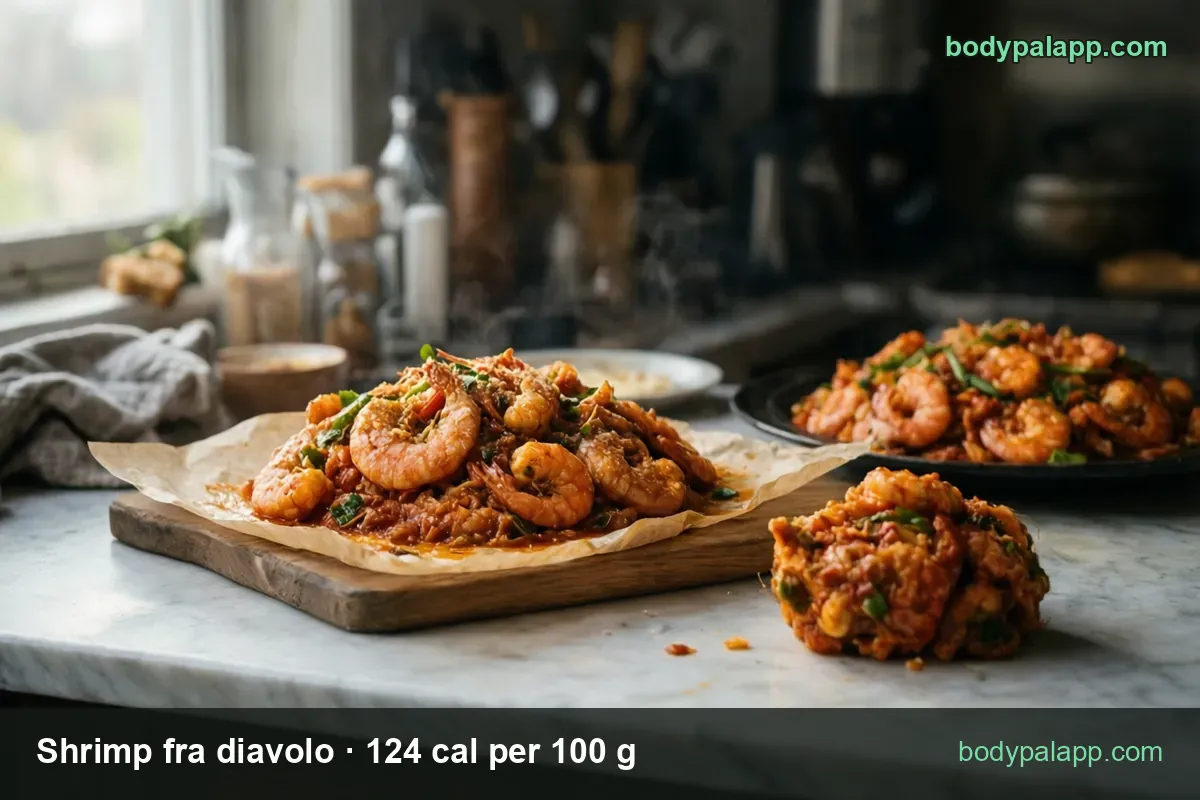
Here is the trap. The pasta version is denser per 100 g, 134 against 124, but a cup of it weighs 224 g against 246 g, so the two cups land at 300 and 305 calories. Skipping the linguine saves you five calories a cup and nothing more. What it does change is what the calories are made of: protein drops from 35.3 g to 14.5 g per cup, and carbohydrate climbs from 11.1 g to 34.5 g. You order the pasta version for the pasta, not to eat lighter.
Rice does something different again. Creole style with rice is the lowest of the three at 123 calories per 100 g, but it carries 436 mg of sodium per 100 g against 153 mg for the sauce-only version, which puts a 243 g cup near 1,059 mg.
Raw versus cooked barely matters with shrimp, which is unusual. Four ounces of raw shrimp (113 g) is 80 calories; the roughly 3 oz of cooked shrimp you get after the water steams off is 77. Nothing is added and nothing is rendered out, so the total holds steady. With this dish the sauce is the only variable that moves the number, which is why scampi at 192 calories per 100 g is a different meal entirely.
Two US supermarket versions are worth naming for context. Michael Angelo's Spicy Shrimp Marinara meal starter labels 77 calories per 100 g and 110 per 1-cup (143 g) serving, lighter than the USDA line because there is more sauce per shrimp; the same brand's linguine version labels 117 calories per 100 g and 349 for the 10.5 oz (298 g) tray.
Cholesterol, protein, and the sodium question
One line in the table clears 100% and it is not the one people expect. A cup delivers 312 mg of cholesterol, 104% of the 300 mg Daily Value, while total fat sits at 16% and saturated fat at 13%. Shrimp is naturally cholesterol-dense and simultaneously lean, an odd combination among the proteins on an Italian menu. The Dietary Guidelines for Americans no longer set a numeric cholesterol cap and advise keeping intake as low as practical within a healthy eating pattern, so the 104% is context rather than a ceiling.
The protein number is the headline for anyone counting. At 35.3 g a cup, 71% of the Daily Value, this is 305 calories buying almost three-quarters of a day's protein target. MyPlate counts shrimp toward the protein foods group, and few dishes in the group land protein this cheaply per calorie.
Sodium is milder than the spice suggests: 376 mg a cup, 16% of the Daily Value, roughly a sixth of a teaspoon of table salt. That is the home-style tomato sauce doing its job without a jar of it. Drop the sauce and shrimp with plain vegetables measures 59 mg per 100 g against 153 for fra diavolo, roughly two and a half times less, though at 118 calories per 100 g it barely saves anything caloric. If sodium is the thing you are watching, the fra diavolo is the better pick over the creole-with-rice version by a wide margin.
How does shrimp fra diavolo compare?
| Dish | Per 100 g | US serving | Calories | Protein |
|---|---|---|---|---|
| Shrimp fra diavolo | 124 kcal | 1 cup (246 g) | 305 kcal | 35.3 g |
| Shrimp and noodles in tomato sauce | 134 kcal | 1 cup (224 g) | 300 kcal | 14.5 g |
| Shrimp creole with rice | 123 kcal | 1 cup (243 g) | 299 kcal | 24.6 g |
| Shrimp scampi | 192 kcal | 1 cup (250 g) | 480 kcal | 38.5 g |
Our take: three of these four cups land within six calories of each other, so the choice is not about calories at all. It is about what fills the cup. Fra diavolo without pasta gives you the most protein per calorie of the three tomato-based options and the least carbohydrate. Scampi is the outlier at 480 a cup, and the extra 175 calories buy 3.2 g of protein and 12.98 g of fat per 100 g instead of 5.16 g. For a lighter dinner, the swap that counts is away from scampi rather than away from the linguine; for the fullest plate at a fixed calorie number, the sauce-only version wins on volume and protein together.
Most popular shrimp fra diavolo brands in the United States
Ranked by how widely each product appears among foods sold in the United States, from the BodyPal food database of over 3.3 million products. Calories are the figures printed on each Nutrition Facts label, checked against USDA FoodData Central.
| Product | Calories (per 100 g) |
|---|---|
| Michael Angelo's Spicy Shrimp Marinara (meal starter) | 77 cal |
| Michael Angelo's Spicy Shrimp Marinara with Linguine | 117 cal |
Brand popularity: BodyPal food database. Nutrition: manufacturer labels / USDA FoodData Central.
Shrimp fra diavolo FAQs
How many calories are in a cup of shrimp fra diavolo?
A 1-cup (246 g) serving runs 305 calories, working out to 124 calories per 100 g. That cup also carries 35.3 g of protein and only 11.1 g of carbohydrate, because the sauce is tomato, onion and pepper rather than anything starchy. Pasta underneath changes the picture entirely.
How many calories in shrimp fra diavolo with linguine?
About 300 calories for a 1-cup (224 g) serving, using the USDA line for shrimp and noodles in tomato sauce at 134 calories per 100 g. That is five fewer than the sauce-only cup, but protein falls from 35.3 g to 14.5 g and carbohydrate climbs to 34.5 g.
How much protein is in shrimp fra diavolo?
A cup delivers 35.3 g of protein, 71% of the Daily Value, from 14.33 g per 100 g. That is one of the highest protein-per-calorie ratios on any pasta-house menu: 305 calories buying 35 g of protein. Shrimp does the work; the tomato sauce adds almost none.
Is shrimp fra diavolo high in cholesterol?
Yes, 312 mg in a 1-cup serving, or 104% of the 300 mg Daily Value, and the only line in the table that clears 100%. Shrimp is naturally cholesterol-dense while staying lean: the same cup holds just 12.7 g of fat and 2.7 g of saturated fat.
Shrimp fra diavolo vs shrimp scampi: which is lighter?
Fra diavolo, by a wide margin: 124 calories per 100 g against 192 for scampi, or 305 per cup against 480. Butter and oil replace the tomato sauce in scampi, so fat jumps from 5.16 g to 12.98 g per 100 g while protein barely moves.
How much sodium is in shrimp fra diavolo?
376 mg in a 1-cup serving, 16% of the Daily Value, or roughly a sixth of a teaspoon of table salt. The same shrimp served creole-style over rice measures 436 mg per 100 g, which puts a 243 g cup at about 1,059 mg, 46% of the Daily Value.
Is shrimp fra diavolo healthy?
For 305 calories a cup you get 35.3 g of protein, 2.5 g of fiber and 16% of the Daily Value for sodium, a strong trade at a normal dinner size. The catch is cholesterol at 104% DV. MyPlate counts shrimp toward the protein foods group.
Is shrimp fra diavolo keto or low carb?
Without pasta, yes: 4.51 g of carbohydrate per 100 g, or 11.1 g in a cup, with 2.5 g of that fiber. Add linguine and a cup carries 34.5 g of carbohydrate, more than three times as much. The sauce is not the problem; the noodles under it are.
Similar foods
- Chilean Sea Bass — 125 cal per fillet
- Sea Bass — 125 cal per fillet
- Shrimp Etouffee — 305 cal per cup
- Scallops Cooked — 107 cal per 3 oz
- Red Snapper — 218 cal per fillet
- Tilapia Cooked — 111 cal per fillet
Count it without the math
Point the camera at the plate and BodyPal counts the shrimp, the sauce and whatever is underneath.


How long does it take to burn off 305 kcal of shrimp fra diavolo?
A 1-cup (246 g) serving is 305 kcal. Enter your weight and the amount you ate to see how long it takes you to burn that off:
lb
| Activity | Time to burn 305 kcal |
|---|---|
| Walking, brisk | 1 hr 1 min |
| Cycling, moderate | 38 min |
| Swimming, moderate | 44 min |
| Jogging | 36 min |
| Weight training, moderate | 1 hr 8 min |
Times are for a 155 lb adult at a steady pace; change the weight to see yours. The amount is set to the portion in the text (246 g); change it to what you actually ate. BodyPal works this out from your steps automatically.
One food is easy to picture; a whole day is harder. See how many calories you need a day and what a deficit actually looks like.