Brownie mix calories come to 123 for 1 oz (28 g) of dry mix and 434 per 100 g. Carbs supply 67% of that energy, protein just 4%. The real swing is portion: a whole 610 g package holds 2,647 calories before you add a single egg or splash of oil.
434kcal
1 100 grams of dry mix · 100 g, dry mix, regular
4%protein
4 gProtein
77 gCarbs
14.9 gFat
How to burn off 434 kcal
—Walking, brisk
—Jogging
—Cycling, moderate
—Swimming
Skip the math. BodyPal counts these calories from your steps and workouts automatically.
Nutrition facts
Dry mix, regular · per 100 g
Calories
434 kcal
Protein
4 g
Carbohydrate
77 g
Fat
14.9 g
Saturated fat
2.5 g
Cholesterol
0 mg
Sodium
303 mg
Potassium
219 mg
Iron
2 mg
Source: USDA FoodData Central
🛡️
Verified nutrition data
Numbers on this page come from USDA FoodData Central, the U.S. Department of Agriculture’s food composition database, and from manufacturer labels where a branded product is named. Last verified September 2026. How we verify our data →
Brownie mix: calories, protein and sodium by serving
Percent of daily value uses the FDA reference of 2,000 kcal a day.
Serving
kcal
Protein
Carbs
Fat
Sodium
% DV kcal
100 g
434
4 g
76.6 g
14.9 g
303 mg
22%
1 oz (28 g)
123
1.1 g
21.7 g
4.2 g
86 mg
6%
Sugar free (28 g)
121
0.8 g
22.8 g
3.5 g
24 mg
6%
Whole package (610 g)
2,647
24.4 g
467.3 g
90.9 g
1,848 mg
132%
3 × 100 g
1,302
12 g
909 mg
5 × 100 g
2,170
20 g
1,515 mg
A whole box of mix holds 2,647 calories
The label serving of 1 oz (28 g) looks modest at 123 calories, about 6% of a 2000-calorie daily value. That ounce is dry powder, though, and nobody eats brownie mix by the ounce. The number that matters for planning is the box: 610 g of mix carries 2,647 calories, which is 132% of the daily value on its own.
Scale it down and the math stays steep. Every 100 g adds 434 calories, so 200 g lands at 868 and 300 g at 1,302. By 500 g you are at 2,170 calories, most of a box, with only 20 g of protein to show for it.
The practical move is to think of the pan, not the spoon. Decide how many pieces you will cut before you bake, then divide the box total by that count. Fewer, larger squares push each one up fast; more, smaller squares keep a single treat closer to the 1 oz figure plus whatever you mix in.
Two thirds of every calorie is carbohydrate
The calorie split is lopsided: 67% carbs, 29% fat and 4% protein. Per 100 g that works out to 76.6 g of carbohydrate, 14.9 g of fat and 4 g of protein. In other words, the dry mix is mostly sugar and flour with a smaller share of fat already blended in.
Saturated fat sits at 2.5 g per 100 g, a fairly small slice of the 14.9 g total. Cholesterol is 0 because the dry mix contains no eggs or butter. Both of those rows change once you bake, since the eggs and fat you add bring their own numbers that this card does not cover.
Protein is the weak spot. A full 100 g gives just 4 g, or 8% of the daily value, and an ounce gives 1.1 g. Brownies made from mix will not keep you full the way a protein-heavy snack does, so treat them as dessert and plan the rest of the meal around something more filling.
Sugar-free mix barely moves the calorie count
If you reach for the sugar-free box hoping to save calories, the numbers say otherwise. An ounce of sugar-free mix has 121 calories against 123 for regular. That is close to a wash, and carbs actually tick up slightly, from 21.7 g to 22.8 g per ounce.
Where the sugar-free version does differ is elsewhere on the label. Fat drops from 4.2 g to 3.5 g per ounce, sodium falls from 86 mg to 24 mg, and it brings 1.2 g of fiber. Protein dips a little, from 1.1 g to 0.8 g.
So pick sugar-free for the sodium or the sugar line if those are what you track, not for the calories. The portion you cut from the pan will matter far more than which box you bought.
Sodium is moderate, portion is the real lever
Regular brownie mix has 303 mg of sodium per 100 g, 13% of the daily value, and 86 mg per ounce. That is unremarkable for a single serving. A whole box, though, reaches 1,848 mg, which is 80% of the daily value, so the sodium story is the same as the calorie story: it depends on how much of the pan you eat.
Potassium is 219 mg per 100 g, a small contribution next to the 4700 mg daily value. Nothing in this mix makes it a nutrient source; its job is flavor and texture.
If you want brownies to fit a day of eating, pair a small square with something that brings protein, like milk or Greek yogurt, and keep the rest of the meal lighter in sugar. Cutting the pan into more pieces is the easiest way to cap the total. BodyPal can also log a baked square from a photo if you would rather not weigh it.
How does brownie mix compare?
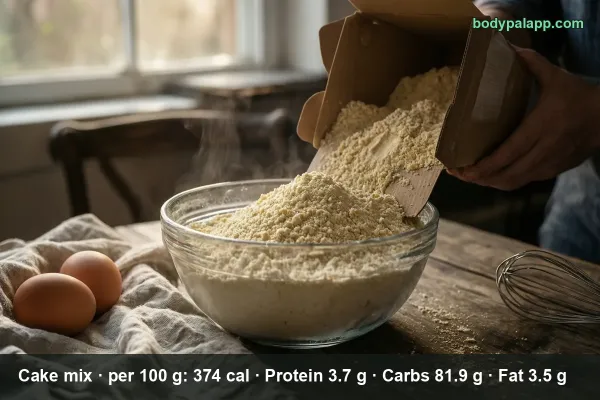
Here is brownie mix next to cake mix, pancake mix and brownie bites, per 100 g and per usual serving.
Verdict: Brownie mix is the densest of the group at 434 calories per 100 g, ahead of cake mix at 374 and pancake mix at 368, mostly because of its 14.9 g of fat against 3.5 g and 3.1 g. If calories are your concern pick cake mix, but if you watch sodium brownie mix wins easily at 303 mg per 100 g versus 728 mg and 1,082 mg.
Most popular brownie mix brands in the United States
Label servings count dry mix, the same state as the number above, so the differences come from the recipes rather than from a change in weight. Source: manufacturer labels / USDA FoodData Central.
Brownie mix FAQs
How many calories are in brownie mix?
Dry brownie mix has 434 calories per 100 g, so a 1 oz scoop is about 123 calories and a 21.5 oz box about 2647 calories.
Is brownie mix good for weight loss?
An ounce of dry mix is 123 calories and is mostly carbohydrate, 21.7 g, with 4.2 g of fat. The sugar-free mix is close behind at 121 calories per ounce.
Brownie mix vs cake mix: which has more calories?
Brownie mix is higher, 434 calories per 100 g against 374 for cake mix, a gap of 60 calories.
How many carbs are in brownie mix?
There are 76.6 g of carbs per 100 g of dry mix, which is 21.7 g per ounce. The sugar-free version lists 80.4 g of carbs per 100 g, with 4.2 g of fiber.
How many calories are in a whole box of brownie mix?
A 610 g package of dry brownie mix has 2,647 calories, or 132% of the daily value. That figure covers the mix only; eggs, oil or butter you add when baking raise the total further.
Does sugar-free brownie mix have fewer calories?
Barely. Sugar-free brownie mix has 121 calories per ounce versus 123 for regular. It does cut sodium to 24 mg from 86 mg and adds 1.2 g of fiber per ounce.
How much sodium is in brownie mix?
Brownie mix has 303 mg of sodium per 100 g, 13% of the daily value, and 86 mg per ounce. A whole 610 g box contains 1,848 mg, which is 80% of the daily value.
How much fat is in brownie mix?
Dry brownie mix has 14.9 g of fat per 100 g, of which 2.5 g is saturated. An ounce holds 4.2 g. Fat supplies 29% of the calories, before any oil or butter is added.
How much protein is in brownie mix?
Brownie mix has only 4 g of protein per 100 g, 8% of the daily value, and 1.1 g per ounce. Protein makes up just 4% of its calories.