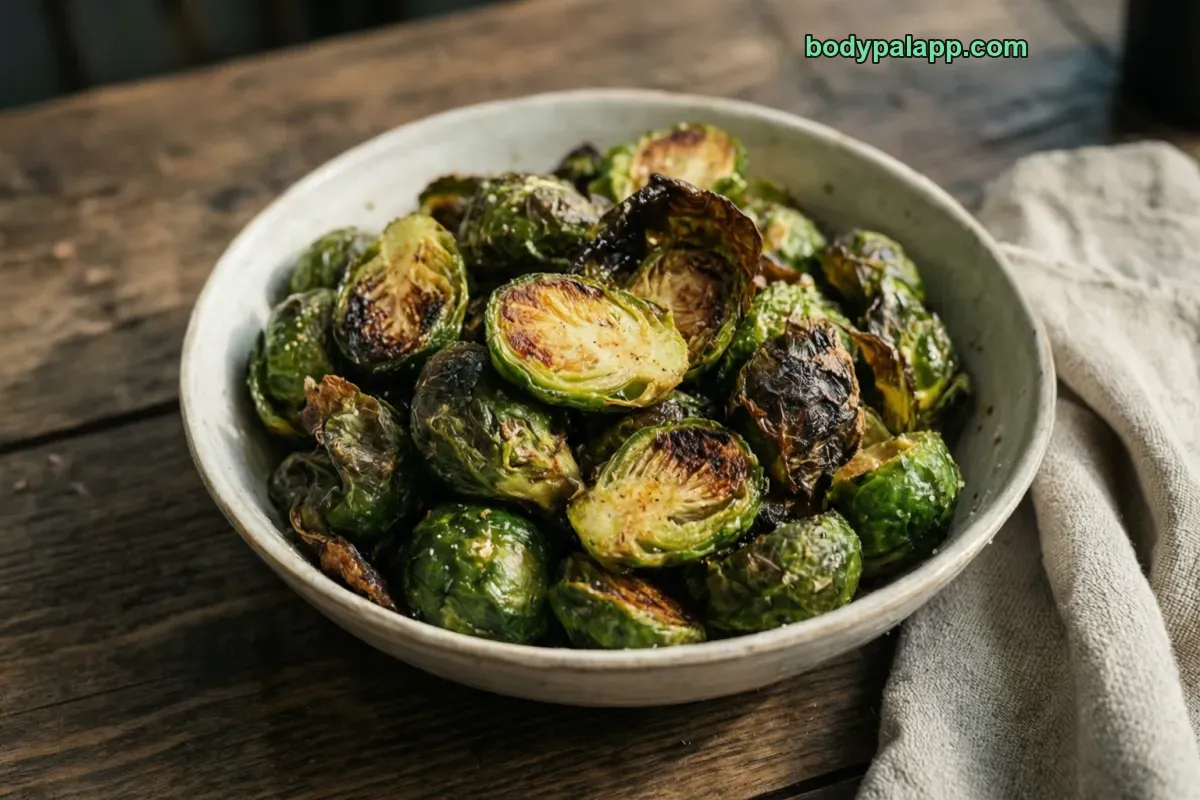
Brussels sprouts calories come to 28 for a half cup (78 g) of boiled, drained sprouts and 36 per 100 g. That is about 1% of a 2000-calorie day per half cup. Portion size barely moves the needle here; what you cook them with moves it far more than the sprouts do.
28kcal
1 half cup · 78 g, boiled and drained, unsalted
24%protein
2 gProtein
6 gCarbs
0.4 gFat
How to burn off 28 kcal
—Walking, brisk
—Jogging
—Cycling, moderate
—Swimming
Skip the math. BodyPal counts these calories from your steps and workouts automatically.
Nutrition facts
Boiled and drained, unsalted · per 78 g
Calories
28 kcal
Protein
2 g
Carbohydrate
5.5 g
Fat
0.4 g
Saturated fat
0.1 g
Cholesterol
0 mg
Sodium
16 mg
Potassium
247 mg
Iron
0.9 mg
Source: USDA FoodData Central
🛡️
Verified nutrition data
Numbers on this page come from USDA FoodData Central, the U.S. Department of Agriculture’s food composition database, and from manufacturer labels where a branded product is named. Last verified September 2026. How we verify our data →
Brussels sprouts: calories, protein and sodium by serving
Percent of daily value uses the FDA reference of 2,000 kcal a day.
Serving
kcal
Protein
Carbs
Fat
Sodium
% DV kcal
Half cup (78 g)
28
2 g
5.5 g
0.4 g
16 mg
1%
1 sprout (21 g)
8
0.5 g
1.5 g
0.1 g
4 mg
0%
100 g
36
2.6 g
7.1 g
0.5 g
21 mg
2%
Raw, 1 cup (88 g)
38
3 g
7.9 g
0.3 g
22 mg
2%
3 × Half cup (78 g)
84
6 g
49 mg
5 × Half cup (78 g)
140
9.9 g
82 mg
Even five half cups stay at 140 calories
The standard half cup (78 g) of boiled sprouts gives 28 calories, 2 g of protein and 2 g of fiber. A single sprout of about 21 g is just 8 calories. Counting sprouts one by one is possible, but the numbers stay so small that a rough handful is accurate enough for most logs.
Scale up and the total climbs slowly. Two half cups (156 g) come to 56 calories, three half cups (234 g) reach 84, and a big 390 g pile, five half cups, lands at 140 calories with 9.9 g of protein. That last portion is a large side by any standard, and it still costs less than many single snacks.
So the portion question for this vegetable runs the other way. You rarely need to cut back. If you want a plate that looks full without adding much energy, doubling the sprouts is one of the cheapest moves you can make.
Carbs supply two thirds of the calories
Per 100 g, boiled sprouts carry 7.1 g of carbs, 2.6 g of protein and 0.5 g of fat. In calorie terms that splits into 66% carbs, 24% protein and 10% fat. The carbs are not mostly sugar: only 1.7 g of the 7.1 g is sugars, and 2.6 g is fiber.
The 24% protein share is high for a vegetable, though the gram count stays modest. A half cup gives 2 g, about 4% of the 50 g daily value. Think of sprouts as a small protein top-up rather than a protein source; the main protein on the plate still has to come from somewhere else.
Fat is close to nothing at 0.5 g per 100 g, with 0.1 g saturated and 0 mg cholesterol. Any fat in a sprout dish almost always comes from the pan, not the vegetable.
High fiber for the calories, almost no sodium
Fiber is the row worth noticing. At 2.6 g per 100 g against just 36 calories, sprouts deliver more fiber per calorie than most foods on a typical plate. Measured against the 28 g daily value, a half cup's 2 g is a small but real contribution, and five half cups add a meaningful share.
Sodium is the opposite story. Unsalted boiled sprouts carry 21 mg per 100 g and 16 mg per half cup, roughly 1% of the 2300 mg daily value. The card's numbers are for sprouts cooked without salt, so the shaker, soy sauce or a salty glaze will set the sodium total, not the vegetable.
Potassium sits at 317 mg per 100 g, a decent amount next to the 4700 mg daily value. If you watch sodium, sprouts are an easy vegetable to keep in the low column as long as the seasoning stays light.
Raw or boiled, the count barely changes; the add-ons do
A cup of raw sprouts (88 g) holds 38 calories, 3 g of protein and 3.3 g of fiber. Boiled, a half cup is 28 calories. Cooking does not add energy on its own; it changes the volume and texture, so a cooked half cup packs in more sprout than you might guess.
Roasting, sautéing and bacon-studded recipes are where the totals jump. Oil, butter, cheese, honey or balsamic glazes can add more calories than the sprouts themselves. If you log a roasted side, log the fat and the sauce separately so the real number shows up.
On a plate, sprouts work best as a filler next to a protein and a starch, adding bulk and fiber at little cost. Frozen bags from brands like Pictsweet Farms or Green Wave Farms make this easy on a weeknight. BodyPal can log the dish from a photo if you would rather not weigh it.
How does brussels sprouts compare?
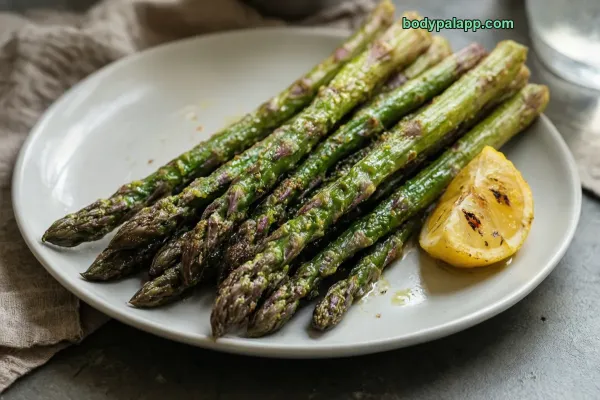
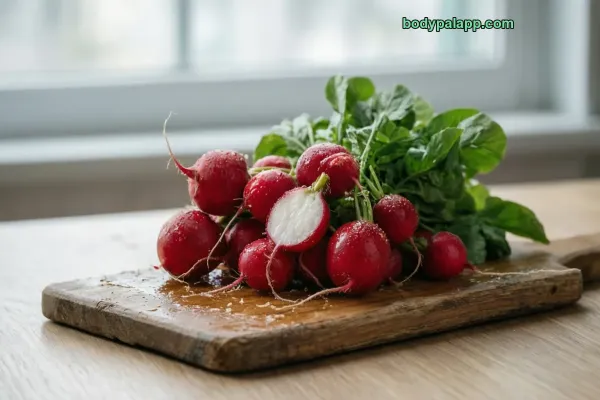
Here is how boiled brussels sprouts stack up against asparagus, radish and cooked carrots, per 100 g and per usual serving.
Verdict: For the lowest count, radish wins at 16 calories per 100 g and asparagus follows at 22, while sprouts at 36 match cooked carrots at 35. For staying full, pick the sprouts: they bring the most protein of the group at 2.6 g per 100 g, plus fiber, for a half cup costing only 28 calories.
Most popular brussels sprouts brands in the United States
Package labels are written for raw sprouts, so they read higher per 100 g than the boiled numbers above. Source: manufacturer labels / USDA FoodData Central.
Brussels sprouts FAQs
How many calories are in brussels sprouts?
A half cup of boiled brussels sprouts (78 g) is 28 calories, and one sprout (21 g) is 8 calories. Per 100 g that is 36 calories cooked and 43 raw.
Are brussels sprouts good for weight loss?
They are low in calories for their volume: 36 calories per 100 g cooked, with 2.6 g of fiber and 0.5 g of fat.
Brussels sprouts or broccoli: which has fewer calories?
Broccoli has 35 calories per 100 g and cooked brussels sprouts 36, so the two are almost identical.
How much protein is in brussels sprouts?
Cooked brussels sprouts have 2.6 g of protein per 100 g, so a half cup (78 g) gives about 2 g. Raw sprouts have 3.4 g per 100 g.
How many calories are in one brussels sprout?
One boiled sprout of about 21 g has 8 calories, with 0.5 g of protein, 1.5 g of carbs and 0.5 g of fiber. It is small enough that a handful barely registers in a daily total.
Are brussels sprouts high in calories?
No. Boiled sprouts have 36 calories per 100 g and 28 per half cup, about 1% of a 2000-calorie day. Calories only climb when oil, butter, bacon or sweet glazes are added.
What are the macros of brussels sprouts per 100 g?
Per 100 g, boiled sprouts give 36 calories, 2.6 g protein, 7.1 g carbs and 0.5 g fat, plus 2.6 g fiber and 1.7 g sugars. Carbs supply 66% of the calories, protein 24% and fat 10%.
Do cooked brussels sprouts have more calories than raw?
Not per gram in any meaningful way: boiled sprouts have 36 calories per 100 g, while a raw cup of 88 g has 38. Cooking shrinks the volume, so a cooked cup holds more sprouts.
How many calories are in a cup of roasted brussels sprouts?
The sprouts themselves are about 38 calories per raw cup (88 g). Roasting adds whatever oil or butter you toss them in, and that fat often outweighs the vegetable, so log it separately.