Butter biscuit calories come to 212 for one 60 g biscuit and 353 per 100 g. The number that moves most is size: a small 14 g biscuit is 49 calories, while a large 4-inch biscuit at 101 g reaches 357. Sodium climbs just as fast, from 348 mg to 586 mg.
212kcal
1 biscuit · 60 g, baked from recipe
8%protein
4.2 gProtein
27 gCarbs
9.8 gFat
How to burn off 212 kcal
—Walking, brisk
—Jogging
—Cycling, moderate
—Swimming
Skip the math. BodyPal counts these calories from your steps and workouts automatically.
Nutrition facts
Baked from recipe · per 60 g
Calories
212 kcal
Protein
4.2 g
Carbohydrate
27 g
Fat
9.8 g
Saturated fat
2.6 g
Cholesterol
2 mg
Sodium
348 mg
Potassium
73 mg
Iron
1.7 mg
Source: USDA FoodData Central
🛡️
Verified nutrition data
Numbers on this page come from USDA FoodData Central, the U.S. Department of Agriculture’s food composition database, and from manufacturer labels where a branded product is named. Last verified September 2026. How we verify our data →
Butter biscuit: calories, protein and sodium by serving
Percent of daily value uses the FDA reference of 2,000 kcal a day.
Serving
kcal
Protein
Carbs
Fat
Sodium
% DV kcal
1 biscuit (60 g)
212
4.2 g
26.8 g
9.8 g
348 mg
11%
Large 4 inch (101 g)
357
7.1 g
45 g
16.5 g
586 mg
18%
Small (14 g)
49
1 g
6.2 g
2.3 g
81 mg
2%
100 g
353
7 g
44.6 g
16.3 g
580 mg
18%
3 × 1 biscuit (60 g)
635
12.6 g
1,044 mg
5 × 1 biscuit (60 g)
1,059
21 g
1,740 mg
One biscuit is 212 calories, a large one 357
The standard entry is one 60 g biscuit at 212 calories, 11% of the daily value for energy. Real biscuits rarely match it. A small 14 g biscuit is just 49 calories, or 2% of the daily value, while a large 4-inch biscuit of 101 g, the size you might get from a bakery, lands at 357 calories and 18%.
The count on the plate matters even more than the size. Two standard biscuits come to 424 calories across 120 g. Three reach 635 calories at 180 g, and a plate of five adds up to 1,059 calories across 300 g. At that point the biscuits are the meal, not the side.
If you track, weigh one biscuit once and remember what it looked like. The small and large entries are about three hundred calories apart, so a wrong guess on size is the easiest way to throw off a day's log. Once you know your usual biscuit, logging it takes seconds.
Carbs lead, but fat supplies 42% of the calories
Carbohydrate supplies 51% of the calories and fat supplies 42%, leaving protein at just 8%. Per 100 g that works out to 44.6 g of carbs, 16.3 g of fat and 7 g of protein. One 60 g biscuit holds 26.8 g of carbs, 9.8 g of fat and 4.2 g of protein.
Fat is why a biscuit packs more energy than its size suggests. The fat cut into the flour is what makes the layers flaky, and it is also what pushes the total to 353 calories per 100 g. Saturated fat accounts for 4.3 g of that per 100 g.
Fiber and sugar barely register: 0.9 g of fiber and 1.3 g of sugars per biscuit. The 4.2 g of protein covers 8% of the daily value. In plain terms, a butter biscuit is starch plus fat, with little protein or fiber to slow it down, which is why it tends to work better as part of a meal than as the meal itself.
Sodium runs ahead of calories
One 60 g biscuit carries 348 mg of sodium, 15% of the daily value. That share runs ahead of its calorie share of 11%, so sodium piles up faster than energy does. A large 4-inch biscuit reaches 586 mg, a full 25% of the daily value, against 18% for calories.
Multiply and the totals get heavy fast. Two biscuits bring 696 mg, three bring 1,044 mg and five reach 1,740 mg. Per 100 g the figure is 580 mg. The salt and leavening in the dough carry it, and that is before ham, sausage gravy or cheese go on top. Breakfast sandwiches built on a large biscuit start from that 586 mg base.
If you watch sodium, a biscuit deserves a line in your log even when the calories look modest. A small 14 g biscuit is the easy fix at 81 mg, or 4% of the daily value. Cholesterol, by contrast, is barely there at 3 mg per 100 g, and potassium is low at 121 mg.
Pair one biscuit with protein, not a second biscuit
Because protein is only 8% of the calories, a biscuit does its best work as a side. Eggs, Greek yogurt or a lean breakfast meat add the protein it lacks. Fruit or vegetables add the fiber, which sits at just 1.5 g per 100 g of biscuit.
Hold the portion at one standard biscuit and the bread side of the plate stays at 212 calories. Reaching for a second takes it to 424 before any butter, honey or gravy, and those toppings are not counted in these figures. If you want the biscuit flavor for less, the small 14 g size gives you a taste for 49 calories.
Packaged butter biscuits such as Bahlsen Butter Biscuit or Godiva Fine Butter Biscuits are cookie-style products, a different food from this baked biscuit, so go by their own labels. For the baked kind, BodyPal can log a biscuit from a photo; the key is matching it to the right size entry.
How does butter biscuit compare?
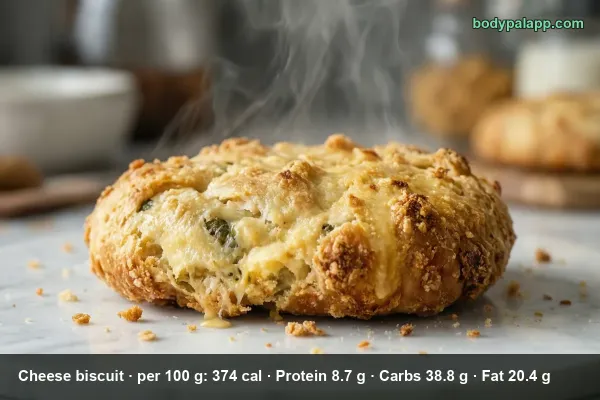
Here is how a butter biscuit stacks up against a plain biscuit, a Pillsbury biscuit and a cheese biscuit, per 100 g and per usual serving.
Verdict: For the lowest count, pick the Pillsbury biscuit: 151 calories per 64 g biscuit and only 2.8 g of fat per 100 g. If you watch sodium, the butter biscuit wins at 580 mg per 100 g, against 854 mg for Pillsbury and 1,002 mg for the plain biscuit.
Most popular butter biscuit brands in the United States
6Godiva Fine Butter Biscuits3 pieces · 30 g500 kcal
Packaged butter biscuits are sweet cookie-style products, so their label numbers per 100 g run higher than a soft biscuit baked from recipe. Source: manufacturer labels / USDA FoodData Central.
Butter biscuit FAQs
How many calories are in one butter biscuit?
A 2-1/2 inch biscuit weighs about 60 g and has 212 calories. A large 4-inch biscuit is 357 calories.
Is a butter biscuit good for weight loss?
One 60 g biscuit is 212 calories with 9.8 g fat and only 4.2 g protein, so it is calorie-dense for its size.
Butter biscuit vs regular biscuit: which has more calories?
Baked from recipe it is 353 calories per 100 g, against 324 per 100 g for a standard refrigerated-dough biscuit.
How much protein is in a butter biscuit?
About 4.2 g in one 60 g biscuit, or 7 g per 100 g. The same biscuit also has 26.8 g carbs and 9.8 g fat.
How many calories are in two butter biscuits?
Two standard 60 g butter biscuits have 424 calories together, at 120 g. They also bring 696 mg of sodium and 8.4 g of protein, so the sodium climbs much faster than the protein does.
How many calories are in a large bakery biscuit?
A large 4-inch biscuit of 101 g has 357 calories, 18% of the daily value. It also carries 586 mg of sodium, which is 25% of the daily value, plus 16.5 g of fat.
How many calories are in a biscuit, depending on size?
A small 14 g biscuit has 49 calories, a standard 60 g biscuit has 212 and a large 101 g biscuit has 357. Size is the main driver, so check which one you actually ate before logging it.
How many calories are in 100 grams of butter biscuit?
100 g of butter biscuit has 353 calories, with 44.6 g of carbs, 16.3 g of fat and 7 g of protein. That is about the weight of one large 4-inch biscuit, which is 101 g.