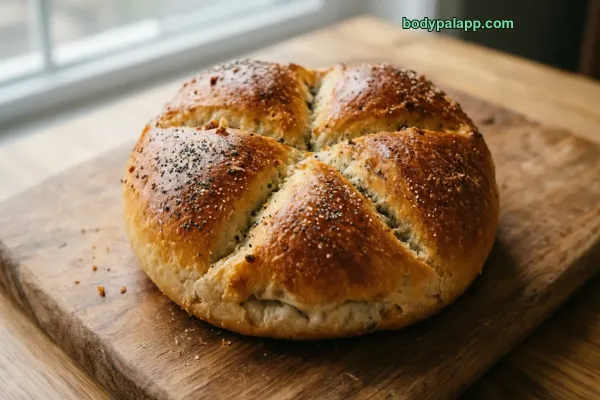
Pillsbury biscuit calories come to 151 for one 64 g buttermilk biscuit and 236 per 100 g. Fat is low at 1.8 g per biscuit, so carbs supply most of the energy. Watch the sodium: one biscuit carries 547 mg, or 24% of the daily value, and that row climbs fast once you take seconds.
151kcal
1 biscuit · 64 g, buttermilk, refrigerated dough
11%protein
4.1 gProtein
30 gCarbs
1.8 gFat
How to burn off 151 kcal
—Walking, brisk
—Jogging
—Cycling, moderate
—Swimming
Skip the math. BodyPal counts these calories from your steps and workouts automatically.
Nutrition facts
Buttermilk, refrigerated dough · per 64 g
Calories
151 kcal
Protein
4.1 g
Carbohydrate
30 g
Fat
1.8 g
Saturated fat
0.3 g
Cholesterol
0 mg
Sodium
547 mg
Iron
1.7 mg
Source: USDA FoodData Central
🛡️
Verified nutrition data
Numbers on this page come from USDA FoodData Central, the U.S. Department of Agriculture’s food composition database, and from manufacturer labels where a branded product is named. Last verified September 2026. How we verify our data →
Pillsbury biscuit: calories, protein and sodium by serving
Percent of daily value uses the FDA reference of 2,000 kcal a day.
Serving
kcal
Protein
Carbs
Fat
Sodium
% DV kcal
1 biscuit (64 g)
151
4.1 g
30.1 g
1.8 g
547 mg
8%
Grands (34 g)
100
2.1 g
14.4 g
3.9 g
362 mg
5%
Golden Layer (34 g)
104
2 g
14 g
4.5 g
360 mg
5%
100 g
236
6.4 g
47.1 g
2.8 g
854 mg
12%
3 × 1 biscuit (64 g)
453
12.3 g
1,640 mg
5 × 1 biscuit (64 g)
755
20.5 g
2,733 mg
Two biscuits make a 302-calorie side
One buttermilk biscuit (64 g) is 151 calories, about 8% of the daily value. Few people stop at one. Two come to 302 calories and 1,093 mg of sodium, and three reach 453 calories with 1,640 mg of sodium. A generous plate of five lands at 755 calories and 2,733 mg of sodium, which is more than a full day's sodium value in one sitting.
The smaller layered styles change the math. USDA lists a Grands piece (34 g) at 100 calories and a Golden Layer piece (34 g) at 104 calories. They weigh about half as much as the 64 g buttermilk biscuit, yet they carry more fat: 3.9 g and 4.5 g, against 1.8 g in the buttermilk version. Smaller is lighter here, but not leaner.
The practical move is to count biscuits, not bites. Each one adds a predictable block of calories and sodium, so decide on one or two before the tray hits the table. Weighing a single biscuit once tells you whether yours bakes closer to the 64 g figure.
Carbs supply almost four fifths of the calories
The calorie split is lopsided: 79% from carbs, 11% from protein and 11% from fat. Per 100 g, that means 47.1 g of carbs, 6.4 g of protein and only 2.8 g of fat, with saturated fat at 0.4 g. For a biscuit, a food people assume is buttery, the buttermilk dough is surprisingly lean.
Protein is modest. One biscuit gives 4.1 g, about 8% of the daily value, and two give 8.2 g. That is not enough to anchor a meal, so a biscuit works better as the side than as the main event.
Fiber and sugar are both small. A biscuit has 1 g of fiber and 2.9 g of sugars; per 100 g it is 1.6 g of fiber and 4.5 g of sugars. The low fiber means the carbs digest quickly, and a biscuit on its own will not keep you full for long. What you spread on top, from butter to jam to gravy, often adds more calories than the biscuit's own fat.
Sodium is the row to watch
Per 100 g, the refrigerated buttermilk dough holds 854 mg of sodium, 37% of the daily value. One 64 g biscuit delivers 547 mg, or 24%. That is a large share for a side dish that contributes only 8% of daily calories, and it is the clearest reason to keep portions in check.
The smaller styles are not salt-free either. A Grands piece (34 g) has 362 mg and a Golden Layer piece (34 g) has 360 mg, each 16% of the daily value. Two of those add up quickly, especially next to bacon, sausage or ham.
The good news sits in the other rows. Cholesterol is 0 mg and saturated fat is just 0.4 g per 100 g. If you watch sodium, the biscuit is the item to limit; if you watch saturated fat, the toppings and the meat on the plate matter more than the dough.
Build the plate around protein and produce
Since a biscuit is mostly fast carbs with little fiber, pair it with foods that bring what it lacks. Eggs, Greek yogurt or a lean meat add protein; fruit or a side of vegetables adds fiber and volume. The biscuit then plays the role of a bread side rather than the whole breakfast.
Mind the salt stacking. Cured meats, cheese and gravy all push sodium higher on top of the 547 mg already in one biscuit. If the rest of your day runs salty, a plain biscuit with fresh fruit is a better match than a loaded breakfast sandwich.
One biscuit at 151 calories fits easily into most days of eating. Trouble starts with the third or fourth. If you want to keep track without a scale, BodyPal can log the biscuit and whatever sits next to it from a photo.
How does Pillsbury biscuit compare?
Here is how a Pillsbury buttermilk biscuit stacks up against a butter biscuit, a kaiser roll and pizza crust, per 100 g and per usual serving.
Verdict: For the fewest calories, the Pillsbury biscuit wins at 151 per serving, while a butter biscuit runs 212 and carries 16.3 g of fat per 100 g against 2.8 g. If sodium or staying full matters more, the kaiser roll is the better bread, with 544 mg of sodium and 9.9 g of protein per 100 g versus 854 mg and 6.4 g here.
Pillsbury biscuit FAQs
How many calories are in one Pillsbury biscuit?
One Pillsbury buttermilk biscuit (64 g) is 151 calories. A Grands biscuit (34 g) is 100 calories and a Golden Layer biscuit (34 g) is 104.
Are Pillsbury biscuits good for weight loss?
One biscuit is 151 calories with 4.1 g protein and 1.8 g fat, and two biscuits come to 302 calories. The same biscuit carries 547 mg sodium.
Pillsbury biscuits vs Grands: which has more calories?
Per 100 g Grands are 293 calories against 236 for the regular buttermilk biscuits. Per piece the regular 64 g biscuit is 151 calories and a 34 g Grands biscuit is 100.
How much protein and carbs are in a Pillsbury biscuit?
A 64 g biscuit has 4.1 g protein and 30.1 g carbs, which is 6.4 g protein and 47.1 g carbs per 100 g.
How many calories are in two Pillsbury biscuits?
Two buttermilk biscuits (128 g) come to 302 calories. They also bring 1,093 mg of sodium and 8.2 g of protein, so the salt adds up faster than the protein does.
How much sodium is in a Pillsbury biscuit?
One 64 g buttermilk biscuit has 547 mg of sodium, about 24% of the daily value. Per 100 g the dough holds 854 mg, or 37% of the daily value.
How many calories are in 100 g of Pillsbury biscuit dough?
100 g of refrigerated buttermilk biscuit dough has 236 calories, with 47.1 g of carbs, 6.4 g of protein and 2.8 g of fat. That is about 12% of the daily calorie value.
How much sugar is in a Pillsbury biscuit?
One buttermilk biscuit has 2.9 g of sugars, or 4.5 g per 100 g. Most of its carbs are starch from the flour, not sugar, and fiber is low at 1 g.
Do Pillsbury biscuits have cholesterol or saturated fat?
The buttermilk biscuit dough lists 0 mg of cholesterol and only 0.4 g of saturated fat per 100 g. Butter or gravy on top changes that more than the biscuit itself.