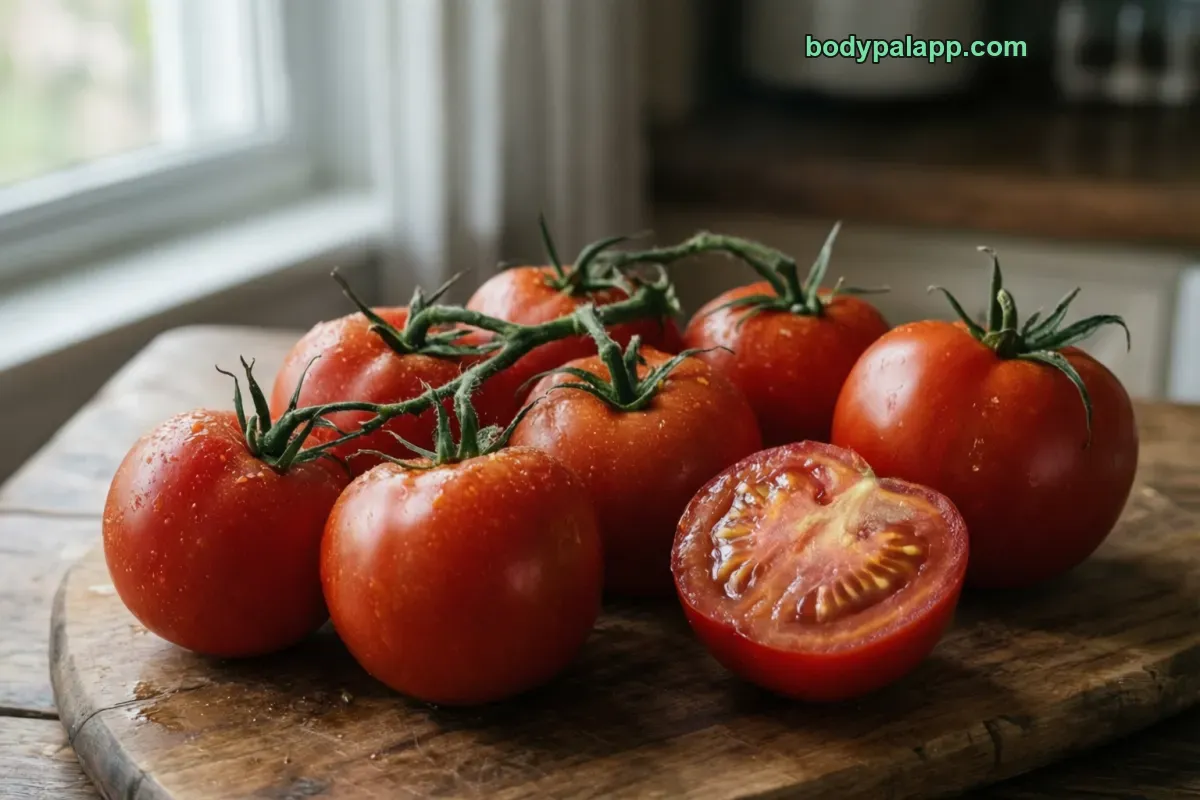
Campari tomato calories come to 43 for one cup chopped (240 g) and 18 per 100 g. The point to notice is how little the portion size matters: even a heaping bowl stays low, because these tomatoes are mostly water with a small amount of natural sugar, almost no fat and only a trace of sodium.
18kcal
1 100 g · 100 g, ripe red tomato
18%protein
0.9 gProtein
4 gCarbs
0.1 gFat
How to burn off 18 kcal
—Walking, brisk
—Jogging
—Cycling, moderate
—Swimming
Skip the math. BodyPal counts these calories from your steps and workouts automatically.
Nutrition facts
Ripe red tomato · per 100 g
Calories
18 kcal
Protein
0.9 g
Carbohydrate
4 g
Fat
0.1 g
Saturated fat
0 g
Cholesterol
0 mg
Sodium
11 mg
Potassium
218 mg
Iron
0.7 mg
Source: USDA FoodData Central
🛡️
Verified nutrition data
Numbers on this page come from USDA FoodData Central, the U.S. Department of Agriculture’s food composition database, and from manufacturer labels where a branded product is named. Last verified September 2026. How we verify our data →
Campari tomato: calories, protein and sodium by serving
Percent of daily value uses the FDA reference of 2,000 kcal a day.
Serving
kcal
Protein
Carbs
Fat
Sodium
% DV kcal
100 g
18
1 g
4 g
0.1 g
11 mg
1%
1 cup chopped (240 g)
43
2.3 g
9.6 g
0.3 g
26 mg
2%
2 medium (246 g)
44
2.3 g
9.9 g
0.3 g
27 mg
2%
3 oz portion (85 g)
15
0.8 g
3.4 g
0.1 g
9 mg
1%
3 × 100 g
54
2.9 g
33 mg
5 × 100 g
90
4.8 g
55 mg
A full cup of chopped campari is only 43 calories
Most foods punish a generous hand. Campari tomatoes do not. A 3 oz portion (85 g), roughly what you would slice onto a sandwich, adds 15 calories. A cup chopped (240 g) lands at 43, and 2 medium tomatoes (246 g) come to 44, which is effectively the same thing.
Scaling up keeps the math friendly. Two 100 g servings (200 g) total 36 calories, three (300 g) total 54, and even 500 g, a quantity few people eat in one sitting, reaches only 90. On a 2000-calorie reference, a cup covers about 2% of the day's energy, so the number on the scale is rarely the problem.
That makes campari tomatoes one of the easiest foods to eyeball. If you log by photo or by guess, being off by a tomato or two shifts the total by single digits. Precision matters far more for whatever you serve with them, a point we come back to below.
Carbs supply 77% of the few calories there are
Per 100 g, a campari tomato carries 4 g of carbohydrate, 1 g of protein and 0.1 g of fat. Translated into energy, carbs account for 77% of the calories, protein for 18% and fat for just 5%. This is a carbohydrate food, but a very dilute one.
Of those 4 g of carbs, 2.5 g are sugars and 0.7 g are fiber. A cup chopped brings 9.6 g of carbs, 6 g of sugars and 1.7 g of fiber. The sweetness campari growers are known for shows up here, yet the absolute amount stays modest because the fruit is so watery.
Protein is a footnote. A cup gives 2.3 g, about 5% of the daily value, so tomatoes will not anchor a meal on their own. Think of them as volume and flavor, and let another item on the plate do the filling work.
Potassium is the row worth reading, not sodium
Fresh campari tomatoes contain 11 mg of sodium per 100 g and 26 mg per cup, which rounds to about 1% of the 2300 mg daily value. If you watch salt, the tomato itself is a non-issue; the salt shaker and any dressing are where sodium enters.
Potassium tells a more interesting story. Per 100 g there are 218 mg of it, roughly twenty times the sodium figure. Against a daily value of 4700 mg that is a modest contribution per serving, but it adds up across a salad, a sauce and a snack.
Saturated fat and cholesterol both read 0, so there is nothing to flag on the fat side. The card values follow the USDA row for ripe red tomatoes, the standard reference for this type, so a particularly ripe or small batch may vary slightly from these figures.
What you put on them matters more than the tomatoes
Because the tomato contributes so little, the calorie count of a tomato dish is set almost entirely by its partners. A drizzle of oil, a scoop of fresh mozzarella or a handful of croutons can each outweigh a whole cup of campari tomatoes. Measure those, and estimate the tomatoes loosely.
For a more filling plate, pair them with a protein source such as eggs, beans, chicken or cottage cheese, and keep the tomato portion generous. You get color, juice and bulk for very few calories, which helps a meal feel larger without changing the total much.
Campari tomatoes also work as a snack eaten whole, since their size sits between a cherry and a medium tomato. If you want a quick record of what you ate, BodyPal can log the food from a photo of your plate.
How does campari tomato compare?
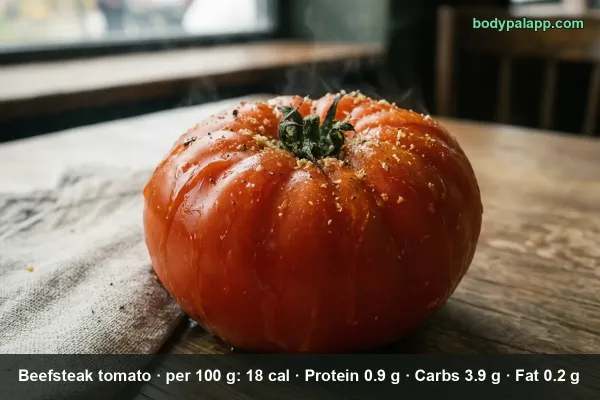
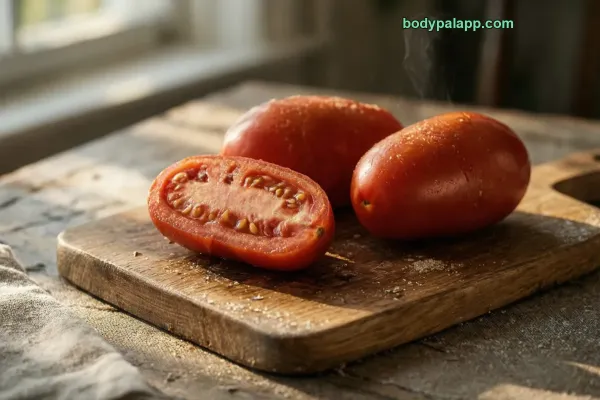
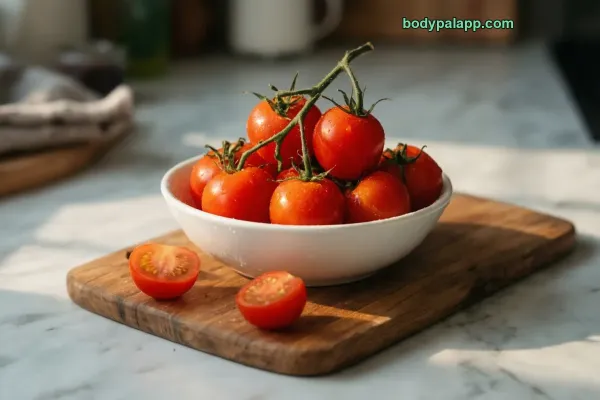
Here is how campari tomatoes stack up against beefsteak, roma and cherry tomatoes, per 100 g and per usual serving.
Verdict: Campari, beefsteak and roma tomatoes are a tie at 18 calories per 100 g, so pick by taste and texture rather than numbers. Cherry tomatoes run about 1.5 times higher at 27 per 100 g, so if you snack by the handful, campari is the leaner choice.
Campari tomato FAQs
How many calories are in campari tomatoes?
Red ripe tomato counts 18 calories per 100 g. A 3 oz portion (85 g) is 15 calories and a full cup chopped (240 g) is 43.
Are campari tomatoes good for weight loss?
They hold 18 calories per 100 g with 0.1 g of fat and 0.7 g of fiber, so even a cup chopped adds only 43 calories.
Campari tomato vs cherry tomato: which has fewer calories?
The campari type sits at 18 calories per 100 g against 27 for cherry tomatoes, about 9 calories less per 100 g.
How many carbs and how much sugar are in a campari tomato?
Per 100 g there are 4 g of carbs, 2.5 g of them sugars, plus 0.7 g of fiber. A cup chopped (240 g) comes to 9.6 g of carbs.
How many calories are in two medium campari tomatoes?
Two medium campari tomatoes (246 g) contain 44 calories. That portion also brings 9.9 g of carbs, 6.1 g of sugars, 1.7 g of fiber and 2.3 g of protein, with only 27 mg of sodium.
How much fiber is in a campari tomato?
Campari tomatoes have 0.7 g of fiber per 100 g and 1.7 g per cup chopped. That is a small share of the 28 g daily value, so count them as a minor fiber source alongside beans, grains or other vegetables.
Do campari tomatoes have fat?
Barely. There is 0.1 g of fat per 100 g and 0.3 g in a cup chopped, with 0 g saturated fat and 0 mg cholesterol. Fat supplies only 5% of the calories.
How much protein does a campari tomato have?
A campari tomato serving of 100 g has 1 g of protein, and a cup chopped has 2.3 g, about 5% of the daily value. Protein makes up 18% of the calories, so tomatoes need a protein partner to make a filling meal.
How much potassium is in campari tomatoes?
Campari tomatoes provide 218 mg of potassium per 100 g, against only 11 mg of sodium. The daily value for potassium is 4700 mg, so a large tomato salad contributes a useful but partial amount.