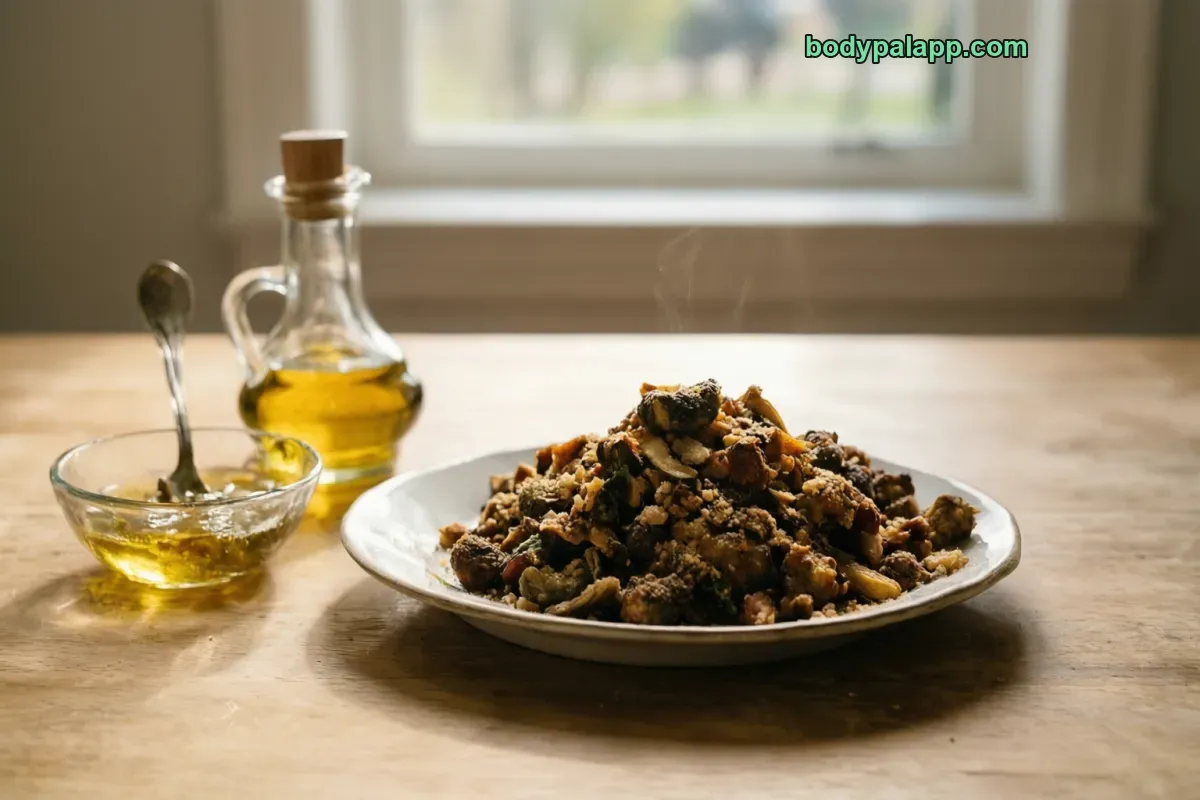
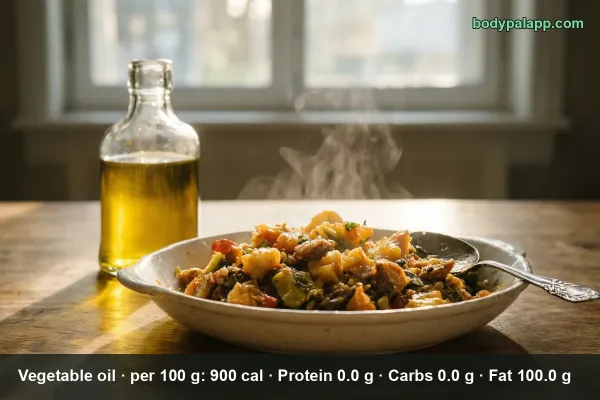
Canola oil calories come to 124 for 1 tbsp (14 g) and 884 per 100 g. Every one of those calories is fat. The oil has 0 g protein, 0 g carbs and 0 mg sodium, so the only thing that moves your total is how much you pour. A loose pour can double a tablespoon without you noticing.
124kcal
1 tablespoon · 14 g, plain, as bottled
0%protein
0 gProtein
0 gCarbs
14 gFat
How to burn off 124 kcal
—Walking, brisk
—Jogging
—Cycling, moderate
—Swimming
Skip the math. BodyPal counts these calories from your steps and workouts automatically.
Nutrition facts
Plain, as bottled · per 14 g
Calories
124 kcal
Protein
0 g
Carbohydrate
0 g
Fat
14 g
Saturated fat
1 g
Cholesterol
0 mg
Sodium
0 mg
Potassium
0 mg
Iron
0 mg
Source: USDA FoodData Central
🛡️
Verified nutrition data
Numbers on this page come from USDA FoodData Central, the U.S. Department of Agriculture’s food composition database, and from manufacturer labels where a branded product is named. Last verified October 2026. How we verify our data →
Canola oil: calories, protein and sodium by serving
Percent of daily value uses the FDA reference of 2,000 kcal a day.
Serving
kcal
Protein
Carbs
Fat
Sodium
% DV kcal
1 tbsp (14 g)
124
0 g
0 g
14 g
0 mg
6%
1 tsp (4.5 g)
40
0 g
0 g
4.5 g
0 mg
2%
1 cup (218 g)
1,927
0 g
0 g
218 g
0 mg
96%
100 g
884
0 g
0 g
100 g
0 mg
44%
3 × 1 tbsp (14 g)
371
0 g
0 mg
5 × 1 tbsp (14 g)
619
0 g
0 mg
Every tablespoon adds 124 calories
Oil is the easiest calorie in the kitchen to miscount, because the pour rarely matches the spoon. A teaspoon of canola oil (4.5 g) is 40 calories, about 2% of the daily value. A tablespoon (14 g) is 124 calories, about 6% of the daily value. Those are small numbers on their own. They stop being small once the bottle tips a second time.
Stack the tablespoons and the total climbs fast. Two tablespoons (28 g) come to 248 calories, three (42 g) to 371, and five (70 g) to 619. Five tablespoons is a realistic amount for a big pan of stir-fry, a tray of roasted potatoes or a batch of baked goods. The food you cook in it may be light; the oil is not.
A full cup (218 g) reaches 1,927 calories, or 96% of the daily value. Nobody eats a cup at once, but plenty of recipes call for one, and those calories spread across every serving. If you track, measure the oil with a spoon or weigh it on a scale. Guessing from the bottle is where most logged totals drift.
All 100% of the calories come from fat
Canola oil is pure fat. Per 100 g it has 100 g of fat, 0 g protein, 0 g carbs, 0 g fiber and 0 g sugars, so the calorie split is 100% fat. That density explains the numbers: 884 calories per 100 g, and 124 in a single tablespoon. No other macro dilutes it.
A tablespoon holds 14 g of fat. Against the daily value of 78 g of fat used on this page, that is a real share from one spoon. Two tablespoons weigh 28 g, and every gram of that is fat. If you are already eating cheese, nuts or fatty meat that day, the oil sits on top of it.
What canola oil does not give you is just as clear. It brings no protein to keep you full, no fiber and no carbohydrate for energy you can feel. Any staying power in a dish comes from what the oil is cooked with, not the oil itself. Treat it as a cooking medium with a calorie cost, not as part of the food's nutrition.
Saturated fat is low and sodium is zero
Of the 100 g of fat in 100 g of canola oil, only 7.4 g is saturated. The daily value for saturated fat is 20 g, and canola oil uses a small part of that relative to how much total fat it carries. If saturated fat is the row you watch, canola is one of the lighter choices on the shelf.
The other label rows are blank. Sodium, cholesterol and potassium all read 0 per 100 g, so the oil adds nothing against the 2300 mg sodium daily value or the 300 mg cholesterol value. If you watch sodium, the salt in a dish comes from seasoning, sauces and stock, not from the oil you cooked it in.
These figures come from the USDA row 'Oil, canola', plain as bottled. Blends on store shelves, such as Filippo Berio Blend of High Oleic Canola Oil and Extra Virgin Olive Oil, mix canola with other oils. For those, read the bottle's own label rather than assuming it matches plain canola.
Measure the oil and let other foods bring the volume
Canola oil works best as a tool. A teaspoon at 40 calories is often enough to coat a nonstick pan, while a tablespoon at 124 suits a tray of roasted vegetables. Because it has 0 g protein and 0 g fiber, pair it with foods that bring both: eggs, beans, chicken, fish, greens and whole grains.
In dressings, the oil usually outweighs everything else in calories. A vinaigrette made with 3 tablespoons of oil already carries 371 calories before the vinegar or mustard goes in. Splitting it across several salads keeps each portion sensible, and tossing the greens well means less dressing does the same job.
BodyPal can log a meal from a photo. Oil is mostly invisible once it is cooked in, so add the spoonfuls you measured to the entry. That one habit closes the most common gap in a food log.
How does canola oil compare?
Here is how canola oil stacks up against vegetable oil, extra virgin olive oil and avocado oil, per 100 g and per usual serving.
Verdict: Calories are no reason to pick one cooking oil over another: canola, extra virgin olive and avocado oil all sit at 884 per 100 g, and vegetable oil at 900. Choose by flavor, price and cooking heat, and measure every one of them, since a tablespoon of any of these runs about 119 to 124 calories.
Most popular canola oil brands in the United States
Ranked by popularity in the BodyPal database
# Productkcal / 100 g
1Filippo Berio Blend of High Oleic Canola Oil and Extra Virgin Olive Oil1 tbsp · 15 ml800 kcal
This blend is labeled per 15 ml tablespoon with rounded label values, so its per 100 g number reads lower than the one above. Source: manufacturer labels / USDA FoodData Central.
Canola oil FAQs
How many calories are in a tablespoon of canola oil?
About 124 calories in one tablespoon (14 g), and 40 calories in one teaspoon (4.5 g).
Is canola oil good for weight loss?
Canola oil is 100% fat at 884 calories per 100 g, so each tablespoon adds 124 calories to a meal. Measuring it instead of pouring keeps the count accurate.
Canola oil vs olive oil: which has more calories?
Both have 884 calories per 100 g, so a tablespoon of either is about 124 calories. Canola oil has 7.4 g saturated fat per 100 g.
How much fat is in a tablespoon of canola oil?
One tablespoon (14 g) has 14 g of fat, about 1.0 g of it saturated, with 0 g carbs and 0 g protein.
How many calories are in 2 tablespoons of canola oil?
Two tablespoons of canola oil (28 g) contain 248 calories. All of them come from fat, with 0 g protein and 0 g carbs, so that amount is a sizable addition to any pan or dressing.
How many calories are in a teaspoon of canola oil?
One teaspoon of canola oil (4.5 g) has 40 calories and 4.5 g of fat. That is about 2% of the daily value for calories, which makes teaspoons the easier unit for lightly coating a pan.
Is 124 calories per tablespoon the USDA number for canola oil?
Yes. The 124 calories for 1 tbsp (14 g) come from the USDA entry 'Oil, canola', which lists 884 calories per 100 g of plain oil as bottled.
Does canola oil have sodium, carbs or sugar?
No. Canola oil has 0 mg sodium, 0 g carbs and 0 g sugars per 100 g. Its 884 calories per 100 g come entirely from fat, of which 7.4 g is saturated.