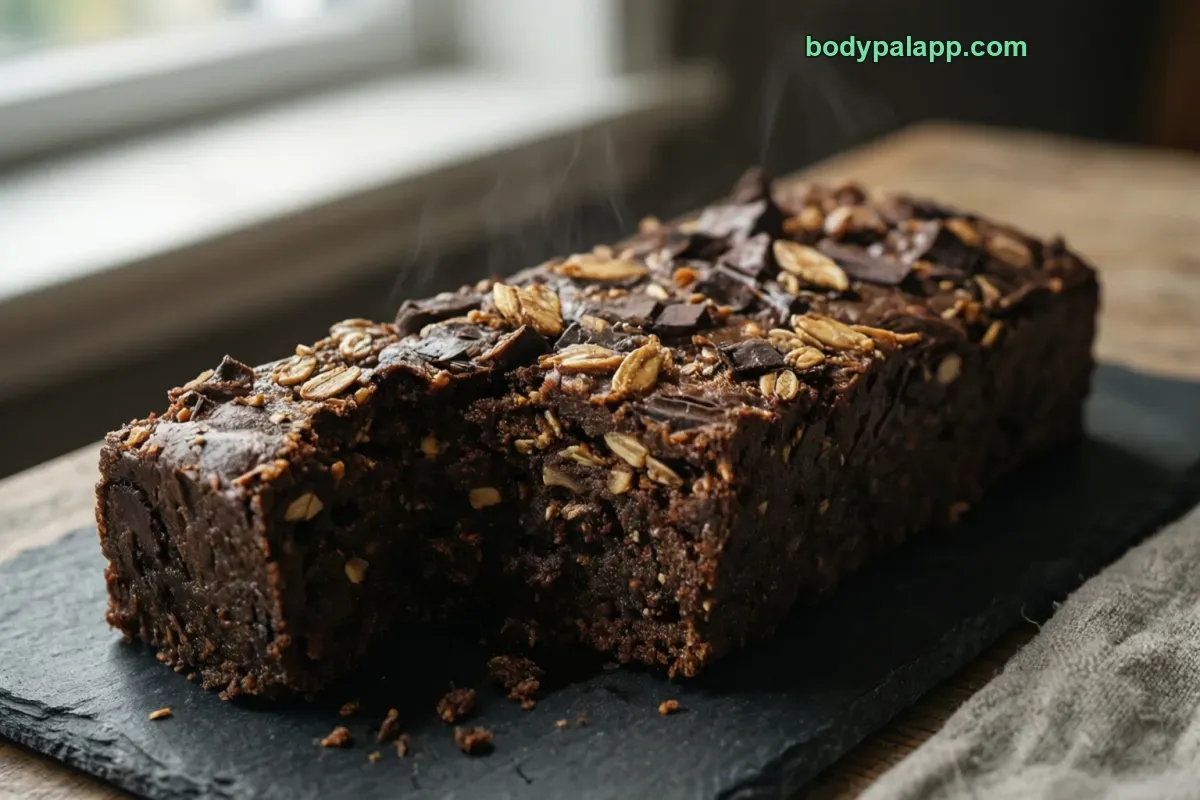
Chocolate brownie Clif Bar calories come to 250 for one 68 g bar and 368 per 100 g. Carbs drive that total: they supply 69% of the calories, and a single bar carries 22 g of sugars next to 9 g of protein. Treat it as energy for activity, not as a protein snack.
250kcal
1 bar · 68 g, packaged, per label
14%protein
9 gProtein
45 gCarbs
5 gFat
How to burn off 250 kcal
—Walking, brisk
—Jogging
—Cycling, moderate
—Swimming
Skip the math. BodyPal counts these calories from your steps and workouts automatically.
Nutrition facts
Packaged, per label · per 68 g
Calories
250 kcal
Protein
9 g
Carbohydrate
45 g
Fat
5 g
Saturated fat
1.5 g
Cholesterol
0 mg
Sodium
170 mg
Potassium
270 mg
Source: USDA FoodData Central
🛡️
Verified nutrition data
Numbers on this page come from USDA FoodData Central, the U.S. Department of Agriculture’s food composition database, and from manufacturer labels where a branded product is named. Last verified September 2026. How we verify our data →
Chocolate brownie Clif Bar: calories, protein and sodium by serving
Percent of daily value uses the FDA reference of 2,000 kcal a day.
Serving
kcal
Protein
Carbs
Fat
Sodium
% DV kcal
1 bar (68 g)
250
9 g
45 g
5 g
170 mg
13%
100 g
368
13.2 g
66.2 g
7.4 g
250 mg
18%
3 × 1 bar (68 g)
751
27 g
510 mg
5 × 1 bar (68 g)
1,251
45 g
850 mg
One bar is a 250-calorie snack, two make a meal
The label serving is the whole bar: 68 g, 250 calories, 45 g of carbs, 9 g of protein and 5 g of fat. That is 13% of a standard daily calorie budget in a wrapper you can finish in a few bites. Because it comes as one sealed unit, there is no guessing about portion size, which makes it easy to log.
The trouble starts when one bar becomes a habit of two. Two bars weigh 136 g and land at 500 calories, which is the size of a full meal, yet they deliver only 18 g of protein. Three bars reach 751 calories and 510 mg of sodium. Five bars, the kind of stash someone might eat over a long hike or a full day of riding, add up to 1,251 calories and 45 g of protein.
The takeaway is simple. A single bar fits easily between meals. Stacking bars adds calories quickly without adding much protein, so if you need more fuel, pair one bar with other food rather than reaching for a second wrapper.
Carbs supply 69% of every bar
Look at where the energy comes from and the bar's purpose becomes obvious. Carbohydrates account for 69% of the calories, fat for 17% and protein for just 14%. Per 100 g that works out to 66.2 g of carbs, 13.2 g of protein and 7.4 g of fat. This is an oat-and-sugar fuel bar with some protein added, not the reverse.
The protein is not nothing. One bar gives 9 g, which the label puts at 18% of the daily value, and 100 g would reach 26%. But you are paying 250 calories for those 9 g. Dedicated protein bars flip that ratio, which is why the compare table below matters if protein is your goal.
Fat stays low at 5 g per bar, and saturated fat is only 2.2 g per 100 g. Cholesterol reads 0. So the macro story is clean and lopsided: mostly carbs, modest protein, little fat. That profile suits a workout, a long walk or a stretch between meals when you need quick energy, and it suits a desk snack less well.
Sugar is the row to watch, fiber softens it
Of the 45 g of carbs in one bar, 22 g are sugars. Per 100 g the bar carries 32.4 g of sugars, so roughly a third of its weight is sugar. That is the number to notice if you track added sweetness or eat several bars a week. The brownie flavor tastes like dessert partly because, by the numbers, it is close to one.
Fiber is the counterweight. Each bar brings 5 g, and 100 g holds 7.4 g, a solid amount for a snack bar. Against a daily value of 28 g, one bar covers a meaningful slice of the fiber row. Fiber adds bulk, which helps a 250-calorie bar feel more like food than candy.
Sodium is not a concern here. One bar has 170 mg, just 7% of the daily value, and even 100 g stays at 250 mg, or 11%. Potassium reads 397 mg per 100 g. If you watch sodium, this bar is one of the milder packaged snacks, so the sugar row is the one to keep your eye on.
Best used as fuel, paired with protein
The bar works best when you will actually use the carbs: before a long run, partway through a hike, or on a bike ride. In those settings the 45 g of carbs per bar are the point, and the sugar is quick energy rather than idle snacking. As a mid-afternoon desk snack, the same 250 calories go less far.
If you want it to hold you longer, pair it with protein. A glass of milk, a cup of Greek yogurt or a hard-boiled egg alongside the bar fills the gap that 9 g of protein leaves. Fruit adds volume for few calories. Coffee or water instead of a sweet drink keeps the sugar total from climbing.
Store brands make similar chocolate brownie energy bars, including Good & Gather and Kize, so check labels if you switch. To keep a running total of bars eaten during a busy week, BodyPal can log the wrapper from a photo.
How does chocolate brownie Clif Bar compare?
Here is how the chocolate brownie Clif Bar stacks up against a generic protein bar, a Quest bar and a chocolate chip granola bar, per 100 g and per usual serving.
Verdict: For the fewest calories per bar pick the chocolate chip granola bar at 117, and for staying full pick the Quest bar, which packs 33.3 g of protein per 100 g at 350 calories. Choose the Clif Bar only when you want carb fuel, since it carries 66.2 g of carbs per 100 g against 35 for the Quest bar.
Most popular chocolate brownie Clif Bar brands in the United States
Ranked by popularity in the BodyPal database
# Productkcal / 100 g
1Clif Bar Chocolate Brownie Energy Bar1 bar · 68 g368 kcal
2Good & Gather Chocolate Brownie Energy Bars1 bar · 68 g368 kcal
3Kize Chocolate Brownie Energy Bars1.5 oz · 43 g442 kcal
4Bay Valley Foods Energy Bar Chocolate Fudge Brownie1 bar · 55 g418 kcal
5Life Choice Energy Bar Chocolate Fudge Brownie1 bar · 55 g418 kcal
How many calories are in a Chocolate Brownie Clif Bar?
One 68 g Chocolate Brownie Clif Bar has 250 calories, which is 368 calories per 100 g.
Is a Chocolate Brownie Clif Bar good for weight loss?
One bar has 250 calories with 45 g carbs, 22 g sugar, 5 g fat and 5 g fiber.
Chocolate Brownie Clif Bar vs protein bar: which has fewer calories?
Per 100 g, the Clif Bar has 368 calories versus 412 for a protein bar. The Clif Bar has 13.2 g protein per 100 g.
How much protein is in a Chocolate Brownie Clif Bar?
One 68 g bar has 9 g protein and 45 g carbs, 22 g of which are sugar.
How much sugar is in a Chocolate Brownie Clif Bar?
One 68 g bar has 22 g of sugars out of 45 g of carbs. Per 100 g that is 32.4 g, so roughly a third of the bar by weight is sugar, which makes sugar the row to watch.
How much fiber does a Chocolate Brownie Clif Bar have?
Each bar has 5 g of fiber, or 7.4 g per 100 g. That is a solid amount for a snack bar and helps the 250 calories feel more filling than a candy bar would.
Is a Chocolate Brownie Clif Bar high in sodium?
No. One bar has 170 mg of sodium, only 7% of the daily value. Even 100 g stays at 250 mg, or 11%, so sodium is a minor concern with this bar.
How many calories are in two Chocolate Brownie Clif Bars?
Two bars total 500 calories, with 18 g of protein and 340 mg of sodium. That is meal-sized energy with modest protein, so pairing one bar with a protein food often works better.
Does a Chocolate Brownie Clif Bar have cholesterol?
The label lists 0 mg of cholesterol. Fat is low too, at 5 g per bar and 2.2 g of saturated fat per 100 g, so most of the calories come from carbs.