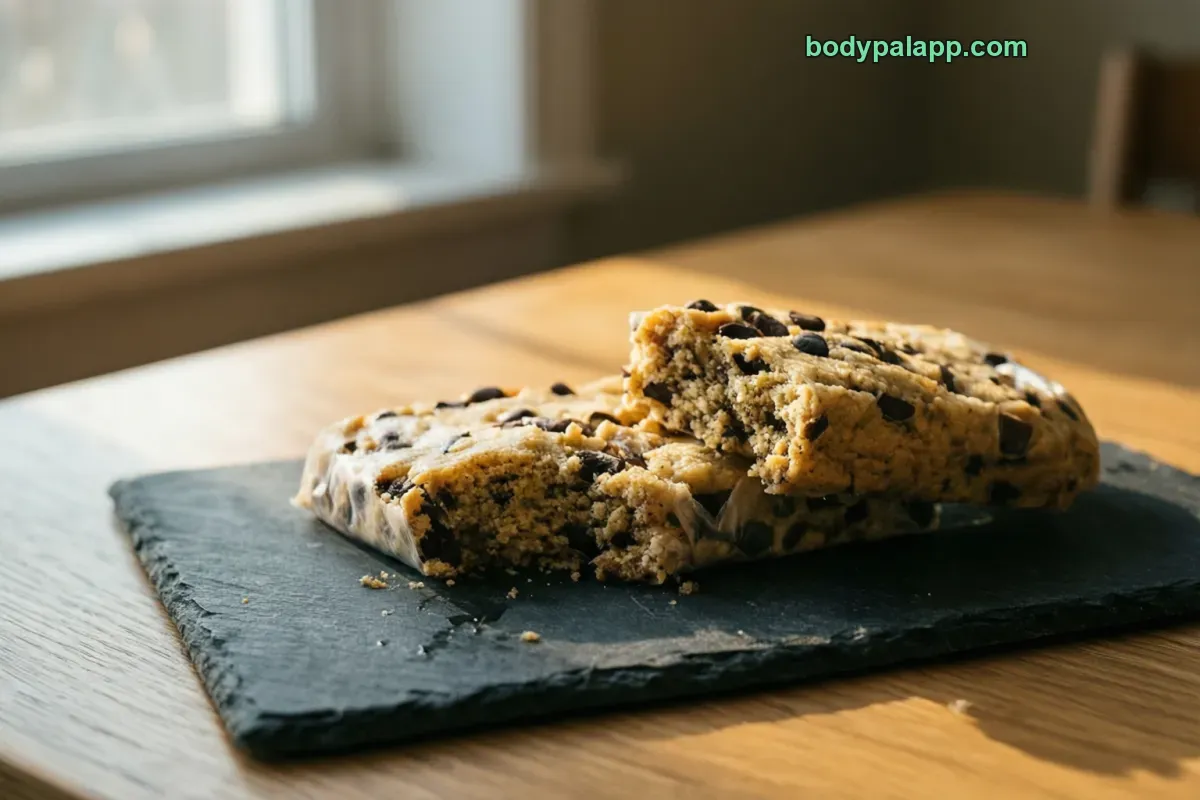
Quest bar calories come to 210 for one 60 g bar, or 350 per 100 g. Fiber is the number to notice. One bar carries 17 g of fiber and only 2 g of sugars, plus 20 g of protein, which is 40% of the daily value. That makes it unusual for something sold as a candy-bar stand-in.
210kcal
1 bar · 60 g, packaged, per label
31%protein
20 gProtein
21 gCarbs
10 gFat
How to burn off 210 kcal
—Walking, brisk
—Jogging
—Cycling, moderate
—Swimming
Skip the math. BodyPal counts these calories from your steps and workouts automatically.
Nutrition facts
Packaged, per label · per 60 g
Calories
210 kcal
Protein
20 g
Carbohydrate
21 g
Fat
10 g
Saturated fat
1.5 g
Cholesterol
5 mg
Sodium
320 mg
Potassium
170 mg
Source: USDA FoodData Central
🛡️
Verified nutrition data
Numbers on this page come from USDA FoodData Central, the U.S. Department of Agriculture’s food composition database, and from manufacturer labels where a branded product is named. Last verified September 2026. How we verify our data →
Quest bar: calories, protein and sodium by serving
Percent of daily value uses the FDA reference of 2,000 kcal a day.
Serving
kcal
Protein
Carbs
Fat
Sodium
% DV kcal
1 bar (60 g)
210
20 g
21 g
10 g
320 mg
11%
100 g
350
33.3 g
35 g
16.7 g
533 mg
18%
3 × 1 bar (60 g)
630
60 g
959 mg
5 × 1 bar (60 g)
1,050
100 g
1,599 mg
One bar is 210 calories, three bars are a meal
A single 60 g bar is 210 calories, about 11% of the daily value. That is snack territory, and the bar is sized to stay there. The label lists every flavor at the same weight, so the total barely moves from one bar to the next.
Where the total moves is in how many you eat. Two bars come to 420 calories with 40 g of protein and 640 mg of sodium. Three bars reach 630 calories, 60 g of protein and 959 mg of sodium, which is a full meal's worth of energy eaten in a few minutes. At five bars you are at 1,050 calories and 1,599 mg of sodium.
Bars are easy to stack because they are dense and do not look like much. If you keep a box in your bag or desk, count wrappers rather than guessing. BodyPal can log the bar from a photo of the wrapper, which helps on days when you grab a second one without thinking about it.
The calories split almost evenly three ways
Most protein bars lean hard on one macro. This one does not. About 31% of the calories come from protein, 33% from carbs and 35% from fat, a near-even split that reads more like a small mixed meal than a protein shake.
Per 100 g, that is 33.3 g of protein, 35 g of carbs and 16.7 g of fat. The carb figure is misleading on its own, though. Of those 35 g, 28.3 g are fiber and only 3.3 g are sugars, so very little of the carb total behaves like the sugar in a regular candy bar. Saturated fat is modest at 2.5 g per 100 g.
Per bar, the fiber works out to 17 g against a daily value of 28 g. That is a lot to take in at once. If you are not used to high-fiber foods, one bar at a time is the sensible pace, and eating it with water rather than on its own is easier on most people.
Sodium is higher than a candy bar's
A bar holds 320 mg of sodium, 14% of the 2300 mg daily value. Per 100 g it is 533 mg, or 23%. You would not guess that from the sweet flavors, and it is well above the chocolate and ice cream bars in the compare table.
One bar is not a problem for most days. The figure matters if you watch sodium and treat bars as a free snack. Two bars put you at 640 mg, and three reach 959 mg before any of your actual meals are counted.
Cholesterol is low at 8 mg per 100 g, and potassium sits at 283 mg per 100 g. Neither changes the picture much. Sodium and fiber are the two rows worth reading on this label.
Treat it as a planned snack, not a free one
At 210 calories and 20 g of protein, a bar works well as a bridge between meals or right after a workout when a full meal is hours away. It also travels well and keeps in a bag, which is most of its appeal.
What it lacks is volume and variety. Pair it with a piece of fruit or a glass of milk if you want it to feel like a real snack, and count those calories too. On days you eat a bar, the protein it brings means the rest of your meals can lean more toward vegetables and whole grains.
Flavors from Quest and similar lines such as Alani Nu sit close together on calories, so pick the one you like. The bigger lever is the count, not the flavor.
How does Quest bar compare?
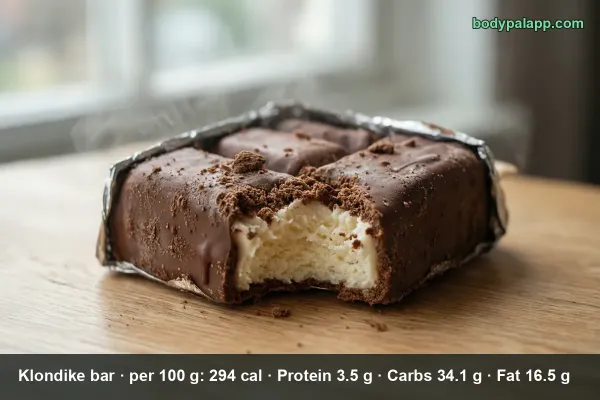
Here is how a Quest bar compares with a generic protein bar, a Hershey bar and a Klondike bar, per 100 g and per usual serving.
Verdict: For protein per calorie, pick the Quest bar: 350 calories and 33.3 g of protein per 100 g, against 412 calories and 30.3 g for a typical protein bar. The Hershey bar is about 1.5 times as calorie dense with only 7.7 g of protein per 100 g, so save it for when you want chocolate, not fuel.
Most popular Quest bar brands in the United States
Ranked by popularity in the BodyPal database
# Productkcal / 100 g
1Quest Protein Bar Mixed Berry1 bar · 60 g333 kcal
2Quest Protein Bar Chocolate Brownie1 bar · 60 g283 kcal
3Quest Protein Bar1 bar · 60 g300 kcal
4Alani Fit Snacks Protein Bar Confetti Cake1 bar · 46 g370 kcal
5Alani Fit Snacks Protein Bar Chocolate Cake1 bar · 46 g370 kcal
6Quest Protein Bar Banana Nut Muffin1 bar · 60 g283 kcal
7Alani Nu Fit Snacks Protein Bars Munchies1 bar · 46 g370 kcal
One 60 g Quest protein bar has about 210 calories.
Is a Quest bar good for weight loss?
A 60 g bar has 210 calories with 20 g protein, 17 g fiber and 2 g sugar.
Quest bar vs protein bar: which has fewer calories?
Per 100 g, a Quest bar has 350 calories and a typical protein bar has 412.
How much protein is in a Quest bar?
About 20 g protein per 60 g bar (33.3 g per 100 g). The bar has 21 g carbs, of which 17 g is fiber.
How much fiber is in a Quest bar?
One 60 g Quest bar has 17 g of fiber, or 28.3 g per 100 g. Against a daily value of 28 g, a single bar covers a large share of the day's fiber.
How much sugar does a Quest bar have?
A Quest bar has 2 g of sugars per 60 g bar, or 3.3 g per 100 g. Most of its 21 g of carbs per bar come from fiber rather than sugar.
How much sodium is in a Quest bar?
One bar contains 320 mg of sodium, 14% of the daily value. Per 100 g that rises to 533 mg, or 23%, which is more than the chocolate and ice cream bars it competes with.
How many calories are in two Quest bars?
Two Quest bars come to 420 calories, with 40 g of protein and 640 mg of sodium. Three bars reach 630 calories, so stacking them quickly turns a snack into a meal.
Is a Quest bar high in fat?
A Quest bar has 10 g of fat per bar, or 16.7 g per 100 g, and fat supplies about 35% of its calories. Saturated fat is low at 2.5 g per 100 g.