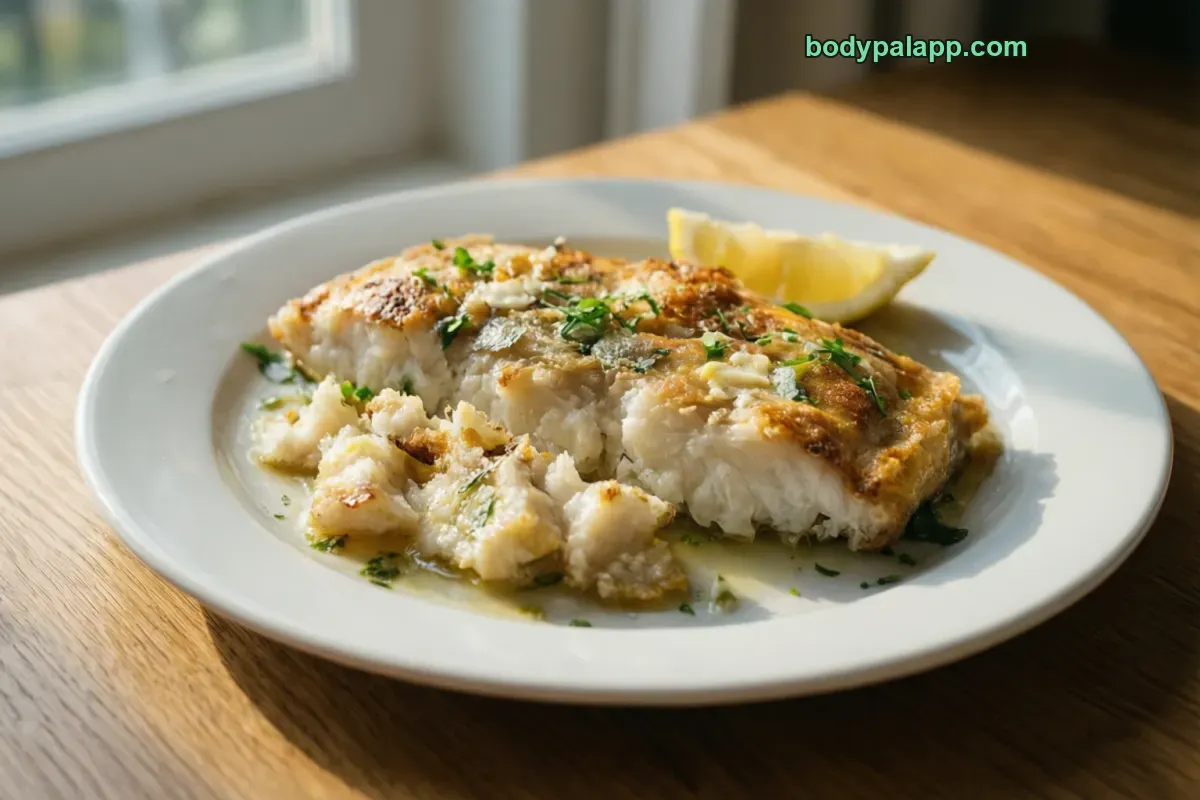
Baked cod fillet calories come to 189 for one 180 g fillet and 105 per 100 g. The number worth noticing is the split: 92 percent of those calories come from protein, with no carbs and barely any fat. A single fillet delivers 41.1 g of protein, which is 82% of the daily value.
189kcal
1 fillet · 180 g, Atlantic, baked, dry heat
92%protein
41 gProtein
0 gCarbs
1.5 gFat
How to burn off 189 kcal
—Walking, brisk
—Jogging
—Cycling, moderate
—Swimming
Skip the math. BodyPal counts these calories from your steps and workouts automatically.
Nutrition facts
Atlantic, baked, dry heat · per 180 g
Calories
189 kcal
Protein
41 g
Carbohydrate
0 g
Fat
1.5 g
Saturated fat
0.3 g
Cholesterol
99 mg
Sodium
140 mg
Potassium
439 mg
Iron
0.9 mg
Source: USDA FoodData Central
🛡️
Verified nutrition data
Numbers on this page come from USDA FoodData Central, the U.S. Department of Agriculture’s food composition database, and from manufacturer labels where a branded product is named. Last verified September 2026. How we verify our data →
Baked cod fillet: calories, protein and sodium by serving
Percent of daily value uses the FDA reference of 2,000 kcal a day.
Serving
kcal
Protein
Carbs
Fat
Sodium
% DV kcal
1 fillet (180 g)
189
41.1 g
0 g
1.5 g
140 mg
9%
3 oz portion (85 g)
89
19.4 g
0 g
0.7 g
66 mg
4%
100 g
105
22.8 g
0 g
0.9 g
78 mg
5%
3 × 1 fillet (180 g)
567
123.3 g
421 mg
5 × 1 fillet (180 g)
945
205.5 g
702 mg
A 3 oz portion is an 89-calorie serving
A full 180 g fillet lands at 189 calories, about 9% of the daily value for calories. That fillet carries 41.1 g of protein and only 1.5 g of fat. For a fish dinner, that is a modest calorie line with a large protein payoff.
The 3 oz portion (85 g) is the restaurant and recipe standard, and it comes to 89 calories with 19.4 g of protein, or 39% of the daily value. If the fillets in your freezer bag are smaller than the 180 g reference, this is the more realistic number to log. Weighing once tells you which row fits your fillets.
Because cod has almost nothing but protein, the totals scale cleanly. Two fillets (360 g) reach 378 calories and 82.2 g of protein. Three fillets come to 567 calories, and five fillets, the kind of tray you cook for a family, total 945 calories with 205.5 g of protein. The fish itself rarely drives the calorie count; what goes on and beside it does.
Nearly every calorie is protein
The calorie split is about as lopsided as food gets: 92 percent protein, 8 percent fat, 0 percent carbohydrate. Per 100 g, baked cod has 22.8 g of protein, 0.9 g of fat and 0 g of carbs, sugars and fiber. Saturated fat sits at 0.2 g per 100 g, a figure small enough to ignore in most food logs.
That profile is why cod is a lean protein pick rather than a balanced meal on its own. It gives you the protein and leaves almost the entire fat and carb budget open. A fillet at 189 calories is mostly structure for the plate, not fuel in the form of energy-dense fat.
The flip side is that cod is easy to make richer without noticing. Butter, oil, breadcrumbs or a creamy sauce can add more calories than the fish itself, and none of that is in these figures. The USDA row behind this page is plain Atlantic cod cooked with dry heat, so log the extras separately.
Sodium stays low until the salt shaker comes out
Plain baked cod is light on sodium: 78 mg per 100 g, 140 mg per 180 g fillet, which is only 6% of the 2300 mg daily value. A 3 oz portion has 66 mg, or 3%. Even five fillets add up to 702 mg, still well under a third of the daily value.
That means the sodium on your plate comes almost entirely from preparation. Seasoning salt, soy sauce, store-bought marinades and breaded coatings can each add more sodium than the fish carries naturally. If you watch sodium, cod gives you a clean starting point and the seasoning is the row to track.
Two other rows are worth a glance. Cholesterol is 55 mg per 100 g against a daily value of 300 mg, a moderate figure for animal protein. Potassium is 244 mg per 100 g, a useful contribution toward the 4700 mg daily value, though cod is not the main source of it in a typical day.
Build the plate around what cod leaves out
Cod brings protein and very little else, so the sides decide whether the meal holds you. It has 0 g of fiber and 0 g of carbs, which makes vegetables, beans, potatoes or a whole grain the natural partners. A fillet at 189 calories leaves plenty of room for a generous side without the plate getting heavy.
Fat is the other gap. A drizzle of olive oil, a few slices of avocado or a spoon of a nut-based sauce add flavor and some staying power that lean white fish lacks. Keep the portion of that fat in view, since it can easily outweigh the fish in calories.
Frozen fillets from brands like Aqua Star or Wholey vary in size, so the per 100 g figure is the safest anchor when the package weight differs from the 180 g reference. If you would rather skip the scale, BodyPal can log the fillet from a photo of your plate.
How does baked cod fillet compare?
Here is how baked cod stacks up against baked tilapia and baked salmon, per 100 g and per usual fillet.
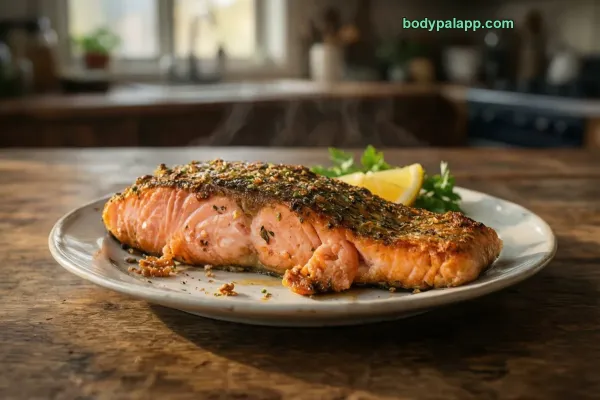
Verdict: For the most protein per calorie, pick cod: 105 calories per 100 g against 128 for tilapia and 206 for salmon. Pick salmon when you want fat on the plate, since its 12.4 g of fat per 100 g is what pushes a fillet to 367 calories.
Most popular baked cod fillet brands in the United States
2L & L International Cod Fillet4 oz · 113 g88 kcal
3Heinen's Cod Fillets4 oz · 113 g71 kcal
4Aqua Star Cod Fillets4 oz · 113 g62 kcal
5Cape Gourmet Cod Fillets4 oz · 113 g80 kcal
6Wholey Cod Fillets4 oz · 113 g53 kcal
Label values are for raw (often frozen, ice-glazed) cod fillets, while the page's main number is for cod cooked with dry heat, which loses water and concentrates calories per 100 g. Source: manufacturer labels / USDA FoodData Central.
Baked cod fillet FAQs
How many calories are in one baked cod fillet?
About 189 calories for a 180 g baked fillet, or 89 calories for a 3 oz portion.
Is baked cod good for weight loss?
Baked cod has 105 calories, 22.8 g protein and 0.9 g fat per 100 g.
Baked cod vs baked salmon: which has fewer calories?
Baked cod has 105 calories per 100 g, while baked salmon has 274 calories per 100 g.
How much protein is in a baked cod fillet?
A 180 g baked cod fillet has 41.1 g protein, which is 22.8 g per 100 g.
How many calories are in 3 oz of baked cod?
A 3 oz portion (85 g) of baked cod has 89 calories. It also carries 19.4 g of protein, 0.7 g of fat and 0 g of carbs, so nearly all of those calories are protein.
Does baked cod have any carbs?
Baked cod has 0 g of carbs per 100 g, along with 0 g of sugars and 0 g of fiber. Its calories come 92 percent from protein and 8 percent from fat, so it fits low-carb eating easily.
How much sodium is in a baked cod fillet?
A 180 g baked cod fillet has 140 mg of sodium, about 6% of the daily value. Per 100 g it is 78 mg. Most of the sodium in a cod dinner usually comes from salt and sauces, not the fish.
How many calories are in two baked cod fillets?
Two baked cod fillets (360 g) come to 378 calories. They provide 82.2 g of protein and 281 mg of sodium, before any butter, oil or sauce is added.
Is baked cod high in cholesterol?
Baked cod has 55 mg of cholesterol per 100 g, against a daily value of 300 mg. That is a moderate amount for an animal protein, and it comes with only 0.2 g of saturated fat per 100 g.