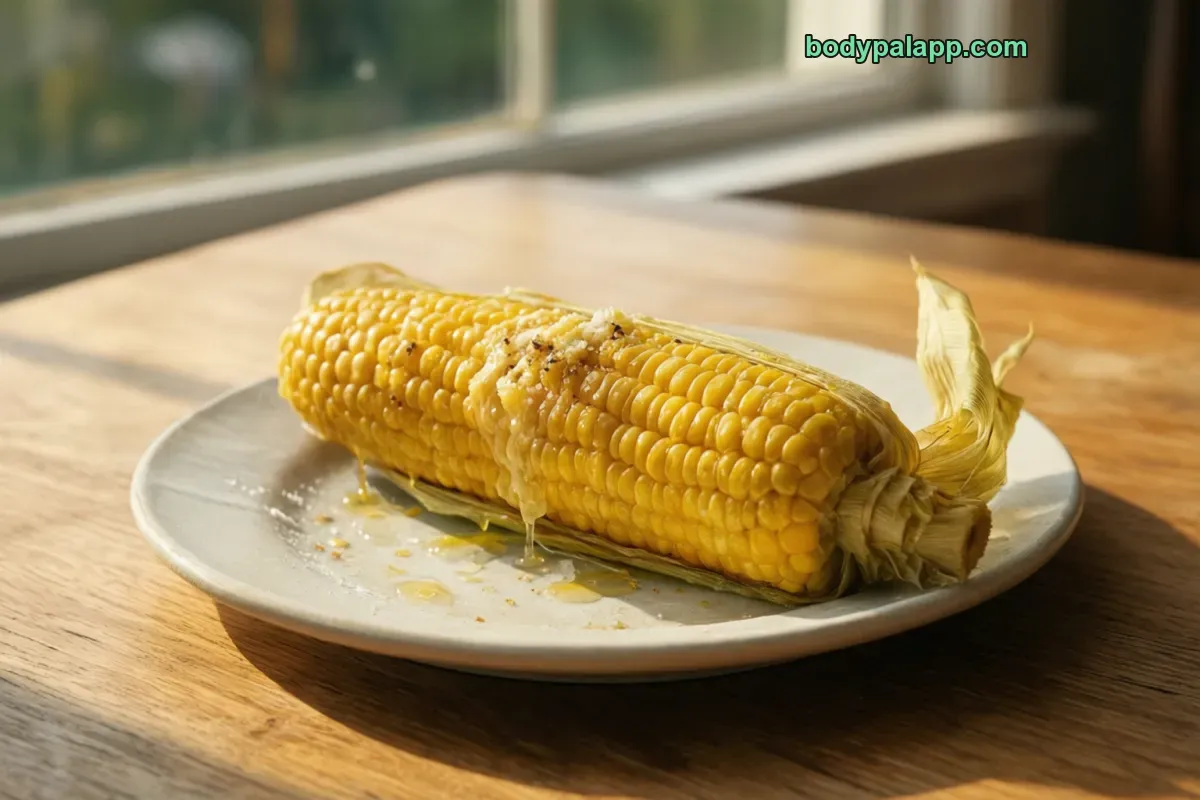
Corn on the cob calories come to 59 for one ear (63 g) and 94 per 100 g, boiled from frozen. The detail worth noticing is the salt: this USDA entry is cooked in salted water, so one ear carries 151 mg of sodium, 7% of the daily value, while 82% of its calories come from carbs.
59kcal
1 ear · 63 g, boiled, drained, from frozen
11%protein
2 gProtein
14 gCarbs
0.5 gFat
How to burn off 59 kcal
—Walking, brisk
—Jogging
—Cycling, moderate
—Swimming
Skip the math. BodyPal counts these calories from your steps and workouts automatically.
Nutrition facts
Boiled, drained, from frozen · per 63 g
Calories
59 kcal
Protein
2 g
Carbohydrate
14.1 g
Fat
0.5 g
Saturated fat
0.1 g
Cholesterol
0 mg
Sodium
151 mg
Potassium
158 mg
Iron
0.4 mg
Source: USDA FoodData Central
🛡️
Verified nutrition data
Numbers on this page come from USDA FoodData Central, the U.S. Department of Agriculture’s food composition database, and from manufacturer labels where a branded product is named. Last verified September 2026. How we verify our data →
Corn on the cob: calories, protein and sodium by serving
Percent of daily value uses the FDA reference of 2,000 kcal a day.
Serving
kcal
Protein
Carbs
Fat
Sodium
% DV kcal
1 ear (63 g)
59
2 g
14.1 g
0.5 g
151 mg
3%
1 cup kernels (165 g)
155
5.1 g
36.8 g
1.2 g
396 mg
8%
100 g
94
3.1 g
22.3 g
0.7 g
240 mg
5%
3 × 1 ear (63 g)
178
5.9 g
454 mg
5 × 1 ear (63 g)
296
9.8 g
756 mg
One ear is 59 calories, but few people stop at one
A single ear in this USDA entry weighs 63 g once cooked and drained, which is a modest cob. At 59 calories it covers just 3% of the daily calorie value used on this page. On its own, that is a light side dish.
The total climbs in a straight line as the ears pile up. Two ears are 118 calories with 3.9 g of protein. Three ears reach 178 calories, and five ears, a realistic count at a summer cookout, land at 296 calories for 315 g of corn. None of those numbers is alarming, but they show how quickly a side turns into a meal's worth of starch.
If you cut the kernels off instead, a cup (165 g) comes to 155 calories, 8% of the daily value. That cup holds more corn than two ears do, so it is easy to eat more without noticing. Ears also vary in size. The 63 g figure describes a small one, so a big farm-stand cob will run higher. If you track closely, weigh one ear once and use that as your reference.
Carbs supply 82% of the calories
Per 100 g, corn on the cob has 22.3 g of carbs, 3.1 g of protein and only 0.7 g of fat. That puts 82% of its calories on carbohydrate, 11% on protein and 6% on fat. Nutritionally, corn behaves more like a starchy side than a leafy vegetable, and it makes sense to count it that way.
Sugar is a small slice of the carb total: 3.6 g per 100 g, or 2.3 g per ear. Fiber is 2.8 g per 100 g, which works out to 1.8 g per ear and 4.6 g per cup of kernels. The rest of the carbohydrate is neither sugar nor fiber, so sweet corn tastes sweet without being a sugary food.
Fat barely registers. Saturated fat is 0.1 g per 100 g and cholesterol is 0. Protein is modest too, at 2 g per ear, or 4% of the daily value. The plain cob is lean, which means anything you spread on it will change the picture far more than the corn does.
Salted cooking water is where the sodium comes from
The USDA row behind this page is corn boiled with salt, and that shows in the sodium line: 240 mg per 100 g. One ear carries 151 mg, 7% of the daily value, and a cup of kernels holds 396 mg, or 17%. For a vegetable, that is a noticeable amount.
It adds up with every extra ear. Two ears hold 302 mg, three hold 454 mg and five hold 756 mg. Add salted butter or a sprinkle of seasoning salt at the table and the total keeps rising, even though the calorie count barely moves.
If you watch sodium, the fix is simple: boil or steam the corn in unsalted water and season it yourself, where you can see how much goes on. The corn itself also brings 251 mg of potassium per 100 g, so a plainly cooked ear is a reasonable side even on a lower-sodium day.
Treat corn as the starch on your plate
Because carbs supply most of its calories and protein is only 2 g per ear, corn fits best in the starch slot of a meal rather than the vegetable slot. Pair it with a protein such as grilled chicken, fish or beans, and add a green vegetable or salad for volume. One or two ears alongside that kind of plate keeps the meal balanced without crowding out anything else.
Toppings decide the final number. Butter, mayo-based elote sauces and grated cheese can easily match the calories of the corn underneath, so log them as separate items. Pre-buttered products such as the Ready Chef Go Corn on the Cob with Butter Steam Bag will not match the plain boiled values on this page, so check the package label.
BodyPal can log an ear of corn from a photo, which makes the cob itself quick to track. The spread on top is the part worth a second look.
How does corn on the cob compare?
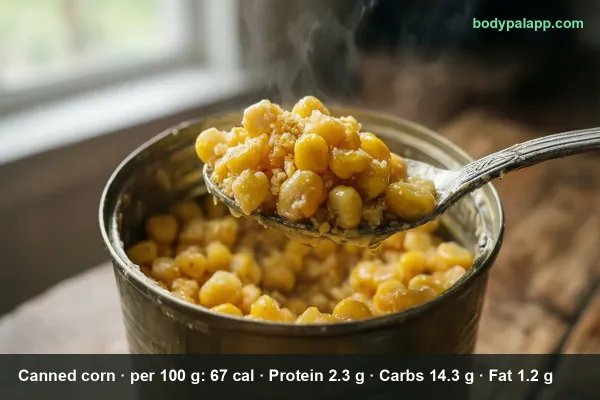
Here is how boiled corn on the cob stacks up against canned corn and asparagus, per 100 g and per usual serving.
Verdict: For the fewest calories pick asparagus at 22 per 100 g, or canned corn at 67 if you want corn itself, which is also lower in sodium than the salted cob at 205 mg per 100 g. Pick the cob when you want a satisfying hand-held side, and cook it in unsalted water to close that sodium gap.
Most popular corn on the cob brands in the United States
Ranked by popularity in the BodyPal database
# Productkcal / 100 g
1Ready Chef Go Corn on the Cob with Butter Steam Bag1 ear · 105 g133 kcal
This packaged ear is sold with butter, so its label reads higher than plain boiled corn. Source: manufacturer labels / USDA FoodData Central.
Corn on the cob FAQs
How many calories are in one ear of corn on the cob?
About 59 calories for one boiled ear (63 g of kernels). A cup of kernels is 155 calories.
Is corn on the cob good for weight loss?
One ear adds 59 calories, 2.0 g of protein and 1.8 g of fiber, and it has only 0.5 g of fat. Per 100 g it is 94 calories.
Corn on the cob vs canned corn: which has fewer calories?
Canned corn is 67 calories per 100 g against 94 for boiled corn on the cob, so the same 100 g of canned corn is 27 calories lower.
How many carbs are in corn on the cob?
100 g has 22.3 g of carbohydrate, of which 2.8 g is fiber. One 63 g ear has 14.1 g of carbs and 2.3 g of sugars.
What are the nutrition facts for corn on the cob per 100 g?
Per 100 g, boiled corn on the cob has 94 calories, 22.3 g of carbs, 3.1 g of protein and 0.7 g of fat. It also has 2.8 g of fiber, 3.6 g of sugars, 240 mg of sodium and 0 cholesterol.
How many calories are in a cup of cooked corn?
A cup of cooked kernels (165 g) has 155 calories, 8% of the daily value. It also brings 36.8 g of carbs, 5.1 g of protein and 4.6 g of fiber, plus 396 mg of sodium when boiled with salt.
What nutrients are in corn on the cob?
One ear gives 59 calories with 14.1 g of carbs, 2 g of protein and 1.8 g of fiber. Per 100 g there are also 251 mg of potassium, and saturated fat is just 0.1 g.
How many calories are in two ears of corn?
Two ears (126 g) have 118 calories, 3.9 g of protein and 302 mg of sodium. Three ears come to 178 calories, and five ears reach 296.
Does a maize cob have the same calories as corn on the cob?
Yes, maize is another name for corn, so a boiled sweet maize cob of 63 g lands at about 59 calories. Bigger cobs scale at 94 calories per 100 g, so weigh a large one for an accurate count.