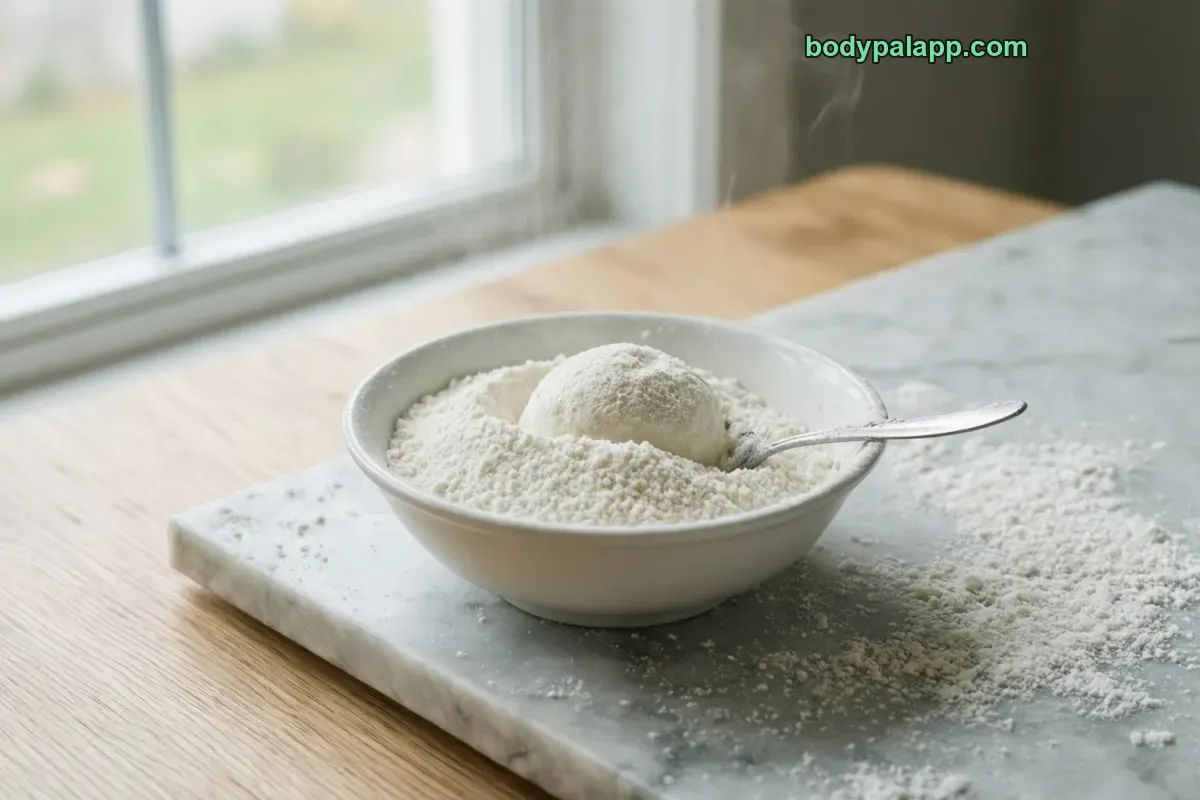
Corn starch calories come to 488 for 1 cup (128 g) and 381 per 100 g of dry, unprepared powder. Every one of those calories comes from carbohydrate, with almost no protein, fat or fiber. The cup figure looks large, but most recipes use a spoonful or two spread across several plates.
488kcal
1 cup · 128 g, dry, unprepared
0%protein
0.3 gProtein
117 gCarbs
0.1 gFat
How to burn off 488 kcal
—Walking, brisk
—Jogging
—Cycling, moderate
—Swimming
Skip the math. BodyPal counts these calories from your steps and workouts automatically.
Nutrition facts
Dry, unprepared · per 128 g
Calories
488 kcal
Protein
0.3 g
Carbohydrate
117 g
Fat
0.1 g
Saturated fat
0 g
Cholesterol
0 mg
Sodium
12 mg
Potassium
4 mg
Iron
0.6 mg
Source: USDA FoodData Central
🛡️
Verified nutrition data
Numbers on this page come from USDA FoodData Central, the U.S. Department of Agriculture’s food composition database, and from manufacturer labels where a branded product is named. Last verified September 2026. How we verify our data →
Corn starch: calories, protein and sodium by serving
Percent of daily value uses the FDA reference of 2,000 kcal a day.
Serving
kcal
Protein
Carbs
Fat
Sodium
% DV kcal
1 cup (128 g)
488
0.3 g
116.8 g
0.1 g
12 mg
24%
100 g
381
0.3 g
91.3 g
0.1 g
9 mg
19%
1 oz portion (28 g)
107
0.1 g
25.6 g
0 g
3 mg
5%
3 × 1 cup (128 g)
1,463
1 g
35 mg
5 × 1 cup (128 g)
2,438
1.7 g
58 mg
One ounce is 107 calories, a full cup is 488
The measure most labels lead with is 1 cup (128 g), which carries 488 calories, or 24% of the daily value used on nutrition labels. Few cooks ever eat that much at once. A cup of starch is a baking-batch quantity, not a serving, and it usually disappears into a cake, a pie filling or a large pot of gravy.
A smaller measure is more realistic. A 1 oz portion (28 g) holds 107 calories, 5% of the daily value, with 25.6 g of carbohydrate. That is still more than many sauces need, so the starch you actually eat per plate is often a fraction of it. Divide the recipe total by the number of servings and the figure shrinks fast.
Scaling up works in a straight line. Two cups (256 g) reach 975 calories, three cups (384 g) reach 1,463, and five cups (640 g) hit 2,438. Those totals matter if you are logging a whole batch of baked goods or a big holiday gravy. Weigh the starch before it goes in the bowl, and the math stays honest from start to finish.
Every calorie in corn starch is carbohydrate
The calorie split is as lopsided as food gets: 100% carbohydrate, 0% protein, 0% fat. Per 100 g the powder holds 91.3 g of carbs, 0.3 g of protein and 0.1 g of fat. It is the starchy part of the corn kernel on its own, and the label shows it.
None of that carbohydrate is sugar. The card lists 0 g of sugars per 100 g and per cup, so the 116.8 g of carbs in a full cup are almost all starch. Against the 275 g daily value for carbohydrate, one cup covers a big share of a day's carbs by itself.
For anyone tracking carbs rather than calories, this is the number to log. A thickened soup, gravy or stir-fry sauce can carry a carb load that the vegetables and meat in it do not explain. If you count carbs, measure the starch the same way you would measure sugar or flour, and the hidden share stops being hidden.
Fiber, protein and sodium barely register
Corn starch is notable more for what it leaves out. Per 100 g it carries just 0.9 g of fiber, 9 mg of sodium and 3 mg of potassium, with 0 g of saturated fat and 0 mg of cholesterol. A full cup adds only 1.2 g of fiber and 12 mg of sodium, which is 1% of the daily value.
Protein tells the same story. One cup supplies 0.3 g, about 1% of the daily value, and a 1 oz portion comes to 0.1 g. The calories arrive with no meaningful protein or fiber alongside them.
That is not a flaw in a thickener. Nobody reaches for corn starch for its nutrients; it is there to change texture. It does mean the calories it adds are plain energy, so the rest of the plate has to bring the protein, fiber and potassium. If you watch sodium, this is one ingredient you can stop worrying about.
A thickener, not a food you eat by the spoon
The numbers on this page describe dry, unprepared powder. Once you whisk it into broth, milk or fruit juice, the liquid adds weight but the starch adds no new calories, so a spoonful of finished sauce is far lighter than a spoonful of powder. Log the starch by its dry weight, not by the volume of sauce it made.
Pantry brands such as Argo, Clabber Girl, Rapunzel Organic and Hodgson Mill all sell the same basic ingredient. The brand table on this page lists their labels if you want to check the box in your cupboard.
If you want the thickening without adding much, use the smallest amount that sets the sauce and pair it with foods that bring protein and fiber, like lean meat, beans or vegetables. BodyPal can also log corn starch from a photo, which makes a quick entry easy when you are cooking.
How does corn starch compare?
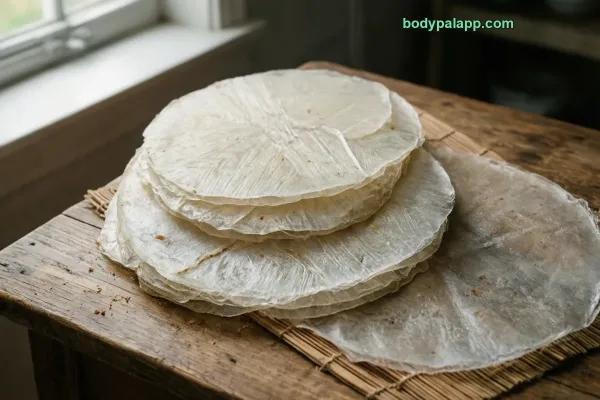
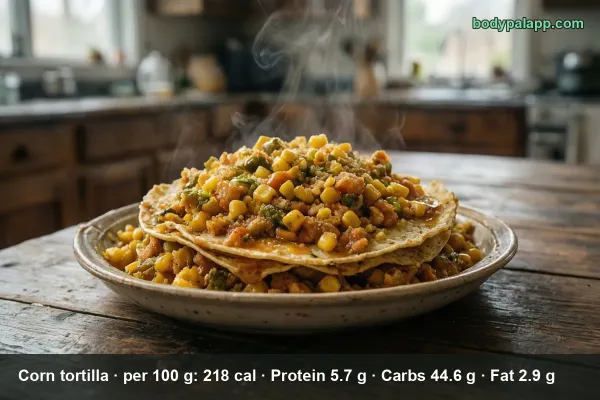
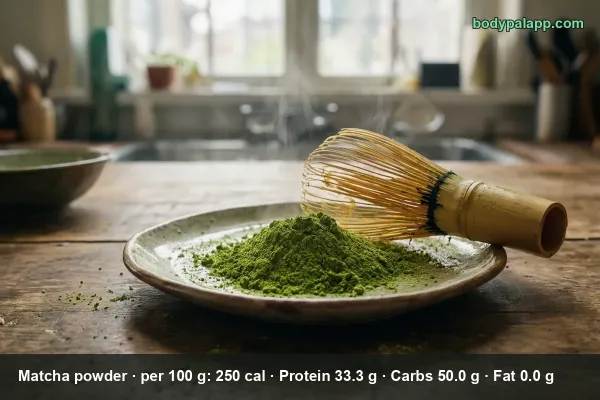
Here is how corn starch stacks up against rice paper, corn tortilla and matcha powder, per 100 g and per usual serving.
Verdict: For fewer calories per gram pick the corn tortilla, which at 218 per 100 g is the lightest of the group. If protein matters, matcha powder with 33.3 g per 100 g leaves corn starch, with almost none, far behind.
Most popular corn starch brands in the United States
Labels round the calories in a small 8 to 10 gram spoonful to the nearest 5 or 10, so their per 100 gram figures read 333 to 375 instead of 381. Source: manufacturer labels / USDA FoodData Central.
Corn starch FAQs
How many calories are in corn starch?
A cup of corn starch (128 g) is 488 calories and 100 grams is 381 calories. A level tablespoon (8 g) works out to about 30 calories.
Is corn starch good for weight loss?
It is used in spoonfuls rather than portions: a tablespoon (8 g) adds about 30 calories and 7.3 g of carbs, while a full cup is 488 calories and 116.8 g of carbs.
Corn starch or a corn tortilla: which has more calories?
Corn starch has 381 calories per 100 grams against 218 for a corn tortilla, but corn starch is measured by the spoon, so 8 g of it is about 30 calories.
How many carbs and protein are in corn starch?
Per 100 grams corn starch has 91.3 g of carbs, 0.3 g of protein and 0.1 g of fat. A tablespoon (8 g) is 7.3 g of carbs and almost no protein.
Does cornstarch have calories?
Yes. Dry cornstarch has 381 calories per 100 g, and all of them come from carbohydrate. It looks like a neutral kitchen powder, but by weight it is denser in calories than a corn tortilla or rice paper.
What is the nutritional value of corn starch per 100 g?
Per 100 g, corn starch has 381 calories, 91.3 g of carbs, 0.3 g of protein, 0.1 g of fat, 0.9 g of fiber, 0 g of sugars and 9 mg of sodium. Saturated fat and cholesterol are both 0.
What are the macros of corn starch?
By calories, corn starch is 100% carbohydrate, 0% protein and 0% fat. A 1 oz portion (28 g) gives 25.6 g of carbs, 0.1 g of protein and 0 g of fat for 107 calories.
How many calories are in a small amount of cornstarch?
A 1 oz portion (28 g) of cornstarch has 107 calories, 5% of the daily value. Most sauces use less than that and split it across several servings, so each plate gets a smaller share.