Dragon fruit calories come to 122 for 1 cup cubed (180 g) and 68 per 100 g, while a whole 75 g fruit is just 51. Nearly all of it, 93%, comes from carbs: a cup carries 21.6 g of sugars and 3.2 g of fiber, with almost no fat, protein or sodium.
122kcal
1 cup, cubed · 180 g, raw
4%protein
1.2 gProtein
29 gCarbs
0.4 gFat
How to burn off 122 kcal
—Walking, brisk
—Jogging
—Cycling, moderate
—Swimming
Skip the math. BodyPal counts these calories from your steps and workouts automatically.
Nutrition facts
Raw · per 180 g
Calories
122 kcal
Protein
1.2 g
Carbohydrate
29 g
Fat
0.4 g
Saturated fat
0.1 g
Cholesterol
0 mg
Sodium
2 mg
Potassium
371 mg
Iron
0.2 mg
Source: USDA FoodData Central
🛡️
Verified nutrition data
Numbers on this page come from USDA FoodData Central, the U.S. Department of Agriculture’s food composition database, and from manufacturer labels where a branded product is named. Last verified September 2026. How we verify our data →
Dragon fruit: calories, protein and sodium by serving
Percent of daily value uses the FDA reference of 2,000 kcal a day.
Serving
kcal
Protein
Carbs
Fat
Sodium
% DV kcal
1 cup cubed (180 g)
122
1.2 g
29.2 g
0.4 g
2 mg
6%
1 fruit (75 g)
51
0.5 g
12.2 g
0.2 g
1 mg
3%
1 slice (7 g)
5
0 g
1.1 g
0 g
0 mg
0%
100 g
68
0.7 g
16.2 g
0.2 g
1 mg
3%
3 × 1 cup cubed (180 g)
367
3.7 g
5 mg
5 × 1 cup cubed (180 g)
612
6.1 g
9 mg
A whole fruit is 51 calories, a cup is 122
The reference whole dragon fruit weighs 75 g and comes in at 51 calories. That is a modest fruit, and many sold in US stores look bigger. If yours is heavier, weigh the peeled flesh and count 68 calories per 100 g; that figure holds for any size.
Cubed fruit is where totals grow. One cup cubed is 180 g and 122 calories, more than double the weight of the reference fruit. A single 7 g slice adds about 5 calories, which is why a few slices on a plate barely register. Smoothie bowls are another story: 2 cups (360 g) reach 245 calories, and 3 cups (540 g) land at 367.
Even a very large serving stays light by snack standards. Five cups, 900 g of fruit, total 612 calories with only 9 mg of sodium and 6.1 g of protein. The lesson is simple. Dragon fruit is low in calories per bite, but volume adds up fast when it becomes the base of a bowl rather than a garnish.
Carbs supply 93% of the calories
Almost everything in dragon fruit's calorie count comes from carbohydrate. Per 100 g it has 16.2 g of carbs against 0.7 g of protein and 0.2 g of fat. In calorie terms that works out to 93% carbs, 4% protein and 3% fat.
Of those 16.2 g of carbs, 12 g are sugars and 1.8 g are fiber. The fruit tastes mildly sweet rather than candy-like, but the energy is still mostly sugar. Saturated fat is 0.1 g per 100 g and cholesterol is 0, so there is nothing to track on the fat side.
Protein is the gap. A full cup gives just 1.2 g, 2% of the daily value, and a whole fruit gives 0.5 g. On its own, dragon fruit will not keep you full for long. That matters if you eat it as a standalone snack and expect it to hold you until the next meal.
Sugar is the row to read, sodium is not
If you track sugar, this is the number that moves. A cup cubed carries 21.6 g of sugars, a whole 75 g fruit carries 9 g, and a single slice carries 0.8 g. The card describes plain raw fruit, so none of it is added sugar.
Fiber softens the picture a little. A cup brings 3.2 g of fiber and a whole fruit 1.4 g, against a daily value of 28 g. That is a useful contribution from a fruit snack, though it will not cover the day by itself. Potassium runs 206 mg per 100 g, a pleasant extra rather than a headline.
Sodium is a non-issue. Per 100 g there is 1 mg, and a cup has 2 mg, which rounds to 0% of the daily value. Even 5 cups total only 9 mg. If you watch salt, dragon fruit is one food you can leave off the worry list entirely.
Pair it with protein to make it a real snack
Because dragon fruit is mostly carbs with very little protein or fat, it works best next to something that has both. Spoon cubes over plain yogurt, stir them into cottage cheese, or eat a whole fruit with a small handful of nuts. The fruit brings color, sweetness and some fiber. The partner brings staying power.
Packaged options change the math. Frozen chunks such as Good & Gather Dragon Fruit Chunks or pulp packs like Luv Fruit Dragon Fruit Pitahaya Pulp are handy for smoothies, while drinks such as Diabolo Dragon Fruit Plum French Soda or Zola Organic Dragon Fruit Hydrating Energy Drink are different products entirely. Read their labels instead of assuming they match the raw fruit's 68 calories per 100 g.
For logging, the cut matters more than the color of the flesh. A cup, a whole fruit and a few slices land at very different totals, so record what you actually ate. BodyPal can log dragon fruit from a photo of your bowl or plate.
How does dragon fruit compare?
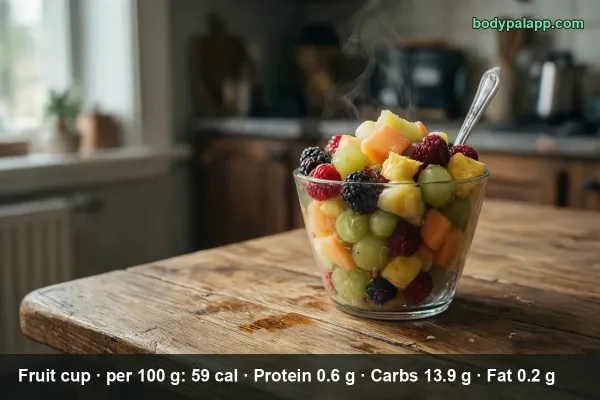
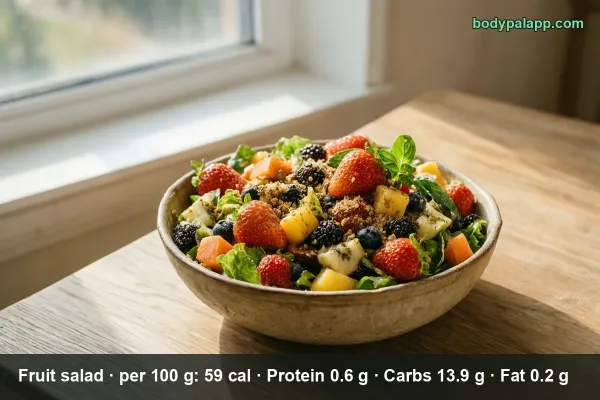
Here is dragon fruit next to three other light fruit choices, compared per 100 g and per usual serving.
Verdict: If the lowest count wins, a Cutie orange at 53 calories per 100 g and 47 per fruit is the leanest pick here, with fruit cup and fruit salad close behind at 59. Dragon fruit costs a little more per gram, so choose it for taste and texture and keep the portion in view.
Most popular dragon fruit brands in the United States
Ranked by popularity in the BodyPal database
# Productkcal / 100 g
1Diabolo Dragon Fruit Plum French Soda16 fl oz · 473 ml13 kcal
2Zola Organic Dragon Fruit Hydrating Energy Drink12 fl oz · 355 ml28 kcal
3Luv Fruit Dragon Fruit Pitahaya Pulp1 cup · 100 g60 kcal
4Sunny Select Dragon Fruit1 cup · 140 g57 kcal
5Good & Gather Dragon Fruit Chunks1 cup · 140 g57 kcal
6Nutty & Fruity Dragon Fruit1 oz · 28 g264 kcal
Fresh chunks and pulp sit close to the numbers above, while the dried fruit is concentrated into a much smaller weight and the flavored drinks are mostly water. Source: manufacturer labels / USDA FoodData Central.
Dragon fruit FAQs
How many calories are in dragon fruit?
A cup of cubed dragon fruit (180 g) is 122 calories and one fruit (75 g) is 51 calories. Per 100 g it is 68 calories.
Is dragon fruit good for weight loss?
Dragon fruit is 68 calories per 100 g with 1.8 g of fiber, so a 180 g cup adds 122 calories and 3.2 g of fiber to the day.
Dragon fruit vs fruit cup: which has fewer calories?
Fruit cup is 59 calories per 100 g and dragon fruit 68, so a 180 g serving is 106 calories of fruit cup against 122 of dragon fruit.
How much sugar is in dragon fruit?
12 g per 100 g, which works out to 21.6 g in a 180 g cup and 9 g in one 75 g fruit.
How many calories are in one dragon fruit?
One 75 g dragon fruit has 51 calories, with 12.2 g of carbs, 9 g of sugars and 1.4 g of fiber. Bigger fruits carry more, so weigh the flesh and count 68 calories per 100 g.
How many calories are in 1 cup of dragon fruit?
A cup of cubed dragon fruit (180 g) has 122 calories, about 6% of the daily value. It brings 29.2 g of carbs, 21.6 g of sugars, 3.2 g of fiber and 1.2 g of protein.
What are the macros of dragon fruit?
Per 100 g, dragon fruit has 16.2 g of carbs, 0.7 g of protein and 0.2 g of fat. Carbs supply 93% of the calories, protein 4% and fat 3%, so it is almost entirely a carb food.
How many calories are in a large whole dragon fruit?
Dragon fruit has 68 calories per 100 g, so a large whole fruit scales with its weight. The reference fruit weighs 75 g and has 51 calories; weigh the peeled flesh of a bigger one and apply the per 100 g figure.
What are the nutrition facts for dragon fruit?
Per 100 g, raw dragon fruit has 68 calories, 12 g of sugars, 1.8 g of fiber, 1 mg of sodium, 206 mg of potassium and 0 mg of cholesterol. Fat is just 0.2 g.