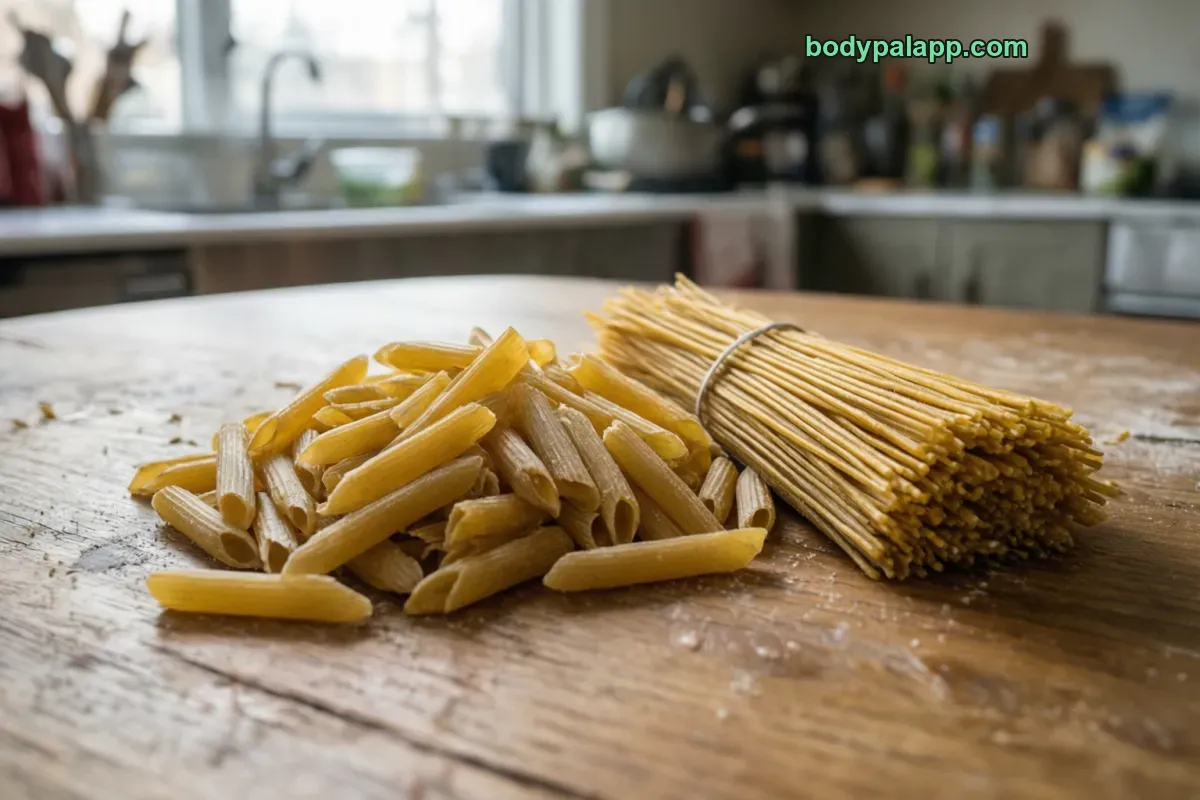
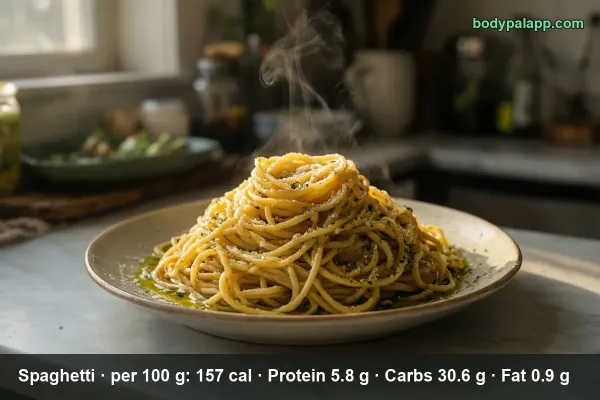
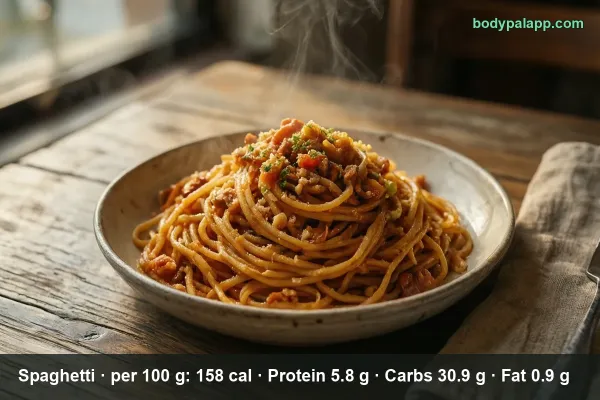
Dry pasta calories come to 211 for a 2 oz serving (57 g) and 371 per 100 g, weighed uncooked. Notice the word uncooked. Pasta soaks up water as it boils, so cooked spaghetti lists only 157 per 100 g. Weigh it before it hits the pot and the count holds up.
211kcal
1 2 oz serving · 57 g, dry, uncooked, enriched
14%protein
7.4 gProtein
43 gCarbs
0.9 gFat
How to burn off 211 kcal
—Walking, brisk
—Jogging
—Cycling, moderate
—Swimming
Skip the math. BodyPal counts these calories from your steps and workouts automatically.
Nutrition facts
Dry, uncooked, enriched · per 57 g
Calories
211 kcal
Protein
7.4 g
Carbohydrate
43 g
Fat
0.9 g
Saturated fat
0.2 g
Cholesterol
0 mg
Sodium
3 mg
Potassium
127 mg
Iron
1.9 mg
Source: USDA FoodData Central
🛡️
Verified nutrition data
Numbers on this page come from USDA FoodData Central, the U.S. Department of Agriculture’s food composition database, and from manufacturer labels where a branded product is named. Last verified October 2026. How we verify our data →
Dry pasta: calories, protein and sodium by serving
Percent of daily value uses the FDA reference of 2,000 kcal a day.
Serving
kcal
Protein
Carbs
Fat
Sodium
% DV kcal
2 oz serving (57 g)
211
7.4 g
42.6 g
0.9 g
3 mg
11%
1 cup spaghetti (91 g)
338
11.9 g
67.9 g
1.4 g
5 mg
17%
1 cup penne (95 g)
352
12.4 g
70.9 g
1.4 g
6 mg
18%
100 g
371
13 g
74.7 g
1.5 g
6 mg
19%
3 × 2 oz serving (57 g)
634
22.3 g
10 mg
5 × 2 oz serving (57 g)
1,057
37.2 g
17 mg
A 2 oz serving is 211 calories, a cup is far more
The label serving for dry pasta is 2 oz, or 57 g. It carries 211 calories, 7.4 g of protein and 42.6 g of carbs, which is 11% of a 2000-calorie daily value. It looks like very little in the box, and that is why plates drift past it so easily.
Cups make the guessing worse. One cup of dry spaghetti weighs 91 g and comes to 338 calories, while one cup of dry penne is 95 g and 352 calories. Shapes pack differently, so a measuring cup is a rough estimate at best. A kitchen scale on the uncooked pasta settles it in seconds.
Big plates are where the total runs away. Two servings (114 g) land at 423 calories, three servings (171 g) at 634, and five servings, 285 g, reach 1,057 calories before any sauce, oil or cheese. If you cook for a family, weigh all the dry pasta that goes into the pot, split the cooked batch by plates, and log your share.
Carbs supply 82% of the calories
Per 100 g, dry pasta has 74.7 g of carbs, 13 g of protein and just 1.5 g of fat. In calorie terms that splits into 82% carbs, 14% protein and 4% fat. This is a starch food, plain and simple, and the fat side barely registers with 0.3 g of saturated fat and 0 mg of cholesterol.
The protein is higher than many people expect. A 2 oz serving gives 7.4 g, or 15% of the 50 g daily value, and 100 g gives 13 g, or 26%. Three servings bring 22.3 g. That does not make pasta a protein dish, but it is more than a garnish.
Fiber and sugar stay modest. Enriched dry pasta has 3.2 g of fiber per 100 g, against a 28 g daily value, and 2.7 g of sugars. A 2 oz serving holds 1.8 g of fiber and 1.5 g of sugars. If you want a plate with more fiber, it has to come from what you serve with the pasta.
Sodium stays near zero until you salt the water
Plain dry pasta is close to sodium-free. It has 6 mg per 100 g, and a 2 oz serving holds 3 mg, which is 0% of the 2300 mg daily value. Even five servings add only 17 mg. Potassium sits at 223 mg per 100 g.
The salt arrives in the kitchen. Our cooked spaghetti page lists 131 mg of sodium per 100 g, while the spaghetti noodle entry lists 1 mg, so how the pot and the plate are seasoned moves this row far more than the pasta itself. Jarred sauces, grated cheese and cured meats each add their own share on top.
If you watch sodium, the pasta is not the problem. Go easy on the salt in the water, choose toppings with care, and check the labels on anything from a jar. The bowl then stays close to the numbers printed on the box.
What you add decides how heavy the bowl gets
At 211 calories and 42.6 g of carbs per 2 oz, dry pasta is an easy base to build a meal around. The pasta brings energy and some protein. Nearly everything else on the plate decides whether the meal ends up light or heavy.
Adding a protein source and a pile of vegetables makes the same portion more filling without stretching the pasta. Oil, butter, cream sauces and cheese push the other way. The pasta has only 0.9 g of fat per serving, so almost every gram of fat in a rich bowl comes from the additions.
The simplest habit is to log the dry weight when you cook and the sauce as its own entry. That keeps the two parts separate, so you can see which one is driving the total. BodyPal can also log a plated pasta dish from a photo when weighing is not practical.
How does dry pasta compare?
This table compares dry pasta with cooked spaghetti, plain spaghetti noodles and tortellini, per 100 g and per usual serving.
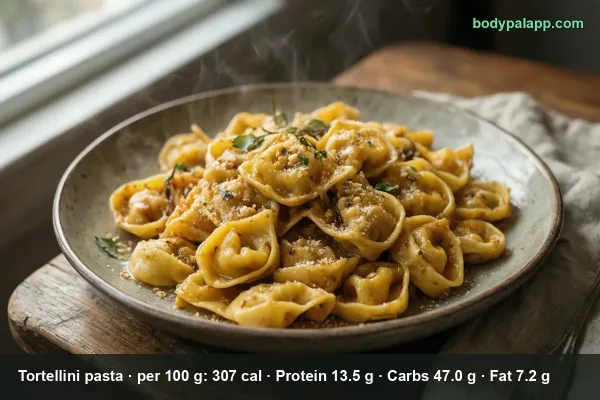
Verdict: Cooked spaghetti at 157 calories per 100 g is the same pasta with water added, about 0.4 of the dry figure, so use it only when you weigh your pasta after boiling. For a lighter bowl stick with plain spaghetti noodles at 158 calories and 1 mg of sodium; tortellini, at 307 calories, 7.2 g of fat and 406 mg of sodium per 100 g, is the heavier pick.
Most popular dry pasta brands in the United States
Ranked by popularity in the BodyPal database
# Productkcal / 100 g
1Daily Chef Angel Hair Enriched Vermicelli2 oz · 56 g357 kcal
About 211 calories in 2 oz (57 g) of dry pasta. A cup of dry spaghetti (91 g) has about 338 calories.
Is pasta good for weight loss?
A 2 oz dry serving has 211 calories with 7.4 g of protein and 1.8 g of fiber. Dry pasta is 371 calories per 100 g, while cooked pasta is 157 per 100 g because it absorbs water.
Dry pasta vs cooked spaghetti: which has more calories?
Per 100 g, dry pasta has 371 calories and cooked spaghetti has 157. The difference is water added during cooking, not extra calories in the portion.
How many carbs are in dry pasta?
Dry pasta has 74.7 g of carbs per 100 g, so a 2 oz serving (57 g) has about 42.6 g of carbs, including 1.5 g of sugar.
How many calories are in 1 cup of dry pasta?
One cup of dry spaghetti (91 g) has 338 calories, and one cup of dry penne (95 g) has 352. Shapes pack differently in a cup, so weighing the uncooked pasta gives a more reliable count.
What does USDA FoodData Central list for dry pasta per 100 g?
The USDA row Pasta, dry, enriched lists 371 calories per 100 g, with 13 g of protein, 74.7 g of carbs and 1.5 g of fat. That protein covers 26% of the 50 g daily value.
How much protein is in a 2 oz serving of dry pasta?
A 2 oz serving (57 g) of dry pasta has 7.4 g of protein, 15% of the daily value. Two servings give 14.9 g and three servings give 22.3 g.
How much sodium is in dry pasta?
Dry pasta has 6 mg of sodium per 100 g and 3 mg per 2 oz serving, which is 0% of the daily value. Most of the sodium in a pasta dish comes from salted water, sauce and cheese.
Does tortellini have more calories than dry pasta?
No. Tortellini pasta lists 307 calories per 100 g against 371 for dry pasta. Tortellini is higher in fat and sodium, though, with 7.2 g of fat and 406 mg of sodium per 100 g.