Eel calories come to 375 for one 159 g fillet and 236 per 100 g, cooked with dry heat. The split is what stands out. Fat supplies 59% of those calories, yet a single fillet still gives you 37.6 g of protein, 75% of the daily value, with zero carbs and very little sodium.
375kcal
1 fillet · 159 g, cooked, dry heat
41%protein
38 gProtein
0 gCarbs
24 gFat
How to burn off 375 kcal
—Walking, brisk
—Jogging
—Cycling, moderate
—Swimming
Skip the math. BodyPal counts these calories from your steps and workouts automatically.
Nutrition facts
Cooked, dry heat · per 159 g
Calories
375 kcal
Protein
38 g
Carbohydrate
0 g
Fat
24 g
Saturated fat
4.8 g
Cholesterol
256 mg
Sodium
103 mg
Potassium
555 mg
Iron
1 mg
Source: USDA FoodData Central
🛡️
Verified nutrition data
Numbers on this page come from USDA FoodData Central, the U.S. Department of Agriculture’s food composition database, and from manufacturer labels where a branded product is named. Last verified October 2026. How we verify our data →
Eel: calories, protein and sodium by serving
Percent of daily value uses the FDA reference of 2,000 kcal a day.
Serving
kcal
Protein
Carbs
Fat
Sodium
% DV kcal
1 fillet (159 g)
375
37.6 g
0 g
23.8 g
103 mg
19%
3 oz portion (85 g)
201
20.1 g
0 g
12.7 g
55 mg
10%
100 g
236
23.7 g
0 g
15 g
65 mg
12%
3 × 1 fillet (159 g)
1,126
112.8 g
310 mg
5 × 1 fillet (159 g)
1,876
188 g
517 mg
One fillet is a 375-calorie main course
A whole cooked eel fillet weighs about 159 g and lands at 375 calories. That is 19% of the daily value from a single piece of fish, before any rice, sauce or sides. It also brings 37.6 g of protein, which covers 75% of the daily value on its own.
The 3 oz portion (85 g) is the more modest option. It comes to 201 calories, 10% of the daily value, with 20.1 g of protein and 12.7 g of fat. If you are logging carefully, weigh it: a full fillet runs nearly twice the calories of a 3 oz piece, and on the plate the two can look closer than they are.
Totals climb fast once eel is shared on a platter. Two fillets reach 750 calories and 75.2 g of protein. Three fillets hit 1,126 calories, and five fillets, 795 g of fish, add up to 1,876. Protein scales just as quickly, to 188 g across those five, so a family-style serving is rarely a light meal.
Fat drives most of the calories in eel
Eel is a rich fish. Of its 236 calories per 100 g, 59% come from fat and 41% from protein. Carbs contribute nothing: the card lists 0 g carbs and 0 g fiber, so every calorie traces back to the flesh itself.
Per 100 g you get 15 g of fat and 23.7 g of protein. Saturated fat is 3 g of that, measured against a daily value of 20 g, so most of the fat is not saturated. Against the total fat daily value of 78 g, a full fillet with 23.8 g takes a sizable but not dominant share.
That fat content is why eel tastes buttery and why it sits higher in calories than a lean white fish would. It also makes eel a filling plate. Plenty of protein plus plenty of fat makes a dense, slow meal, so a smaller piece often satisfies more than you expect.
Cholesterol is the row to watch, not sodium
The number that jumps out on the label is cholesterol: 161 mg per 100 g, against a daily value of 300 mg. If you track cholesterol, a full fillet uses a large slice of that budget, and a 3 oz portion is the easier fit.
Sodium is the opposite story. Plain eel cooked with dry heat has only 65 mg per 100 g, 3% of the daily value. A whole fillet carries 103 mg, just 4%. Even five fillets total 517 mg. Eel also brings 349 mg of potassium per 100 g, a modest share of the daily value.
Those low sodium figures describe the plain fish from the USDA row "Fish, eel, mixed species, cooked, dry heat". Packaged and sauced products such as Old Fisherman Roasted Eel or Panasia Pike Eel in Soy Sauce are different foods, so read their own labels if sodium matters to you.
Zero carbs leaves room on the plate
Because eel has 0 g of carbs and 0 g of fiber, everything else on the plate decides how balanced the meal ends up. Vegetables, a salad or pickled sides add fiber and volume with few calories. Rice adds the starch eel lacks, which is why the two show up together so often.
In sushi, onigiri and rolls, the eel is usually a small strip, glazed and set on rice with extras like avocado. The fish itself follows the per 100 g numbers on this page, but the rice, sauce and fillings bring their own calories, so count them as separate items rather than guessing from the eel alone.
If you want eel in a lighter day, the 3 oz portion at 201 calories is the practical choice and still delivers 40% of the daily value for protein. BodyPal can log eel from a photo of your plate, which helps when the portion is a few slices rather than a weighed fillet.
How does eel compare?
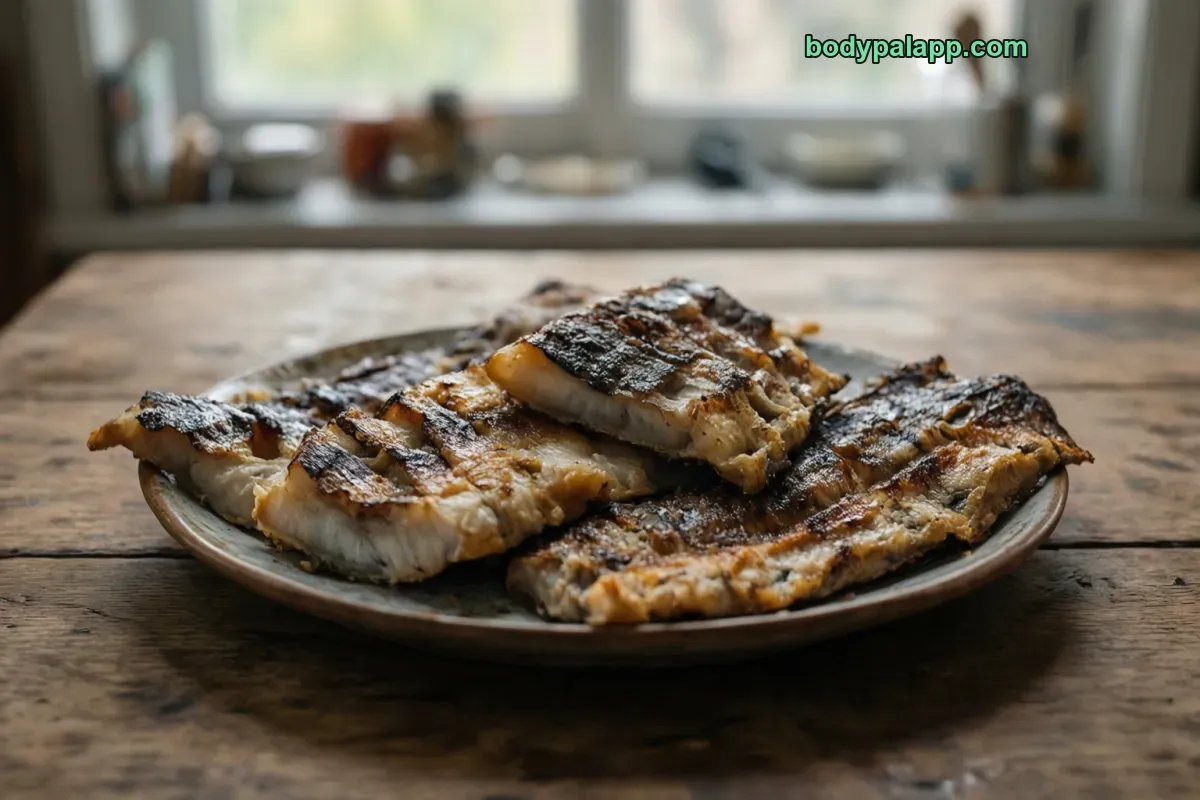
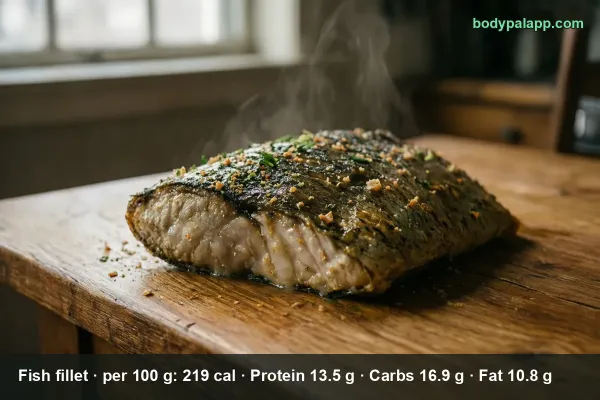
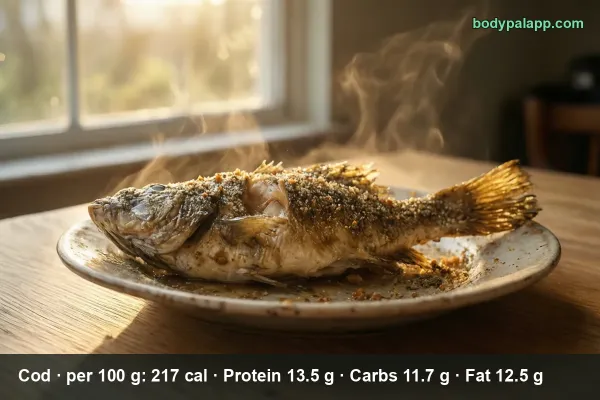
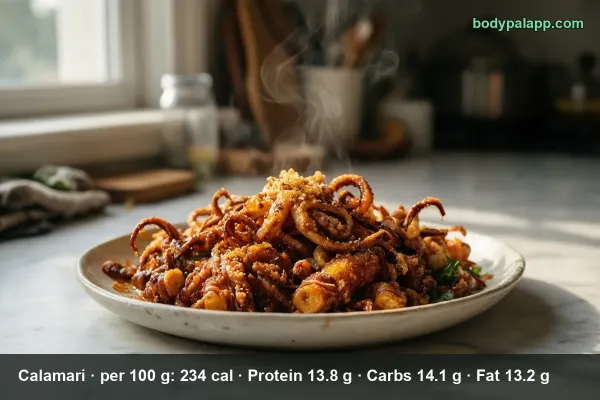
Here is how cooked eel stacks up against fish fillet, cod and calamari, per 100 g and per usual serving.
Verdict: On calories alone the four are close, with cod lowest at 217 per 100 g and calamari at 234, so none of them is a clear weight-loss winner. For staying full and keeping sodium low, eel is the pick: fish fillet carries 561 mg sodium, cod 426 mg and calamari 377 mg per 100 g, all with only about 13.5 g of protein.
Most popular eel brands in the United States
Ranked by popularity in the BodyPal database
# Productkcal / 100 g
1Old Fisherman Roasted Eel3 pieces · 55 g238 kcal
2Old Fisherman Roasted Eel with Fermented Black Beans3 pieces · 55 g238 kcal
3Panasia Pike Eel in Soy Sauce3.8 oz · 110 g118 kcal
Canned eel in soy sauce is labeled with the sauce included, so it reads lower per 100 g than plain cooked eel. Source: manufacturer labels / USDA FoodData Central.
Eel FAQs
How many calories are in one eel fillet?
A cooked eel fillet (159 g) has about 375 calories. A 3 oz portion has 201 calories.
Is eel good for weight loss?
Cooked eel has 236 calories and 15 g fat per 100 g, along with 23.7 g protein and no carbs. A 3 oz portion comes to 201 calories.
Eel vs calamari: which has more calories?
They are almost the same: cooked eel has 236 calories per 100 g and calamari has 234.
How much protein is in eel?
Cooked eel has 23.7 g protein per 100 g, which is 37.6 g in one fillet (159 g) and 20.1 g in a 3 oz portion.
How many calories are in 3 oz of eel?
A 3 oz portion of cooked eel (85 g) has 201 calories, about 10% of the daily value. It also provides 20.1 g of protein, 12.7 g of fat and 0 g of carbs.
Is eel high in fat?
Yes, for a fish. Cooked eel has 15 g of fat per 100 g, and fat supplies 59% of its calories. Only 3 g of that is saturated fat, and a full fillet carries 23.8 g of fat.
How much cholesterol is in eel?
Cooked eel has 161 mg of cholesterol per 100 g, measured against a daily value of 300 mg. It is the most notable row on the label, so a 3 oz portion is the easier fit if you track it.
Does eel have any carbs?
No. Plain cooked eel has 0 g of carbs and 0 g of fiber per 100 g. Its 236 calories come from protein and fat, split 41% and 59%.
Eel vs cod: which is better for protein?
Eel has 23.7 g of protein per 100 g versus 13.5 g in cod, for 236 calories against cod's 217. Eel also has far less sodium: 65 mg versus 426 mg per 100 g.