
How Many Calories Are in a Fish Fillet?
A restaurant fish fillet, battered or breaded and fried, weighs about 226 g and carries 495 calories. Per 100 g the same fillet runs 219 calories. Take the coating away and the number collapses: a plain grilled tilapia fillet is 103 calories per 100 g, under half as much for the same fish.
On this page
- Fish fillet quick facts
- US servings from one ounce to a restaurant plate
- Fried breaded and grilled fillets side by side
- Sodium is the row to watch
- How does a fish fillet compare
- Most popular fish fillet brands
- Fish fillet FAQs
Fish fillet quick facts
When an American types "fish fillet" into a calorie tracker, the thing on the plate is almost never a naked piece of fish. It is battered or breaded and fried, whether it came from a family restaurant, a drive-thru or a box in the freezer. So the number below comes from the generic, unbranded USDA record for exactly that: SR Legacy 169846, "Restaurant, family style, fish fillet, battered or breaded, fried". It is the only record in this group that carries a real USDA portion weight rather than a manufacturer's label serving.
| Nutrient | Per 100 g | Per 1 restaurant serving (226 g) | % Daily Value |
|---|---|---|---|
| Calories | 219 | 495 | — |
| Total fat | 10.79 g | 24.4 g | 31% |
| Saturated fat | 1.88 g | 4.2 g | 21% |
| Carbohydrate | 16.89 g | 38.2 g | 14% |
| Dietary fiber | 0.9 g | 2.0 g | 7% |
| Total sugars | 0.45 g | 1.0 g | — |
| Protein | 13.49 g | 30.5 g | 61% |
| Sodium | 561 mg | 1268 mg | 55% |
| Cholesterol | 36 mg | 81 mg | 27% |
| Potassium | 251 mg | 567 mg | 12% |
% Daily Value is based on a 2,000-calorie diet.
Verified nutrition data
Numbers on this page come from USDA FoodData Central, the U.S. Department of Agriculture’s food composition database, and from manufacturer labels where a branded product is named. Last verified September 2026. How we verify our data →
There is no added-sugars row here, because the SR Legacy edition does not publish added sugars for restaurant dishes. It would be close to nothing anyway: total sugars are 0.45 g per 100 g, and the coating is starch, not sugar. Trans fat is not published for this record either, so it stays off the table rather than being guessed at.
Two rows deserve a second look before you scroll on. Protein lands at 61% of the Daily Value for one serving, which sounds like a win. Sodium lands at 55% for the same piece of fish, which is not.
US servings from one ounce to a restaurant plate
| Serving | Weight | Calories |
|---|---|---|
| 1 oz | 28 g | 62 kcal |
| Per 100 g | 100 g | 219 kcal |
| One breaded fillet, retail size | 108 g | 237 kcal |
| 4 oz | 113 g | 247 kcal |
| Two breaded fillets | 216 g | 473 kcal |
| One restaurant serving | 226 g | 495 kcal |
Only the 226 g line is a USDA portion. Everything else in that table is our own arithmetic from the USDA 100 g figure, scaled to the weights people actually deal with: the 108 g single fillet that matches most frozen retail label servings, the 4 oz slab a home cook pulls off a tray, and the ounce for anyone weighing on a scale.
That gap between 108 g and 226 g is where most of the miscounting happens. A restaurant serving is not one fillet in the retail sense; it is roughly two of them, and it doubles the calories, the fat and the sodium in one step. If you log "a fish fillet" out of habit at a sit-down restaurant, you are probably logging half of what you ate.
Fried breaded and grilled fillets side by side
| Version | Per 100 g | Typical piece | Calories |
|---|---|---|---|
| Fried restaurant fillet (main record) | 219 kcal | 1 serving, 226 g | 495 kcal |
| Diner-style battered fillet | 234 kcal | 1 serving, 201 g | 470 kcal |
| Fillet from a fish sandwich | 195 kcal | 4 oz, 113 g | 220 kcal |
| Breaded haddock fillet, frozen retail | 236 kcal | 1 fillet, 106 g | 250 kcal |
| Panko-breaded haddock fillet | 220 kcal | 1 fillet, 100 g | 220 kcal |
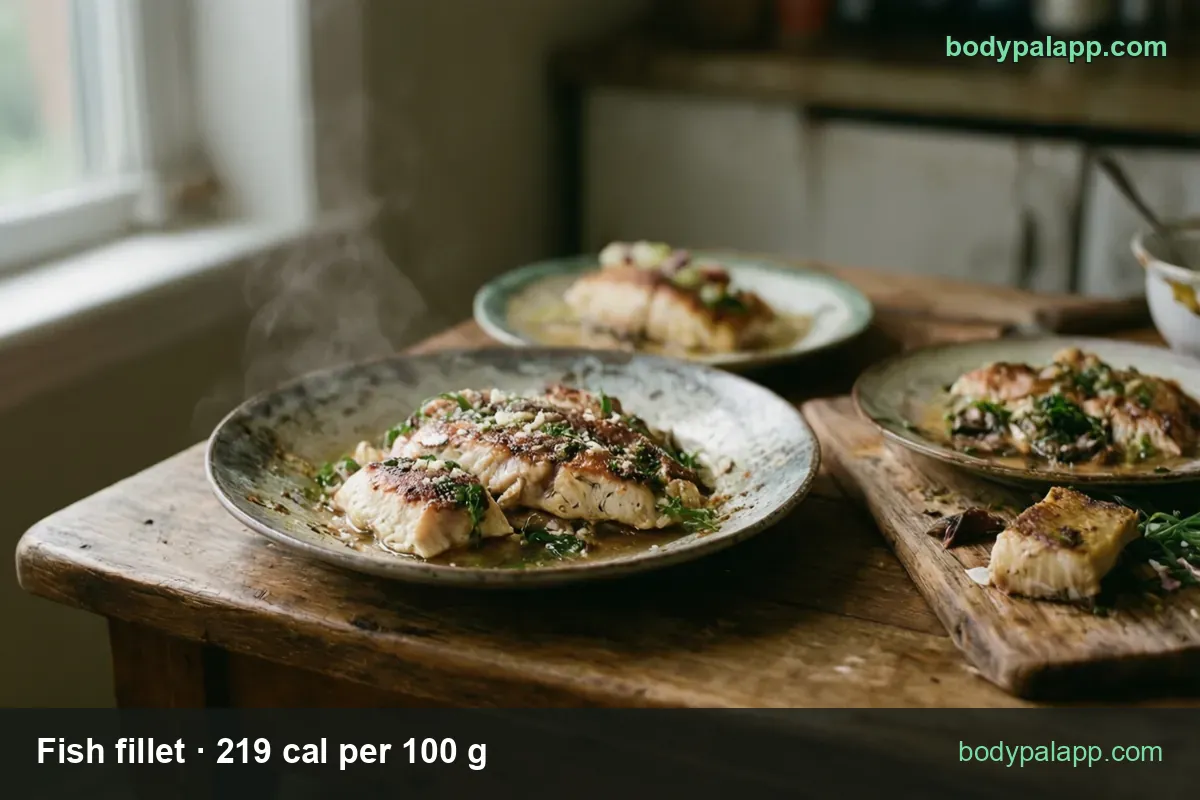
| Flame-grilled tilapia fillet, frozen retail | 103 kcal | 1 fillet, 97 g | 100 kcal |
The diner-style line is a named chain record (Denny's) rather than the generic one: heavier batter, more absorbed oil, 234 calories per 100 g against 219, though the plated portion is smaller at 201 g so the total lands slightly lower.
The sandwich record is the useful oddity. A fillet built to sit inside a bun carries 8.27 g of carbohydrate per 100 g against 16.89 g in the restaurant version, because the coating is thinner. Less breading, more fish, and protein rises to 18.16 g per 100 g.
Then there is the bottom line of the table, and it is the whole story of this food. One freezer brand sells breaded tilapia fillets at 243 calories per 100 g and flame-grilled tilapia fillets at 103. Same fish, same brand, same aisle, 140 calories apart per 100 g. Nothing about the fish changed. The batter and the fryer did all of it.
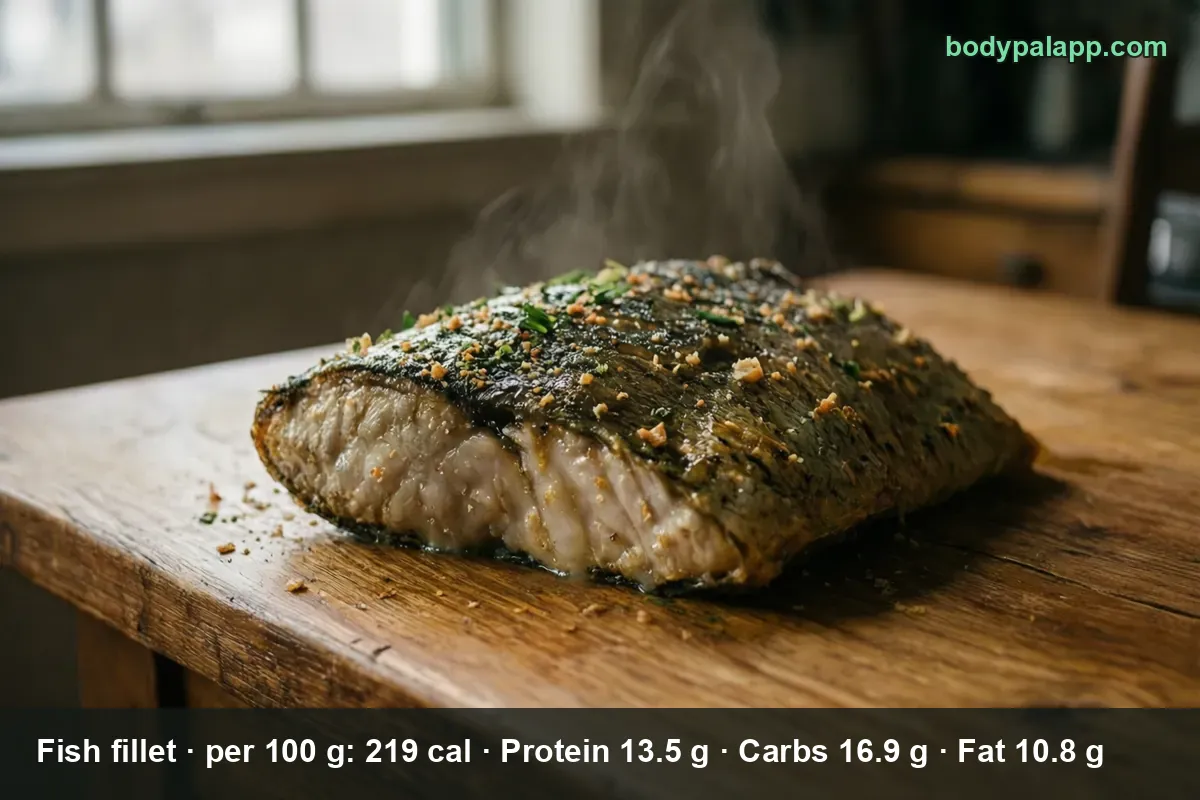
Worth saying plainly, since the photo at the top of this page shows a plain baked fillet with herbs: that is what 103 calories per 100 g looks like, not 219. The USDA index has no generic record for an unbreaded baked fillet under that name, so the grilled retail fillet is the closest honest stand-in.
Sodium is the row to watch
Fat is the row people expect to be bad here, and at 24.4 g per serving, 31% of the Daily Value, it is not great. But sodium is worse in relative terms. One 226 g serving carries 1,268 mg, or 55% of the FDA Daily Value of 2,300 mg. That is a little over half a teaspoon of table salt, from one piece of fish, before any fries, tartar sauce or bread.
The per-100-g column is what hides it. At 561 mg, the fillet reads like a moderate food. The portion is what turns it into more than half a day's allowance, and the portion is the part nobody weighs.
Protein tells the opposite story, less flatteringly than it first appears. The serving delivers 30.5 g, 61% of the Daily Value, and MyPlate counts seafood as a protein food worth eating twice a week. Yet per 100 g the fried fillet gives only 13.49 g of protein for 219 calories. Chicken cooked as a recipe ingredient gives 28.06 g for 182 calories. Breading and frying cut the protein density of the same weight of food roughly in half. If your reason for ordering fish is the protein, the coating is working against you.
If you are watching sodium, the grilled fillet on the same freezer shelf is the better pick, and the Dietary Guidelines put the cap for adults at 2,300 mg a day for context.
How does a fish fillet compare
| Food | Per 100 g | US serving | Calories |
|---|---|---|---|
| Fish fillet, battered and fried | 219 kcal | 1 restaurant serving, 226 g | 495 kcal |
| Chicken, as ingredient in recipes | 182 kcal | 4 oz, 113 g | 206 kcal |
| Beef, for use with vegetables | 191 kcal | 4 oz, 113 g | 216 kcal |
| Breading or batter, as an ingredient | 201 kcal | 1 oz, 28 g | 57 kcal |
Our take: the fried fillet is the heaviest thing in this table per 100 g, and all three of the others come in lighter, including the breading measured on its own at 201. Read that last row again. The coating by itself is nearly as calorie-dense as the finished fillet, which tells you where the calories in your dinner are coming from. Chicken gives just over double the protein per 100 g, beef nearly two and a half times, both for fewer calories. For weight loss, a grilled fillet at 103 per 100 g comes in lighter than every row in this table. For a filling meal that still tastes like a treat, order the fried fillet and count the full 495, not one fillet's worth.
Most popular fish fillet brands in the United States
Ranked by how widely each product appears among foods sold in the United States, from the BodyPal food database of over 3.3 million products. Calories are the figures printed on each Nutrition Facts label, checked against USDA FoodData Central.
| Product | Calories (per 100 g) |
|---|---|
| Gorton's Breaded Haddock Fish Fillets | 236 cal |
| Big Y Beer Battered Haddock Fish Fillets | 168 cal |
| Gorton's Crispy Panko Haddock Fillets | 220 cal |
| Gorton's Crispy Battered Haddock Fillets | 231 cal |
| Gorton's Tilapia Breaded Fish Fillets | 243 cal |
| Gorton's Signature Flame Grilled Tilapia Fillets | 103 cal |
Brand popularity: BodyPal food database. Nutrition: manufacturer labels / USDA FoodData Central.
Fish fillet FAQs
How many calories are in one fish fillet?
One restaurant fish fillet serving of 226 g holds 495 calories, based on the USDA record for a battered or breaded fried fillet at 219 calories per 100 g. A smaller retail-size breaded fillet of 108 g works out to 237 calories, our own arithmetic from that same 100 g figure.
How many calories in a breaded fish fillet?
A frozen breaded haddock fillet is 250 calories for one 106 g piece, or 236 per 100 g on the label. A panko-breaded haddock fillet lands at 220 calories for a 100 g piece. Breading style moves the number more than the species of fish does.
How much protein is in a fish fillet?
A 226 g fried fillet gives 30.5 g of protein, which is 61% of the Daily Value. Per 100 g it is 13.49 g. That is low for fish, because roughly a third of the weight on the plate is batter and absorbed frying oil rather than flesh.
Baked vs fried fish fillet calories?
A flame-grilled tilapia fillet is 103 calories per 100 g against 219 for the fried breaded version, so frying and breading roughly double it. USDA has no generic record for a plain baked fillet with no coating, so the grilled retail fillet is the closest clean comparison.
How many calories in Gorton's fish fillets?
Gorton's breaded haddock fillets are 250 calories per 106 g fillet, the crispy panko haddock 220 per 100 g fillet, and the breaded tilapia 270 per 111 g fillet. The flame-grilled tilapia fillet is 100 calories per 97 g piece, the lightest of the range.
How many carbs are in a fish fillet?
A 226 g fried fillet carries 38.2 g of carbohydrate, 14% of the Daily Value, and 2.0 g of fiber. Fish itself has none. Every gram comes from the batter or breadcrumbs, which is why a fillet pulled from a sandwich shows only 8.27 g per 100 g.
How much sodium is in a restaurant fish fillet?
One 226 g restaurant fillet has 1,268 mg of sodium, 55% of the Daily Value in a single piece of fish. That is a little over half a teaspoon of table salt. The per-100-g figure of 561 mg looks tame by comparison and hides how big the plated portion is.
Is fried fish fillet healthy?
One 226 g serving delivers 30.5 g of protein but also 24.4 g of fat, 55% of the Daily Value for sodium and 27% for cholesterol. If you are watching sodium, a grilled fillet at 103 calories per 100 g is the better pick on the same shelf.
Similar foods
- Fish And Chips — 372 cal for 2 fried fish pieces
- Cod — 911 cal per whole fish
- Fish Fry — 304 cal per small/regular fillet
- Shrimp Toast — 213 cal per slice
- Fish Ball — 208 cal for 7 fish balls
- Raw Salmon — 354 cal per fillet
Count it without the math
Point the camera at the plate and BodyPal counts the fillet for you, batter and all.


How long does it take to burn off fish fillet?
One restaurant serving (226 g) is 495 kcal. Enter your weight and the amount you ate to see how long it takes you to burn that off:
lb
| Activity | Time to burn 495 kcal |
|---|---|
| Walking, brisk | 1 hr 39 min |
| Cycling, moderate | 1 hr 2 min |
| Swimming, moderate | 1 hr 11 min |
| Jogging | 58 min |
| Weight training, moderate | 1 hr 50 min |
Times are for a 155 lb adult at a steady pace; change the weight to see yours. The amount is set to the portion in the text (226 g); change it to what you actually ate. BodyPal works this out from your steps automatically.
Want the bigger picture? Calculate your daily calorie needs — your maintenance figure, a target for losing or gaining, and the date you get there.