
How many calories are in a fish fry?
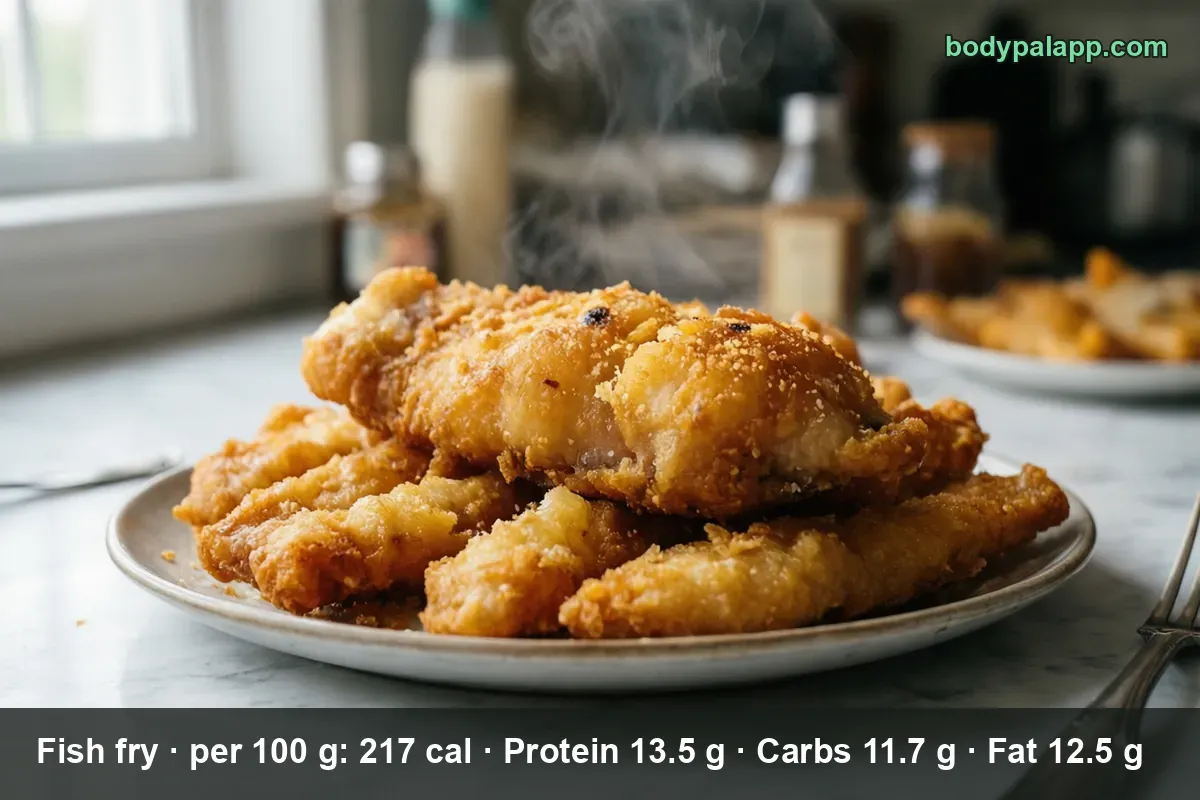
A regular fried fish fillet weighs 140 g and carries 304 calories. Per 100 g, battered and fried white fish runs 217 calories, with 18.9 g of protein and 596 mg of sodium in that single fillet. Order the platter and three fillets put 911 calories on the table.
You'd need to walk about 61 minutes to burn the 304 calories in one regular fillet (140 g).
How long does it take to burn off fish fry?
One regular fillet (140 g) is 304 kcal. Enter your weight and the amount you ate to see how long it takes you to burn that off:
lb
| Activity | Time to burn 304 kcal |
|---|---|
| Walking, brisk | 1 hr 1 min |
| Cycling, moderate | 38 min |
| Swimming, moderate | 43 min |
| Jogging | 36 min |
| Weight training, moderate | 1 hr 8 min |
Times are for a 155 lb adult at a steady pace; change the weight to see yours. The amount is set to the portion in the text (140 g); change it to what you actually ate. BodyPal works this out from your steps automatically.
On this page
- Fish fry quick facts
- US servings from one ounce to a whole fish
- Which fish you fry changes the number
- What the batter adds
- Sodium is the row to watch
- How does a fish fry compare
- Most popular fish fry brands
- Fish fry FAQs
Fish fry quick facts
An American fish fry means white fish, breaded or battered, dropped in hot oil. Cod is the default in most fry shacks and church basements, so the numbers below come from the USDA record FNDDS 2706244, "Fish, cod, fried", part of the 2021–2023 survey release. It is the row with real household portions attached: a fillet, a cup of flaked fish, a whole fish.
The main column is a small-to-regular fillet at 140 g, which is what lands on a plate as one piece. Fry a different species and the picture shifts a little, never wildly, and those numbers are further down the page.
| Nutrient | Per 100 g | Per 1 regular fillet (140 g) | % Daily Value |
|---|---|---|---|
| Calories | 217 | 304 | — |
| Total fat | 12.48 g | 17.5 g | 22% |
| Saturated fat | 1.73 g | 2.4 g | 12% |
| Carbohydrate | 11.72 g | 16.4 g | 6% |
| Dietary fiber | 0.5 g | 0.7 g | 2% |
| Total sugars | 0.2 g | 0.3 g | — |
| Protein | 13.52 g | 18.9 g | 38% |
| Sodium | 426 mg | 596 mg | 26% |
| Cholesterol | 42 mg | 59 mg | 20% |
| Potassium | 203 mg | 284 mg | 6% |
% Daily Value is based on a 2,000-calorie diet.
Verified nutrition data
Numbers on this page come from USDA FoodData Central, the U.S. Department of Agriculture’s food composition database, and from manufacturer labels where a branded product is named. Last verified September 2026. How we verify our data →
Two rows you would see on a package are missing here: added sugars and trans fat. This FNDDS edition does not publish either nutrient for cooked-dish records, so putting a figure in those rows would mean inventing one. The Daily Values used above are the FDA's reference amounts for adults.
US servings from one ounce to a whole fish
| Serving | Weight | Calories |
|---|---|---|
| 1 oz | 28 g | 61 kcal |
| Per 100 g | 100 g | 217 kcal |
| 1 cup, flaked | 135 g | 293 kcal |
| One small or regular fillet | 140 g | 304 kcal |
| One large fillet | 210 g | 456 kcal |
| One whole fish, any size | 420 g | 911 kcal |
The cup, the two fillet sizes and the whole fish are all USDA household measures for this record. The ounce line is our own arithmetic from the USDA 100 g figure, not a USDA serving, and it is the handiest one to memorize: roughly 61 calories per ounce of finished fried fish, coating included.
Here is where people trip. A cup of flaked fish sounds like a full meal and comes to 293 calories, while a single large fillet you would eat without thinking twice is 456. The cup weighs less than the fillet, 135 g against 210 g, because flaked fish packs loosely. Measuring fried fish by volume almost always undercounts it.
The whole-fish portion, 420 g, is also the size of a three-piece platter, since three regular fillets add up to the same weight. That plate is 911 calories, 46% of a 2,000-calorie day, before hush puppies, fries or tartar sauce join it.
Which fish you fry changes the number
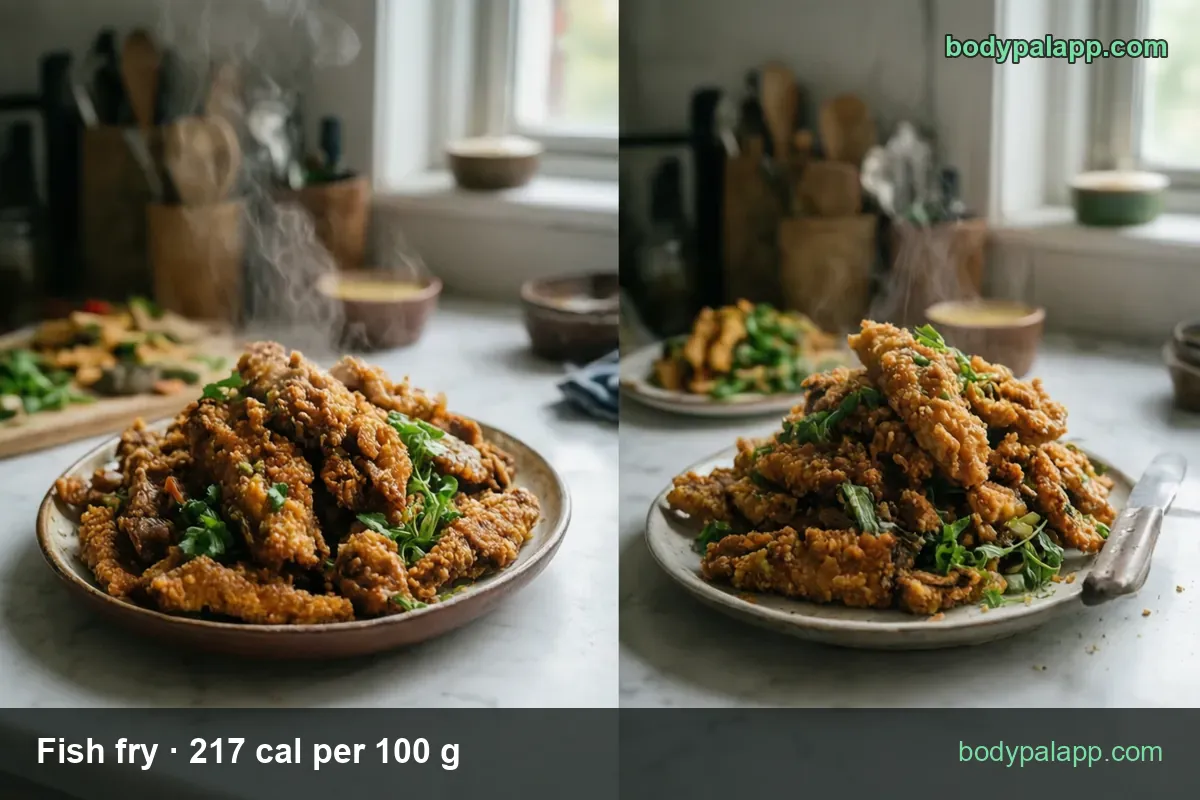
Same batter, same oil, different fish. Lean white species land within a few calories of each other; oilier ones climb.
| Version | Per 100 g | Typical piece | Calories |
|---|---|---|---|
| Fried cod, the main row | 217 kcal | one regular fillet, 140 g | 304 kcal |
| Fried haddock | 217 kcal | one regular fillet, 140 g | 304 kcal |
| Fried whiting | 233 kcal | 3 oz, 85 g | 198 kcal |
| Fried tilapia | 237 kcal | 3 oz, 85 g | 201 kcal |
| Fried catfish | 255 kcal | 3 oz, 85 g | 217 kcal |
| Fried salmon | 307 kcal | one regular fillet, 140 g | 430 kcal |
| Restaurant battered fillet | 219 kcal | 3 oz, 85 g | 186 kcal |
Cod and haddock are the tie at the bottom, 217 calories per 100 g each, and they are the two lightest rows in the table. Catfish, the South's fish-fry fish, sits 38 calories per 100 g higher and brings more saturated fat with it, 2.66 g against 1.73 g. Salmon is a different animal entirely at 307 per 100 g, which turns one fillet into 430 calories.
The 3 oz figures in that table are our own arithmetic from the USDA 100 g values rather than USDA household portions, because a 3 oz piece is what a portion guide asks for and what a scale gives you at home. Note that 3 oz is smaller than nearly every fillet served in a restaurant.
Bagged frozen fillets are their own category. The USDA Branded record for Gorton's Air Fried Fish Fillets lists 173 calories per 100 g and 190 calories for the labeled serving of two fillets, 110 g. That is the lowest number on this page per gram, and the reason is oil, not fish. Dry "fish fry" seasoning mixes sold in the same aisle are a coating product, not a cooked dish, and none of their numbers belong here.
What the batter adds
Plain cod carries no carbohydrate. Fried cod carries 11.72 g per 100 g, which is 16.4 g in one 140 g fillet. Every one of those grams arrived with the flour, cornmeal or beer batter, and so did most of the fat: 17.5 g in a fillet, 22% of the Daily Value.
That is the honest trade in a fish fry. The protein is genuinely good, 18.9 g in a fillet at 38% of the Daily Value, and it costs you a coating that roughly doubles the calories of the fish underneath. MyPlate counts fried fish in the protein group all the same; the Dietary Guidelines ask for about 8 ounces of seafood a week for adults, and a fish fry is a perfectly ordinary way to spend part of that.
Restaurant coatings run thicker. The SR Legacy record for a family-style battered or breaded fried fish fillet shows 16.89 g of carbohydrate per 100 g against 11.72 g in the FNDDS cod row, plus about an eighth less fat. Thicker batter, more starch, less oil in the flesh: a real difference in preparation, not a disagreement between sources.
Sodium is the row to watch
Most people fry fish worrying about the oil. The number that actually stands out is salt. One 140 g fillet carries 596 mg of sodium, 26% of the Daily Value, ahead of its 22% for total fat. That is roughly a quarter teaspoon of table salt, and it arrives before anyone reaches for the shaker or the tartar sauce.
A three-piece platter clears 1,788 mg, most of a day's 2,300 mg limit. Restaurant versions are saltier per gram still, 561 mg per 100 g in the battered fillet record against 426 mg for home-style fried cod. If you are watching sodium, the fish is not the problem; the seasoned coating and the sauce are, and both are easy to cut.
How does a fish fry compare
| Fried fish | Per 100 g | US serving | Calories |
|---|---|---|---|
| Fish fry, cod | 217 kcal | one regular fillet, 140 g | 304 kcal |
| Haddock | 217 kcal | one regular fillet, 140 g | 304 kcal |
| Trout | 271 kcal | one regular fillet, 90 g | 244 kcal |
| Salmon | 307 kcal | one regular fillet, 140 g | 430 kcal |
Our take: for a lighter plate, fry cod or haddock, the two lowest rows per 100 g in this table. Trout looks cheaper at 244 calories, but only because its fillet is 90 g; gram for gram it is 54 calories heavier than cod. Salmon is the one to log carefully, since a same-size fillet costs 126 calories more than cod for a similar amount of protein. And if satiety is the goal rather than the calorie floor, tilapia earns its place: 17.18 g of protein per 100 g, the most of any white fish on this page.
Most popular fish fry brands in the United States
Ranked by how widely each product appears among foods sold in the United States, from the BodyPal food database of over 3.3 million products. Calories are the figures printed on each Nutrition Facts label, checked against USDA FoodData Central.
| Product | Calories (per 100 g) |
|---|---|
| Gorton's Air Fried Fish Fillets | 173 cal |
Brand popularity: BodyPal food database. Nutrition: manufacturer labels / USDA FoodData Central.
Fish fry FAQs
How many calories are in a fish fry?
A regular fried cod fillet of 140 g carries 304 calories, and fried fish runs 217 calories per 100 g. A full plate built from USDA's whole-fish portion, 420 g, comes to 911 calories before any side. One cup of flaked fried fish, 135 g, is 293 calories.
How many calories in one fried fish fillet?
304 calories for a small-to-regular fillet of 140 g. A large fillet weighs 210 g and lands at 456 calories, half again as much for the same piece of fish. Both figures are USDA household portions for fried cod, not restaurant plates, which are usually two or three fillets.
Is fried fish high in protein?
Yes, one 140 g fried cod fillet holds 18.9 g of protein, 38% of the Daily Value, for 304 calories. Fried tilapia is denser still at 17.18 g per 100 g. Protein survives the fryer; what the batter adds is fat and starch, not amino acids.
How many carbs are in fried fish?
11.72 g per 100 g, which works out to 16.4 g in a 140 g fillet, 6% of the Daily Value. Plain cod carries no carbohydrate at all, so every gram here comes from the coating. A restaurant-style battered fillet is heavier still at 16.89 g per 100 g.
Fried cod vs fried catfish: which has more calories?
Catfish, at 255 calories per 100 g against cod's 217. Over a 3 oz (85 g) piece that is 217 calories for catfish and 184 for cod, our own arithmetic from the USDA 100 g figures. Catfish also carries more saturated fat, 2.66 g per 100 g versus 1.73 g.
How much sodium is in a fish fry?
596 mg in a 140 g fillet, 26% of the Daily Value, before tartar sauce or extra salt at the table. That is roughly a quarter teaspoon of table salt. The restaurant-style battered fillet is saltier per gram, 561 mg per 100 g against 426 mg for the FNDDS cod row.
Is air fried fish lower in calories than deep fried?
The USDA Branded entry for Gorton's Air Fried Fish Fillets lists 173 calories per 100 g, against 217 for deep-fried cod, and 190 calories for the labeled 110 g serving of two fillets. That is about a fifth less per gram, because less oil is absorbed by the coating.
How many calories in a 3 oz serving of fried fish?
184 calories for 3 oz (85 g) of fried cod, our own arithmetic from the USDA 100 g figure rather than a USDA household portion. The same 3 oz of fried tilapia is 201 calories, fried whiting 198, and fried catfish 217. A 3 oz portion is smaller than most single fillets.
Similar foods
- Hash Brown — 119 cal per patty
- Skirt Steak — 187 cal for 3 oz cooked
- Chicken Taco — 222 cal per taco
- Dosa — 326 cal per large dosa
- Flat iron steak — 391 cal per steak
- Chuck Steak — 360 cal per steak
Count it without the math
Point the camera at the plate and BodyPal counts the fillets for you, batter and all.

