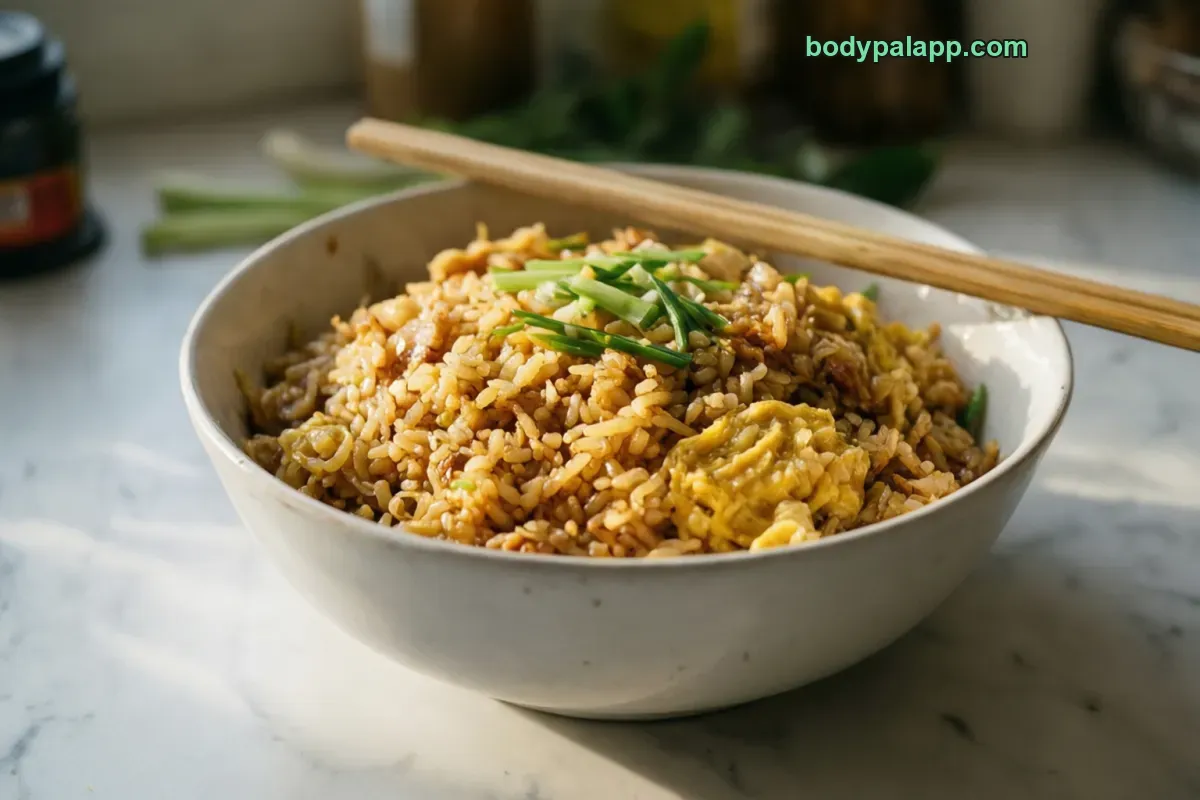
Egg fried rice calories come to 289 for a 1 cup (166 g) serving and 174 per 100 g. Carbs supply 75% of those calories, while a cup brings only 6.4 g of protein and 599 mg of sodium, which is 26% of the daily value. Portion size moves the total more than anything else.
289kcal
1 cup · 166 g, meatless, with egg
9%protein
6.4 gProtein
54 gCarbs
5.3 gFat
How to burn off 289 kcal
—Walking, brisk
—Jogging
—Cycling, moderate
—Swimming
Skip the math. BodyPal counts these calories from your steps and workouts automatically.
Nutrition facts
Meatless, with egg · per 166 g
Calories
289 kcal
Protein
6.4 g
Carbohydrate
54 g
Fat
5.3 g
Saturated fat
0.8 g
Cholesterol
30 mg
Sodium
599 mg
Potassium
115 mg
Iron
0.8 mg
Source: USDA FoodData Central
🛡️
Verified nutrition data
Numbers on this page come from USDA FoodData Central, the U.S. Department of Agriculture’s food composition database, and from manufacturer labels where a branded product is named. Last verified September 2026. How we verify our data →
Egg fried rice: calories, protein and sodium by serving
Percent of daily value uses the FDA reference of 2,000 kcal a day.
Serving
kcal
Protein
Carbs
Fat
Sodium
% DV kcal
1 cup (166 g)
289
6.4 g
54 g
5.3 g
599 mg
14%
100 g
174
3.8 g
32.5 g
3.2 g
361 mg
9%
3 × 1 cup (166 g)
867
19.1 g
1,798 mg
5 × 1 cup (166 g)
1,444
31.9 g
2,996 mg
One cup is 289 calories, three cups are 867
The standard serving here is 1 cup (166 g), which lands at 289 calories, about 14% of the daily value used on this page. As a side dish, that is reasonable. The catch is that fried rice is rarely eaten as a side. It is usually the main event, and the scoop keeps growing.
Double the portion to 332 g and you reach 578 calories. Three cups, or 498 g, come to 867, which is closer to a full dinner than a side. A family-style batch of 5 cups weighs 830 g and holds 1,444 calories, so how you divide the pan decides the evening more than the recipe does.
If you log by weight, the math stays simple: 174 calories for every 100 g. A kitchen scale beats guessing by eye. Rice packs down, and a cup scooped from a takeout box is rarely level, so an honest weigh-in keeps your log close to what you actually ate.
Three quarters of the calories come from carbs
The calorie split is 75% carbs, 16% fat and 9% protein. Per 100 g that means 32.5 g of carbs, 3.2 g of fat and 3.8 g of protein. In a full cup you get 54 g of carbs against 6.4 g of protein.
The egg is there, but it does not carry the dish. A cup covers 13% of the daily value for protein, which is modest for 289 calories. The rice is the bulk, and the rice is starch. If you expected a protein-forward meal, this is not it.
Fat is lower than many people assume: 5.3 g per cup, with only 0.5 g of saturated fat per 100 g. Fiber is thin at 1.8 g per cup, and sugars barely register at 1 g. These figures come from the USDA entry for meatless fried rice, so a restaurant version cooked with a heavier hand on the oil will sit higher. Treat the card as a baseline, not a ceiling.
Sodium is the row to watch
A single cup carries 599 mg of sodium, or 26% of the daily value. Per 100 g it is 361 mg. That is a large share for a dish that covers only 14% of your daily calories, and it is the number on this label that deserves a second look.
The gap widens as the portion grows. Two cups bring 1,199 mg, three cups bring 1,798 mg, and a 5-cup batch reaches 2,996 mg, which is more than the full daily value on its own. Calories rise in step, but sodium is the row that runs out first.
If you watch sodium, skip the extra soy sauce at the table and keep your serving near one cup. Filling the rest of the plate with unsalted vegetables adds volume without adding to this row. Cooking at home also gives you control over how much salty seasoning goes into the pan, which a takeout order does not.
Fried rice works best as one part of the plate
With 6.4 g of protein and 1.8 g of fiber per cup, egg fried rice is light on the two things that make a meal feel complete. On its own, a big bowl is a lot of starch for not much staying power, which is how one cup quietly becomes three.
Add a lean protein such as grilled chicken, tofu or an extra egg, plus a generous pile of steamed or stir-fried vegetables. That turns one cup into a full plate instead of a warm-up for a second scoop. Packaged options like Ka-Me Traditional Egg Fried Rice fit the same approach: check the serving size on the box and build the rest of the meal around it.
If you are tracking, log the portion you actually ate rather than the menu name. BodyPal can log the food from a photo, which helps when the rice arrives in a takeout container instead of a measuring cup.
How does egg fried rice compare?
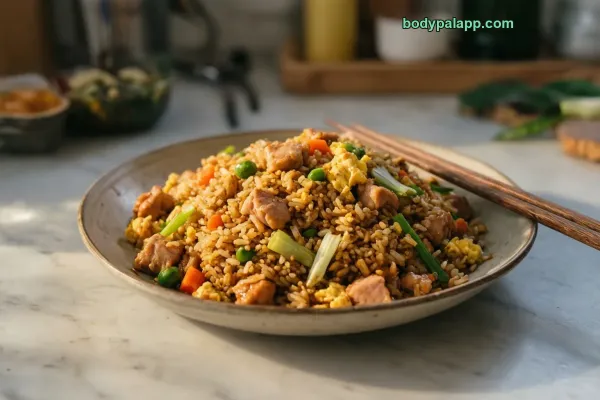
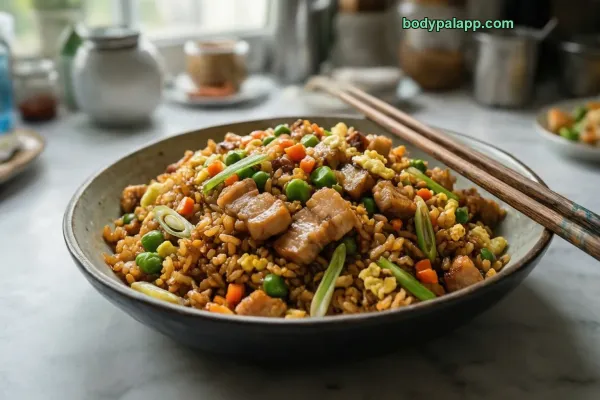
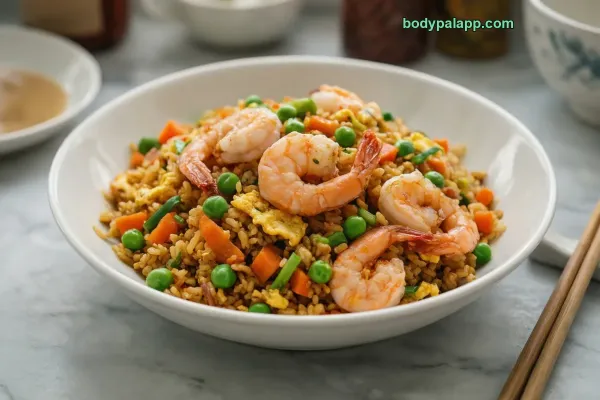
Here is egg fried rice next to chicken, pork and shrimp fried rice, compared per 100 g and per usual serving.
Verdict: For the fewest calories per serving, egg fried rice wins at 289 per cup, against 329 for shrimp, 343 for chicken and 354 for pork, though those cups weigh 198 g versus 166 g here. For more protein, pick pork or chicken fried rice, at 7.6 g and 7.3 g per 100 g versus 3.8 g for the egg version.
Most popular egg fried rice brands in the United States
Ranked by popularity in the BodyPal database
# Productkcal / 100 g
1Ka-Me Traditional Egg Fried Rice1 cup · 140 g207 kcal
Packaged fried rice differs in recipe and oil content, so its label can read higher than the number above. Source: manufacturer labels / USDA FoodData Central.
Egg fried rice FAQs
How many calories are in a cup of egg fried rice?
About 289 calories per cup (166 g), or 174 calories per 100 g.
Is egg fried rice good for weight loss?
A cup of egg fried rice is 289 calories, while a cup of plain cooked white rice (163 g) is 210. The difference comes mostly from the oil: 3.2 g fat per 100 g versus 0.3 g.
Egg fried rice vs pork fried rice: which has fewer calories?
Egg fried rice has 174 calories per 100 g and pork fried rice has 179, so they are almost the same.
How many carbs are in egg fried rice?
One cup has about 54 g of carbs, 1.8 g of fiber and 6.4 g of protein. Per 100 g that is 32.5 g carbs.
How many calories are in 100 g of egg fried rice?
There are 174 calories in 100 g of egg fried rice. That same 100 g holds 32.5 g of carbs, 3.8 g of protein, 3.2 g of fat and 361 mg of sodium, based on the USDA entry for meatless fried rice.
How much protein is in egg fried rice?
A 1 cup (166 g) serving has 6.4 g of protein, or 3.8 g per 100 g. That covers 13% of the daily value and only 9% of the dish's calories, so the egg adds some protein while the rice dominates.
What is the full nutrition profile of egg fried rice?
One cup has 289 calories, 54 g of carbs, 6.4 g of protein, 5.3 g of fat, 1.8 g of fiber, 1 g of sugars and 599 mg of sodium. Per 100 g, cholesterol is 18 mg and potassium is 69 mg.
How many calories does fried rice usually have?
Fried rice runs from 166 to 179 calories per 100 g across the versions on our pages. Shrimp sits at 166, chicken at 173, egg at 174 and pork at 179, so the add-in barely changes calories per gram.