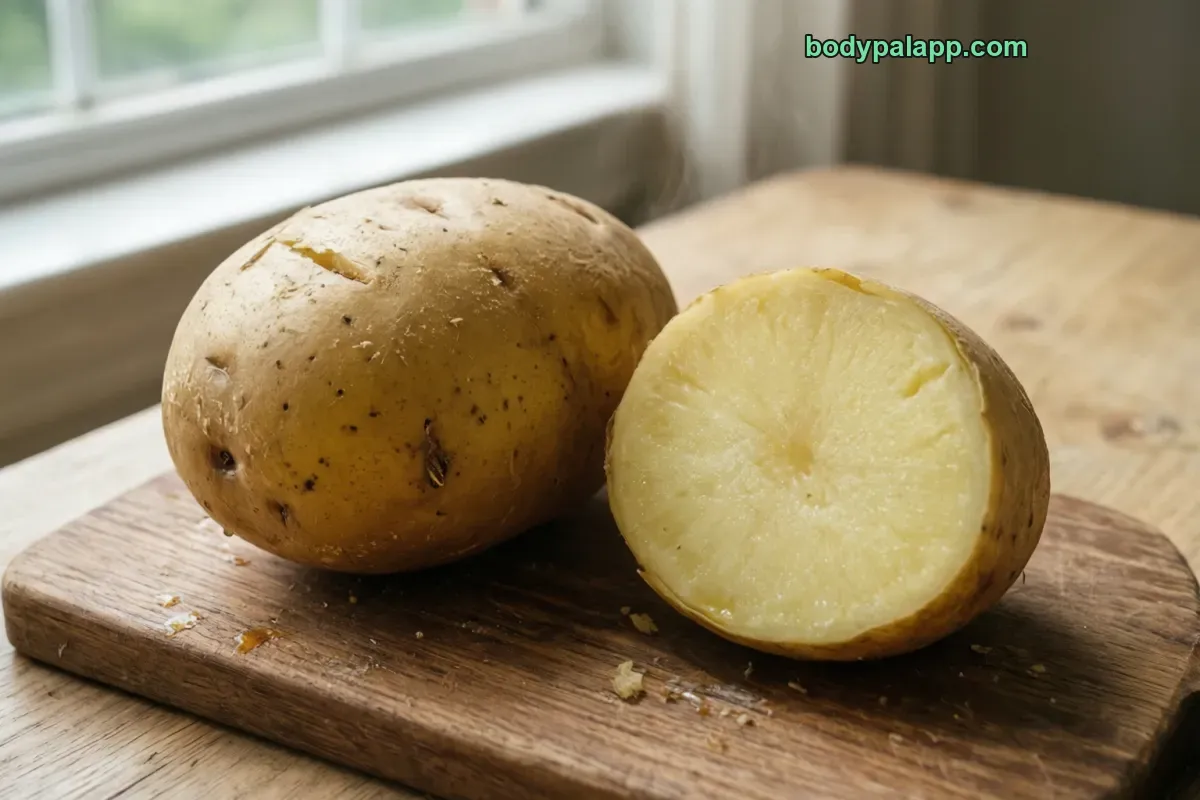
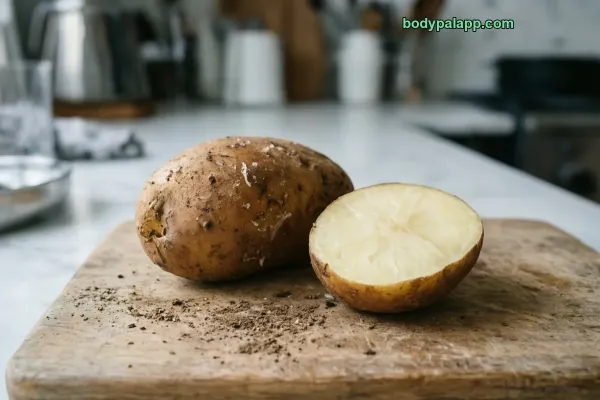
Golden potato calories come to 159 for one medium potato (173 g) baked with its skin, and 92 per 100 g. Almost all of that is carbohydrate: carbs supply 90% of the calories and fat just 1%. That means the size of the potato, and whatever you put on it, decides the total.
159kcal
1 medium potato · 173 g, baked, flesh and skin
9%protein
3.6 gProtein
36 gCarbs
0.3 gFat
How to burn off 159 kcal
—Walking, brisk
—Jogging
—Cycling, moderate
—Swimming
Skip the math. BodyPal counts these calories from your steps and workouts automatically.
Nutrition facts
Baked, flesh and skin · per 173 g
Calories
159 kcal
Protein
3.6 g
Carbohydrate
36 g
Fat
0.3 g
Saturated fat
0.1 g
Cholesterol
0 mg
Sodium
12 mg
Potassium
941 mg
Iron
1.1 mg
Source: USDA FoodData Central
🛡️
Verified nutrition data
Numbers on this page come from USDA FoodData Central, the U.S. Department of Agriculture’s food composition database, and from manufacturer labels where a branded product is named. Last verified September 2026. How we verify our data →
Golden potato: calories, protein and sodium by serving
Percent of daily value uses the FDA reference of 2,000 kcal a day.
Serving
kcal
Protein
Carbs
Fat
Sodium
% DV kcal
1 medium (173 g)
159
3.6 g
36.5 g
0.3 g
12 mg
8%
1 small (138 g)
127
2.9 g
29.1 g
0.2 g
10 mg
6%
1 large (299 g)
275
6.3 g
63 g
0.4 g
21 mg
14%
100 g
92
2.1 g
21.1 g
0.2 g
7 mg
5%
3 × 1 medium (173 g)
477
10.9 g
36 mg
5 × 1 medium (173 g)
796
18.2 g
61 mg
A large potato is 275 calories, a small one 127
Size is the biggest swing on this page. Baked with its skin, a small golden potato (138 g) comes to 127 calories, a medium (173 g) to 159, and a large (299 g) to 275. That large potato is 14% of a 2000-calorie daily value, more than double the small one.
Store potatoes rarely match those USDA weights, and the gap between small and large is bigger than most people judge by eye. Cooking for more people multiplies it fast: two medium potatoes (346 g) total 318 calories, three (519 g) reach 477, and five (865 g), about a family tray, land at 796. A bag of mixed sizes can drift well above or below those figures.
The math stays simple because the rate never changes: 92 calories per 100 g. A kitchen scale gives you the most honest number, and if weighing is not practical, BodyPal can log the potato from a photo. Either way, get the size right before you worry about anything else, because size moves the total first.
Carbs are 90% of the calories
A baked golden potato is a carbohydrate food, plain and simple. Per 100 g it has 21.1 g of carbs, 2.1 g of protein and 0.2 g of fat, which puts carbs at 90% of the calories, protein at 9% and fat at 1%. Only 1.5 g of those carbs are sugars, and 2.1 g are fiber.
In a medium potato that becomes 36.5 g of carbs, 2.6 g of sugars and 3.6 g of fiber. The protein, 3.6 g, is real but modest at 7% of the daily value. A large potato pushes that to 63 g of carbs and 6.3 g of protein, or 13% of the daily value. You get some protein, but nobody should count a potato as the protein on the plate.
Fat barely registers: 0.3 g in a medium potato and 0 g of saturated fat. That is the potato before anyone touches it. Butter, sour cream and cheese are where fat enters the dish, so the plain potato is a lean base and the toppings decide whether it stays one.
Potassium is high, sodium is almost zero
The row that stands out on the label is potassium. A baked golden potato has 544 mg per 100 g, measured against a daily value of 4700 mg, and a medium potato at 173 g carries more than that 100 g figure. If you track minerals, this is the one worth crediting the potato for.
Sodium goes the other way. A medium baked potato has 12 mg, just 1% of the 2300 mg daily value, and even a large one has only 21 mg. Cholesterol is 0, and so is saturated fat. On the rows people usually worry about, the plain potato is close to blank.
So the salt in a baked potato comes from the shaker and the toppings, not the potato. Five medium potatoes still carry only 61 mg of sodium on their own, which tells you where the real number comes from. If you watch sodium, taste before you season and count what goes on top, since cheese, bacon bits and seasoning blends add up quickly.
A medium potato is a 159-calorie side, not a meal
At 159 calories, 8% of a 2000-calorie daily value, a medium baked potato fits neatly as the starch on a plate. It brings 3.6 g of fiber and very little fat, but only 3.6 g of protein, so it works best next to a protein food and a vegetable rather than on its own.
Toppings are the real variable. The plain potato has 0.3 g of fat, so anything rich spooned on top can easily match or beat the potato's own calories. Salsa, plain yogurt, herbs, mustard or a squeeze of lemon keep the total close to the potato's number; butter and cheese do not. If you track your day, log the potato and its toppings as separate items so you can see which one moved the number.
Packaged golden potato products are a different food. Brookshire's Golden Potato Crowns and Crunchin' Cuts Golden Potato Fries are shaped, prepared products, so use their own labels rather than the baked whole-potato figures on this page.
How does golden potato compare?
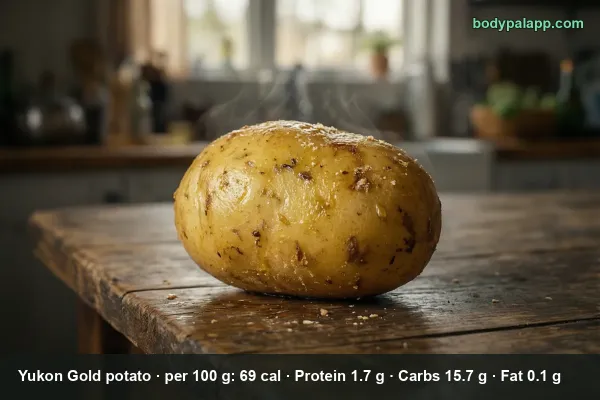
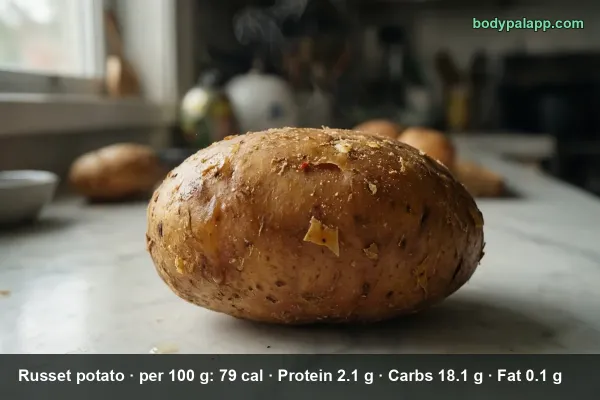
Here is how a baked golden potato stacks up against Yukon Gold and russet potatoes, per 100 g and per usual serving.
Verdict: If you are counting calories, pick Yukon Gold: 69 per 100 g, about 0.8 times the golden potato. If you want the most protein for moderate calories, pick russet, with 79 calories and 2.1 g of protein per 100 g.
Most popular golden potato brands in the United States
Ranked by popularity in the BodyPal database
# Productkcal / 100 g
1Brookshire's Golden Potato Crowns3 oz · 84 g202 kcal
2Crunchin' Cuts Golden Potato Fries30 g500 kcal
These are fried frozen potato products, so their labels read far higher in calories and fat than a plain baked potato. Source: manufacturer labels / USDA FoodData Central.
Golden potato FAQs
How many calories are in one golden potato?
A medium golden potato (173 g) baked with the skin has about 159 calories. A small one (138 g) is 127 calories and a large one (299 g) is 275.
Are golden potatoes good for weight loss?
Baked with the skin they are 92 calories per 100 g, so a medium potato is 159 calories with 0.3 g of fat and 3.6 g of fiber.
Golden potato vs russet potato: which has more calories?
Baked with the skin, golden potatoes are 92 calories per 100 g and russet potatoes 95. A 173 g medium potato is 159 calories against 164 for a russet.
How many carbs are in a golden potato?
A medium 173 g golden potato has 36.5 g of carbs, including 3.6 g of fiber and 2.6 g of sugars, plus 3.6 g of protein.
How many calories are in 100 g of golden potato?
Baked with the skin, 100 g of golden potato has 92 calories. That weight also gives 21.1 g of carbs, 2.1 g of protein and 0.2 g of fat, about 5% of a 2000-calorie daily value.
What are the macros of a golden potato?
A medium baked golden potato (173 g) has 36.5 g of carbs, 3.6 g of protein and 0.3 g of fat. By calories, that is 90% carbs, 9% protein and 1% fat, with 3.6 g of fiber on top.
Do golden potatoes have protein?
Yes, a little: a medium baked golden potato has 3.6 g of protein, 7% of the daily value, and a large one has 6.3 g. Protein supplies only 9% of the calories, so pair it with a protein food if that matters to you.
How many calories are in 2 golden potatoes?
Two medium baked golden potatoes (346 g total) have 318 calories. They also bring 7.3 g of protein and 24 mg of sodium. Two large potatoes land much higher, since one large alone is 275 calories.