Jerusalem artichoke calories come to 110 for 1 cup sliced (150 g) and 73 per 100 g, raw. The thing to notice is where they come from: 90% of the calories are carbs, and 9.6 g of every 100 g is sugar. Fat is 0 and protein is just 2 g, so portion size and cooking fat decide the total.
110kcal
1 cup of slices · 150 g, raw, sliced
10%protein
3 gProtein
26 gCarbs
0 gFat
How to burn off 110 kcal
—Walking, brisk
—Jogging
—Cycling, moderate
—Swimming
Skip the math. BodyPal counts these calories from your steps and workouts automatically.
Nutrition facts
Raw, sliced · per 150 g
Calories
110 kcal
Protein
3 g
Carbohydrate
26 g
Fat
0 g
Saturated fat
0 g
Cholesterol
0 mg
Sodium
6 mg
Potassium
644 mg
Iron
5.1 mg
Source: USDA FoodData Central
🛡️
Verified nutrition data
Numbers on this page come from USDA FoodData Central, the U.S. Department of Agriculture’s food composition database, and from manufacturer labels where a branded product is named. Last verified September 2026. How we verify our data →
Jerusalem artichoke: calories, protein and sodium by serving
Percent of daily value uses the FDA reference of 2,000 kcal a day.
Serving
kcal
Protein
Carbs
Fat
Sodium
% DV kcal
1 cup sliced (150 g)
110
3 g
26.2 g
0 g
6 mg
5%
100 g
73
2 g
17.4 g
0 g
4 mg
4%
3 oz portion (85 g)
62
1.7 g
14.8 g
0 g
3 mg
3%
3 × 1 cup sliced (150 g)
329
9 g
18 mg
5 × 1 cup sliced (150 g)
548
15 g
30 mg
A sliced cup is a 110-calorie side
A cup of sliced raw Jerusalem artichoke weighs 150 g and lands at 110 calories, about 5% of the daily value for energy. A 3 oz portion (85 g) drops to 62 calories, roughly what you get from a handful of thin slices tossed into a salad. At either size, this tuber barely dents a day of eating.
The total climbs fast once it becomes the main event. Two cups (300 g) come to 219 calories, three cups (450 g) to 329, and a big roasting tray of five cups (750 g) to 548. That last figure is a meal-sized number, so if you roast a whole bag and graze from the pan, weigh it first.
Protein rises from 6 g to 15 g across those same multiples, which is modest for the calories involved. Sodium stays tiny the whole way, topping out at 30 mg for five cups. Log by weight when you can, because a cup of uneven, knobby slices can drift well above or below 150 g.
Carbs supply 90% of the calories
Per 100 g, Jerusalem artichoke carries 17.4 g of carbohydrate, 2 g of protein and 0 g of fat. That makes the calorie split 90% carbs, 10% protein and 0% fat. In practice it behaves like a starchy vegetable, not a leafy one, and it belongs in the same mental slot as potatoes on your plate.
A cup brings 26.2 g of carbs and 3 g of protein, which is 6% of the 50 g daily value for protein. That protein share is small, so the tuber will not do the job of a protein food. It fills space and adds texture; it does not carry a meal on its own.
With no fat at all, every calorie you add with butter or oil is extra on top of the raw figures. If you track carbs, the 3 oz portion and its 14.8 g is the easiest amount to fit into a lower-carb day without giving the vegetable up entirely.
Sugar is the row to watch, not sodium
Of the 17.4 g of carbs per 100 g, 9.6 g are listed as sugars. In a sliced cup that becomes 14.4 g of sugars inside 26.2 g of total carbs, a larger sugar share than most people expect from a knobby root. If you are watching sugar, count this tuber the way you would count a piece of fruit.
Fiber is listed at 1.6 g per 100 g and 2.4 g per cup, measured against a 28 g daily value. That is a modest contribution. Do not count on Jerusalem artichoke alone to cover your fiber; pair it with beans, greens or whole grains if that row matters to you.
Sodium barely registers: 4 mg per 100 g and 6 mg per cup, 0% of the 2300 mg daily value. Potassium is the standout mineral at 429 mg per 100 g, set against a 4700 mg daily value. Cholesterol and saturated fat are both 0, so the only rows that move are carbs and sugars.
Pair it with protein and a little fat
With 2 g of protein and no fat per 100 g, Jerusalem artichoke is a side, not a meal. Put it next to chicken, fish, eggs, tofu or beans and the plate starts to look balanced. The protein food brings the staying power that the tuber lacks.
The usual ways to cook it, roasted in oil or mashed with butter, add calories the raw figures do not show. If you are counting, log the oil or butter as its own item rather than guessing it into the vegetable. Raw slices shaved thin into a salad keep the total closest to the numbers on this page, and they add a crisp, nutty bite.
A sensible default is one sliced cup next to a lean protein and a pile of leafy greens. That keeps the side at 110 calories and leaves room for a modest drizzle of oil. Snap a photo of the plate and BodyPal can log the Jerusalem artichoke for you; then check the weight against the 150 g cup if your slices look generous.
How does jerusalem artichoke compare?
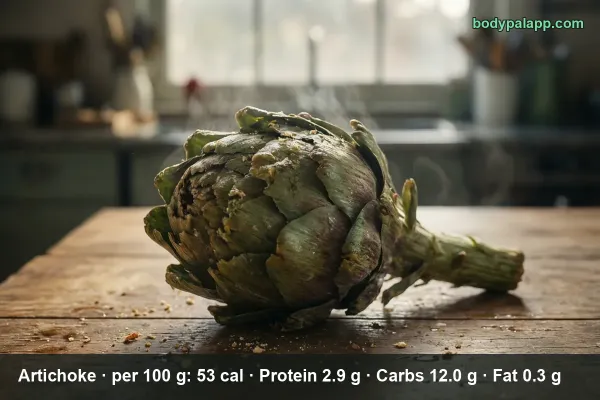
Here is how Jerusalem artichoke stacks up against artichoke, purple potato and carrot stick, per 100 g and per usual serving.
Verdict: For the fewest calories pick carrot stick at 41 per 100 g or artichoke at 53, both well under Jerusalem artichoke's 73. If you want a starchy side that still undercuts potato, Jerusalem artichoke beats purple potato's 93 per 100 g.
Jerusalem artichoke FAQs
How many calories are in Jerusalem artichokes?
One cup of raw slices (150 g) is 110 calories. Per 100 g, Jerusalem artichoke has 73 calories.
Are Jerusalem artichokes good for weight loss?
A cup of slices is 110 calories with 2.4 g of fiber and essentially no fat, since 100 g holds just 0.01 g.
Jerusalem artichoke vs artichoke: which has fewer calories?
Artichoke has 53 calories per 100 g and Jerusalem artichoke 73, so the regular artichoke is 20 calories lower per 100 g.
How many carbs are in Jerusalem artichoke?
Per 100 g there are 17.4 g of carbs, including 9.6 g sugars and 1.6 g fiber. One cup of slices (150 g) comes to 26.2 g of carbs.
How much protein does raw Jerusalem artichoke have per 100 g?
Raw Jerusalem artichoke has 2 g of protein per 100 g, based on the USDA FoodData Central row for raw Jerusalem artichokes. A sliced cup (150 g) has 3 g, which is 6% of the 50 g daily value.
What are the nutrition facts for Jerusalem artichoke?
Per 100 g raw, Jerusalem artichoke has 73 calories, 17.4 g carbs, 2 g protein, 0 g fat, 1.6 g fiber, 9.6 g sugars, 4 mg sodium and 429 mg potassium. Cholesterol and saturated fat are both 0.
How many calories are in sunchokes?
Sunchokes are another name for Jerusalem artichokes, so the numbers match: 73 calories per 100 g and 110 per cup sliced (150 g). A 3 oz portion (85 g) has 62 calories.
How much of the carbohydrate in Jerusalem artichoke is sugar?
In 100 g, 9.6 g of the 17.4 g of carbs are sugars and 1.6 g is fiber. A sliced cup carries 14.4 g of sugars within 26.2 g of carbs, with 2.4 g of fiber.