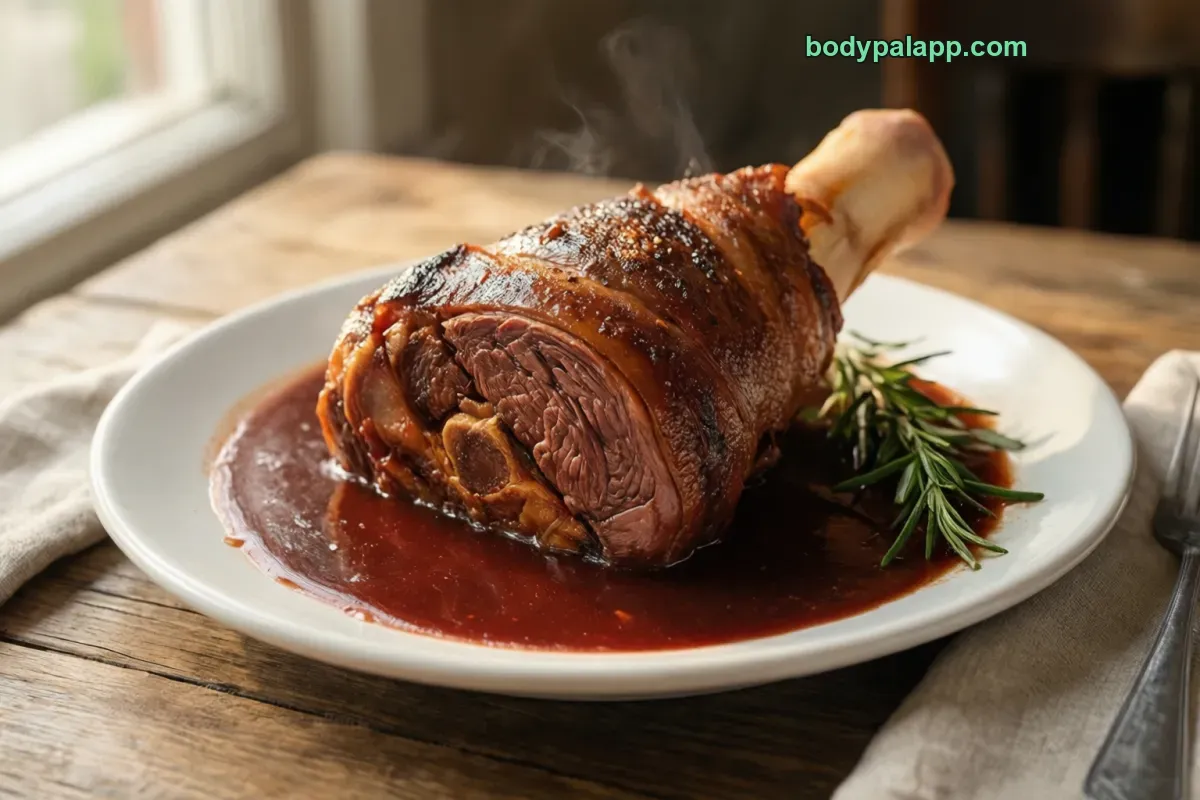
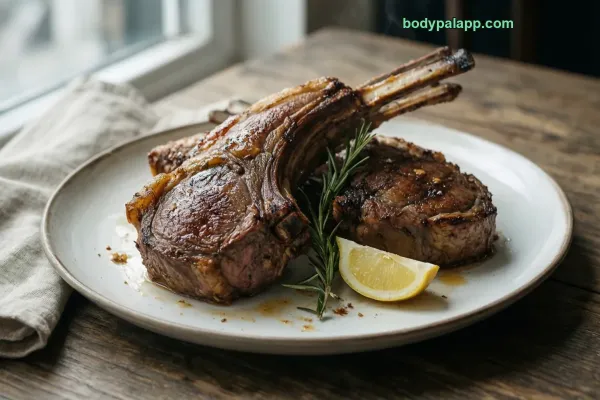
Lamb shank calories come to 605 for one roasted shank (269 g) and 225 per 100 g, counting lean and fat together. The thing to notice is the size of the portion: a single shank carries 71 g of protein and 30% of the daily calorie value, so one shank is a full dinner on its own.
605kcal
1 shank · 269 g, roasted, lean and fat
49%protein
71 gProtein
0 gCarbs
33 gFat
How to burn off 605 kcal
—Walking, brisk
—Jogging
—Cycling, moderate
—Swimming
Skip the math. BodyPal counts these calories from your steps and workouts automatically.
Nutrition facts
Roasted, lean and fat · per 269 g
Calories
605 kcal
Protein
71 g
Carbohydrate
0 g
Fat
33 g
Saturated fat
13.7 g
Cholesterol
242 mg
Sodium
175 mg
Potassium
877 mg
Iron
5.3 mg
Source: USDA FoodData Central
🛡️
Verified nutrition data
Numbers on this page come from USDA FoodData Central, the U.S. Department of Agriculture’s food composition database, and from manufacturer labels where a branded product is named. Last verified September 2026. How we verify our data →
Lamb shank: calories, protein and sodium by serving
Percent of daily value uses the FDA reference of 2,000 kcal a day.
Serving
kcal
Protein
Carbs
Fat
Sodium
% DV kcal
1 shank (269 g)
605
71 g
0 g
33.5 g
175 mg
30%
Lean only (238 g)
428
67 g
0 g
15.9 g
157 mg
21%
3 oz portion (85 g)
191
22.4 g
0 g
10.6 g
55 mg
10%
100 g
225
26.4 g
0 g
12.5 g
65 mg
11%
3 × 1 shank (269 g)
1,816
213.1 g
525 mg
5 × 1 shank (269 g)
3,026
355.2 g
874 mg
One shank is a 605-calorie main course
A whole roasted shank gives 269 g of meat and lands at 605 calories, with 71 g of protein and 33.5 g of fat. That is 30% of the daily calorie value in one item and 142% of the protein value. Few single cuts pack this much into one serving.
Restaurants often serve shanks in pairs, and that is where the total climbs fast. Two shanks reach 1,211 calories and 142.1 g of protein. Three hit 1,816. Cooking five for a family dinner puts 3,026 calories in the pot, before any sauce, potatoes or bread joins them.
If a full shank is more than you want, the 3 oz portion (85 g) is the practical unit. It comes to 191 calories and 22.4 g of protein, about 10% of the daily calorie value. Pull the meat off the bone, weigh it once, and logging the leftovers later in the week gets much easier.
Fat and protein split the calories almost evenly
Lamb shank has no carbohydrate and no fiber, so every calorie comes from just two sources. Fat supplies 51% and protein 49%. Per 100 g that is 26.4 g of protein against 12.5 g of fat, and because fat is denser in calories per gram, the smaller fat number ends up matching the protein in energy.
That even split is what separates shank from the leanest cuts. It is a slow-cooking cut with connective tissue and a fat layer, which is why braising makes it tender and also why the fat line is substantial. For a high-protein meal it still delivers: 26.4 g of protein per 100 g is serious protein density for any meat.
Saturated fat is 5.1 g per 100 g and cholesterol is 90 mg. Over a whole shank those rows grow with the portion. If you track saturated fat against the 20 g daily value, a full shank takes a large share of that day's allowance, so the rest of the plate is the place to go lighter.
Eating only the lean meat cuts a shank to 428 calories
The 605 figure assumes you eat the shank as roasted, lean meat plus its trimmed fat layer. Leave the visible fat on the plate and the edible portion drops to 238 g with 428 calories and 15.9 g of fat. That is 21% of the daily calorie value instead of 30%.
Protein barely moves. The lean-only shank still has 67 g against 71 g for the whole thing, so trimming removes mostly fat. Fat falls from 33.5 g to 15.9 g, roughly halved, and that makes the knife the single biggest lever on this page.
Sodium stays modest either way: 175 mg for a full shank and 157 mg for lean only, which is 8% and 7% of the daily value. Plain roasted lamb is low in sodium. The salt usually arrives with the rub, the stock or the gravy, so the braising liquid is the part to watch if you count sodium.
Pair a shank with vegetables, not more fat
Because the shank brings zero carbs and zero fiber, the sides decide what kind of meal this becomes. Buttery mashed potatoes or creamy polenta push the plate toward a very heavy dinner. Roasted carrots, white beans, lentils or a pile of greens add volume and the fiber the meat lacks.
Potassium is a quiet plus at 326 mg per 100 g, and the meat itself has only 65 mg of sodium per 100 g. Chill the braise and lift the fat off the top before reheating. You keep the flavor of the sauce without adding much to the fat line.
If you split one shank between two people, each plate gets roughly half the totals above, which turns a heavy main into a moderate one. BodyPal can log the food from a photo, which helps when the portion is a heap of meat pulled from the bone rather than a neat, weighable cut.
How does lamb shank compare?
Here is how lamb shank stacks up against lamb chop, beef tenderloin and ground pork, per 100 g and per usual serving.
Verdict: Lamb shank is the lightest of the four at 225 calories per 100 g, against 264 for lamb chop, 273 for beef tenderloin and 297 for ground pork. For fewer calories per bite pick the shank, but if you want a smaller plate, a single chop at 238 or a 3 oz portion of ground pork at 252 beats a full 605-calorie shank.
Lamb shank FAQs
How many calories are in one lamb shank?
About 605 calories for a 269 g roasted shank with the fat left on. Trimmed to lean only, the same cut (238 g) is about 428 calories.
Is lamb shank good for weight loss?
A 3 oz portion (85 g) is 191 calories with 22.4 g protein. Trimming the fat brings 100 g down from 225 to 180 calories.
Lamb shank or lamb chop: which has more calories?
Lamb shank is 225 calories per 100 g roasted and lamb chop 264, so the chop runs about 39 calories higher per 100 g.
How much protein is in a lamb shank?
One 269 g roasted shank has about 71 g of protein, which is 26.4 g per 100 g. The lean-only piece (238 g) has about 67 g.
Is lamb shank a lean cut of meat?
Not entirely: fat supplies 51% of its calories, with 12.5 g of fat per 100 g roasted. Trim the visible fat and one shank drops to 428 calories with 15.9 g of fat, which is a much leaner plate.
How many calories are in lamb shank meat only?
The lean meat alone from one shank comes to 428 calories for 238 g, with 67 g of protein. Eating the fat too raises it to 605 calories for the full 269 g shank.
How many calories does lamb shank have per 100 g?
Roasted lamb shank has 225 calories per 100 g, counting lean and fat together. That 100 g also gives 26.4 g of protein, 12.5 g of fat and no carbohydrate at all.
Is lamb shank high in calories?
Per 100 g it is moderate at 225 calories, lower than lamb chop at 264. The catch is size: one shank is 605 calories, 30% of the daily value, so portion matters more than the cut.
How much protein does lamb shank have per 100 g?
Lamb shank has 26.4 g of protein per 100 g, which is 53% of the daily value. Protein supplies 49% of the calories, so nearly half of what you eat is protein.
What are the full nutrition facts for lamb shank?
Per 100 g roasted: 225 calories, 26.4 g protein, 12.5 g fat, 5.1 g saturated fat, 0 g carbs, 0 g fiber, 65 mg sodium, 90 mg cholesterol and 326 mg potassium.