
How Many Calories in Lime Juice?
The juice of one lime, which USDA weighs at 44 g, is 11 calories. Fresh lime juice runs 25 calories per 100 g, so a 1 fl oz pour is 8 calories, a tablespoon is 4, and the wedge you squeeze over a taco is 1. Bottled unsweetened juice is lighter still at 21 per 100 g.
On this page
- Lime juice quick facts
- The real portion is a squeeze, not a cup
- Fresh against bottled
- Why the bottle says 0 calories
- Carbs that are not sugar
- Lime juice against lemon juice
- Key lime, sweetened lime, and the rows USDA does not have
- Most popular lime juice brands
- FAQ
Lime juice quick facts
One USDA row carries this whole page: Lime juice, raw, SR Legacy 168156. The serving column is the measure people actually make, a whole 2-inch lime squeezed out, which USDA puts at 44 g of juice.
| Nutrient | Per 100 g | Per juice of 1 lime (44 g) | % Daily Value |
|---|---|---|---|
| Calories | 25 cal | 11 cal | — |
| Total fat | 0.07 g | 0.03 g | 0% |
| Saturated fat | 0.01 g | 0.00 g | 0% |
| Carbohydrate | 8.42 g | 3.7 g | 1% |
| Dietary fiber | 0.4 g | 0.2 g | 1% |
| Total sugars | 1.69 g | 0.7 g | — |
| Protein | 0.42 g | 0.2 g | 0% |
| Sodium | 2 mg | 0.9 mg | 0% |
% Daily Value is based on a 2,000-calorie diet.
Verified nutrition data
Numbers on this page come from USDA FoodData Central, the U.S. Department of Agriculture’s food composition database, and from manufacturer labels where a branded product is named. Last verified September 2026. How we verify our data →
Read down that last column and the story is how little there is to say. Fat, saturated fat, protein and sodium all round to zero. Carbohydrate and fiber round to 1%. Potassium, which is not on the label above, adds 51 mg for the lime, another 1% of the FDA Daily Value of 4,700 mg.
Two rows are missing on purpose. Trans fat is 0 g and stays out of a serving table where it would only ever read zero. Added sugars has no figure in this SR Legacy row at all, and 100% lime juice has none to declare, so there is nothing to show rather than a blank.
Total sugars carries no percentage either. The FDA sets a Daily Value for added sugars, not for the sugars a fruit came with, so the row is left as a gram figure.
The real portion is a squeeze, not a cup
Almost nobody drinks lime juice. They squeeze it, so the useful portions are small and the calorie numbers stay in single digits.
| Portion | Weight | Calories |
|---|---|---|
| Juice of one wedge or slice | 5 g | 1 cal |
| 1 tbsp | 15.1 g | 4 cal |
| 1 oz by weight | 28.35 g | 7 cal |
| 1 fl oz | 30.8 g | 8 cal |
| Juice of one lime (2-inch) | 44 g | 11 cal |
| 1 cup | 242 g | 61 cal |
The cup row is there for completeness and for anyone batching margaritas. It is 61 calories, and it is also five and a half limes of work.
Two of those rows look like the same thing and are not. A fluid ounce is a volume and weighs 30.8 g of lime juice, which is 8 calories. An ounce by weight is 28.35 g, which is 7. That is a small gap on one pour and a real one on a recipe scaled to a pitcher.
The same trap sits inside the cup. USDA weighs a cup of lime juice at 242 g, but eight fluid ounces at 30.8 g each comes to 246. Anyone who builds a cup out of fl oz measures ends up with about 1 calorie more than the cup row says. Neither number is wrong; they are two different ways of arriving at "a cup", and the juice is dense enough for the rounding to show.
For logging, pick the measure you actually use. A squeeze over fish or a bowl of guacamole is a wedge or a half, which is 1 to 6 calories and disappears into any day's total. A cocktail is where lime juice starts to count, and even then two fl oz is 16. Half a lime and a two fl oz pour are our own scaling of the USDA rows above, not USDA portions.
Fresh against bottled
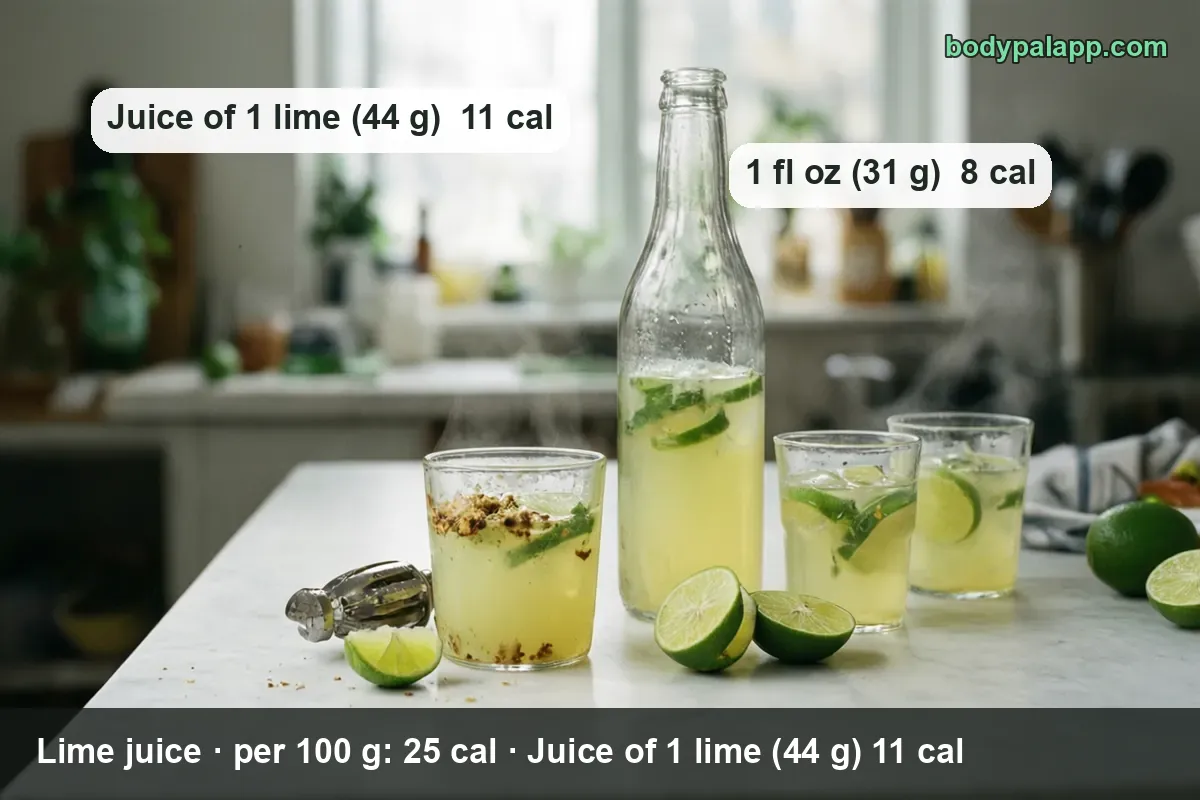
The bottle in the door of the refrigerator is a different USDA row: Lime juice, canned or bottled, unsweetened, SR Legacy 168157. It is not a rougher estimate of the fresh number, it is a measurably different liquid.
| Nutrient | Fresh, raw | Bottled, unsweetened |
|---|---|---|
| Calories per 100 g | 25 cal | 21 cal |
| 1 fl oz (30.8 g) | 8 cal | 6 cal |
| 1 tbsp | 4 cal (15.1 g) | 3 cal (15.4 g) |
| 1 cup | 61 cal (242 g) | 52 cal (246 g) |
| Carbohydrate per 100 g | 8.42 g | 6.69 g |
| Total sugars per 100 g | 1.69 g | 1.37 g |
| Protein per 100 g | 0.42 g | 0.25 g |
| Sodium per 100 g | 2 mg | 16 mg |
| Potassium per 100 g | 117 mg | 75 mg |
Calories fall 16%, from 25 to 21 per 100 g. That is the part people notice, and it is the least interesting part.
Sodium is the row worth reading. It goes from 2 mg per 100 g to 16, an eight-fold jump, because bottled juice is preserved and pasteurized rather than poured straight out of the fruit. It is still a trivial amount in absolute terms; a whole cup of the bottled stuff is 39 mg against a 2,300 mg Daily Value. But the direction is the opposite of what "fewer calories" suggests, and potassium moves the same way, dropping from 117 mg to 75.
Our take: for a drink or a dressing where the lime is the flavor, squeeze it, because the fresh row wins on potassium and on taste for a difference of two or three calories per pour. For a marinade, a big batch of salsa or anything that gets cooked, the bottle is fine and the numbers barely move. Do not switch to bottled to save calories. You would be saving 2 calories per fl oz and giving up most of the potassium to do it.
Why the bottle says 0 calories
Pick up almost any supermarket bottle of 100% lime juice and the Nutrition Facts panel reads 0 Calories. The laboratory number for the same liquid is 21 calories per 100 g. Both are correct.
The trick is the serving size. These bottles declare 1 teaspoon, about 5 mL, because that is roughly what goes into a glass of water or a spoonful of dressing. One teaspoon of lime juice carries about 1 calorie, and FDA labeling rules (21 CFR 101.9) let a food declare zero calories when a serving contains fewer than five. So the panel rounds 1 down to 0, and the databases that scale label values back up to 100 g inherit the zero.
It matters if you cook with lime. A quarter cup in a marinade is not 0 calories, it is about 13 on our own scaling of the 100 g figure. The number is small either way, which is exactly why the rounding survives, but the label is telling you about a teaspoon and nothing else.
Carbs that are not sugar
Fresh lime juice shows 8.42 g of carbohydrate per 100 g and only 1.69 g of sugars. Per 44 g lime that is 3.7 g of carbohydrate and 0.7 g of sugar. The gap of roughly 6.7 g is the part that surprises people who read the panel and expect a fruit juice to be mostly sugar.
USDA calculates carbohydrate by difference: weigh the water, protein, fat and ash, and whatever is left is counted as carbohydrate. In a lime most of that remainder is citric acid and other organic acids, not sugar. That is the whole reason lime juice tastes the way it does. Orange juice sits at the other end of the same arithmetic, where the leftover is mostly sugar and the drink is sweet.
So the 8.4 g figure is real but it is not sweetness, and it is not doing much to a daily total either. A whole lime's worth is 3.7 g of carbohydrate, or 1% of the Daily Value. The MyPlate guidance on fruit counts 100% juice toward the fruit group, though it treats whole fruit as the better default, and half a cup of lime juice is not how anyone gets there.
Lime juice against lemon juice
The two citrus juices sit close enough that the choice is about flavor, not calories. Numbers per 100 g and per 1 fl oz, the pour a cocktail or a dressing actually uses.
| Juice | Per 100 g | Per 1 fl oz | Carbs per 100 g | Protein per 100 g |
|---|---|---|---|---|
| Lime juice, fresh | 25 cal | 8 cal | 8.42 g | 0.42 g |
| Lime juice, bottled, unsweetened | 21 cal | 6 cal | 6.69 g | 0.25 g |
| Lemon juice, fresh | 22 cal | 7 cal | 6.90 g | 0.35 g |
| Lemon juice, bottled | 17 cal | 5 cal | 5.62 g | 0.45 g |
Fresh lime is the heaviest of the four at 25 calories per 100 g, and fresh lemon the lighter of the two fresh juices at 22. Across a 1 fl oz pour that is 8 against 7. The bottled versions of both drop another few calories and the same ordering holds.
Our take: at a difference of one calorie per fluid ounce, use the fruit the dish wants. If you are counting anything here, count the pours rather than the fruit: a double squeeze of lime in a drink is 16 calories on our own doubling of the 1 fl oz row, and everything else in the glass will cost more than the lime. Lime juice is one of the few flavorings that costs almost nothing, which is what makes it useful when you are cutting.
Key lime, sweetened lime, and the rows USDA does not have
Key lime juice has no separate entry in USDA FoodData Central. Not in Foundation Foods, not in SR Legacy, not in FNDDS. If you are logging key lime juice, use the lime juice numbers above and know that the database does not draw a distinction. Key limes are smaller and more acidic, so the juice of one key lime weighs well under 44 g, but there is no published figure for it and inventing one would be worse than saying so.
Sweetened lime juice and lime cordial are not covered either. The products sold under those names in the United States are sugar-based cordials and cocktail mixers, and their calories come from the sugar, not the fruit, so a lime juice row cannot describe them. Read the bottle.
One more entry worth knowing about: FNDDS lists Lime juice, 100%, freshly squeezed with numbers identical to SR Legacy 168156, down to the 117 mg of potassium. It is the same laboratory work republished for the national dietary survey, which is a useful thing to recognize when two calorie sites appear to disagree and are quietly quoting the same measurement twice.
Most popular lime juice brands in the United States
Ranked by how widely each product appears among foods sold in the United States, from the BodyPal food database of over 3.3 million products. Calories are the figures printed on each Nutrition Facts label, checked against USDA FoodData Central.
| Product | Calories (per 100 g) |
|---|---|
| Buda Juice Lime Juice | 25 cal |
| Sicilia Lime Juice | 40 cal |
Brand popularity: BodyPal food database. Nutrition: manufacturer labels / USDA FoodData Central.
Lime juice FAQs
How many calories are in lime juice?
Fresh lime juice is 25 calories per 100 g. The juice of one 2-inch lime, which USDA weighs at 44 g, is 11 calories. A 1 fl oz pour is 8 calories and a tablespoon is 4. Bottled unsweetened lime juice is 21 calories per 100 g.
How many calories are in the juice of one lime?
About 11 calories. USDA puts the yield of one 2-inch lime at 44 g of juice, and fresh lime juice runs 25 calories per 100 g. A single wedge or slice gives about 5 g, which is 1 calorie, so a squeeze over a taco is effectively free.
How many calories are in 1 tablespoon of lime juice?
4 calories for fresh lime juice, at 15.1 g per tablespoon. Bottled unsweetened juice is 3 calories for the same spoon. A quarter cup, which is four tablespoons, comes to about 15 calories fresh and 13 bottled.
Does lime juice have sugar?
Very little: fresh lime juice holds 1.69 g of total sugars per 100 g, or 0.7 g in the juice of one lime. Carbohydrate reads much higher at 8.42 g because USDA counts it by difference, and in a lime most of that remainder is citric acid rather than sugar.
Lime juice or lemon juice, which has fewer calories?
Lemon, by three calories per 100 g. Fresh lemon juice is 22 calories per 100 g against 25 for fresh lime. Across a 1 fl oz pour that is 7 calories versus 8. The gap is too small to choose on, so pick the fruit the dish wants.
Is bottled lime juice the same as fresh?
Not quite: bottled unsweetened juice is 21 calories per 100 g against 25 for fresh, so it is 16% lighter. Sodium runs the other way, from 2 mg per 100 g to 16, and potassium falls from 117 mg to 75. The calorie saving is not a reason to switch.
How many calories are in 1 fl oz of lime juice?
8 calories fresh, 6 bottled. A fluid ounce of lime juice weighs 30.8 g, which is not the same as an ounce by weight at 28.35 g, and that heavier measure works out at 7 calories. A cup is 242 g and 61 calories.
Why does my bottle of lime juice say 0 calories?
Rounding: those labels declare a 1 teaspoon serving, which carries about 1 calorie, and FDA rules let a food print zero calories when a serving holds fewer than five. The same juice measures 21 calories per 100 g in the laboratory, so a quarter cup in a marinade is about 13.
Similar foods
- Gatorade — 158 cal per bottle
- Cappuccino — 65 cal per cup (8 fl oz)
- ICEE — 185 cal per medium
- Slurpee — 101 cal per small
- Almond Milk Latte — 61 cal for 12 fl oz latte
- Arizona Green Tea — 224 cal per tall can, 23 fl oz
Count it without the math
Point the camera at the plate and BodyPal works out what the lime, the guacamole and everything under them add up to.


Burning it off is one side of it. The other is knowing your number: work out how many calories you need a day, with macros and a goal date.