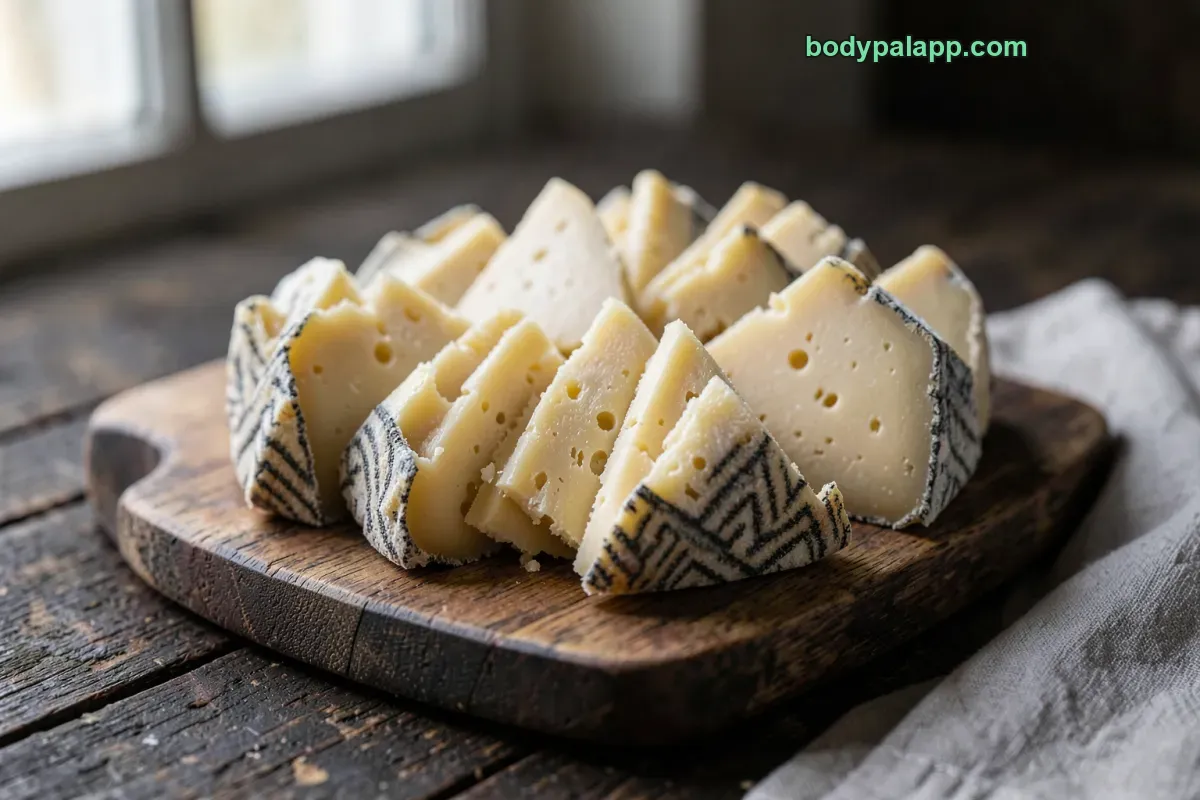
Manchego calories come to 120 for a 1 oz (28 g) piece and 429 per 100 g. The figure to notice is the fat: 76% of the calories come from it, with zero carbs and zero sugar. Protein covers the rest, at 7 g per ounce.
120kcal
1 ounce · 28 g, packaged, per label
24%protein
7 gProtein
0 gCarbs
10 gFat
How to burn off 120 kcal
—Walking, brisk
—Jogging
—Cycling, moderate
—Swimming
Skip the math. BodyPal counts these calories from your steps and workouts automatically.
Nutrition facts
Packaged, per label · per 28 g
Calories
120 kcal
Protein
7 g
Carbohydrate
0 g
Fat
10 g
Saturated fat
7 g
Cholesterol
25 mg
Sodium
160 mg
Source: USDA FoodData Central
🛡️
Verified nutrition data
Numbers on this page come from USDA FoodData Central, the U.S. Department of Agriculture’s food composition database, and from manufacturer labels where a branded product is named. Last verified September 2026. How we verify our data →
Manchego: calories, protein and sodium by serving
Percent of daily value uses the FDA reference of 2,000 kcal a day.
Serving
kcal
Protein
Carbs
Fat
Sodium
% DV kcal
1 oz (28 g)
120
7 g
0 g
10 g
160 mg
6%
100 g
429
25 g
0 g
35.7 g
571 mg
21%
3 × 1 oz (28 g)
360
21 g
480 mg
5 × 1 oz (28 g)
601
35 g
799 mg
One ounce is 120 calories, a cheese board is far more
A 1 oz (28 g) wedge of manchego is 120 calories, about 6% of a 2,000-calorie day. That is a modest number on its own. The trouble is that manchego is a nibbling cheese, served in thin triangles that are easy to stop counting.
Two ounces (56 g) bring you to 240 calories and 14 g of protein. Three ounces (84 g) land at 360 calories, and five ounces (140 g), a realistic total for a long evening around a shared board, come to 601 calories. At that point the cheese alone has become a meal.
If you want manchego to stay a snack, weigh one portion once so you know what 28 g looks like on the plate. A kitchen scale beats guessing here, because firm, dense cheese packs more grams into a small slice than most people expect. BodyPal can also log it from a photo of your plate.
Fat supplies three quarters of every calorie
Per 100 g, manchego carries 35.7 g of fat, 25 g of protein and 0 g of carbohydrate. In calorie terms that works out to 76% fat and 24% protein. There is no sugar and no fiber to speak of, so every calorie comes from those two sources.
The protein is real. One ounce delivers 7 g, which is 14% of the 50 g daily value, and a 100 g portion reaches 25 g, half the daily value. That makes manchego a fair protein contributor for a cheese, though not a lean one: you pay for that protein with more than its weight in fat.
For low-carb eaters the zero-carb profile is the appeal. For anyone counting calories, the fat density is the catch. A small amount fills a lot of the calorie budget, so manchego works best as a flavor accent rather than the base of a dish.
Saturated fat is the row to watch
Of the 35.7 g of fat in 100 g of manchego, 25 g is saturated. The daily value for saturated fat is 20 g, so a 100 g serving goes past it on its own. Even a few ounces take a large bite out of that limit, which matters more than the calorie total if you are watching saturated fat.
Sodium is moderate for an aged cheese. One ounce holds 160 mg, or 7% of the 2,300 mg daily value. Three ounces reach 480 mg, and 100 g comes to 571 mg, 25% of the daily value. That is noticeable but lower than many hard grating cheeses.
Cholesterol sits at 89 mg per 100 g against a 300 mg daily value. If any of these rows matter to you, the simplest lever is portion size: one ounce keeps every number in a comfortable range, while a full board pushes them all up together.
Pair it with foods that bring what manchego lacks
Manchego has no fiber and no carbohydrate, so it pairs naturally with foods that supply both. Fresh fruit, raw vegetables or a few whole-grain crackers add volume and crunch without many calories, and they slow down how fast the cheese disappears.
Labels on the market vary in style, from Spanish imports such as Don Juan Manchego PDO Cheese to domestic options like California Select Farms Manchego-Style Cheese and Boar's Head Manchego Cheese. Check the label on the one you buy, since age and recipe shift the numbers slightly. The figures on this page reflect one packaged manchego, per label.
On a busy day, an ounce of manchego with an apple makes a filling snack with protein and fat to hold you over. On a cheese-board night, decide on your portion before you sit down. Grating it over a salad or vegetables also stretches the flavor across more food.
How does manchego compare?
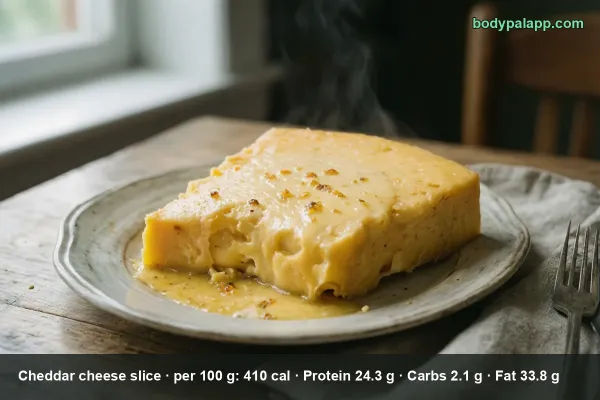
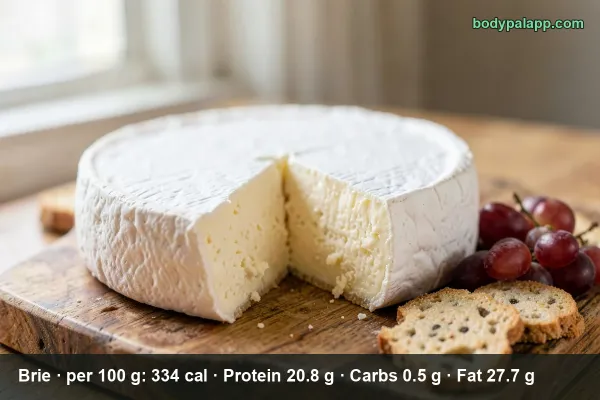
Here is how manchego stacks up against parmesan, cheddar and brie, per 100 g and per usual serving.
Verdict: If calories decide it, brie is the lighter pick at 334 per 100 g against 429 for manchego, while parmesan at 420 and cheddar at 410 land close to it. If sodium is your concern, avoid parmesan at 1,804 mg per 100 g and choose manchego, cheddar or brie, which all stay between 571 and 644 mg.
Most popular manchego brands in the United States
Ranked by popularity in the BodyPal database
# Productkcal / 100 g
1El Cortijo Manchego Cheese1 oz · 28 g429 kcal
2California Select Farms Manchego-Style Cheese1 oz · 28 g357 kcal
3Cacique Manchego Cheese1 oz · 28 g321 kcal
4Don Juan Manchego PDO Cheese1 slice · 28 g429 kcal
One ounce (28 g) of manchego has about 120 calories. Per 100 g it is 429 calories.
Is manchego good for weight loss?
One ounce has 120 calories, 7 g protein, 10 g fat and 0 g carbs. It is calorie-dense at 429 calories per 100 g.
Manchego vs parmesan: which has more calories?
Manchego has 429 calories per 100 g and parmesan 420, so one ounce is about 120 vs 118 calories.
How much protein is in manchego?
Manchego has 25 g protein per 100 g, about 7 g per 1 oz serving.
How many calories are in 100 grams of manchego?
100 g of manchego has 429 calories, with 25 g of protein, 35.7 g of fat and 0 g of carbs. That is about 21% of a 2,000-calorie day, so it is a generous portion rather than a nibble.
Is manchego cheese keto friendly?
Manchego has 0 g of carbs and 0 g of sugar per 100 g, so it fits a low-carb or keto pattern easily. Calories still count, though: one ounce is 120, mostly from fat.
How much sodium is in manchego?
One ounce of manchego holds 160 mg of sodium, 7% of the daily value. A 100 g portion has 571 mg, or 25%, which is far below parmesan at 1,804 mg per 100 g.
How many calories are in a few slices of manchego on a cheese board?
Three ounces (84 g) of manchego come to 360 calories, and five ounces (140 g) reach 601. Thin slices add up quickly, so count the ounces rather than the pieces.
How much saturated fat does manchego have?
Manchego has 25 g of saturated fat per 100 g, more than the 20 g daily value. Keeping to a 1 oz (28 g) serving keeps that number much more manageable.