
How many calories are in masoor dal?
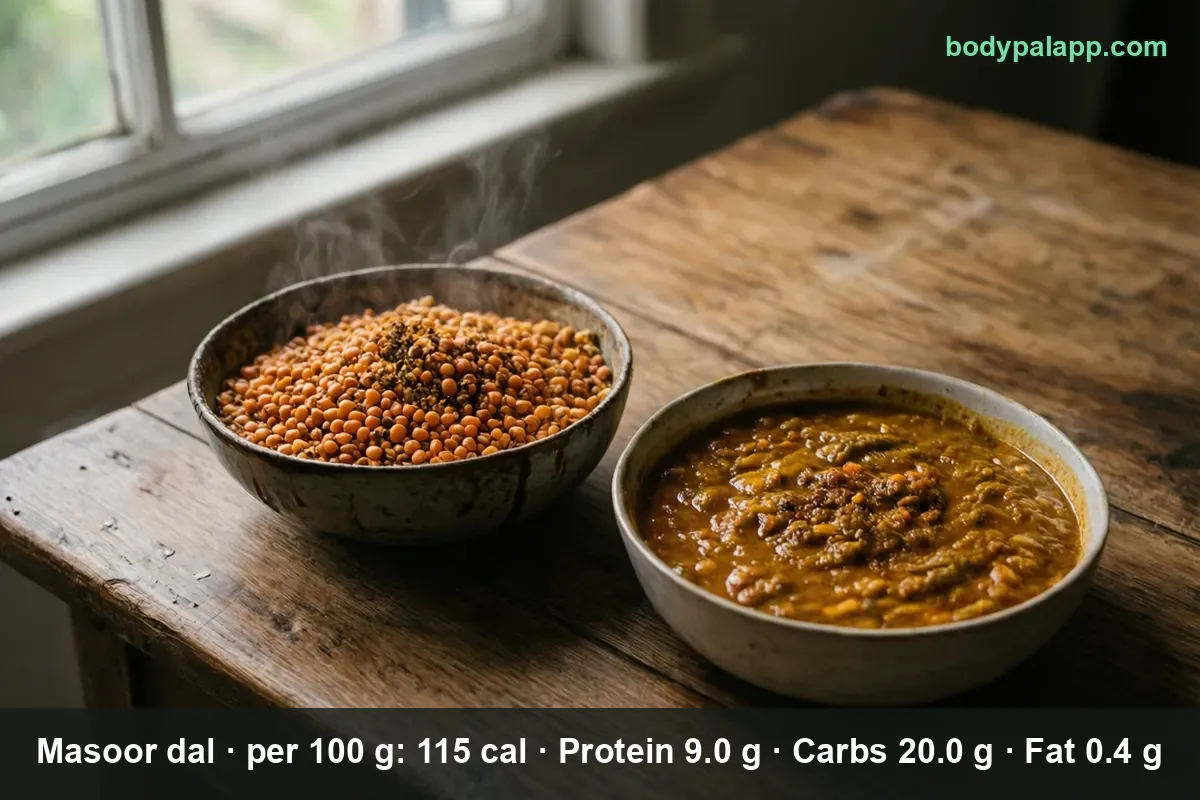
A 1-cup serving of cooked masoor dal, 180 g of it, is 207 calories. Per 100 g the dal runs 115 calories, which puts it among the lightest hot dishes on an Indian table. The catch is not the lentil at all - it is the spoon of ghee that finishes it.
On this page
- Masoor dal quick facts
- US servings, from one ounce to a full cup
- Masoor dal with tadka is a different food
- Dry masoor dal is the number people log by mistake
- Fiber, not protein, is the standout row
- How does masoor dal compare?
- Most popular masoor dal brands
- FAQ
Masoor dal quick facts
USDA has no entry filed under the name masoor dal. What it has is FNDDS 2707425, "Lentils, from dried, no added fat", and that record describes exactly what most people cook on a weeknight: dried red lentils simmered in water with salt, turmeric and aromatics, with no ghee or oil stirred in. That is the row used for every number on this page.
The one thing it does not describe is the tempering. If your dal finishes with a hot spoon of ghee, cumin and chilies poured over the top, you want the fat-added record instead, and it gets its own section below. Everything else - the split red lentil, the pot, the water - is the same food.
| Nutrient | Per 100 g | Per 1 cup (180 g) | % Daily Value |
|---|---|---|---|
| Calories | 115 | 207 | — |
| Total fat | 0.38 g | 0.7 g | 1% |
| Saturated fat | 0.05 g | 0.1 g | 0% |
| Carbohydrate | 20.01 g | 36.0 g | 13% |
| Dietary fiber | 7.9 g | 14.2 g | 51% |
| Total sugars | 1.79 g | 3.2 g | — |
| Protein | 8.97 g | 16.1 g | 32% |
| Sodium | 233 mg | 419 mg | 18% |
% Daily Value is based on a 2,000-calorie diet.
Verified nutrition data
Numbers on this page come from USDA FoodData Central, the U.S. Department of Agriculture’s food composition database, and from manufacturer labels where a branded product is named. Last verified September 2026. How we verify our data →
Two rows you would see on a package are missing here on purpose: added sugars and trans fat. The FNDDS release does not publish either value for this record, so listing them would mean inventing them. In a pot of lentils, water and spices, both sit at zero in practice anyway.
Cholesterol is a flat 0 mg, since nothing in plain dal comes from an animal. Potassium is the quiet win: 367 mg per 100 g, so 661 mg in a cup, or 14% of the Daily Value. The Daily Values used throughout come from the FDA nutrition label reference.
US servings, from one ounce to a full cup
| Serving | Weight | Calories |
|---|---|---|
| 1 oz cooked | 28.4 g | 33 kcal |
| 1 oz dry, yield after cooking | 70 g | 81 kcal |
| 1/2 cup cooked | 90 g | 104 kcal |
| 1 cup cooked | 180 g | 207 kcal |
| Per 100 g | 100 g | 115 kcal |
The 1-cup, 180 g line is USDA's own household measure, and it is the one to reach for when dal is the main dish. The half cup and the ounce of cooked dal are our own arithmetic from the USDA 100 g figure, not USDA servings - useful when dal is the side next to rice or a sabzi rather than the center of the plate.
The strangest row in that table is the third one. One ounce of dry red lentils weighs 28 g in the bag but lands at roughly 70 g on the plate, because the lentil swells to about two and a half times its weight in water. That 70 g line is our own arithmetic from the cooked 115 per 100 g figure, not a USDA serving. The weight is what changes.
A restaurant thali or a takeout container of dal usually holds more than a cup. Two cups is 414 calories before the rice, the roti or the tadka, which is worth knowing before you log a single scoop.
Masoor dal with tadka is a different food
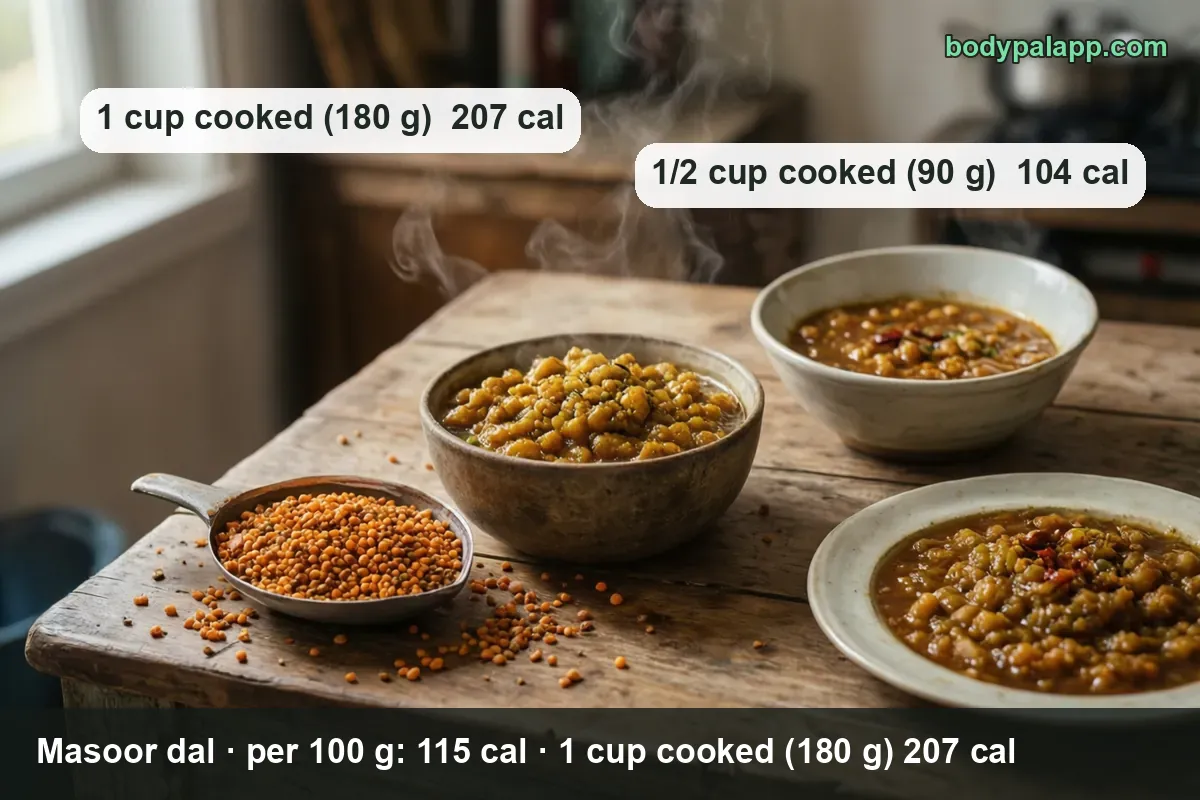
Pour hot ghee, cumin and dried chilies over the pot and the calories per 100 g climb from 115 to 166. USDA keeps that as a separate record, FNDDS 2707424, "Lentils, from dried, fat added". A 1-cup serving of it is 307 calories. That is 100 calories of tempering on a dish that started at 207 - the tadka is effectively just under half a serving of dal, poured on top of the dal.
The fat row tells the same story more bluntly. Plain dal gives you 0.7 g of fat in a cup; the tempered version gives you 12.7 g. Protein and fiber barely move.
| Version | Per 100 g | Typical serving | Calories |
|---|---|---|---|
| Masoor dal, no added fat | 115 kcal | 1 cup (180 g) | 207 kcal |
| Masoor dal with tadka, ghee or oil | 166 kcal | 1 cup (185 g) | 307 kcal |
| Plain boiled masoor dal, no salt | 116 kcal | 1 cup (198 g) | 230 kcal |
| Boiled masoor dal, salted | 114 kcal | 1 cup (198 g) | 226 kcal |
| Masoor dal from canned lentils | 166 kcal | 1/2 cup (90 g) | 149 kcal |
| Dry masoor dal, before cooking | 358 kcal | 1 cup (192 g) | 687 kcal |
Three of those rows sit within a few calories of each other per 100 g - 114, 115 and 116 - and the difference between them is the recipe base and the salt, not the lentil. Salting the water costs nothing in calories but moves sodium from 2 mg per 100 g in the unsalted record up to 233 mg in the one used here. If you are watching sodium, cooking the lentils in plain water and seasoning at the table is the cheapest fix on this page.
The canned version deserves one warning. It carries the added fat of the fat-added record and the highest sodium of the lot at 325 mg per 100 g, so a half cup already spends 149 calories. The half-cup weight there is our own scaling from the 100 g figure rather than a USDA serving.
Dry masoor dal is the number people log by mistake
Dry split red lentils are 358 calories per 100 g, from SR Legacy 174284. A full cup of them, 192 g, is 687 calories - more than three cooked cups. Nobody eats them that way, but plenty of people log them that way.
Here is where the two worlds meet. US bags of masoor dal print a dry serving: Bob's Red Mill and 365 Everyday Value both use 1/4 cup at 50 g, which is 190 and 180 calories respectively, while Trikona, Goya and Royal list 39 to 45 g portions at 130 to 160 calories. That quarter cup of Bob's, 190 calories dry, cooks into roughly one full cup of dal at 207. The two numbers describe the same lentils at different moments.
So log one or the other, never both. Weighed the lentils before they hit the pot? Use the dry figure. Serving from the pot? Use 115 per 100 g. Double-counting is how a 200-calorie bowl turns into 400 on paper.
Fiber, not protein, is the standout row
Masoor dal gets talked about as a protein dish, and the protein is real: 16.1 g in a cup, 32% of the 50 g Daily Value, for 207 calories. But fiber is the row that runs away with it. That same cup carries 14.2 g of fiber, 51% of the 28 g Daily Value - half a day's fiber from one bowl.
That ratio is unusual. Most foods that clear 30% of the protein DV in 200 calories are animal foods with no fiber at all. The Dietary Guidelines for Americans count beans, peas and lentils in both the protein foods group and the vegetable group for exactly this reason, and MyPlate treats them the same way. Dal is one of the few dishes that lets you tick both boxes with one ladle.
Sodium is the row to keep an eye on. At 419 mg a cup, the USDA record spends 18% of the day's 2,300 mg - about a fifth of a teaspoon of table salt. That is moderate on its own, but dal rarely arrives alone, and pickle, papad or a salted rice dish alongside it add up fast.
How does masoor dal compare?
| Lentil dish | Per 100 g | US serving | Calories |
|---|---|---|---|
| Masoor dal, no added fat | 115 kcal | 1 cup, 180 g | 207 kcal |
| Lentils, boiled, no salt | 116 kcal | 1 cup, 198 g | 230 kcal |
| Lentils with fat added | 166 kcal | 1 cup, 185 g | 307 kcal |
| Dry red lentils, raw | 358 kcal | 1 cup, 192 g | 687 kcal |
Our take: the three cooked entries land between 207 and 307 calories a cup, and the only thing separating the bottom from the top is added fat. Cook masoor dal in water and you have a 200-calorie bowl with half a day's fiber, which is about as efficient as a hot, filling dish gets. Temper it and you are eating a 300-calorie bowl - still reasonable, but no longer the light option people assume it is. Our advice: keep the tadka, measure the ghee, and let the rice be the thing you cut.
Most popular masoor dal brands in the United States
Ranked by how widely each product appears among foods sold in the United States, from the BodyPal food database of over 3.3 million products. Calories are the figures printed on each Nutrition Facts label, checked against USDA FoodData Central.
| Product | Calories (per 100 g) |
|---|---|
| Bob's Red Mill Red Lentils | 380 cal |
| 365 Everyday Value Red Lentils | 360 cal |
| Trikona Turkish Red Lentil Masoor Dal | 333 cal |
| Goya Lentils Masoor Dal | 356 cal |
| Royal Masoor Dal Split Red Lentils | 333 cal |
Brand popularity: BodyPal food database. Nutrition: manufacturer labels / USDA FoodData Central.
Masoor dal FAQs
How many calories are in 1 cup of masoor dal?
A 1-cup serving of cooked masoor dal, 180 g, comes to 207 calories, based on the USDA's lentils-from-dried record at 115 calories per 100 g. That is dal simmered in water with salt and no ghee. Add a tadka and the same cup climbs to about 307.
How many calories are in 100 g of masoor dal?
100 g of cooked masoor dal is 115 calories. That same 100 g holds 8.97 g of protein, 20.01 g of carbohydrate, 7.9 g of fiber and only 0.38 g of fat. Dry lentils are a different story at 358 calories per 100 g, since the water has not gone in yet.
Is masoor dal high in protein?
One cup carries 16.1 g of protein, 32% of the 50 g Daily Value, for 207 calories. That is solid for a plant food, but dal is not a protein powerhouse next to meat or eggs. Its fiber score is higher: 14.2 g, or 51% of a day.
How much fiber is in masoor dal?
A 1-cup serving gives 14.2 g of fiber, 51% of the 28 g Daily Value, from 7.9 g per 100 g. Half a cup still delivers roughly 7 g. Few single foods on a dinner plate move the fiber line that far, which is why dal fills you up at 207 calories.
Does tadka add many calories to dal?
Yes: about 100 per cup. USDA's fat-added lentil record runs 166 calories per 100 g against 115 without, so a 1-cup serving goes from 207 to 307. The fat row moves from 0.7 g to 12.7 g. A restrained teaspoon of ghee sits somewhere in between.
Dry or cooked masoor dal - which number do I log?
Log the cooked number, 115 calories per 100 g, unless you weighed the lentils dry. A 1/4 cup of dry red lentils, 50 g on most US bags, is about 190 calories and swells into roughly a full cooked cup. Counting both is how a 200-calorie bowl becomes 400.
Is masoor dal good for weight loss?
At 115 calories per 100 g it is one of the lighter hot dishes you can build a meal on, and 14.2 g of fiber per cup does the work of keeping you full. The catch is what goes on top: tadka pushes the same cup to 307, and rice adds its own.
How many carbs are in masoor dal?
A cup holds 36.0 g of carbohydrate, 13% of the Daily Value, and 14.2 g of that is fiber. Net of fiber you are left with about 22 g. Sugars are minor at 3.2 g per cup, and the lentils themselves bring them, so the carbs here are mostly slow starch.
Similar foods
- Olive — 26 cal for 5 large olives
- Coleslaw — 257 cal per cup
- Cucumber Salad — 191 cal per cup
- Salad With Italian Dressing — 191 cal per cup
- Broccoli Slaw — 229 cal per cup
- Urad Dal — 189 cal per cup cooked
Count it without the math
Point the camera at the bowl and BodyPal counts the dal for you, tadka and all.


How long does it take to burn off masoor dal?
A 1-cup (180 g) serving is 207 kcal. Enter your weight and the amount you ate to see how long it takes you to burn that off:
lb
| Activity | Time to burn 207 kcal |
|---|---|
| Walking, brisk | 41 min |
| Cycling, moderate | 26 min |
| Swimming, moderate | 30 min |
| Jogging | 24 min |
| Weight training, moderate | 46 min |
Times are for a 155 lb adult at a steady pace; change the weight to see yours. The amount is set to the portion in the text (180 g); change it to what you actually ate. BodyPal works this out from your steps automatically.
Burning it off is one side of it. The other is knowing your number: work out how many calories you need a day, with macros and a goal date.