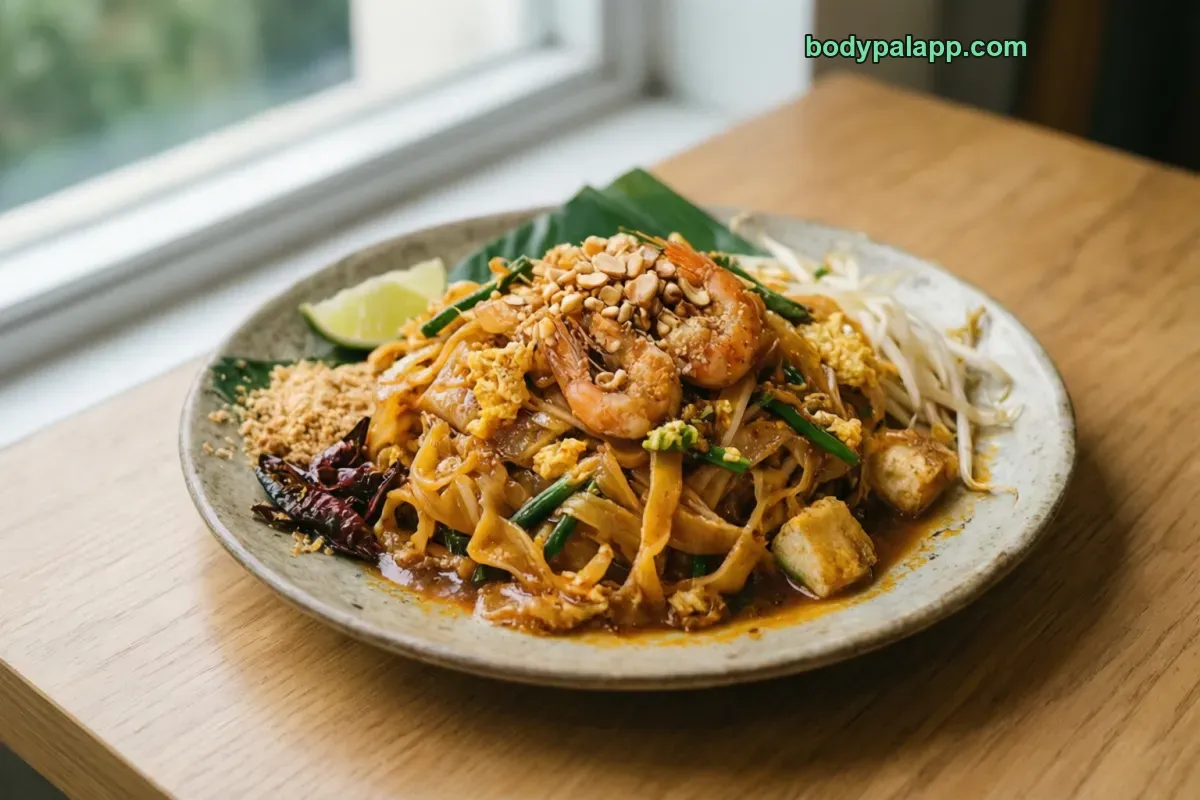
Pad thai noodles calories come to 308 for a 1 cup (200 g) serving of the prepared dish with chicken, or 154 per 100 g. The figure to notice is fat: it supplies 43% of those calories, more than the noodles' carbs do, and the same cup carries 768 mg of sodium.
308kcal
1 cup · 200 g, prepared dish, with chicken
21%protein
16.3 gProtein
29 gCarbs
15 gFat
How to burn off 308 kcal
—Walking, brisk
—Jogging
—Cycling, moderate
—Swimming
Skip the math. BodyPal counts these calories from your steps and workouts automatically.
Nutrition facts
Prepared dish, with chicken · per 200 g
Calories
308 kcal
Protein
16.3 g
Carbohydrate
29 g
Fat
15 g
Saturated fat
2.6 g
Cholesterol
96 mg
Sodium
768 mg
Potassium
304 mg
Iron
1.4 mg
Source: USDA FoodData Central
🛡️
Verified nutrition data
Numbers on this page come from USDA FoodData Central, the U.S. Department of Agriculture’s food composition database, and from manufacturer labels where a branded product is named. Last verified September 2026. How we verify our data →
Pad thai noodles: calories, protein and sodium by serving
Percent of daily value uses the FDA reference of 2,000 kcal a day.
Serving
kcal
Protein
Carbs
Fat
Sodium
% DV kcal
1 cup (200 g)
308
16.3 g
28.7 g
15 g
768 mg
15%
Plain rice noodles, 1 cup (176 g)
190
3.2 g
42.3 g
0.4 g
33 mg
10%
100 g
154
8.1 g
14.4 g
7.5 g
384 mg
8%
3 × 1 cup (200 g)
924
48.8 g
2,304 mg
5 × 1 cup (200 g)
1,540
81.3 g
3,840 mg
Three cups turns pad thai into a 924-calorie meal
One cup of chicken pad thai, about 200 g, is 308 calories, or 15% of a 2000-calorie daily value. That sounds modest, but a cup of noodles is a small mound on a plate. Most people serve themselves more without noticing, because the dish is soft, saucy and easy to keep eating.
The total climbs fast. Two cups (400 g) come to 616 calories. Three cups (600 g) reach 924, which is a full meal for many adults on its own. A large family-style batch of five cups, 1,000 g, holds 1,540 calories. If you split a big order, measure your share once so you know what a cup actually looks like in your bowl.
The noodles themselves are not the main driver. A cup of plain rice noodles (176 g) is 190 calories, while the finished dish is 308 per cup. The rest comes from what turns noodles into pad thai: oil in the wok, the sweet and salty sauce, and the chicken. Weigh the cooked dish, not the dry noodles, when you log it.
Fat, not noodles, supplies the most calories
The calorie split is 43% fat, 36% carbs and 21% protein. Per 100 g that is 7.5 g fat, 14.4 g carbs and 8.1 g protein. For a dish people think of as a noodle bowl, that is a surprising amount of fat, and it comes from the cooking oil and sauce rather than the rice noodles.
Compare it with plain rice noodles. A cup of those has 42.3 g carbs, just 0.4 g fat and 3.2 g protein. They are almost pure starch. The finished dish flips that profile: fewer carbs per cup at 28.7 g, far more fat at 15 g, and much more protein.
That protein is the good news. A cup of chicken pad thai gives 16.3 g, or 33% of the daily value, and two cups reach 32.5 g. Saturated fat stays fairly low at 1.3 g per 100 g, so most of the fat is the unsaturated kind found in typical cooking oils and peanuts.
Sodium is the row to watch
One cup carries 768 mg of sodium, which is 33% of the daily value. That is a third of a day's allowance in a portion that many people would call a side. Per 100 g the figure is 384 mg.
Portions make it worse. Two cups bring 1,536 mg, and three cups hit 2,304 mg, past the full daily value in a single meal. Plain rice noodles have only 33 mg per cup, or 1% of the daily value, so almost all of the salt comes from fish sauce, soy-style seasonings and the rest of the sauce. If you watch sodium, ask for sauce on the side or eat a smaller portion alongside unsalted vegetables.
Two other rows are worth a glance. Sugars reach 8.1 g per cup, which reflects the sweet side of the sauce. Fiber is low at 2.4 g per cup, and cholesterol runs 48 mg per 100 g, mostly from the chicken.
Pair a single cup with vegetables, not more noodles
Pad thai works best as the center of a meal with a firm portion limit. One cup at 308 calories leaves plenty of room for a big side of steamed or raw vegetables, which add volume and fiber that the noodles lack. A clear soup or a cucumber salad does the same job without adding much to the total.
If you cook at home, the oil and sauce are the levers. Use less of both and the fat and sodium rows drop, while the noodles stay the same. Packaged options from brands such as A Taste of Thai, Koyo Brown Rice or King Soba sell just the noodles, so the final numbers depend on how you finish them.
Restaurant plates are harder to judge, so estimate by cups and log generously. BodyPal can log a plate of pad thai from a photo, which helps when you cannot weigh it. The pattern to remember is simple: the first cup is a reasonable meal, and every extra cup adds another 308 calories and 768 mg of sodium.
How does pad thai noodles compare?
Here is how chicken pad thai stacks up against shrimp pad thai, tofu pad thai and tuna noodle casserole, per 100 g and per usual serving.
Verdict: For the fewest calories, pick pad thai with shrimp at 294 per cup, while tofu pad thai runs highest at 330 because of its 9.2 g fat per 100 g. For staying full, chicken pad thai at 8.1 g protein per 100 g beats both other pad thai versions, and only tuna noodle casserole edges it at 9 g.
Most popular pad thai noodles brands in the United States
Ranked by popularity in the BodyPal database
# Productkcal / 100 g
1A Taste of Thai Pad Thai Noodles1 package · 163 g319 kcal
2Explore Cuisine Organic Red Rice Pad Thai Noodles2 oz · 56 g375 kcal
3Koyo Brown Rice Organic Pad Thai Noodles2 oz · 56 g357 kcal
4Tiger Tiger Pad Thai Noodles in No Time1 cup as prepared · 100 g180 kcal
5Great Value Pad Thai Noodles with Broccoli and Tofu1 package · 269 g104 kcal
6King Soba Organic Pad Thai Noodles1.9 oz · 55 g358 kcal
7Explore Asian Thai Red Rice Pad Thai Noodles2 oz · 56 g357 kcal
Most packaged pad thai noodles are labeled per dry weight, so they read much higher than the cooked dish above. Source: manufacturer labels / USDA FoodData Central.
Pad thai noodles FAQs
How many calories are in a cup of pad thai noodles?
About 308 calories per cup (200 g) of prepared pad thai, or 154 calories per 100 g.
Are pad thai noodles good for weight loss?
One cup has 308 calories with 16.3 g protein and 15 g fat. Plain cooked rice noodles without sauce are lower at 190 calories per cup (176 g).
Pad thai vs tofu pad thai: which has more calories?
Pad thai has 154 calories per 100 g and the meatless version 165, so a 200 g cup is 308 vs 330 calories.
How many carbs are in pad thai noodles?
A cup of pad thai has 28.7 g carbs and 8.1 g sugars. A cup of plain cooked rice noodles has 42.3 g carbs.
How many calories are in plain pad thai rice noodles?
A cup of plain rice noodles (176 g) has 190 calories. It carries 42.3 g carbs, only 0.4 g fat and 33 mg sodium, so most of the calories in finished pad thai come from oil, sauce and chicken.
How much sodium is in a cup of pad thai?
One cup of chicken pad thai has 768 mg of sodium, 33% of the daily value. Per 100 g it is 384 mg, and three cups reach 2,304 mg, past the full daily value.
How much protein is in chicken pad thai?
A cup of chicken pad thai provides 16.3 g of protein, 33% of the daily value. Per 100 g it has 8.1 g, and two cups deliver 32.5 g.
How many calories are in two cups of pad thai?
Two cups (400 g) of chicken pad thai come to 616 calories. That portion also brings 1,536 mg of sodium and 32.5 g of protein, so a larger plate adds up quickly.