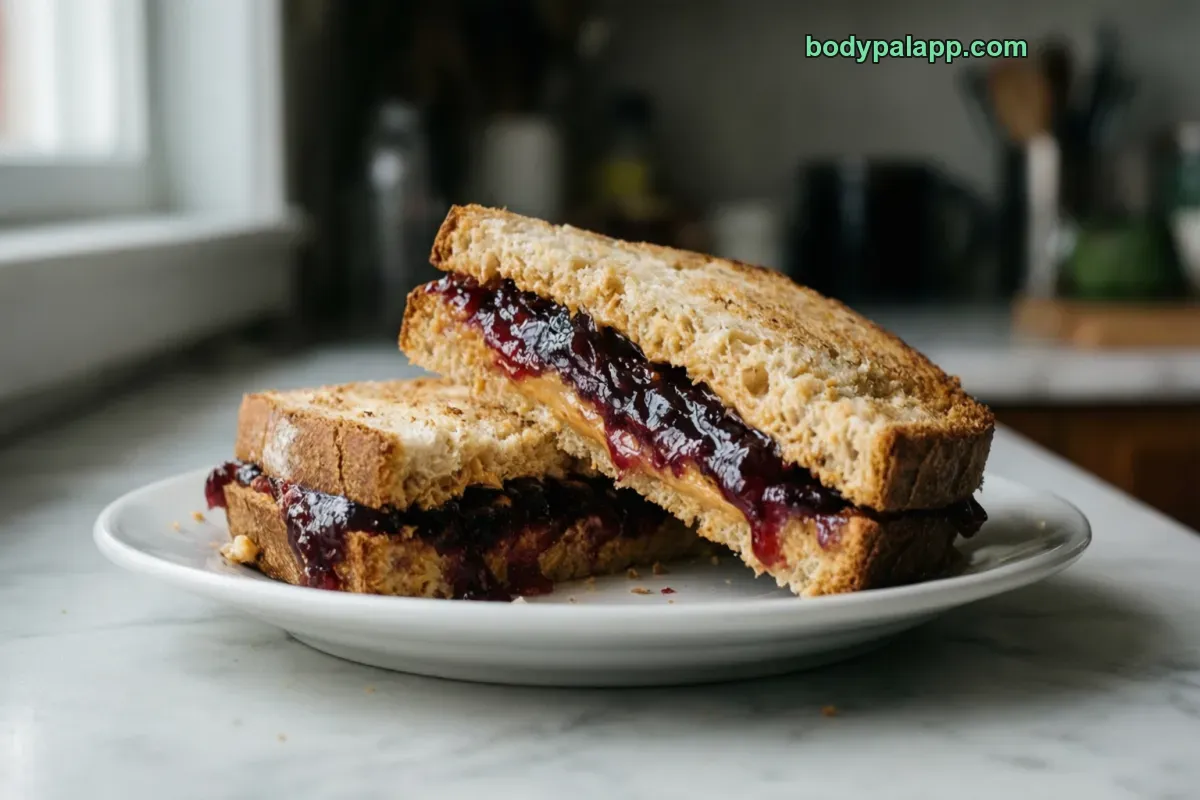
Peanut butter and jelly sandwich calories come to 404 for one 112 g sandwich, or 361 per 100 g. The number to notice is the fat: it supplies 40% of the calories, while protein covers only 12%. Half a sandwich drops to 202, so portion size moves the total more than any ingredient swap.
404kcal
1 sandwich · 112 g, regular peanut butter and jelly
12%protein
12.8 gProtein
51 gCarbs
18.6 gFat
How to burn off 404 kcal
—Walking, brisk
—Jogging
—Cycling, moderate
—Swimming
Skip the math. BodyPal counts these calories from your steps and workouts automatically.
Nutrition facts
Regular peanut butter and jelly · per 112 g
Calories
404 kcal
Protein
12.8 g
Carbohydrate
51 g
Fat
18.6 g
Saturated fat
3.8 g
Cholesterol
0 mg
Sodium
412 mg
Potassium
260 mg
Iron
2.6 mg
Source: USDA FoodData Central
🛡️
Verified nutrition data
Numbers on this page come from USDA FoodData Central, the U.S. Department of Agriculture’s food composition database, and from manufacturer labels where a branded product is named. Last verified September 2026. How we verify our data →
PB&J sandwich: calories, protein and sodium by serving
Percent of daily value uses the FDA reference of 2,000 kcal a day.
Serving
kcal
Protein
Carbs
Fat
Sodium
% DV kcal
1 sandwich (112 g)
404
12.8 g
50.6 g
18.6 g
412 mg
20%
Half sandwich (56 g)
202
6.4 g
25.3 g
9.3 g
206 mg
10%
Reduced fat (112 g)
380
14 g
54.9 g
13 g
449 mg
19%
100 g
361
11.4 g
45.2 g
16.6 g
368 mg
18%
3 × 1 sandwich (112 g)
1,213
38.4 g
1,236 mg
5 × 1 sandwich (112 g)
2,022
64 g
2,061 mg
Half a sandwich is a 202-calorie snack
A standard PB&J weighs 112 g and lands at 404 calories, about 20% of the daily value used on this page. That makes it a light lunch on its own, not a snack. Cut it in half and you have 56 g, 202 calories and 6.4 g of protein, which sits much closer to snack territory.
The trouble is that sandwiches tend to come in pairs. Two sandwiches weigh 224 g and add up to 809 calories with 824 mg of sodium. Three reach 1,213 calories, and a lunchbox habit of five across a workweek totals 2,022 calories and 2,061 mg of sodium.
Protein grows in step, from 12.8 g in one sandwich to 25.6 g in two, but it never catches up with the calories. If you want the taste without the full load, the half sandwich is the cleanest lever you have. Thick spreads and oversized bread push a homemade version past the 112 g reference, so weigh yours once to know where it lands.
Fat supplies 40% of the calories
Per 100 g a PB&J carries 16.6 g of fat, 45.2 g of carbs and 11.4 g of protein. In calorie terms that splits into 48% carbs, 40% fat and 12% protein. Carbs win the count, but fat is close behind, and the reduced-fat version shows where it comes from: swapping the spread cuts fat from 18.6 g to 13 g per sandwich.
Saturated fat is modest at 3.4 g per 100 g, and cholesterol is 0. Fiber reaches 2.8 g per 100 g, or 3.1 g in a full sandwich. That is a small contribution rather than a reason to choose it.
Protein is the weak spot. One sandwich gives 12.8 g, about 26% of the daily value, which is respectable for a sandwich with no meat or cheese. Still, at 12% of calories it will not anchor a high-protein day by itself. If staying full is the goal, pair it with something protein-rich rather than reaching for a second sandwich.
Sugar and sodium both creep up with portions
One sandwich carries 16.8 g of sugars, or 15 g per 100 g. Jelly is the obvious source, though bread and sweetened peanut butters add to the tally. That is more sugar than many people expect from a lunch sandwich, so the jelly layer is the first place to trim if you track sugars.
Sodium is 412 mg per sandwich, 18% of the daily value. One sandwich is unremarkable on this row. Two bring 824 mg and three bring 1,236 mg, which is a large share of the day before dinner even starts.
Potassium sits at 232 mg per 100 g, a modest figure that does little to offset the salt. If you watch sodium, the half sandwich at 206 mg, 9% of the daily value, is the version that barely registers. Pairing it with fruit or plain vegetables keeps the meal's sodium close to that low number.
Reduced-fat peanut butter barely moves the total
USDA lists a reduced-fat version at the same 112 g weight. It comes to 380 calories against 404 for the regular sandwich, with fat dropping from 18.6 g to 13 g. That is a real cut in fat, but a small cut in calories.
The trade-offs show up elsewhere. Carbs rise from 50.6 g to 54.9 g, sodium climbs from 412 mg to 449 mg, or 20% of the daily value, and sugars barely change at 16.4 g versus 16.8 g. Protein ticks up from 12.8 g to 14 g, the one clear gain.
Our position: choose reduced fat if fat grams are what you track, but do not expect it to rescue a calorie budget. Eating half a regular sandwich saves far more than switching spreads. BodyPal can log either version from a photo, so you can see which one you actually made.
How does PB&J sandwich compare?
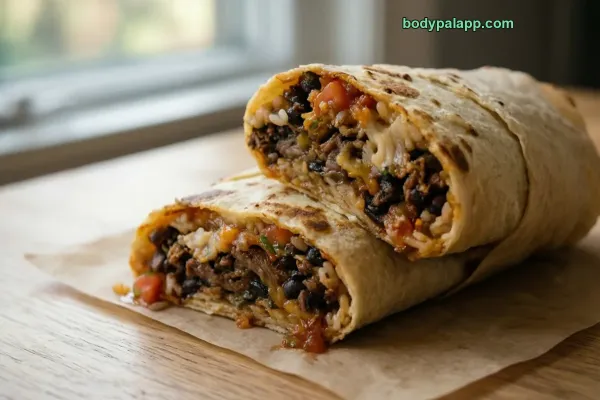
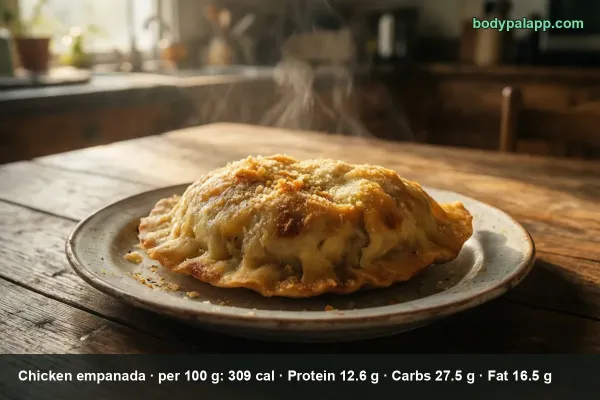
Here is how a PB&J stacks up against a burrito, a chicken empanada and a bowl of chili, per 100 g and per usual serving.
Verdict: For the fewest calories per serving, chili wins at 301 for a 255 g cup, while the burrito costs the most at 482. Calorie for calorie the PB&J is the densest food here at 361 per 100 g, so pick it for convenience and keep the portion to one sandwich or less.
PB&J sandwich FAQs
How many calories are in a peanut butter and jelly sandwich?
About 404 calories for a standard sandwich of 112 g. Half a sandwich, made with one slice of bread, is about 202 calories.
Is a PB&J sandwich good for weight loss?
One sandwich is 404 calories with 50.6 g of carbs and 16.8 g of sugar. Made with reduced fat peanut butter it drops to 380 calories.
Does a PB&J have fewer calories than a plain peanut butter sandwich?
Slightly. Per 100 g a peanut butter and jelly sandwich is 361 calories and a plain peanut butter sandwich is 382.
How much protein is in a peanut butter and jelly sandwich?
About 12.8 g of protein per sandwich (112 g), which is 11.4 g per 100 g, alongside 18.6 g of fat.
How many calories are in half a peanut butter and jelly sandwich?
Half a PB&J weighing 56 g has 202 calories. It also brings 6.4 g of protein, 8.4 g of sugars and 206 mg of sodium, which makes it a reasonable snack-sized portion.
How many calories does peanut butter and jelly have per 100 g?
A peanut butter and jelly sandwich has 361 calories per 100 g. That weight holds 11.4 g of protein, 45.2 g of carbs and 16.6 g of fat, so it is a calorie-dense food by weight.
How do average PB&J calories change with reduced-fat peanut butter?
A reduced-fat PB&J of 112 g has 380 calories, compared with 404 for the regular version. Fat falls to 13 g, but sodium rises to 449 mg, so the saving is modest.
How many calories do two PB&J sandwiches have?
Two PB&J sandwiches, 224 g in total, have 809 calories. They also deliver 25.6 g of protein and 824 mg of sodium, which makes the pair a full meal rather than a snack.