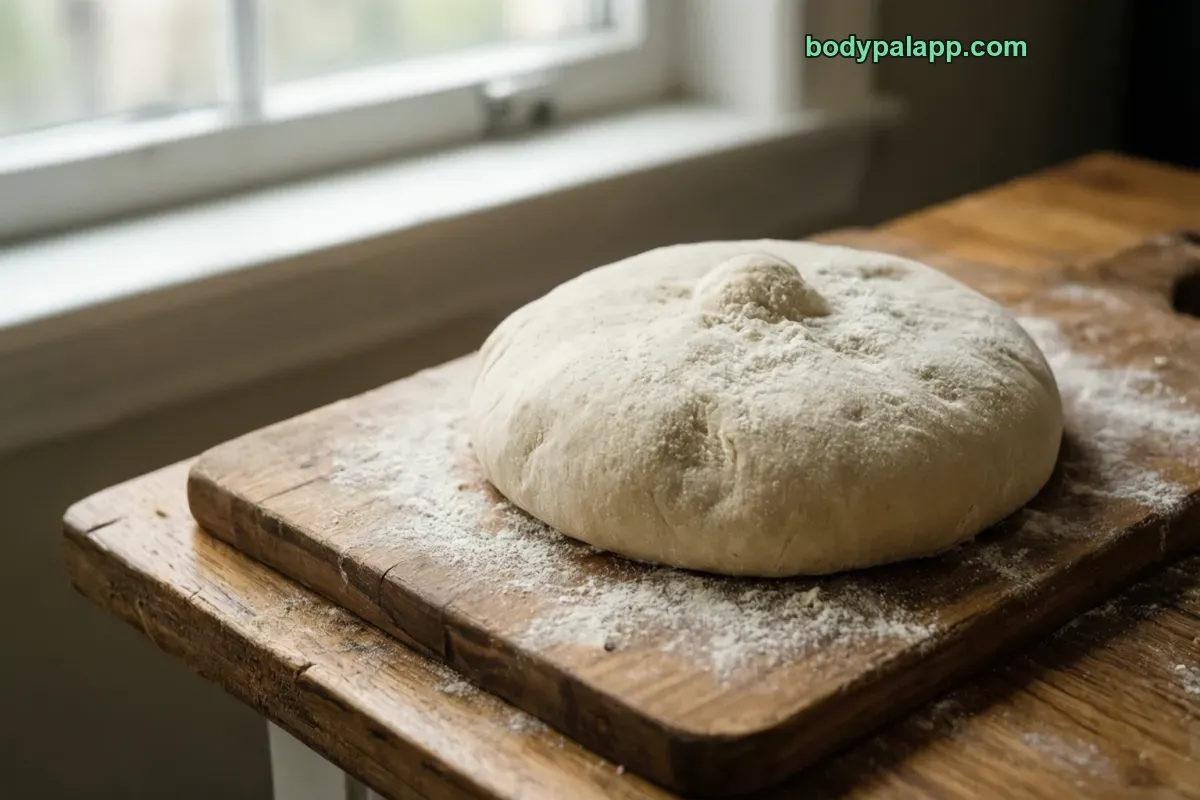
Pizza dough calories come to 130 for a 2 oz portion (57 g) and 228 per 100 g of packaged dough. Notice the carb share: 78% of the calories come from carbohydrate, while fat sits at just 1.8 g per 100 g. The dough is lean, so portion size and toppings decide how heavy the finished pizza gets.
130kcal
1 2 oz portion · 57 g, packaged, per label
16%protein
5 gProtein
25 gCarbs
1 gFat
How to burn off 130 kcal
—Walking, brisk
—Jogging
—Cycling, moderate
—Swimming
Skip the math. BodyPal counts these calories from your steps and workouts automatically.
Nutrition facts
Packaged, per label · per 57 g
Calories
130 kcal
Protein
5 g
Carbohydrate
25 g
Fat
1 g
Saturated fat
0 g
Cholesterol
0 mg
Sodium
300 mg
Source: USDA FoodData Central
🛡️
Verified nutrition data
Numbers on this page come from USDA FoodData Central, the U.S. Department of Agriculture’s food composition database, and from manufacturer labels where a branded product is named. Last verified September 2026. How we verify our data →
Pizza dough: calories, protein and sodium by serving
Percent of daily value uses the FDA reference of 2,000 kcal a day.
Serving
kcal
Protein
Carbs
Fat
Sodium
% DV kcal
2 oz portion (57 g)
130
5 g
25 g
1 g
300 mg
6%
4 oz portion (113 g)
258
9.9 g
49.6 g
2 g
594 mg
13%
100 g
228
8.8 g
43.9 g
1.8 g
526 mg
11%
3 × 2 oz portion (57 g)
390
15 g
899 mg
5 × 2 oz portion (57 g)
650
25 g
1,499 mg
A 4 oz ball of dough is already 258 calories
A 2 oz portion (57 g) of packaged pizza dough has 130 calories, 25 g of carbs and 5 g of protein. That is about 6% of a 2,000-calorie daily value. Most store dough comes in bigger balls, though, and few people stop at 2 oz.
Step up to a 4 oz portion (113 g) and you are at 258 calories, 13% of the daily value. Three 2 oz portions, 171 g in all, come to 390 calories. Five of them, 285 g, reach 650 calories, a realistic amount if one person eats a whole small pie. Not one topping has been counted yet.
The simplest fix is a kitchen scale. Weigh the ball, divide it before you stretch it, and you know your base number before the oven is hot. If you log by weight, every 100 g is 228 calories, so the math stays easy.
Carbs supply 78% of the calories
Per 100 g, pizza dough carries 43.9 g of carbohydrate, 8.8 g of protein and 1.8 g of fat. In calorie terms that splits into 78% carbs, 16% protein and 7% fat. This is a flour food first and very little else.
The fat figure surprises people. At 1.8 g per 100 g, with 0 g of saturated fat and 0 mg of cholesterol on this label, raw dough is lean. The fat in a finished pizza mostly arrives later, from oil brushed on the crust, cheese and meat.
Fiber and sugar are both modest at 1.8 g per 100 g. That fiber number is low for the carb load, which is what you expect from refined white flour. A 2 oz portion covers 10% of the protein daily value: useful, but not a reason to eat it. If you want more fiber, whole wheat options such as Mazor's Whole Wheat Mini Pizza Doughs exist; read that label for its own numbers.
Sodium is the row to watch
Sodium is the line on this label worth reading. Pizza dough has 526 mg per 100 g, which is 23% of the 2,300 mg daily value. A 2 oz portion carries 300 mg, or 13%, and a 4 oz portion 594 mg, or 26%.
That is before sauce, cheese or cured meat, all of which bring their own salt. Three 2 oz portions add up to 899 mg from the dough alone, and five reach 1,499 mg. A pizza that looks plain can sit well into your daily sodium before the toppings are tallied.
If you watch sodium, the dough is the one part you cannot scrape off. Stretch a thinner base, favor fresh vegetables over cured meats, and compare labels, since salt is a recipe choice. Big Y Pizza Dough, Whole Foods Market All Natural Pizza Dough and DeLallo Italian Pizza Dough Kit each list their own figures.
Toppings decide what the pizza costs you
With 130 calories per 2 oz and almost no fat, the dough is the predictable part of a pizza. The variable part is everything on top. Oil, cheese and processed meats are dense in fat, and together they can easily outweigh the base.
A few habits keep the total in check. Stretch the dough thin so a smaller portion covers the pan. Measure the cheese instead of pouring freely. Pile on vegetables, which add volume for few calories, and add a lean protein such as chicken if you want the meal to keep you full longer.
Pizza dough also works beyond pizza: flatbreads, garlic knots, calzones. The same rule applies. Weigh the dough, log the fillings separately, and the numbers stay honest. When weighing is not practical, BodyPal can log a slice from a photo.
How does pizza dough compare?
Here is how pizza dough stacks up against pizza crust, cookie dough and a pizza bagel, per 100 g and per usual serving.
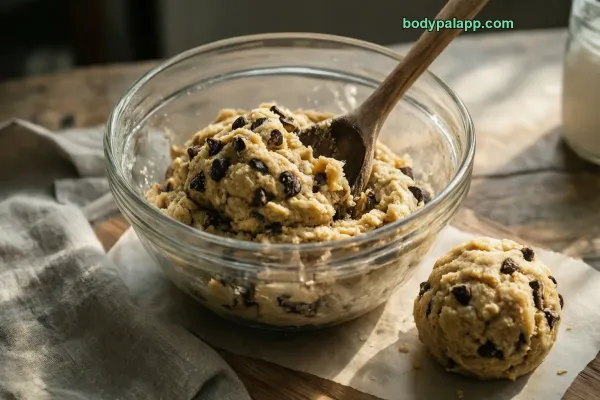
Verdict: For the leanest base, pick raw pizza dough at 228 calories per 100 g; pizza crust climbs to 293 with 12.3 g of fat, and cookie dough runs about 2 times the calories at 451. The pizza bagel offers more protein at 10.8 g per 100 g, but at 244 calories a piece it is not the lighter choice.
Most popular pizza dough brands in the United States
Ranked by popularity in the BodyPal database
# Productkcal / 100 g
1Papa Sal's Original Pizza Dough57 g211 kcal
2Whole Foods Market All Natural Pizza Dough2 oz · 57 g333 kcal
A 2 oz serving (57 g) is 130 calories and 100 g is 228 calories. A 4 oz piece comes to 258 calories.
Is pizza dough good for weight loss?
It is dense for its size: 228 calories per 100 g, mostly from 43.9 g of carbohydrate, with only 1.8 g fat. A full 8 oz (227 g) of dough is 518 calories.
Pizza dough or pizza crust: which has more calories?
Baked pizza crust is 293 calories per 100 g, against 228 for raw dough, because baking drives off water and concentrates the weight.
How many carbs and how much protein are in pizza dough?
Per 100 g there are 43.9 g carbs and 8.8 g protein. A 2 oz serving (57 g) has 25.0 g carbs and 5.0 g protein.
How many calories are in a 4 oz ball of pizza dough?
A 4 oz portion (113 g) of packaged pizza dough has 258 calories, with 49.6 g of carbs, 9.9 g of protein and 2 g of fat. That is 13% of a 2,000-calorie daily value.
How much sodium is in pizza dough?
Pizza dough has 526 mg of sodium per 100 g, or 23% of the daily value. A 2 oz portion carries 300 mg and a 4 oz portion 594 mg, before sauce or cheese add more.
Is pizza dough high in fat?
No. Packaged pizza dough has 1.8 g of fat per 100 g and 0 g of saturated fat on this label, so fat supplies only 7% of its calories. Most of a pizza's fat comes from toppings and oil.
How much sugar and fiber does pizza dough have?
Pizza dough has 1.8 g of sugar and 1.8 g of fiber per 100 g. A 2 oz portion holds about 1 g of each, so it is low in sugar but also low in fiber for its carb load.