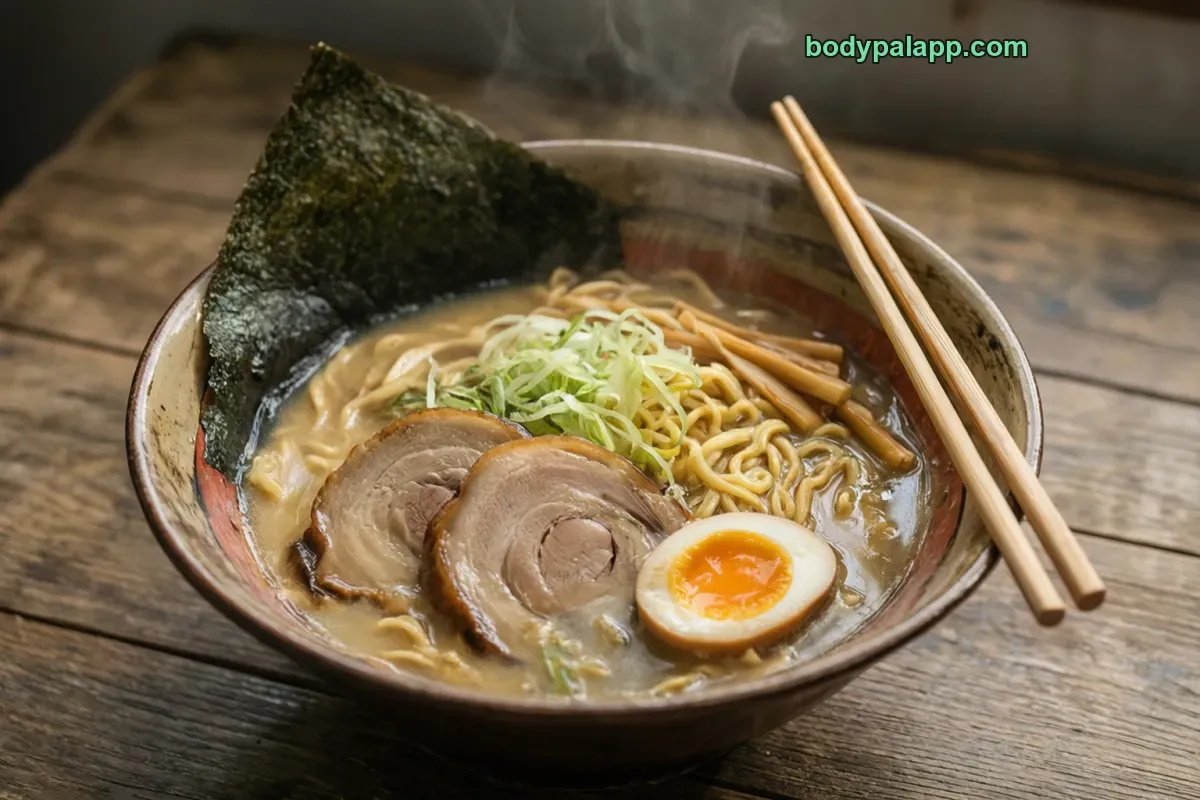
Ramen bowl calories come to 311 for 1 cup (245 g) of prepared ramen with broth, or 127 per 100 g. The number to watch is sodium. That same cup carries 816 mg, 35% of the daily value, and a deep bowl can easily hold several cups, so both totals climb quickly.
311kcal
1 cup · 245 g, prepared, broth included
23%protein
17.5 gProtein
34 gCarbs
11.2 gFat
How to burn off 311 kcal
—Walking, brisk
—Jogging
—Cycling, moderate
—Swimming
Skip the math. BodyPal counts these calories from your steps and workouts automatically.
Nutrition facts
Prepared, broth included · per 245 g
Calories
311 kcal
Protein
17.5 g
Carbohydrate
34 g
Fat
11.2 g
Saturated fat
2.6 g
Cholesterol
130 mg
Sodium
816 mg
Potassium
235 mg
Iron
2.4 mg
Source: USDA FoodData Central
🛡️
Verified nutrition data
Numbers on this page come from USDA FoodData Central, the U.S. Department of Agriculture’s food composition database, and from manufacturer labels where a branded product is named. Last verified September 2026. How we verify our data →
Ramen bowl: calories, protein and sodium by serving
Percent of daily value uses the FDA reference of 2,000 kcal a day.
Serving
kcal
Protein
Carbs
Fat
Sodium
% DV kcal
1 cup (245 g)
311
17.5 g
34.2 g
11.2 g
816 mg
16%
With chicken (245 g)
309
17.2 g
37.7 g
9.5 g
867 mg
15%
Vegetarian (245 g)
265
9.8 g
38.1 g
8.2 g
843 mg
13%
100 g
127
7.1 g
14 g
4.6 g
333 mg
6%
3 × 1 cup (245 g)
933
52.4 g
2,448 mg
5 × 1 cup (245 g)
1,556
87.3 g
4,079 mg
Three cups of ramen reach 933 calories
The 311-calorie figure covers 1 cup (245 g) of noodles and broth together. That is a modest starting point for a meal, but ramen is rarely eaten by the cup. Restaurant and takeout bowls are deep, and the broth adds volume fast.
Scale it up and the total moves in a straight line. Two cups come to 622 calories with 34.9 g of protein. Three cups reach 933 calories and 52.4 g of protein. A very large serving of 5 cups lands at 1,556 calories, which is most of a 2000-calorie reference day in a single sitting.
So the real question is not what a cup holds but how many cups your bowl holds. If you are tracking, estimate the volume before you log it rather than defaulting to a single cup. BodyPal can log the bowl from a photo, which helps when the portion is hard to judge by eye.
Carbs lead, but fat supplies a third
Per 100 g, a ramen bowl has 14 g of carbohydrate, 7.1 g of protein and 4.6 g of fat. By calories that splits into 44% carbs, 33% fat and 23% protein. The noodles drive the carb share, while the fat comes from the broth, oils and toppings.
Fat is the swing factor. A cup holds 11.2 g of it, and saturated fat stays fairly modest at 1.1 g per 100 g. Richer, creamier broths push the fat share up; clearer broths pull it down. That is why two bowls of similar size can land at quite different totals.
Protein is respectable for a soup. One cup gives 17.5 g, which is 35% of the daily value and more than many noodle dishes manage. Fiber is the weak spot at 2.2 g per cup, and sugar barely registers at 1 g, so the bowl is filling mainly through volume and protein rather than fiber.
Sodium is the row to watch
A single cup of ramen carries 816 mg of sodium, 35% of the daily value. Per 100 g that is 333 mg. Those numbers look manageable on their own, until you remember how big a typical bowl is.
At 2 cups, sodium reaches 1,632 mg. At 3 cups it is 2,448 mg, already above the 2300 mg daily value used on this page. A 5-cup serving hits 4,079 mg. Few foods make sodium climb this fast with portion size, because the salty broth is most of what you are eating.
If you watch sodium, the simplest lever is the broth. Eat the noodles and toppings and leave part of the liquid behind. Keeping the rest of the day's meals lower in salt also helps the total. Potassium is low here at 96 mg per 100 g, so the bowl adds little on that front.
Chicken and vegetarian bowls trade protein for calories
USDA lists separate rows for ramen with chicken and for vegetarian ramen, each at 245 g. The chicken version comes to 309 calories with 17.2 g of protein and 9.5 g of fat. On calories it is nearly identical to the standard bowl, with a little less fat and a bit more carbohydrate at 37.7 g.
The vegetarian bowl is the lightest at 265 calories. The cost is protein: 9.8 g, or 20% of the daily value, against 17.5 g in the standard cup. It does carry the most fiber of the three at 2.7 g, plus slightly more carbohydrate at 38.1 g.
None of these versions is a low-sodium pick. Chicken ramen has 867 mg per serving and vegetarian ramen 843 mg, both slightly above the standard cup's 816 mg. Choose by how much protein you want from the meal, and manage sodium through how much broth you finish. Packaged options such as Nissin Ramen Bowl or Saffron Road Shoyu Ramen Bowl with Chicken are worth checking against their own labels.
How does ramen bowl compare?
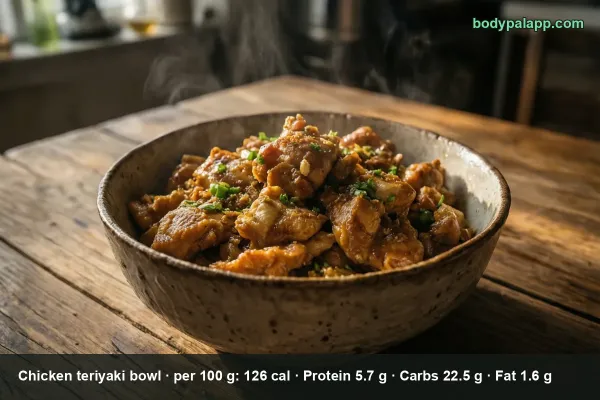
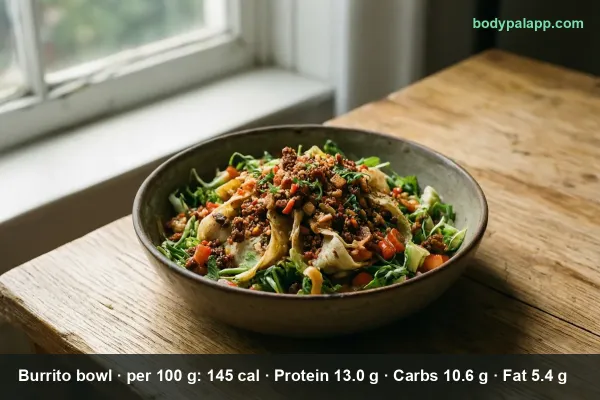
Here is how a ramen bowl stacks up against dry ramen noodles, a chicken teriyaki bowl and a burrito bowl, per 100 g and per usual serving.
Verdict: For the fewest calories per bite, the ramen bowl at 127 per 100 g is level with the chicken teriyaki bowl at 126, while dry ramen noodles pack 440 calories and 1,855 mg of sodium per 100 g. For staying full, pick the burrito bowl, with 13 g of protein per 100 g for 145 calories.
Most popular ramen bowl brands in the United States
Instant cup products are labeled by dry weight, so they read far higher per 100 g than the prepared bowl above, while the refrigerated and frozen bowls are already made up with broth. Source: manufacturer labels / USDA FoodData Central.
Ramen bowl FAQs
How many calories are in a ramen bowl?
A 1 cup serving (245 g) is about 311 calories. Per 100 g a ramen bowl is 127 calories, since most of the bowl is broth.
Is a ramen bowl good for weight loss?
One cup is 311 calories with 17.5 g protein, 34.2 g carbs and 11.2 g fat. The vegetarian version is lighter at 265 calories per cup, and one with fish is 274.
Ramen bowl vs ramen noodles: which has more calories?
Per 100 g the prepared bowl is 127 calories, while dry ramen noodles are 440. The broth and vegetables in a bowl dilute the noodles.
How much protein is in a ramen bowl?
About 17.5 g of protein per cup, which is 7.1 g per 100 g. The same cup carries 816 mg of sodium.
How many calories are in 2 cups of ramen?
Two cups of prepared ramen with broth have 622 calories. That portion also brings 34.9 g of protein and 1,632 mg of sodium, so a large bowl adds up quickly on both counts.
How much sodium is in a cup of ramen?
A 1 cup (245 g) serving of ramen has 816 mg of sodium, 35% of the daily value. Per 100 g it is 333 mg. Leaving some broth in the bowl is the easiest way to take in less.
How many calories are in vegetarian ramen?
Vegetarian ramen has 265 calories per 245 g serving, the lightest of the ramen rows here. It also has less protein, 9.8 g against 17.5 g in the standard cup, and 843 mg of sodium.
How many calories are in chicken ramen?
Ramen with chicken has 309 calories per 245 g serving, with 17.2 g of protein, 9.5 g of fat and 37.7 g of carbs. Sodium is 867 mg, or 38% of the daily value.
How many carbs are in a ramen bowl?
A cup of ramen has 34.2 g of carbohydrate, or 14 g per 100 g. Carbs supply 44% of the calories. Fiber is low at 2.2 g per cup and sugar is just 1 g.