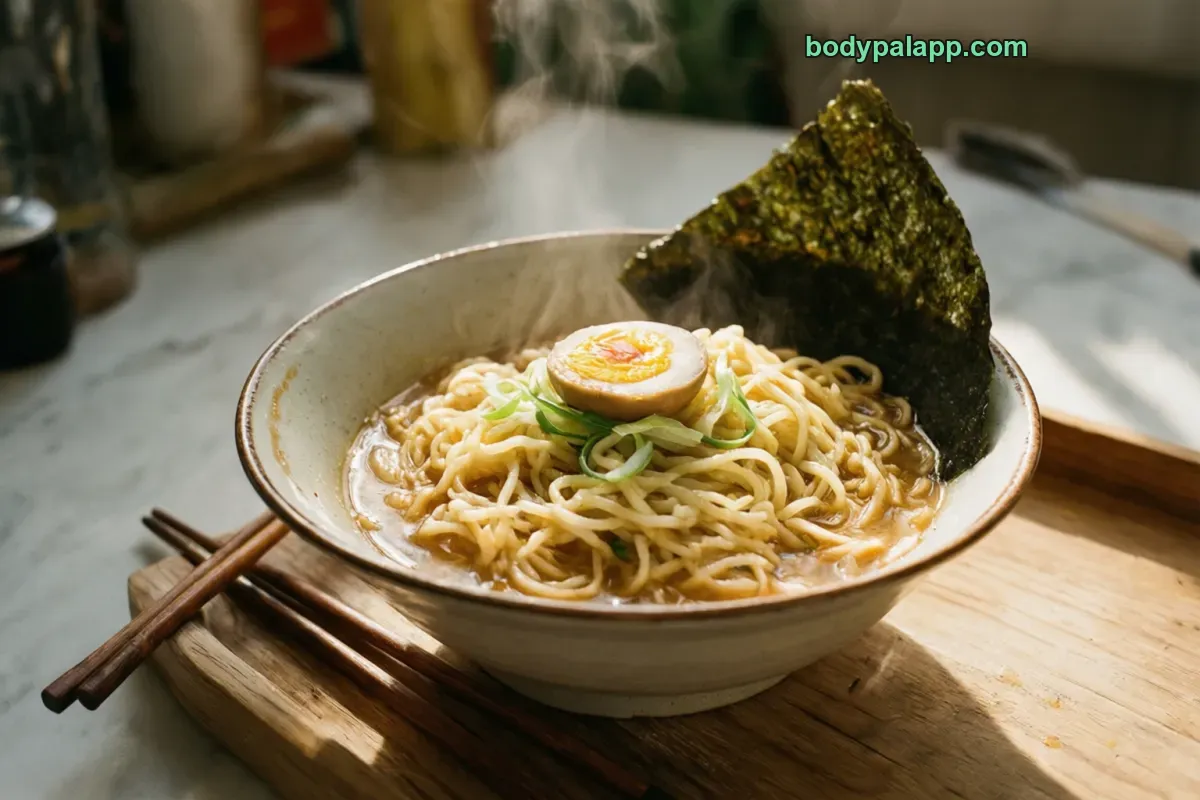
Ramen noodles calories come to 374 for one 85 g package of dry noodles with seasoning, or 440 per 100 g. Sodium is the number to notice. One package carries 1,577 mg, or 69% of the daily value. That is a much bigger share of your day than the 19% the calories take.
374kcal
1 package · 85 g, dry, any flavor
9%protein
8.6 gProtein
51 gCarbs
15 gFat
How to burn off 374 kcal
—Walking, brisk
—Jogging
—Cycling, moderate
—Swimming
Skip the math. BodyPal counts these calories from your steps and workouts automatically.
Nutrition facts
Dry, any flavor · per 85 g
Calories
374 kcal
Protein
8.6 g
Carbohydrate
51 g
Fat
15 g
Saturated fat
6.9 g
Cholesterol
0 mg
Sodium
1577 mg
Potassium
154 mg
Iron
3.5 mg
Source: USDA FoodData Central
🛡️
Verified nutrition data
Numbers on this page come from USDA FoodData Central, the U.S. Department of Agriculture’s food composition database, and from manufacturer labels where a branded product is named. Last verified September 2026. How we verify our data →
Ramen noodles: calories, protein and sodium by serving
Percent of daily value uses the FDA reference of 2,000 kcal a day.
Serving
kcal
Protein
Carbs
Fat
Sodium
% DV kcal
1 package (85 g)
374
8.6 g
51.2 g
15 g
1,577 mg
19%
Noodle block only (81 g)
356
8.2 g
48.8 g
14.2 g
1,503 mg
18%
1 cup prepared (245 g)
162
3.7 g
22.1 g
6.5 g
691 mg
8%
100 g
440
10.2 g
60.3 g
17.6 g
1,855 mg
22%
3 × 1 package (85 g)
1,122
25.9 g
4,730 mg
5 × 1 package (85 g)
1,870
43.2 g
7,884 mg
One package is 374 calories, and most people eat all of it
A standard package weighs 85 g and lands at 374 calories with the seasoning included. The noodle block alone is 81 g and 356 calories, so the flavor packet adds very little energy. Skipping it barely changes the calorie total. It barely changes the sodium either, which the next sections cover.
Cooked ramen looks lighter on paper. One cup of prepared ramen (245 g) is 162 calories, because the water adds weight but no energy. That cup is only part of the pot, though. Finish the whole bowl, broth included, and you are back to the calories of the full dry package.
Doubling up is where totals climb. Two packages come to 748 calories and 17.3 g of protein, and three reach 1,122 calories. Five packages hit 1,870 calories, close to a full day on the 2000-calorie daily value. Because the packages are cheap and quick to cook, a second one is easy to make. Decide how many you are cooking before the water boils, not after the first bowl.
Fat supplies more than a third of the calories
Per 100 g of dry product, ramen has 60.3 g of carbs, 17.6 g of fat and 10.2 g of protein. By calories, that works out to 55% carbs, 36% fat and only 9% protein. That fat share is high for a noodle, and it explains why a small block packs so much energy.
Saturated fat is the part of that fat to watch. Dry ramen has 8.1 g per 100 g, against a daily value of 20 g. A single package gives 15 g of total fat. Cholesterol sits at 0, so the fat story here is about saturated fat, not cholesterol.
Protein is the weak spot. One package gives 8.6 g, just 17% of the daily value, and fiber stays at 2.5 g. Sugar is low at 1.7 g, so this is not a sweet food. Mostly it is starch and fat, without much protein or fiber to balance them.
Sodium is the row to watch, even without the packet
Sodium is the standout number on this label. One package delivers 1,577 mg, which is 69% of the daily value. Per 100 g of dry product it reaches 1,855 mg, or 81%. Few foods in the meals category put this much of a day's sodium into a single cheap serving.
Tossing the seasoning packet trims less than you might expect. The noodle block alone still carries 1,503 mg, which is 65% of the daily value. A cup of prepared ramen holds 691 mg, or 30%, but that is just one cup. Drinking all the broth from a full package brings back the full package's sodium.
Multiples climb fast. Two packages reach 3,154 mg, which is more than a full day's daily value. Three reach 4,730 mg, and five reach 7,884 mg. Potassium, which some people track alongside sodium, is only 181 mg per 100 g against a daily value of 4700 mg. If you watch sodium, count one package as most of your day's allowance and keep other salty foods light around it.
Build the bowl out instead of adding a second package
One package covers 19% of the daily value for calories but only 17% for protein, and fiber is low. That gap is the best argument for adding to the bowl instead of cooking another block. A second package doubles the calories and sodium while adding little else.
Easy add-ins are an egg cracked into the simmering broth, cubes of tofu, leftover chicken, or a handful of frozen vegetables tossed in for the last minute. Leafy greens, mushrooms and scallions add volume without much energy. Use half the seasoning or less and let the toppings carry the flavor. If you are shopping by type, labels like Lotus Foods Rice Ramen or King Soba Organic Buckwheat Ramen use different grains than a classic Maruchan block.
Ramen fits a day of eating fine when the rest of that day is lower in sodium and brings in more protein and fiber. If you track intake, log the package you actually cooked, not the cup on the label. BodyPal can log your bowl from a photo, toppings included, so the extras get counted too.
How does ramen noodles compare?
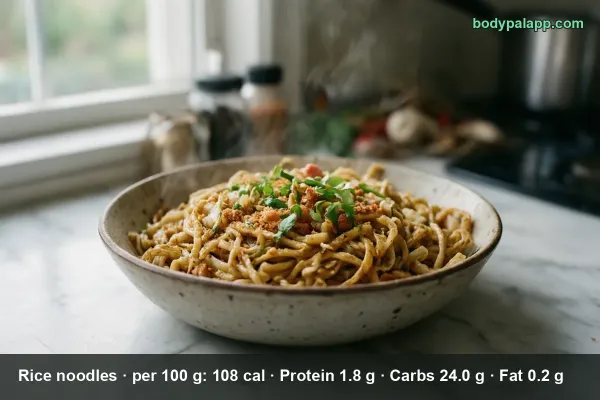
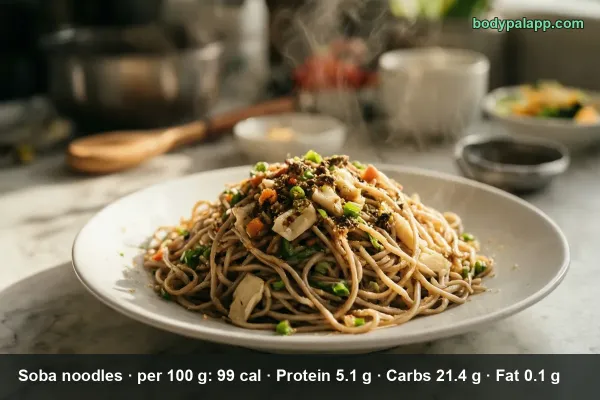
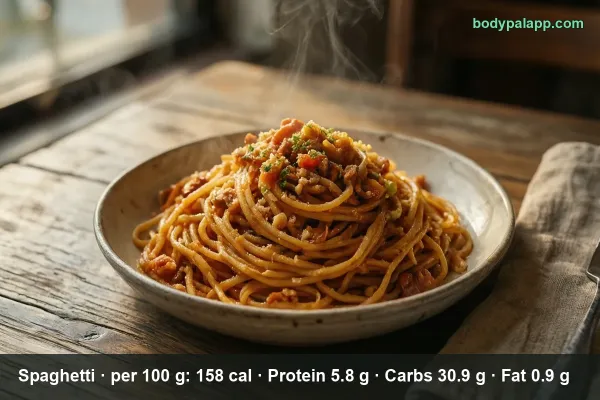
This table compares ramen noodles with rice, soba and spaghetti noodles per 100 g and per usual serving.
Verdict: For the fewest calories, pick soba noodle at 99 per 100 g against 440 for dry ramen, with rice noodle close behind at 108. For more protein with almost no sodium, spaghetti noodle wins at 5.8 g protein and 1 mg sodium per 100 g.
Most popular ramen noodles brands in the United States
Several of these are fresh, rice or buckwheat noodles sold without a fried seasoning block, so they read well below the 440 per 100 g of a standard instant package. Source: manufacturer labels / USDA FoodData Central.
Ramen noodles FAQs
How many calories are in one package of ramen noodles?
A standard 3 oz (85 g) package is about 374 calories dry. The noodle block on its own (81 g) is about 356 calories.
Are ramen noodles good for weight loss?
One package is 374 calories with 14.9 g fat, 51.2 g carbs and 1,577 mg sodium, close to a fifth of a 2,000 calorie day. A cup prepared with water is 162 calories.
Ramen noodles vs rice noodles: which has fewer calories?
Rice noodles have 108 calories per 100 g against 440 per 100 g for dry ramen noodles, which are fried before packaging.
How much protein is in ramen noodles?
About 8.6 g of protein in one 85 g package, or 10.2 g per 100 g.
How many calories are in a cup of cooked ramen?
One cup of prepared ramen (245 g) has 162 calories and 691 mg of sodium. That is 30% of the sodium daily value. The cup is lower than a full package because water adds weight but no calories.
How much sodium is in a package of ramen noodles?
One 85 g package has 1,577 mg of sodium, or 69% of the daily value. The noodle block alone still has 1,503 mg, so skipping the seasoning packet cuts only a small amount.
Does skipping the seasoning packet save calories?
Only a little. The noodle block alone is 356 calories, compared with 374 for the full package with seasoning. Most of the energy is in the noodles, not the flavor packet.
How many calories are in two packages of ramen?
Two packages come to 748 calories, with 17.3 g of protein and 3,154 mg of sodium. That sodium total is more than a full day's daily value.
How much fat is in ramen noodles?
One package has 15 g of fat, and fat makes up 36% of the calories. Per 100 g of dry product, ramen has 17.6 g of fat, including 8.1 g of saturated fat.